Cheshire Antiques Consultant Ltd has dated this Victorian Narrative Oil Painting to the Victorian era.
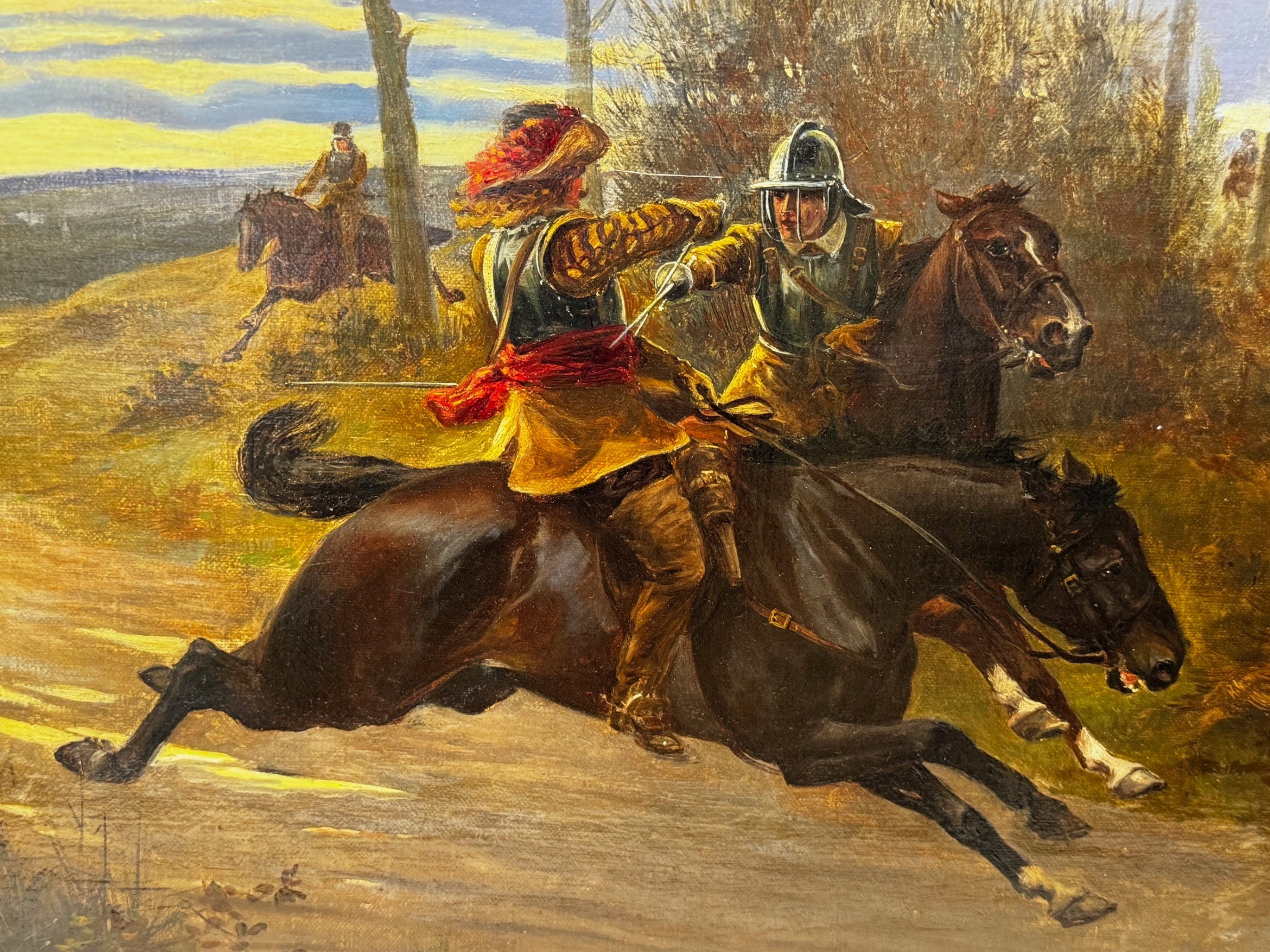
Feel the thrill of the chase & fight for survival, impress your clients & guests with this British military Civil war skirmish battle historical masterpiece to display on your office or home wall space.
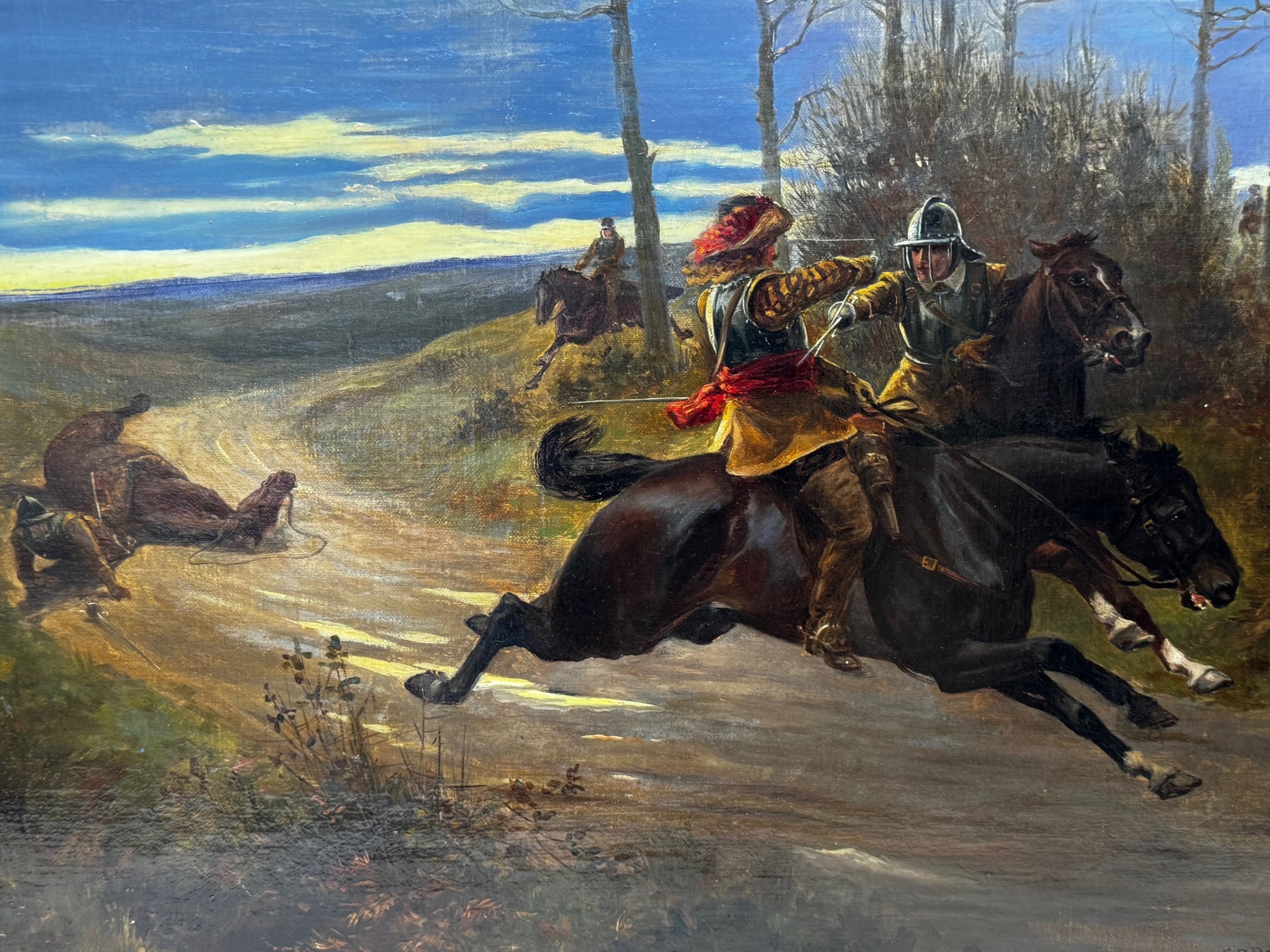
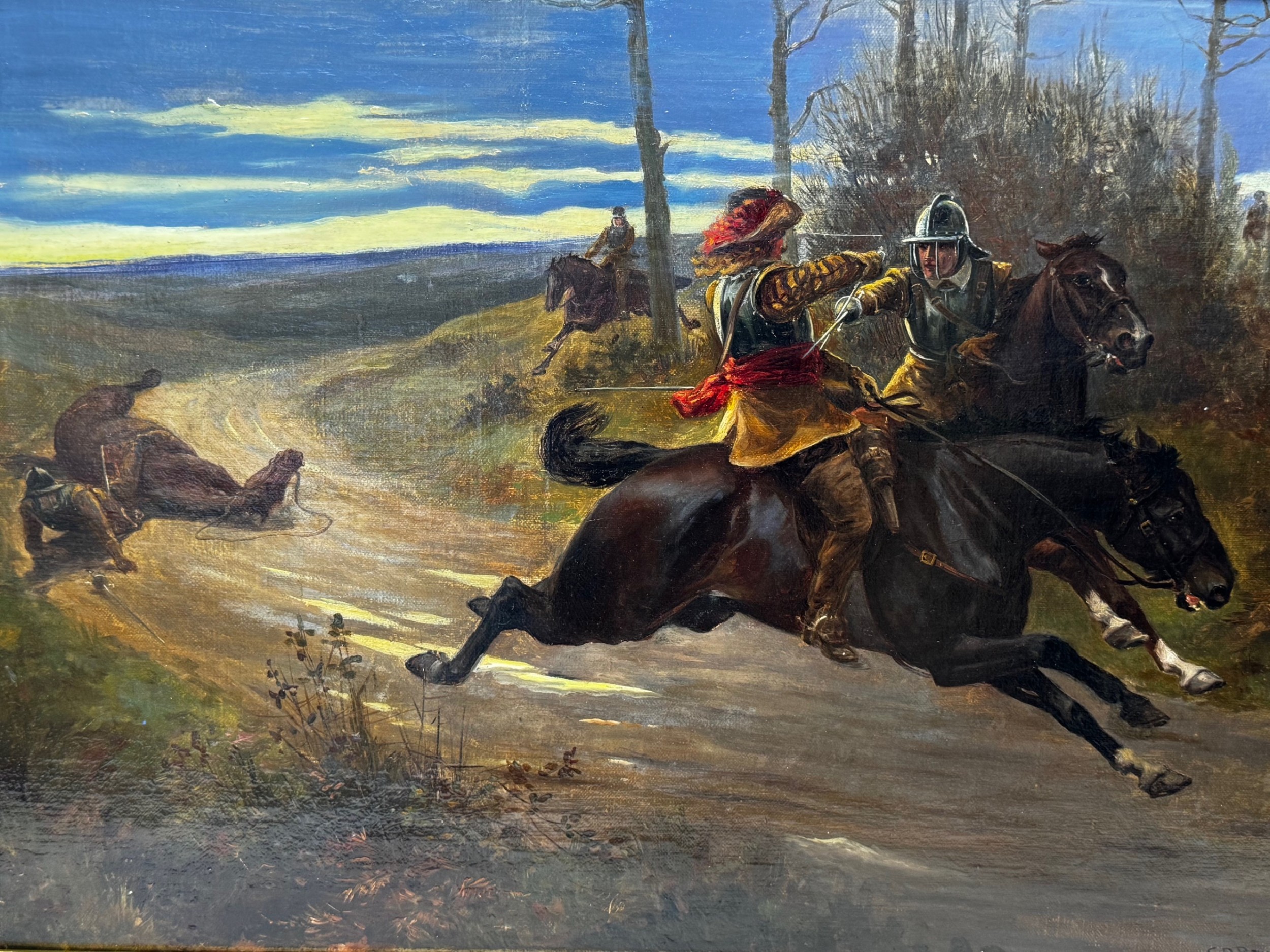
Subject military battle skirmish set during the English civil war which was between 1642 to 1651.
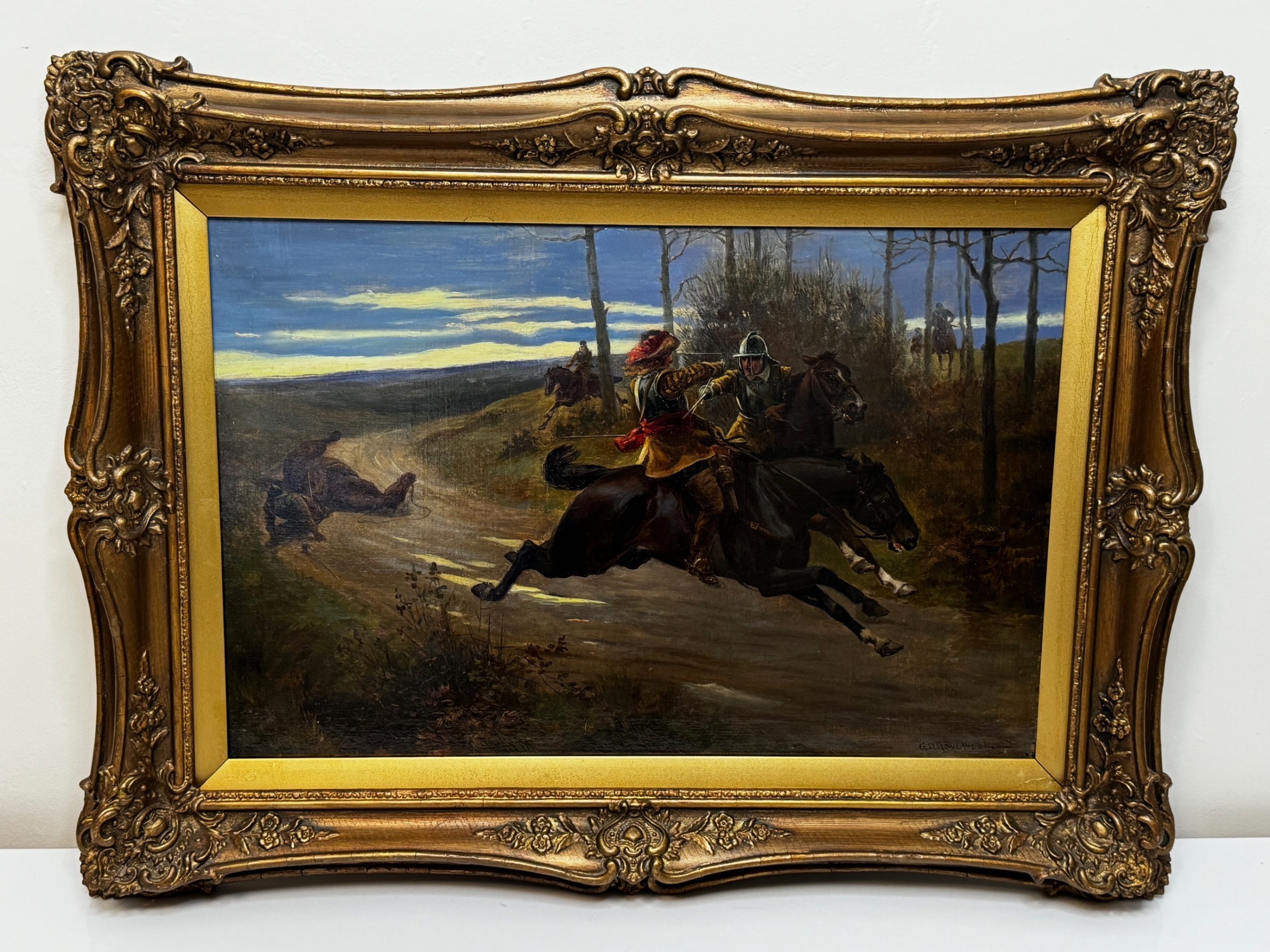
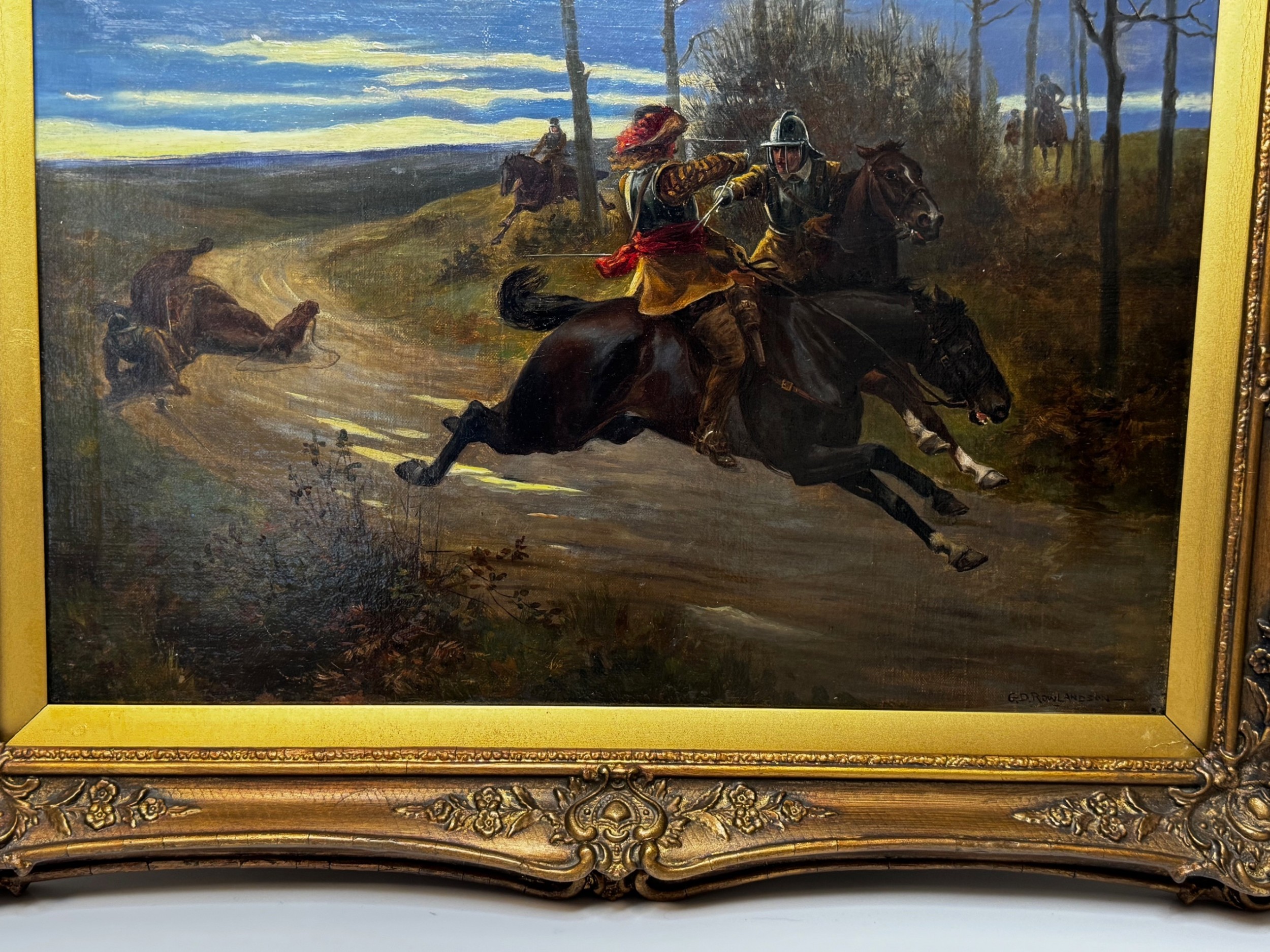
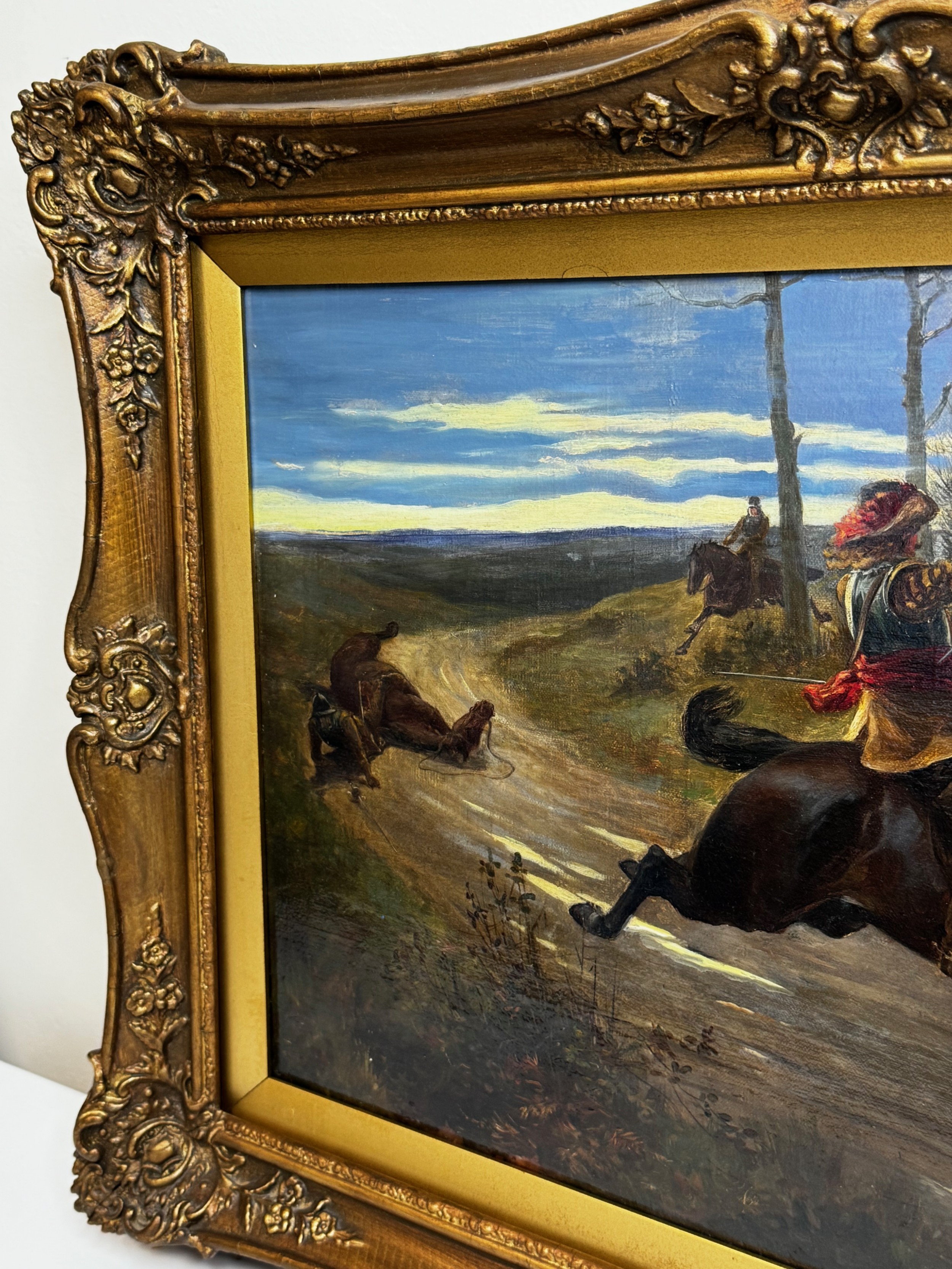
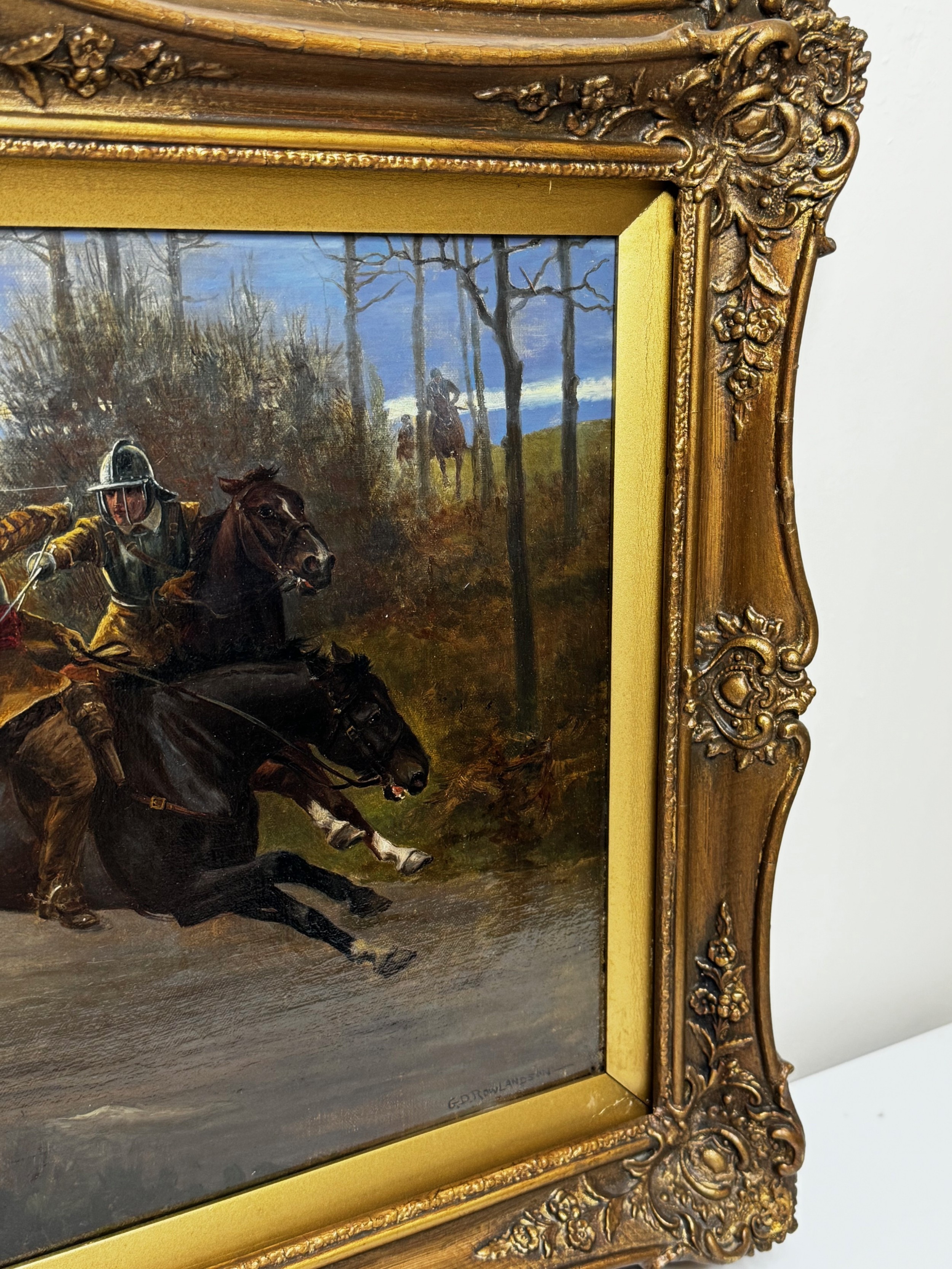
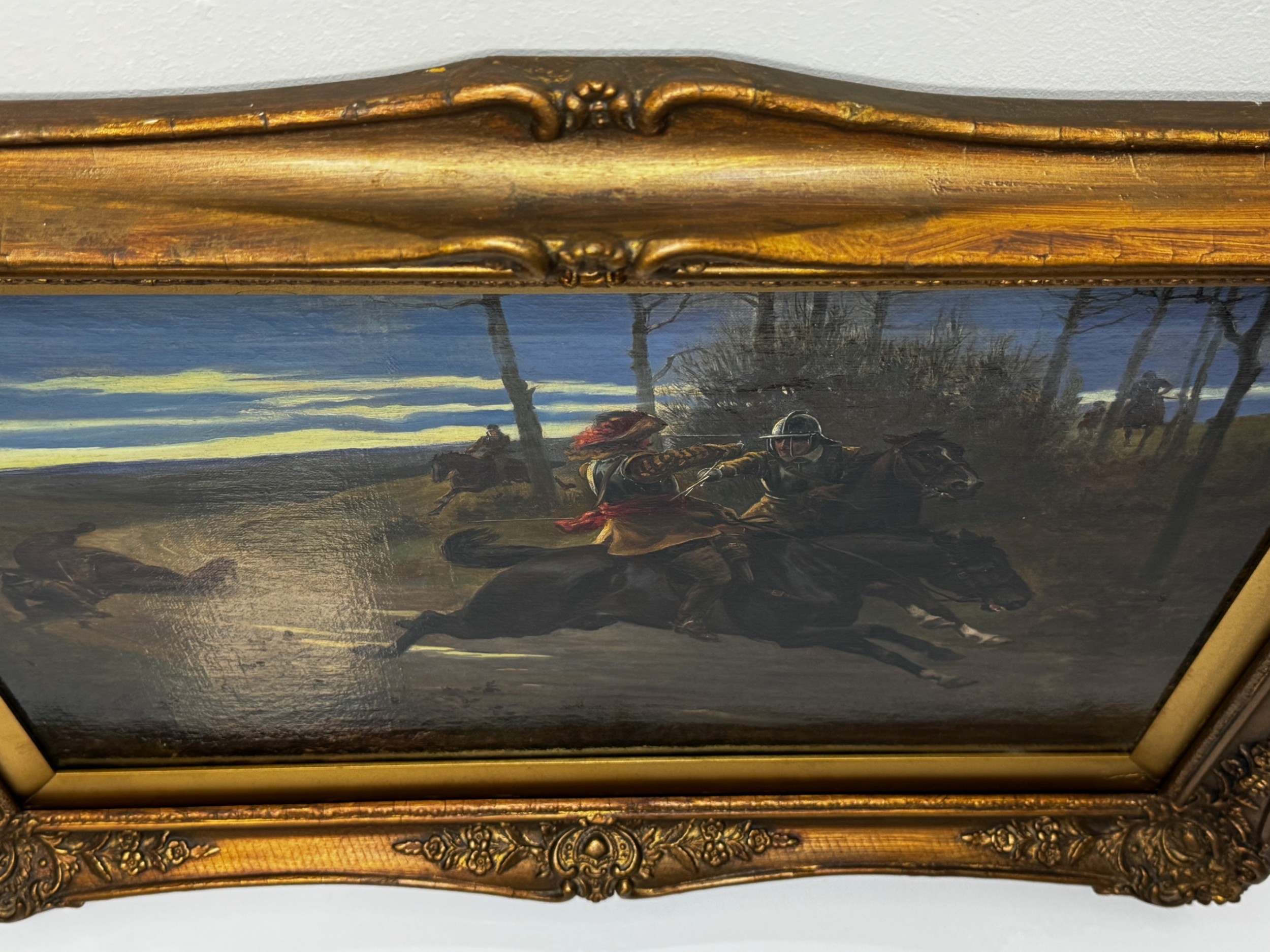
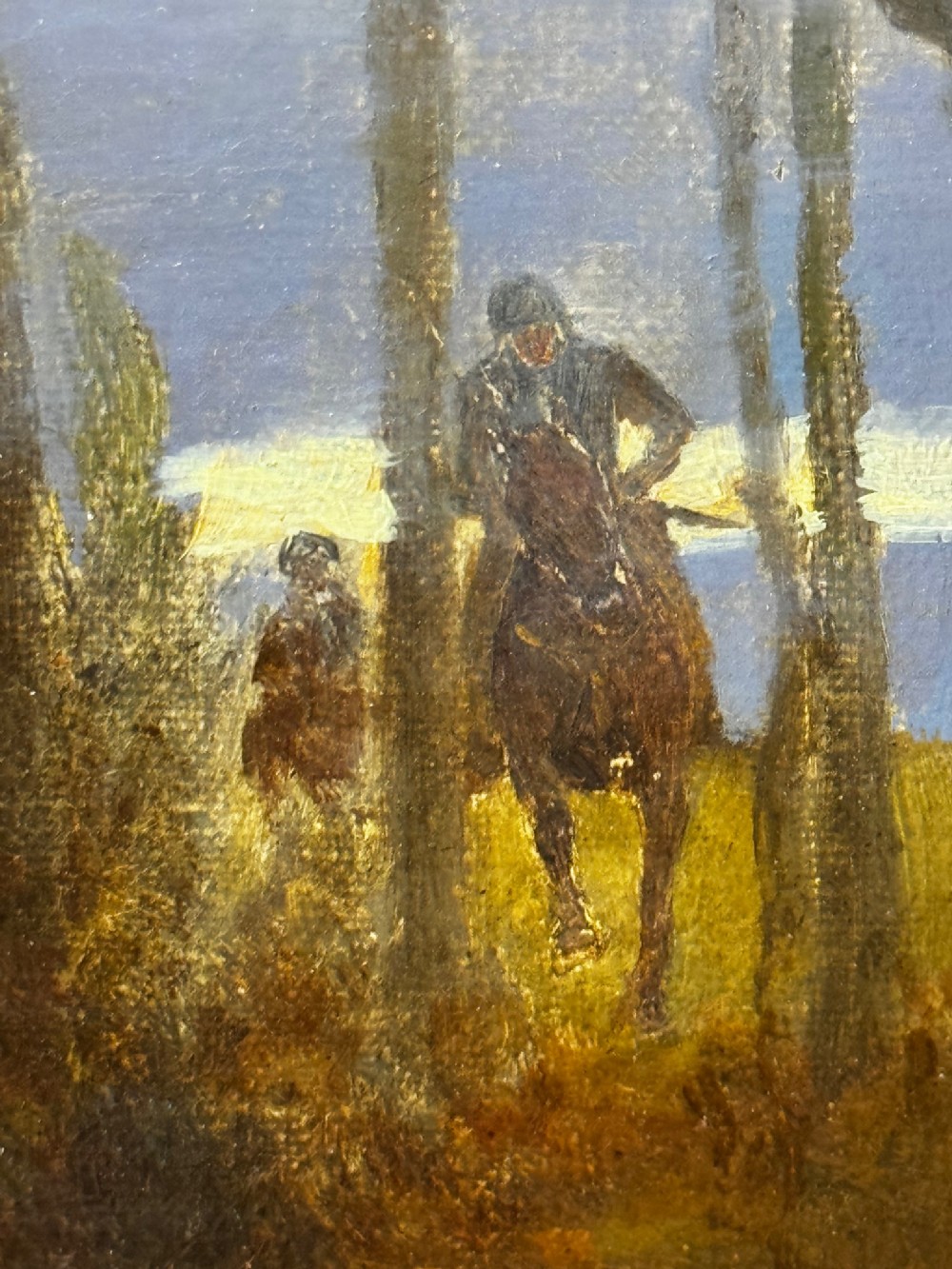
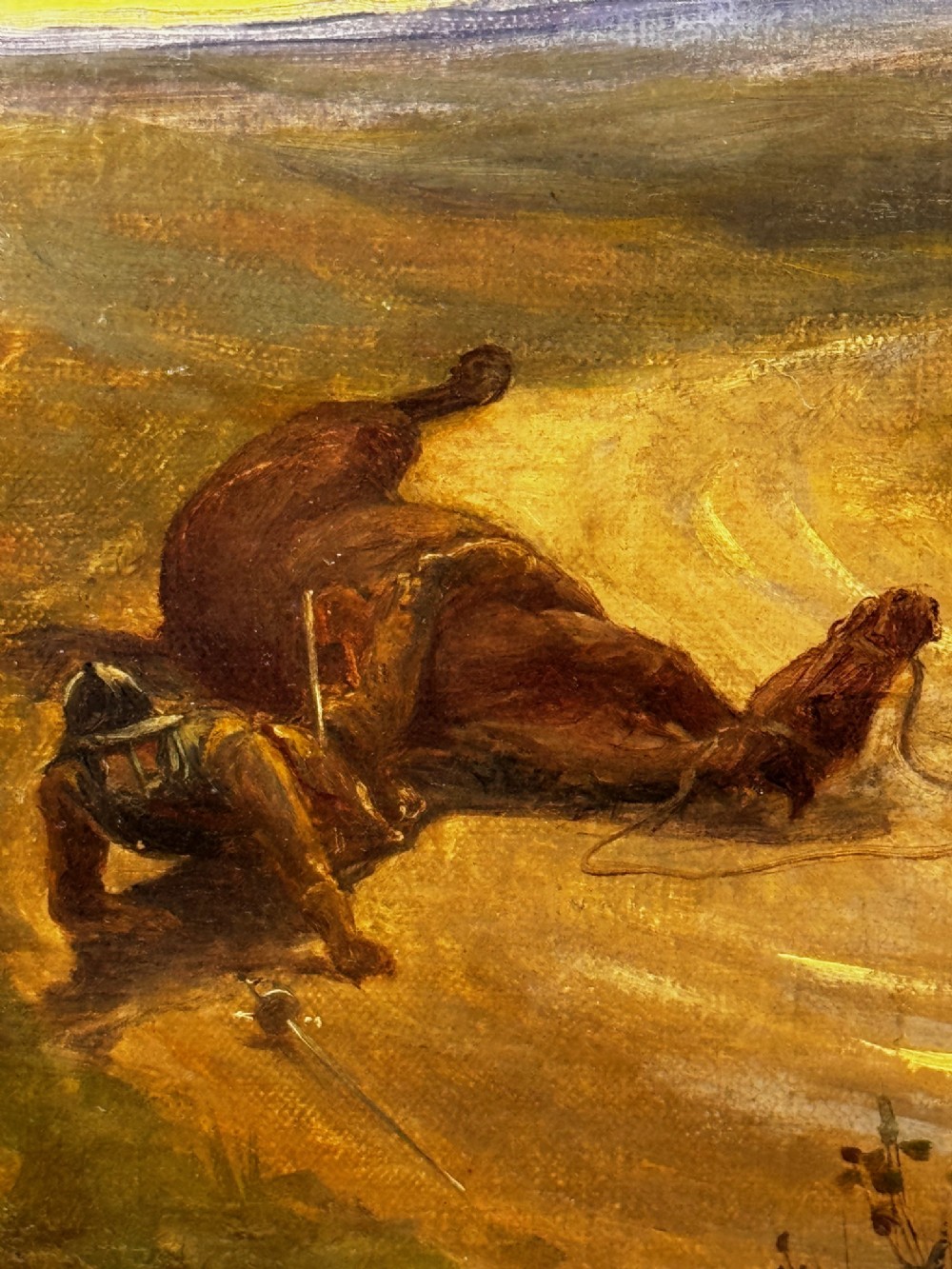
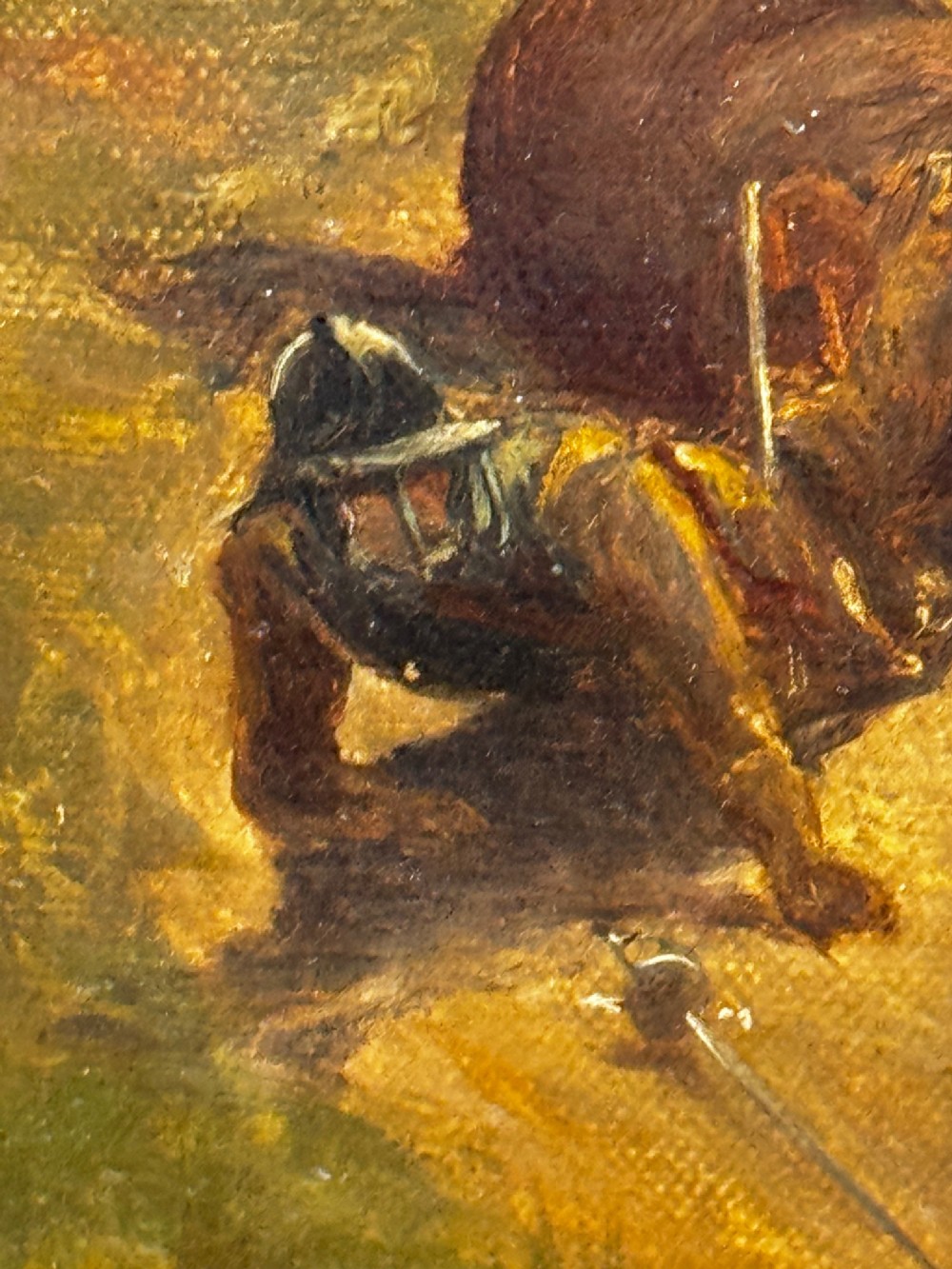
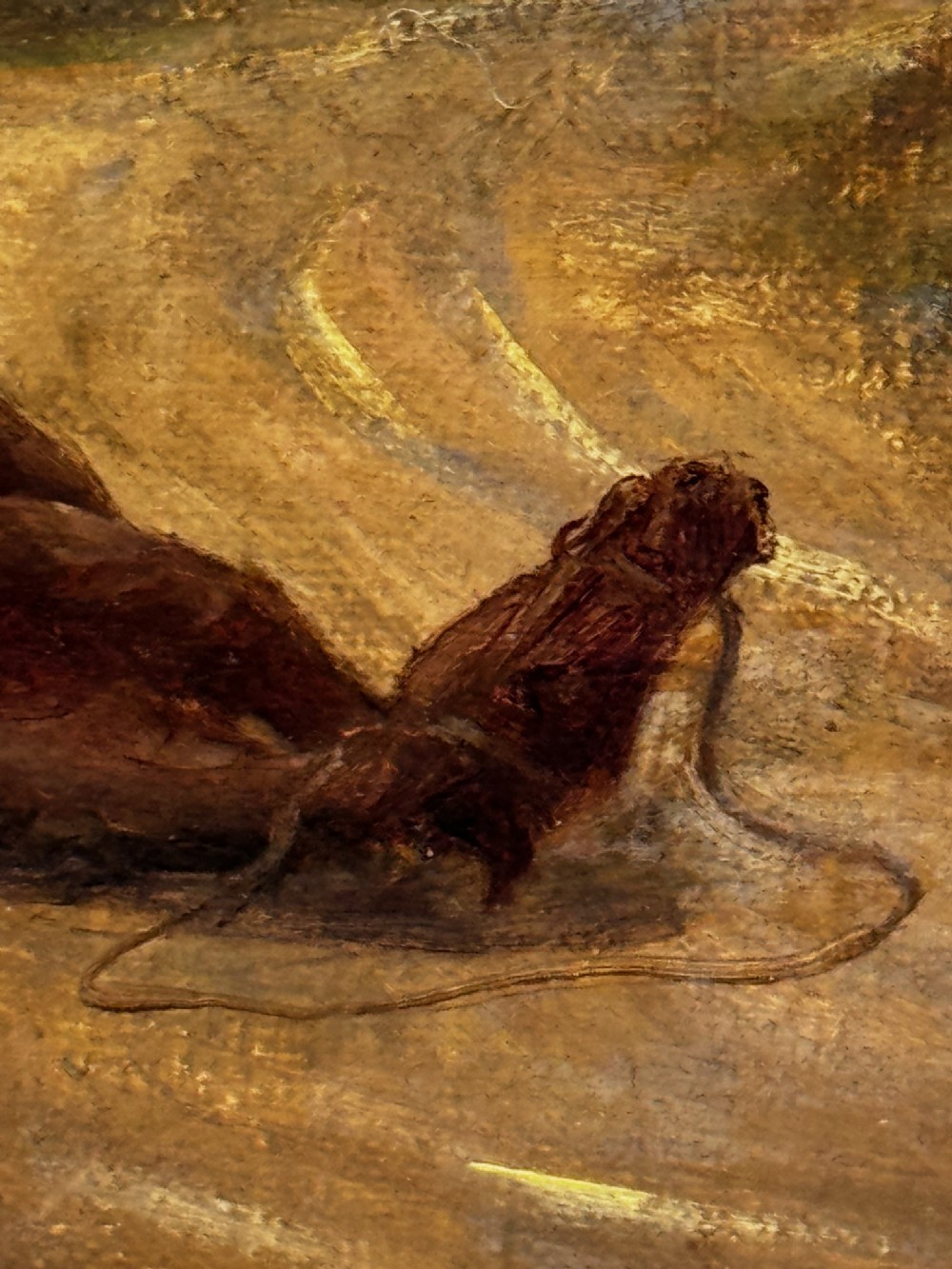
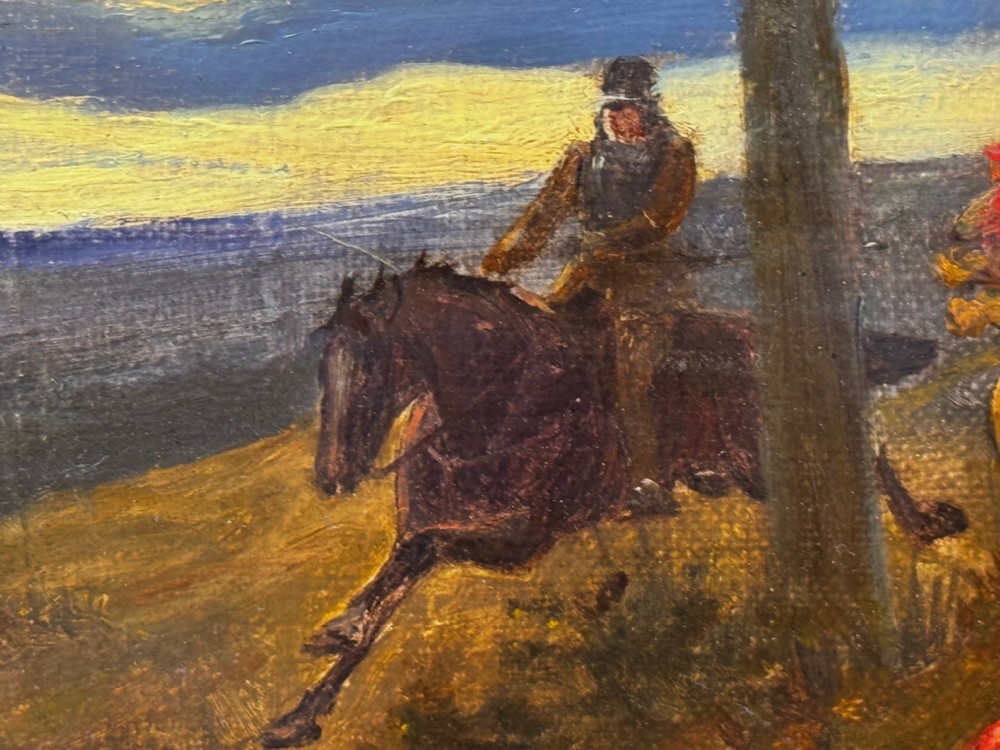
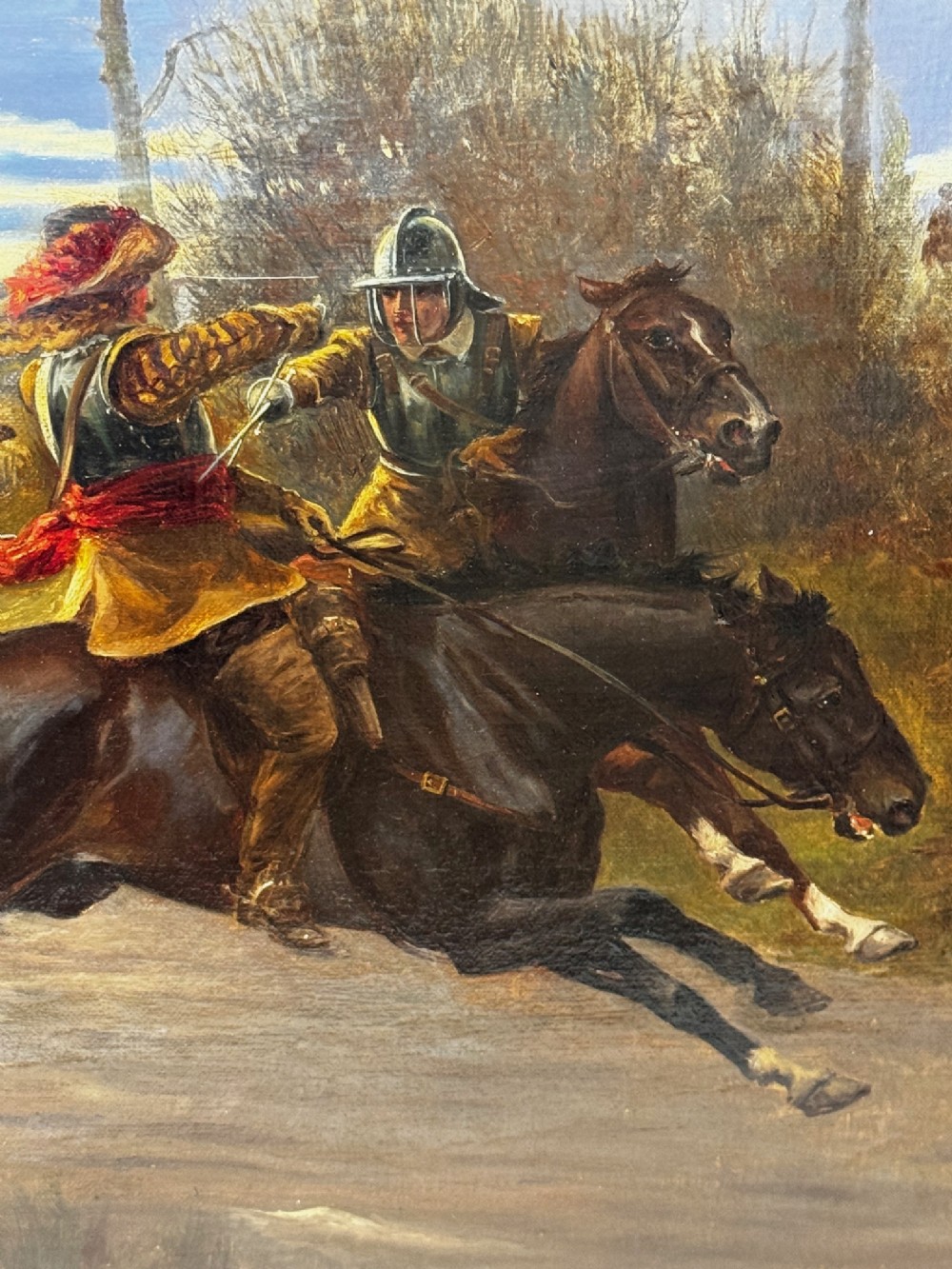
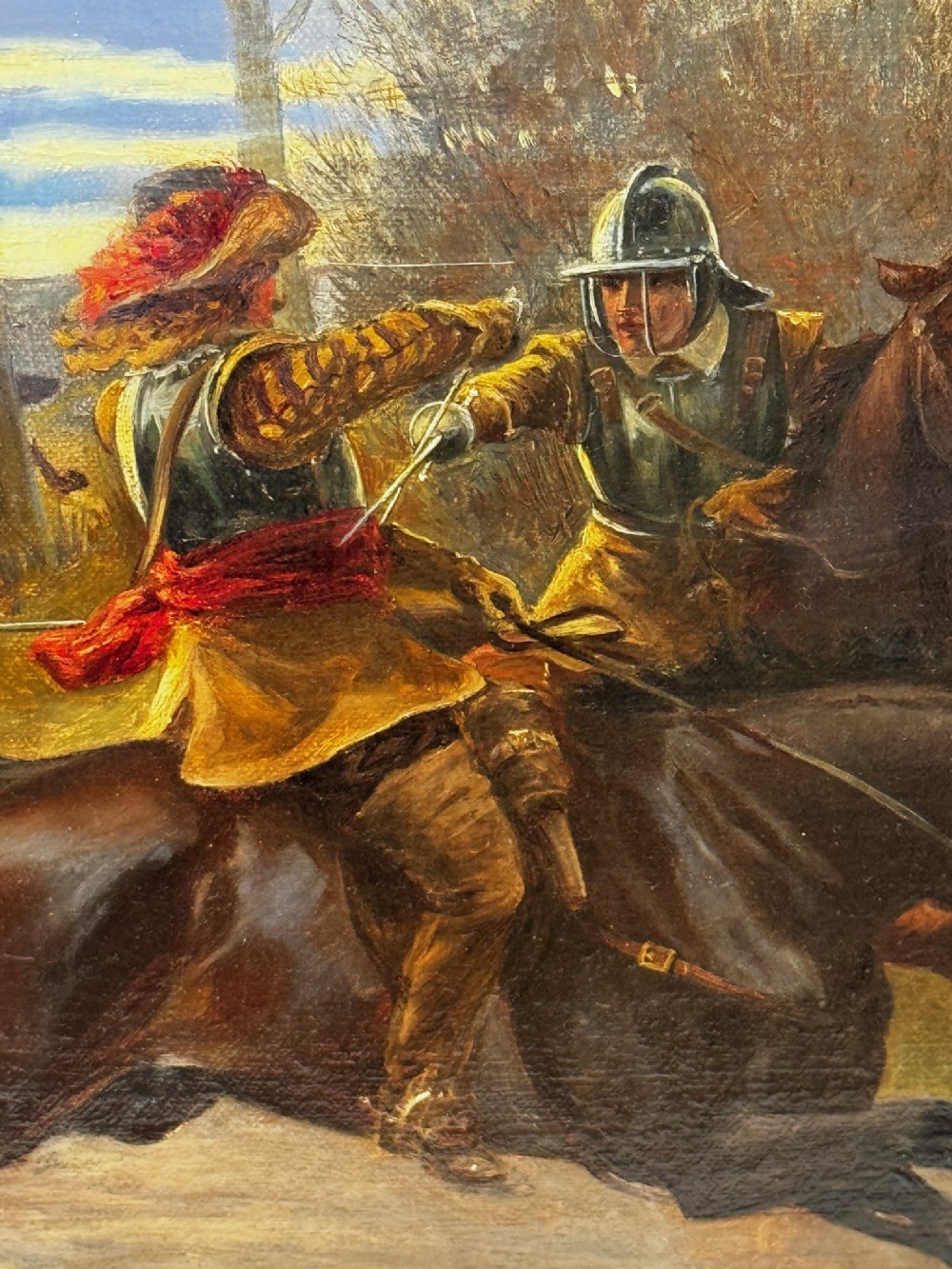
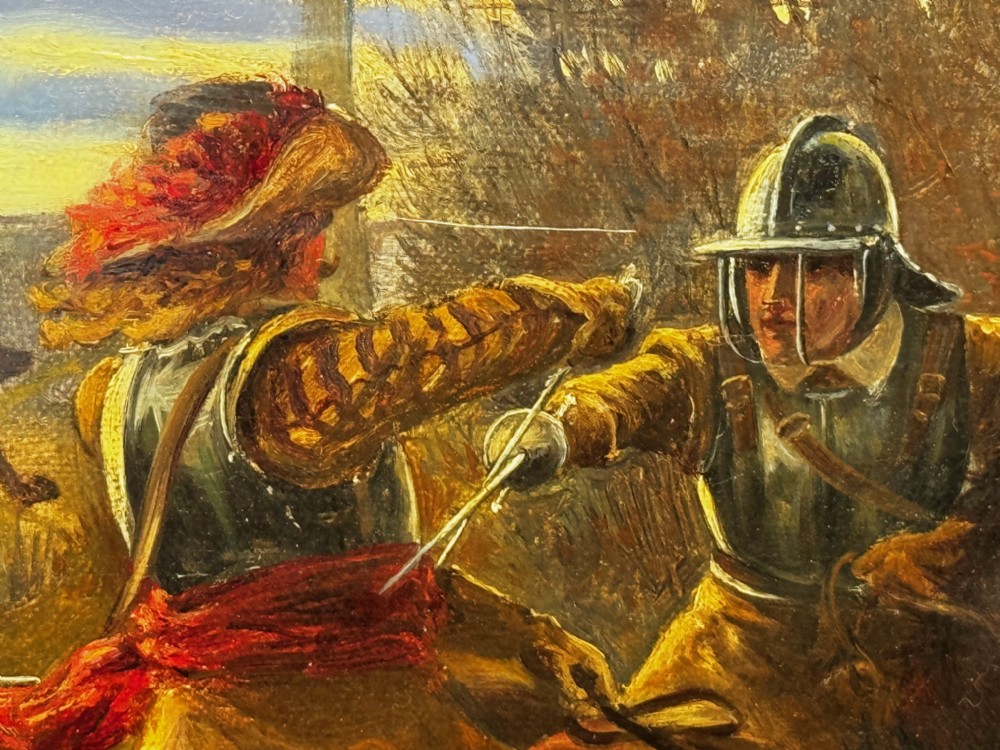
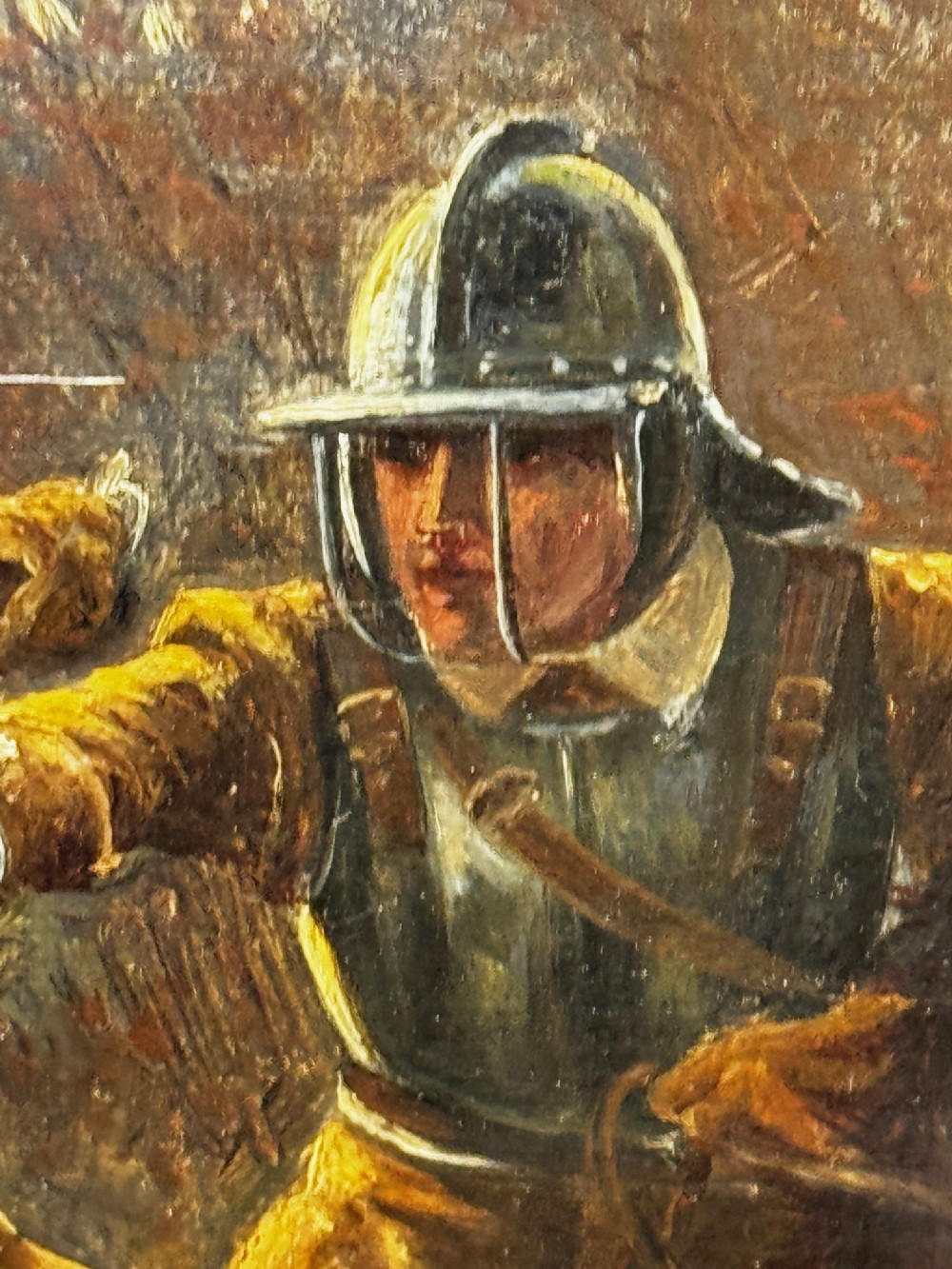
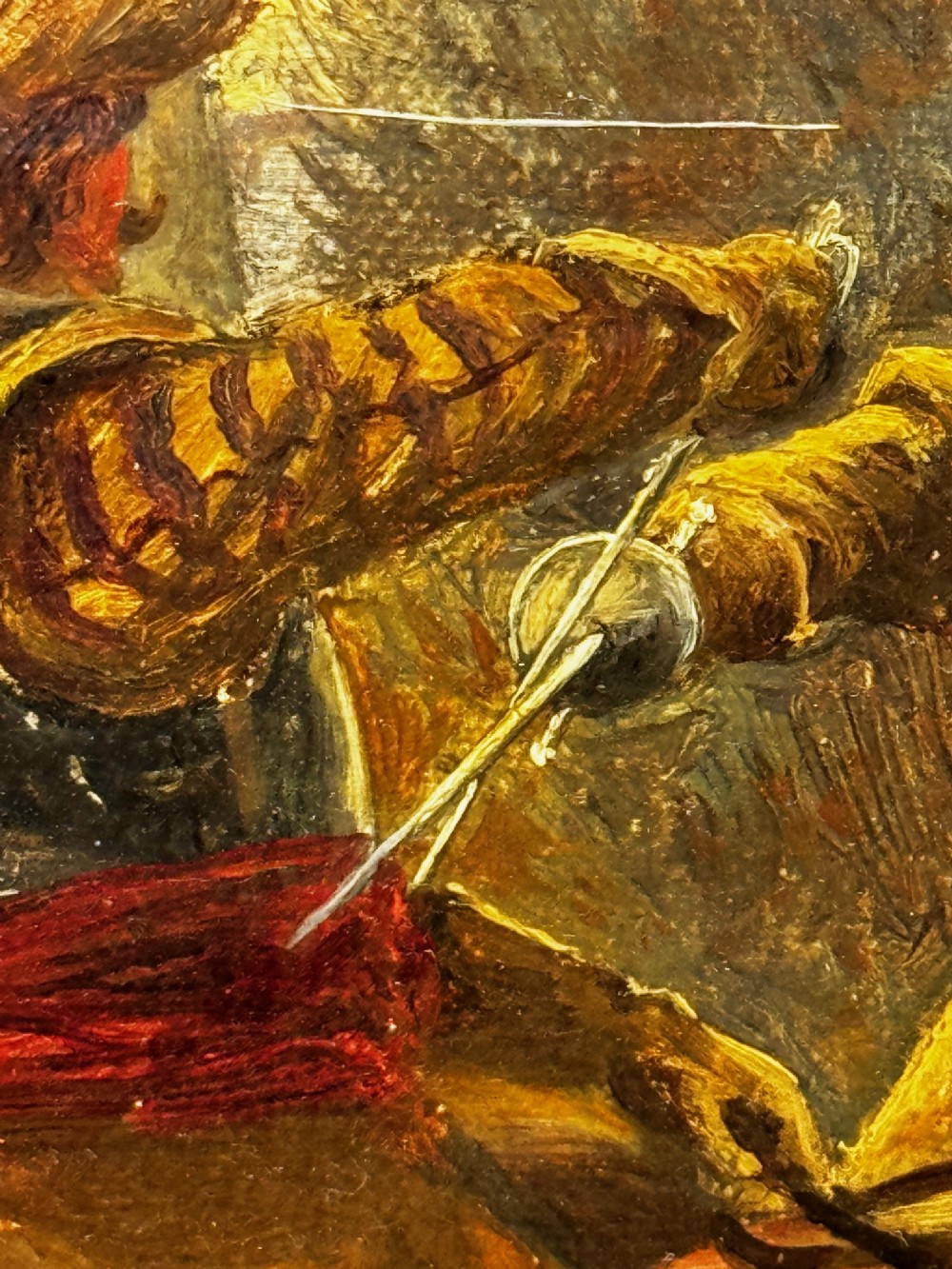
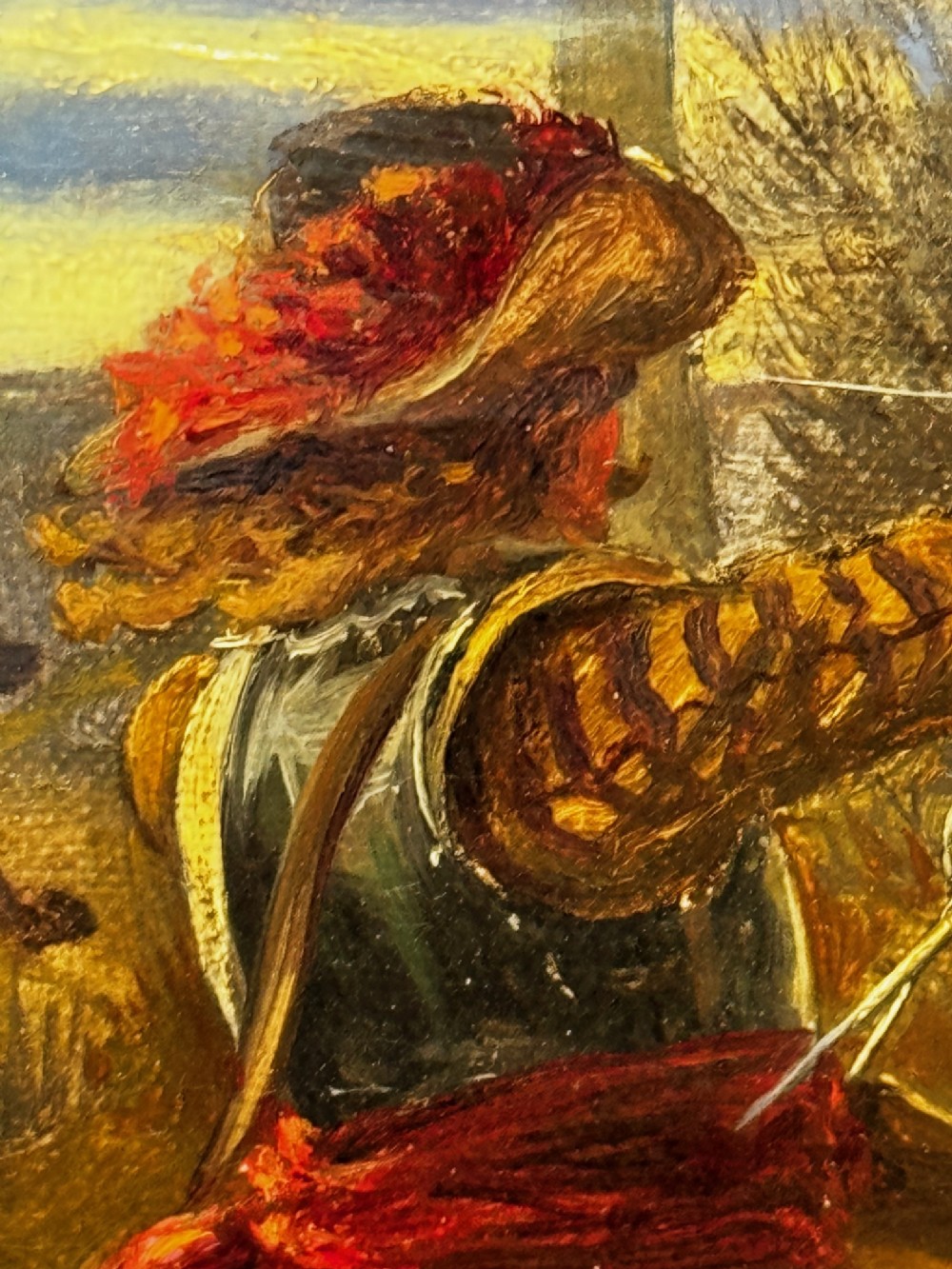
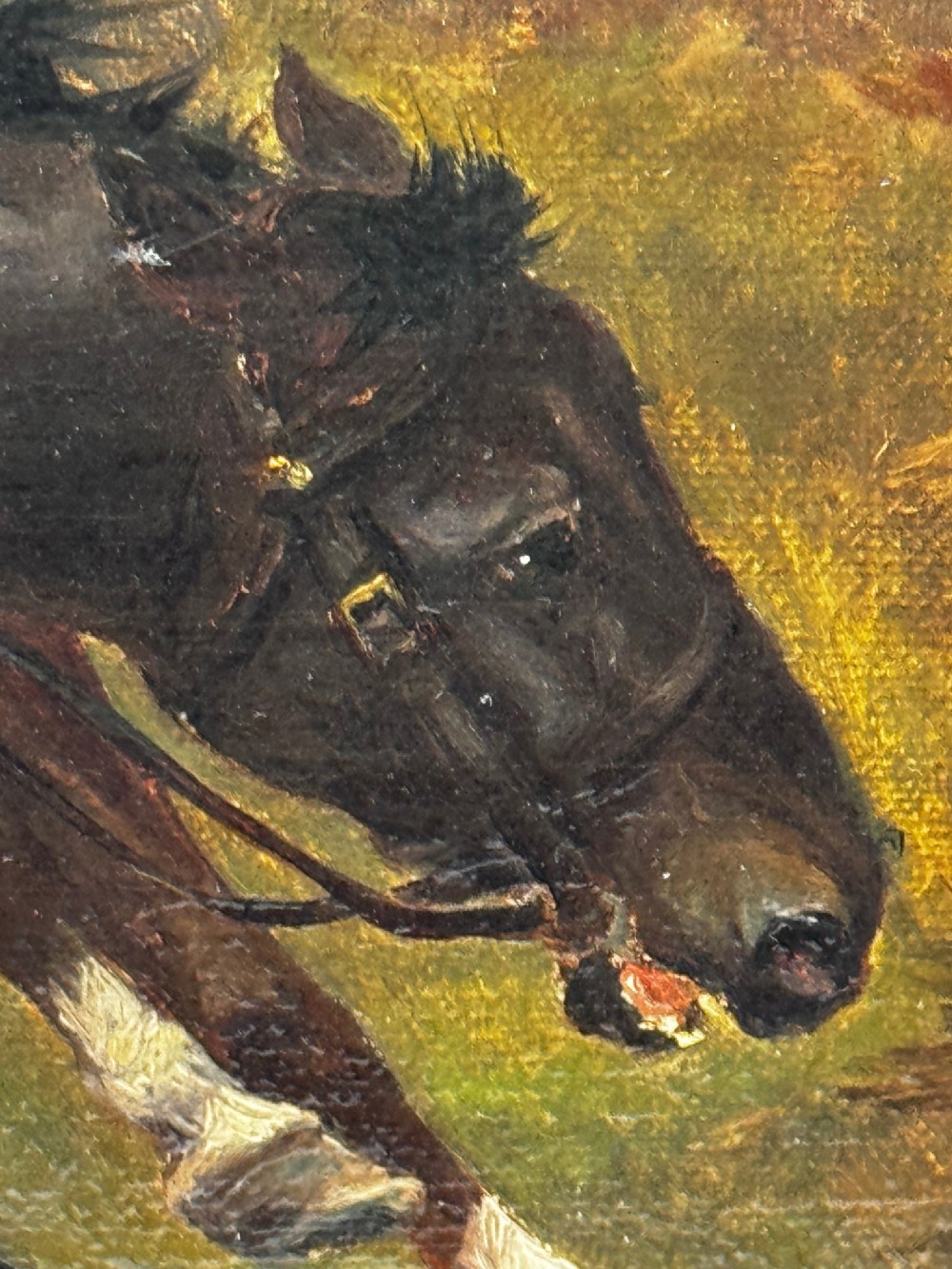
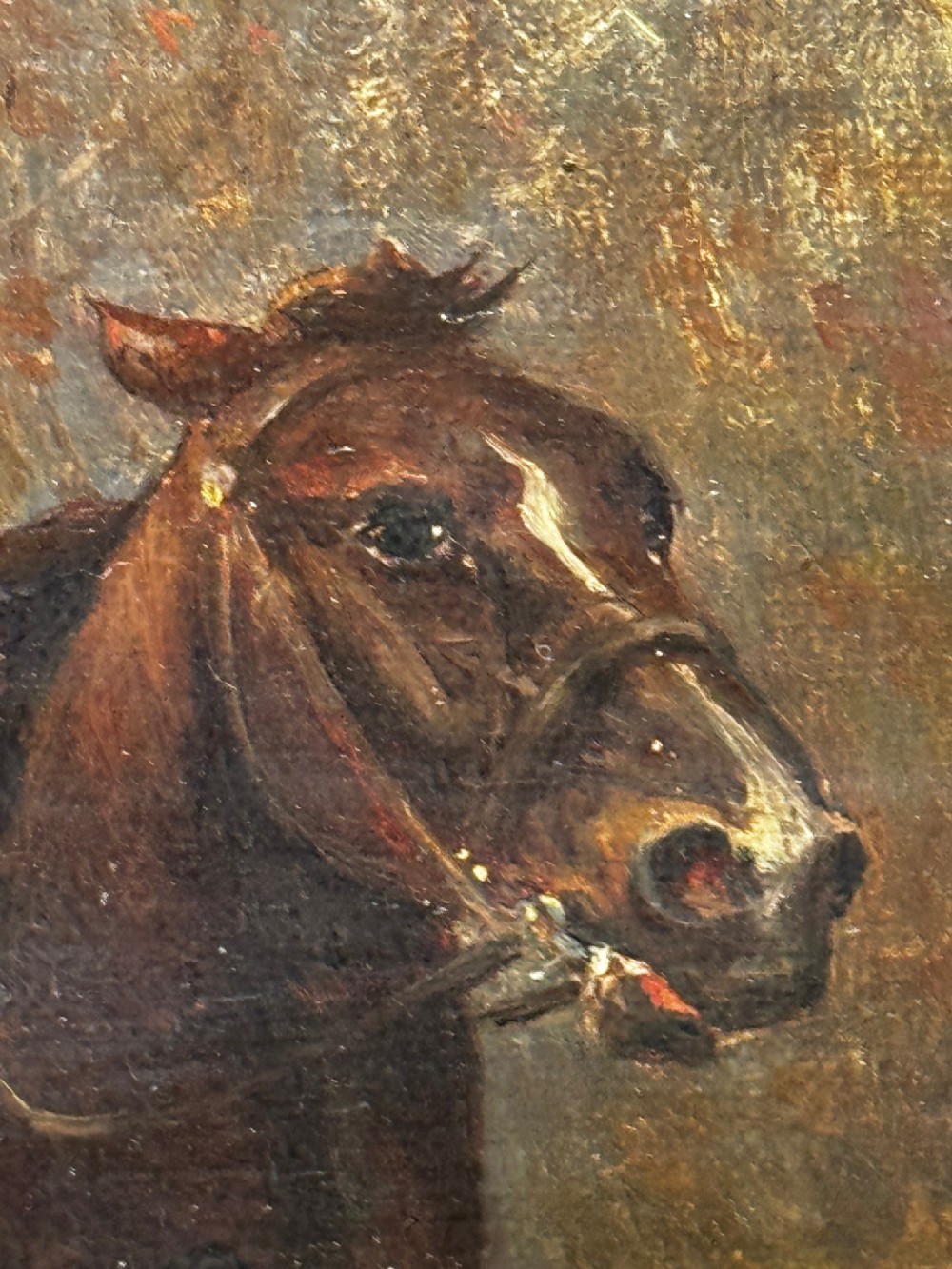
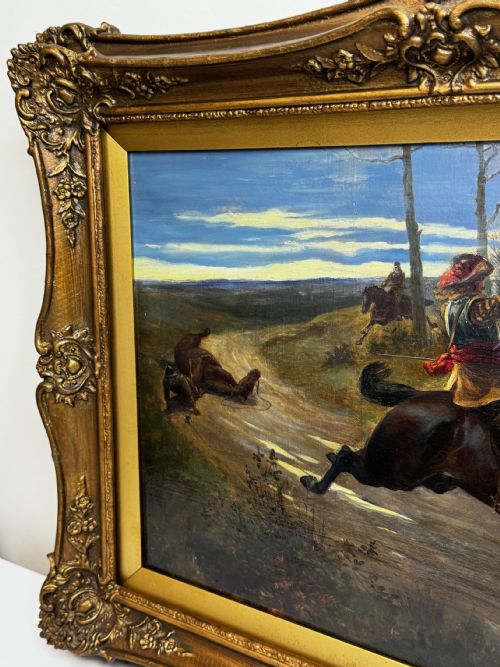
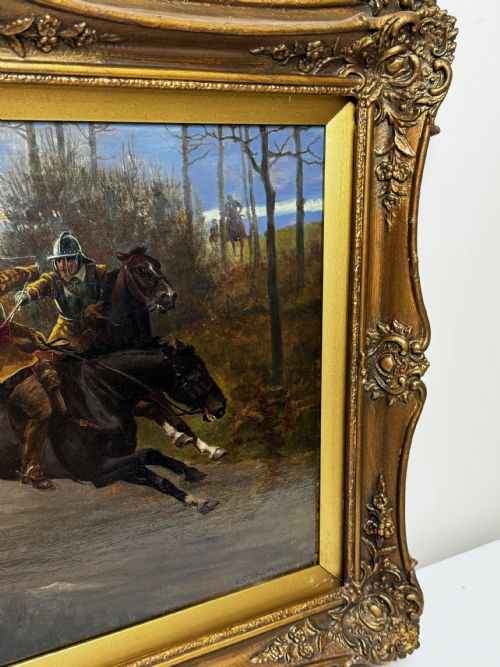
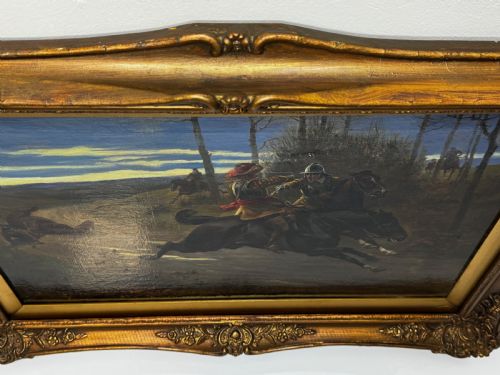
Wearing his traditional fancy Cavalier stylish dashing hat & clothing with breastplate armour. He successfully fought & brought down a Roundhead by killing his horse which lays dead on the road path, the Roundhead is alive getting up and about to retrieve his dropped sword which is in front of him. On either flank more Roundheads on horseback are approaching the sole Royalist, he is brought to your focus as he is in duel sword combat with another Roundhead who wears his traditional lobster helmet & breastplate armour whilst galloping along the meandering path, he has escaped the defeat of the royalist Charles 11 loss at the battle of Worcester which was in 1651. The horses faces have such exceptional intense expressions which you will love.
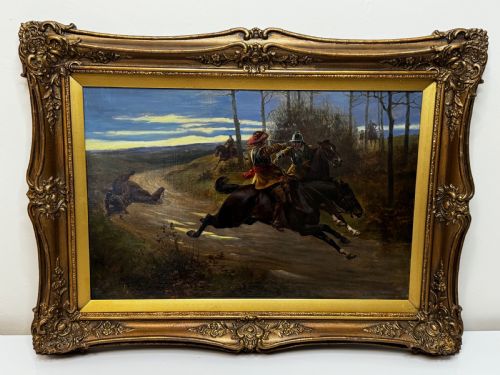
Title “Royalist cavalry on horseback pursued by Roundheads” Skirmish by George Derville Rowlandson
Oil on canvas.
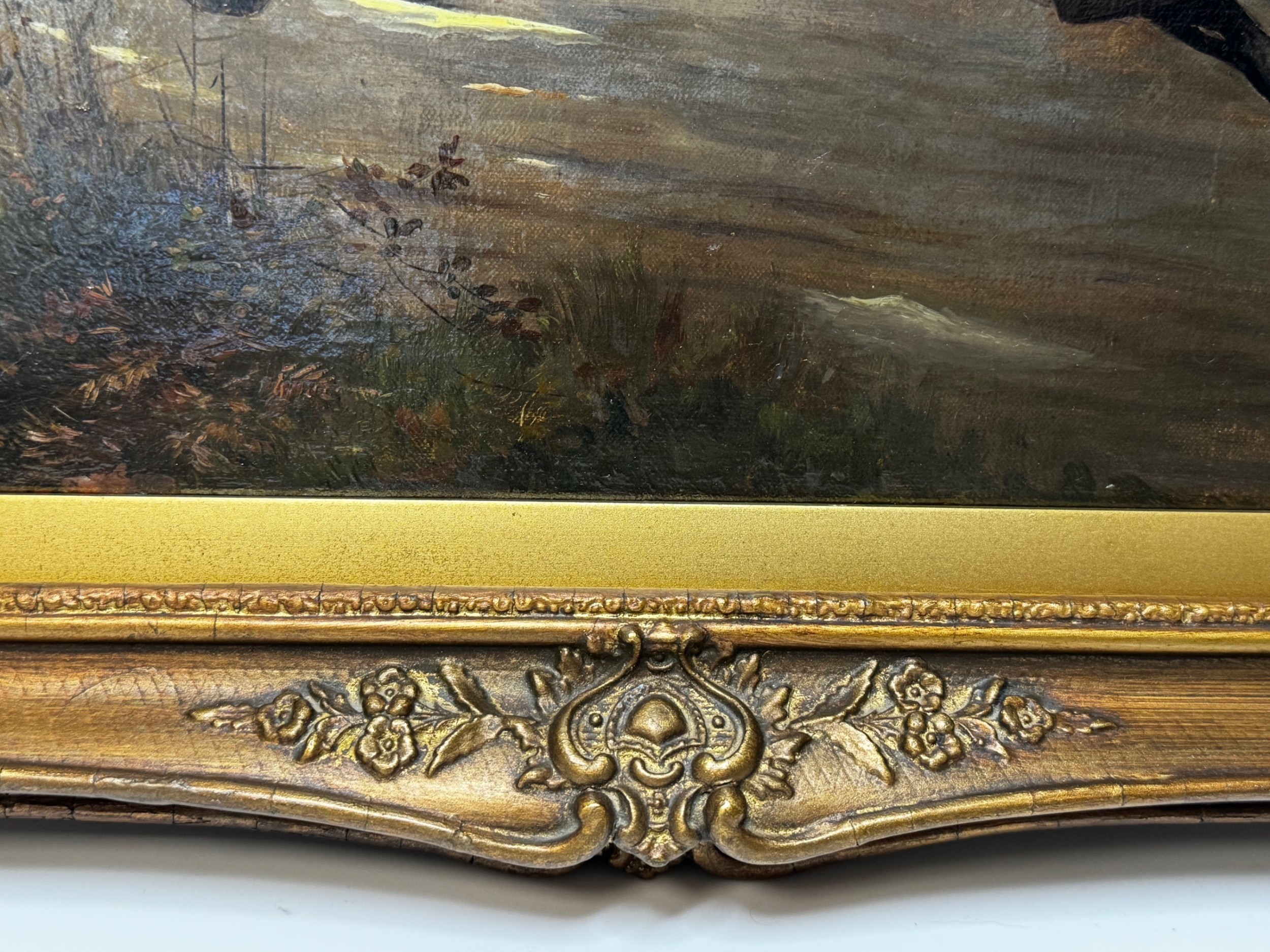
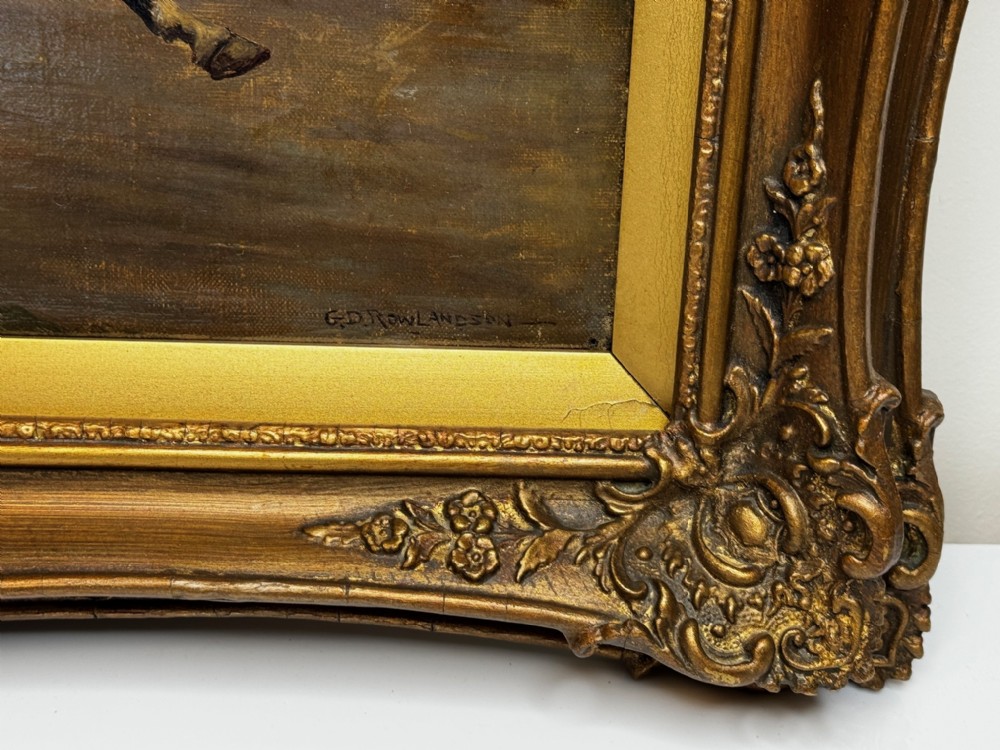
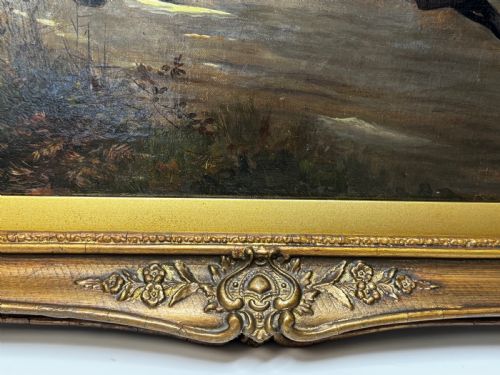
Set in the original traditional decorative gilt frame which enhances this painting even further.
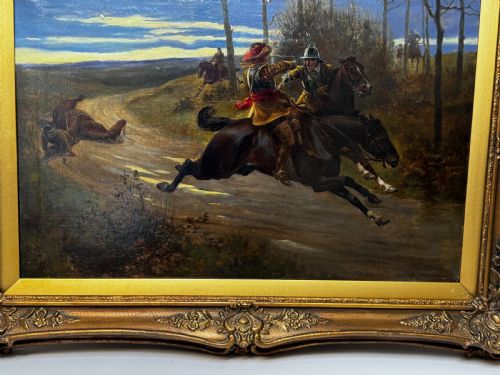
A good display size with the frame being 70 cm wide and 53.5 cm high.
Circa late 19th century Victorian ere,
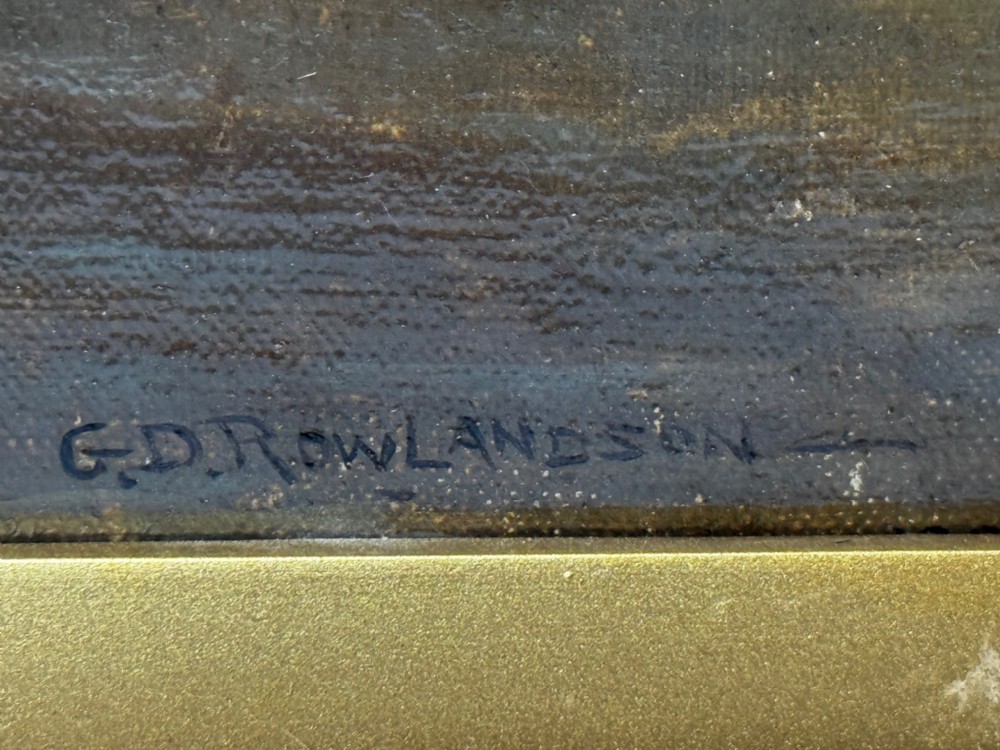
This painting is signed in the bottom corner by the known British artist George Derville Rowlandson.
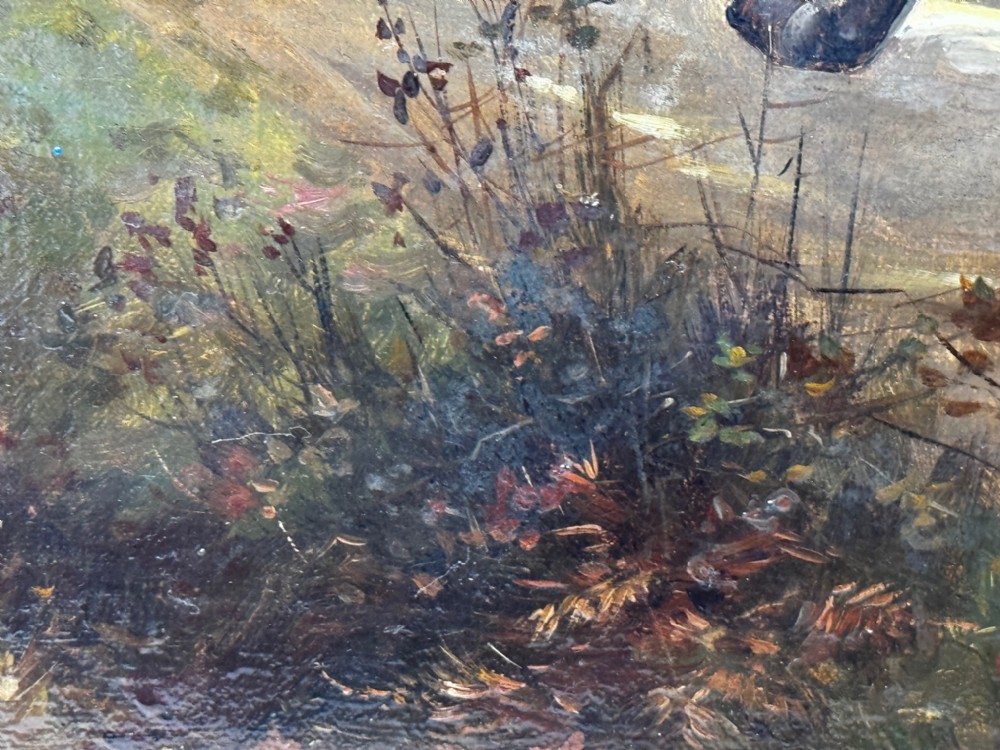
In our opinion this is one of his finer works.
The English Civil War was between Royalists and Parliamentarians in the Kingdom of England from 1642 to 1651. Part of the wider 1639 to 1653 Wars of the Three Kingdoms, the struggle consisted of the First English Civil War and the Second English Civil War. The Anglo-Scottish War of 1650 to 1652 is sometimes referred to as the Third English Civil War. While the conflicts in the three kingdoms of England, Scotland and Ireland had similarities, each had their own specific issues and objectives. The First English Civil War was fought primarily over the correct balance of power between Parliament and Charles I. It ended in June 1646 with Royalist defeat and the king in custody.
However, victory exposed Parliamentarian divisions over the nature of the political settlement. The vast majority went to war in 1642 to assert Parliament's right to participate in government, not abolish the monarchy, which meant Charles' refusal to make concessions led to a stalemate. Concern over the political influence of radicals within the New Model Army like Oliver Cromwell led to an alliance between moderate Parliamentarians and Royalists, supported by the Covenanters. Royalist defeat in the 1648 Second English Civil War resulted in the execution of Charles I in January 1649, and establishment of the Commonwealth of England.
In 1650, Charles II was crowned king of Scotland, in return for agreeing to create a Presbyterian church in both England and Scotland. The subsequent Anglo-Scottish War ended with Parliamentarian victory at Worcester on 3 September 1651. Both Ireland and Scotland were incorporated into the Commonwealth, and Britain became a unitary state until the Stuart Restoration in 1660.
The Battle of Worcester took place on 3 September 1651 in and around the city of Worcester, England and was the last major battle of the 1642 to 1651 Wars of the Three Kingdoms. A Parliamentarian army of around 28,000 under Oliver Cromwell defeated a largely Scottish Royalist force of 16,000 led by Charles II of England.
The Royalists took up defens
Cheshire Antiques Consultant Ltd has dated this Victorian Narrative Oil Painting to the Victorian era.
Source the historic in 17th, 18th, 19th & 20th century fine arts, painting, sculptures & collectibles
You can view the stock and full dealer information on the Cheshire Antiques Consultant Ltd Profile Page
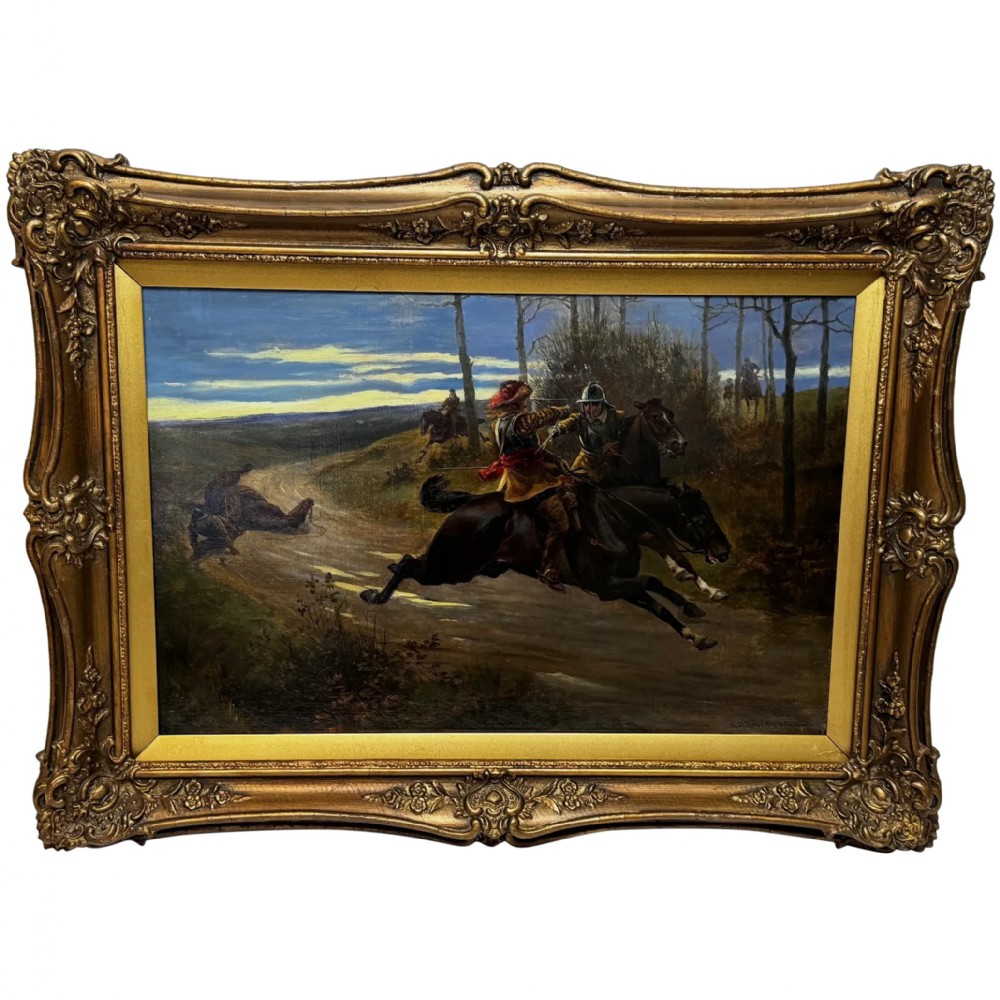
Victorian Oil Painting Civil War Royalist Pursued by Roundheads Escape