




Historical Narrative Painting
Historical narrative painting captures dramatic scenes from literature, myth, and past eras on canvas, offering buyers a window into theatrical storytelling.
Historical Narrative Painting
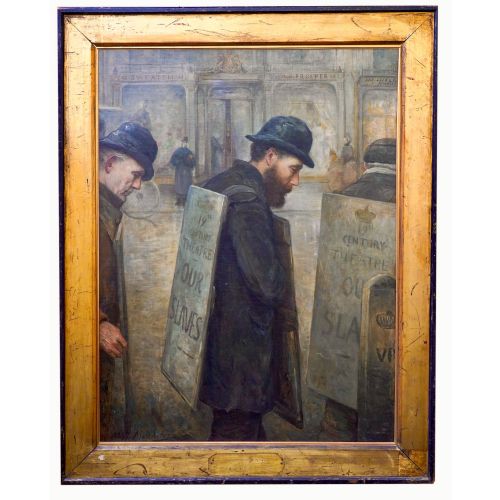
A historical narrative painting depicts a specific moment from history, literature, or domestic genre scenes, capturing human drama within framed artwork. Buyers encounter works ranging from large Victorian social history canvases to seventeenth-century Italian Baroque compositions.
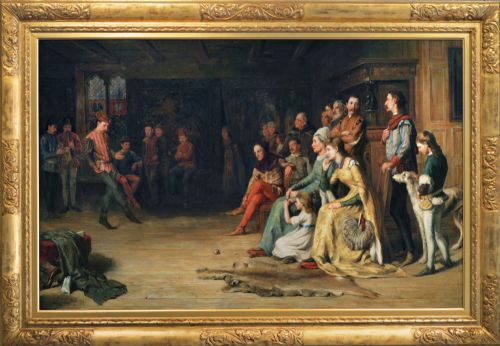
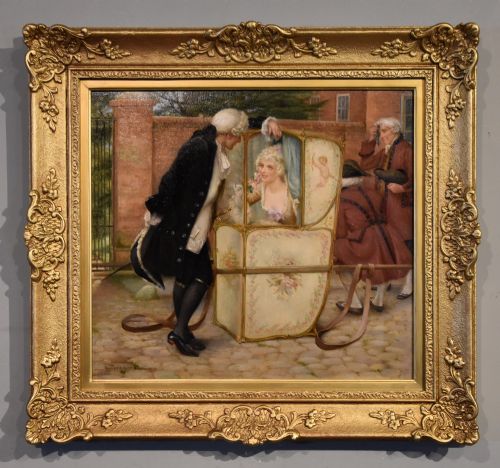
The nineteenth century dominates the selection, particularly Victorian genre paintings and scenes involving cavaliers, domestic interiors, and historical processions. These oils on canvas often portray detailed character interactions and dramatic tension.
Works span from the seventeenth century through to the early twentieth century, incorporating French rococo influences, colonial-American subjects, and watercolour mediums. Oil paint on canvas remains the primary format across the centuries represented.
Materials and technique
Artists built these compositions primarily using oil paint on canvas stretched over wooden frames, occasionally utilising oil on board or paper. Giltwood frames frequently house the paintings, providing an ornate boundary for the historical drama depicted within.
Techniques combine traditional layering of oil pigments to achieve rich colour depth, light play, and texture in drapery and facial expressions. Watercolour and pen and ink drawings also appear, showing finer linear work alongside broader oil strokes.
Historical Narrative Painting Retail Price Guide 2026
Typical asking prices for historical narrative painting among the pieces listed under this phrase on Sellingantiques today, from the lower quarter to the upper quarter. They describe what is for sale here now, not the wider market.
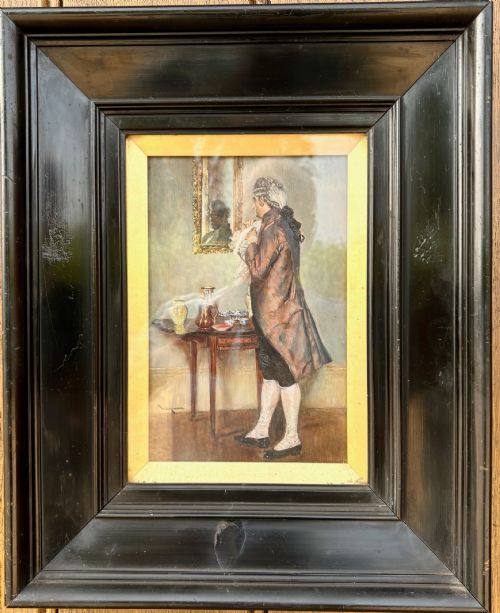
A domestic interior captures a gentleman's shaving ritual abruptly interrupted by his wife.
Assessing quality
Quality rests in the handling of narrative detail, anatomical proportion, and the psychological intensity between figures. Superior works orchestrate complex groups with confident brushwork, whereas lesser examples rely on stiff postures and static composition.
The treatment of light and fabric textures distinguishes accomplished painters from decorative copyists. Well-executed canvases render velvet, metal, and flesh with distinct visual weight and atmospheric depth.
Felix Stone Moscheles·James Hamilton·Delapoer Downing·Thomas Hicks·George Bernard O'Neill·Robert Alexander Hillingford·Edwin Hughes·Alfred Holst Tourrier·John A. Houston·Pietro D'asaro·Andrea Celesti·Frank Moss Bennett·Rolinda Sharples·Frank Dadd·Christoffel Bisschop·Walter Dendy Sadler·James Bertrand·George Cattermole·Arthur David McCormick·Jules Girardet·Abraham Cooper
The Historical Narrative Painting Glossary
- Genre painting
- Depiction of aspects of everyday life by subjects from ordinary life, often imbued with moral or narrative subtext. These scenes form a substantial portion of historical narrative art.
- Cavalier
- A supporter of King Charles I during the English Civil War, frequently depicted in seventeenth-century attire with long hair, hats, and boots. They are a recurring subject in nineteenth-century historical art.
- Baroque
- An exuberant style of architecture, art, and music prevalent in Europe from the early seventeenth until the mid-eighteenth century. It is characterised by dramatic use of light, shadow, and intense emotion.
- Giltwood
- Wood that has been covered with a thin layer of gold leaf or gold paint. Many historical paintings retain their original giltwood frames.
Historical Narrative Painting: Frequently Asked Questions
What subjects do these paintings show?
The canvases depict dramatic episodes from history, classical literature, and domestic genre scenes. Subjects include royal messengers, eloping couples, literary adaptations, and seventeenth-century civil war encounters.
Artists drew inspiration from historical events, theatrical plays, and everyday human drama. Each piece freezes a specific narrative moment for the viewer.
How should I frame an oil painting?
Many historical paintings come in their original giltwood or moulded wooden frames, which complement the period aesthetic. Maintaining the historic frame preserves the object's integrity and visual context.
If framing an unmounted canvas, choose a period-appropriate moulding that respects the depth and scale of the work. Avoid modern minimalist frames that clash with nineteenth-century or baroque aesthetics.
How do I identify the period of a painting?
Dating relies on costume details, artistic style, framing materials, and stretcher construction behind the canvas. Nineteenth-century Victorian works often feature distinct social realism or theatrical costuming.
Signatures, dates inscribed on the canvas or reverse, and artist records provide definitive chronological anchors. Stylistic markers like seventeenth-century chiaroscuro also signal the era of execution.
Are these works always painted on canvas?
While oil on canvas is the predominant medium across the centuries, artists also utilised wood panels, paper, and board. Watercolour and pen and ink drawings appear alongside traditional oil paintings.
Support materials evolved with availability, but stretched canvas remained the preferred choice for large historical narrative compositions. Each support type requires specific handling and environmental controls.