





Giltwood Narrative Painting
These giltwood narrative painting works bring together Victorian and nineteenth-century canvas scenes within ornate frames, offering collectors a glimpse into historical and domestic tales.
Giltwood Narrative Painting
When you search for a giltwood narrative painting, you encounter oil paintings on canvas depicting historical genres, domestic interiors, and classical subjects. The pieces originate from the nineteenth century, including Victorian and French school works housed in gold leaf wooden frames.
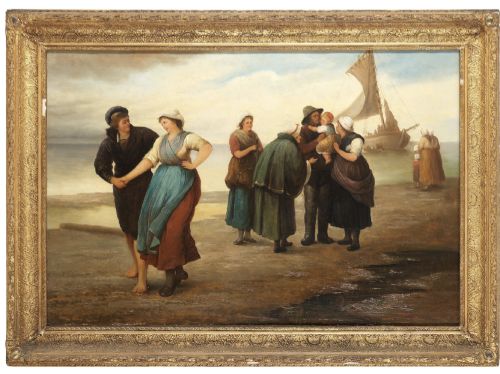
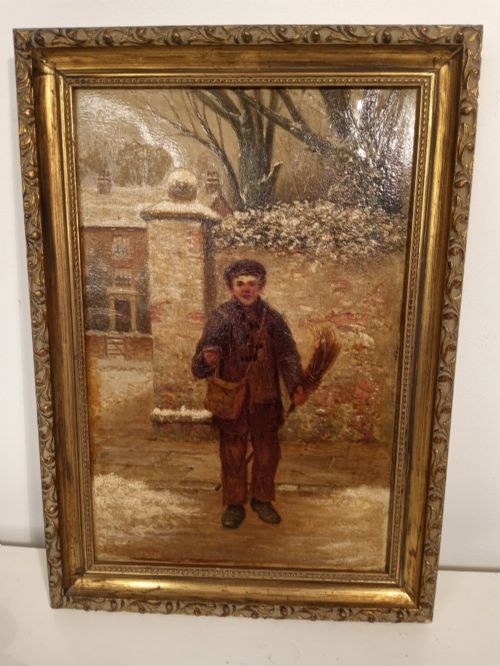
You meet oil paintings showing figures returned from voyages, chimney sweepers, hunting scenes, and literary or mythological subjects like a Nereid. The visual storytelling defines these fine art paintings, each telling a distinct human or classical story.
The physical presence relies heavily on the giltwood frame, which surrounds the canvas and completes the decorative object. These framed oil paintings date from the Victorian era and the broader nineteenth century, reflecting academic, genre, and classicist styles.
How they were made
Makers applied oil paint to canvas supports, building up rich compositions through layered pigments and brushwork. Artists captured detailed human expressions and narrative actions within historical genre and classical paintings.
The surrounding frames consist of wood treated with gold leaf to create the characteristic giltwood finish. This gilding technique frames the oil paintings with ornate metallic lustre, typical of nineteenth-century framing methods.
Listings feature oil paint on canvas supports enclosed within giltwood frames, representing nineteenth-century academic, French school, and Victorian genres.
What varies in quality
The refinement of brushwork and the expressive depth of the figures distinguish different works within this group. Academic precision and compositional balance separate highly accomplished narrative scenes from simpler renderings.
The craftsmanship of the giltwood frame also shapes the overall quality of the piece, with intricate moulding and well-preserved gold leaf enhancing the visual impact of the canvas within.
John Arthur Lomax·Alfred Holst Tourrier·JOHN HENRY DELL·William Edward Frost·Edmund Alphonse Andre·Alexandre Decamps·Francesco Bergamini
The Giltwood Narrative Painting Glossary
- Giltwood
- Wood decorated with gold leaf or gold paint to create a lustrous metallic surface. This material frequently frames nineteenth-century oil paintings.
- Narrative painting
- Artwork that tells a story, depicting a specific moment from history, literature, myth, or daily life. These oil paintings focus on human interaction and dramatic action.
- Oil on canvas
- Pigments mixed with drying oil applied to a stretched woven fabric support. This medium serves as the primary base for fine art paintings from the Victorian period.
- Victorian
- Pertaining to the reign of Queen Victoria, spanning the nineteenth century. This period produced distinct academic, genre, and historical oil paintings.
Giltwood Narrative Painting: Frequently Asked Questions
What is a giltwood narrative painting?
A giltwood narrative painting is an oil painting on canvas that tells a story, housed in a gold leaf wooden frame. These nineteenth-century works depict historical events, domestic scenes, and classical figures.
The category encompasses Victorian genre paintings, French school pieces, and academic works. The ornate frame forms an integral part of the finished artwork.
How were these paintings displayed?
These oil paintings were displayed primarily in nineteenth-century domestic interiors and galleries, framed in giltwood to catch the light. The heavy frames served to elevate the status of the narrative artwork on the wall.
Collectors hung them in reception rooms and parlours where guests could study the narrative details and brushwork up close.
How do I date a Victorian oil painting?
Dating a Victorian oil painting involves examining the canvas, the pigment style, and the biographical dates of the artist. Many pieces carry signatures, dates, or stylistic markers characteristic of the nineteenth century.
The framing style and the construction of the wooden stretcher also provide clues to the period of creation.
How do I care for giltwood frames?
Giltwood frames require gentle dusting with a soft, dry brush to protect the delicate gold leaf surface. Moisture and chemical cleaners damage the historic gilding and wood beneath.
Keeping the paintings away from direct sunlight and stable humidity levels preserves both the canvas and the giltwood frame.