


Yew Windsor Armchair
When you sit in a yew windsor armchair, you connect directly with centuries of English provincial woodworking tradition.
Yew Windsor Armchair
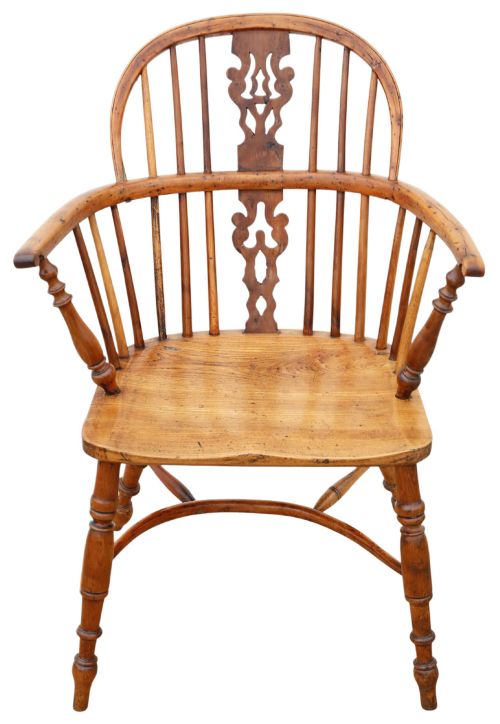
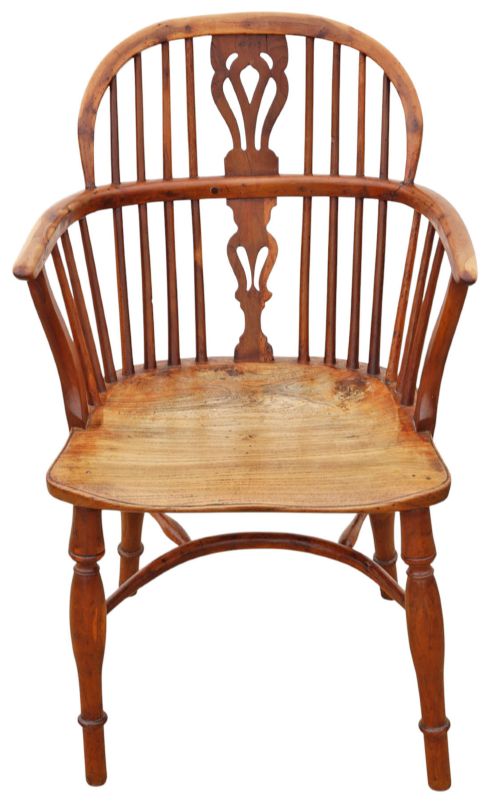
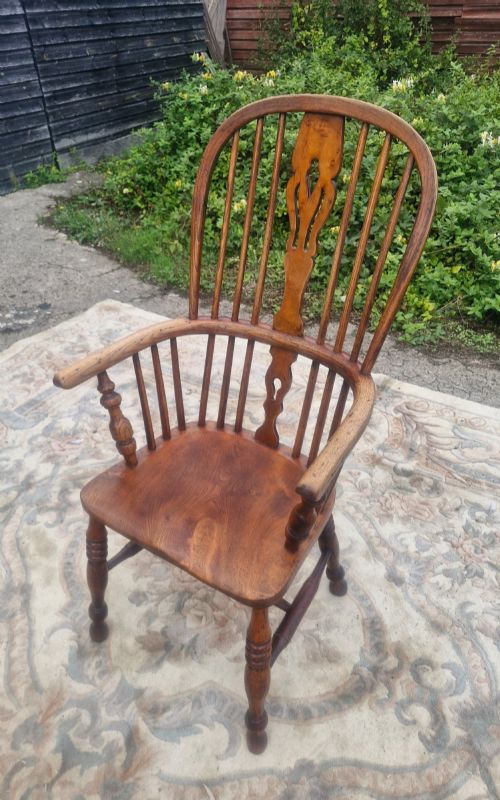
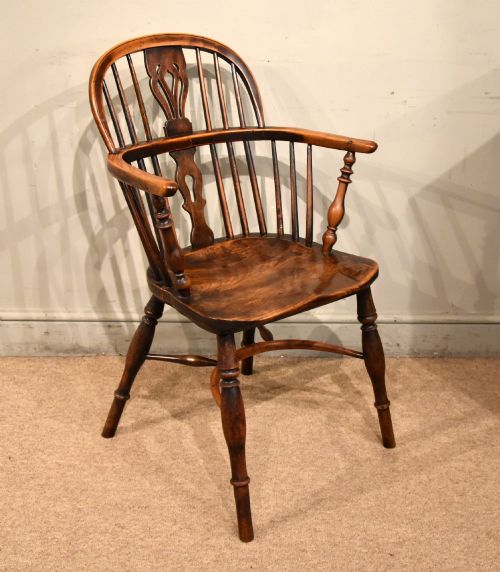
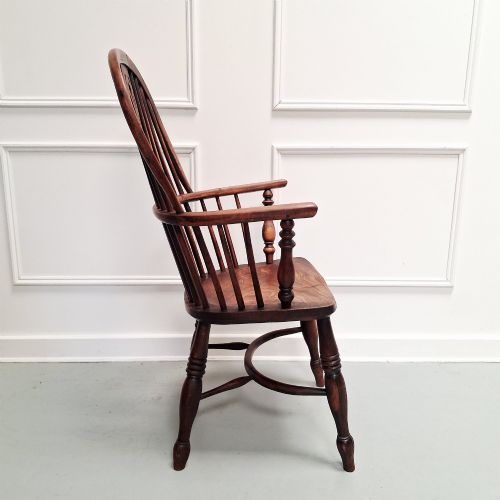
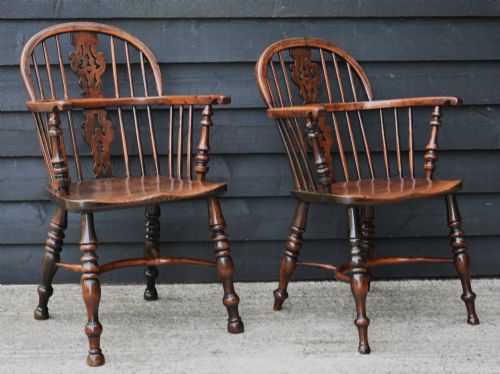
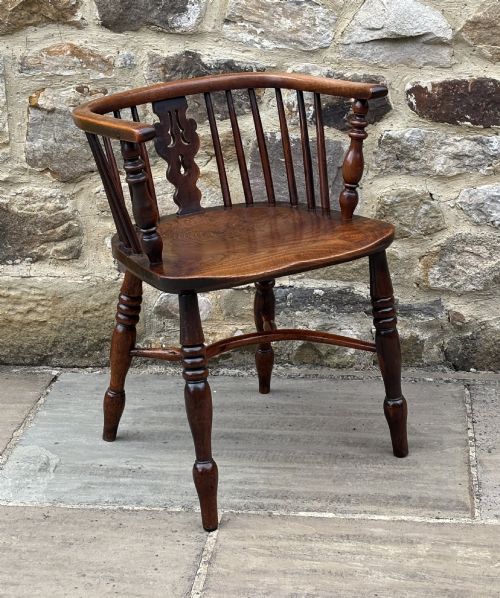
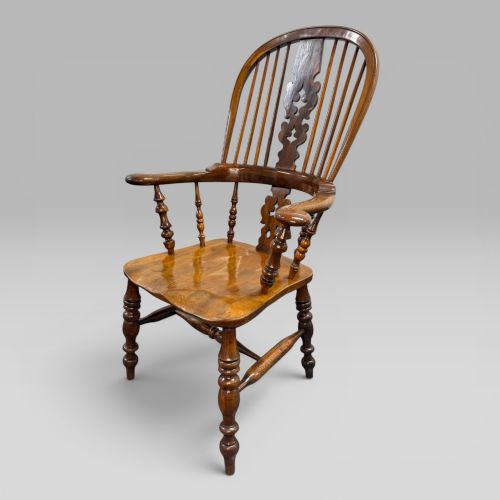
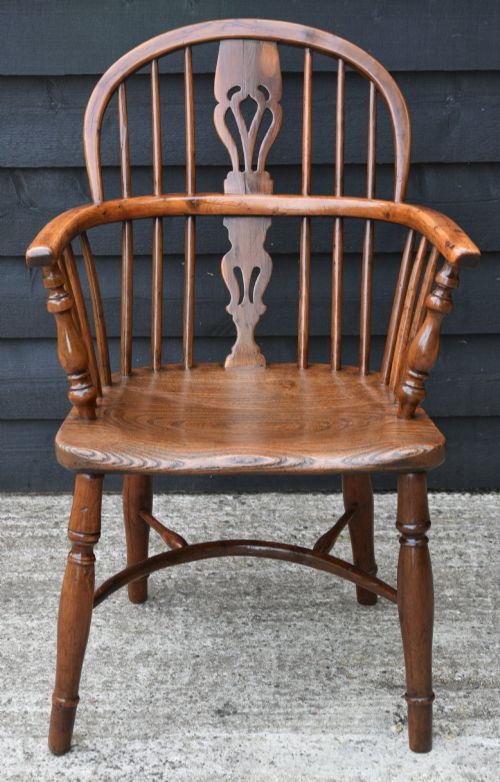
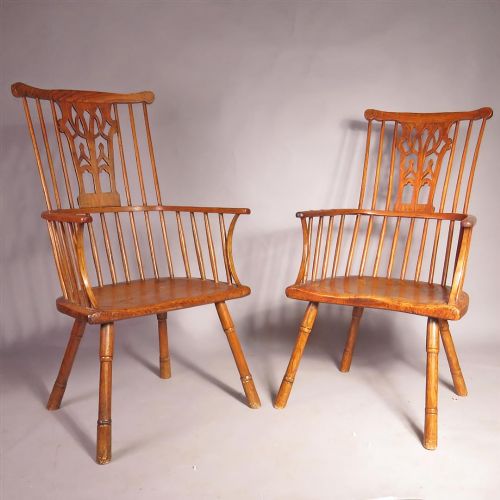
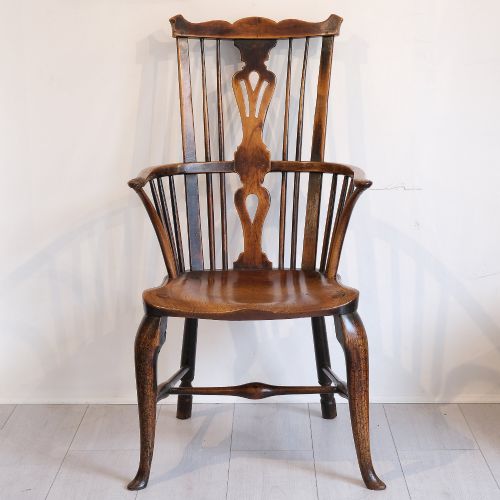
A yew windsor armchair is a distinct form of traditional English seating where individual spindles and legs are socketed directly into a solid wooden seat. These chairs bridge the gap between utilitarian country furniture and sophisticated domestic seating.
Most pieces seen here originate from the eighteenth and nineteenth centuries, spanning Georgian and Victorian periods. The commonest version combines a richly figured yew wood upper section with a durable elm seat.
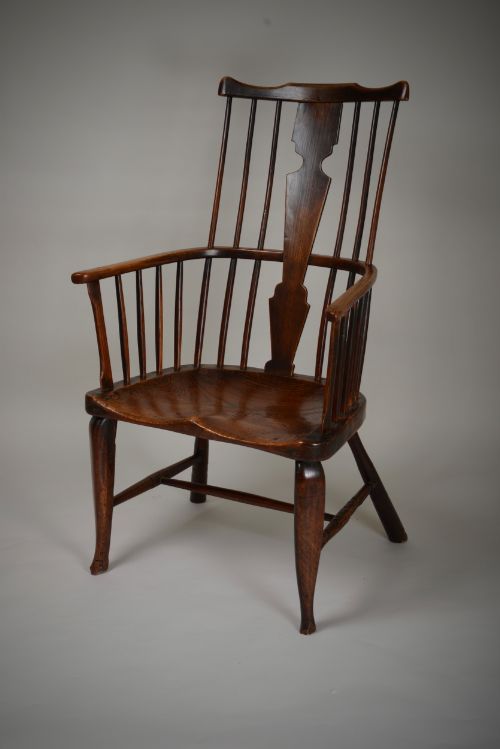
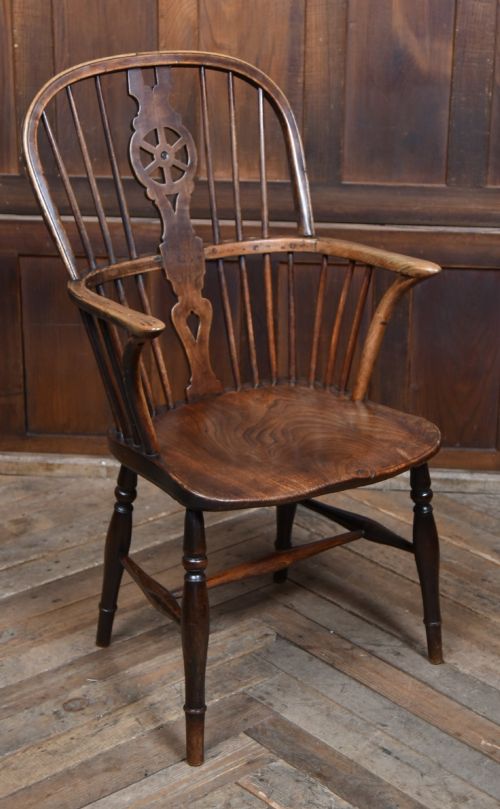
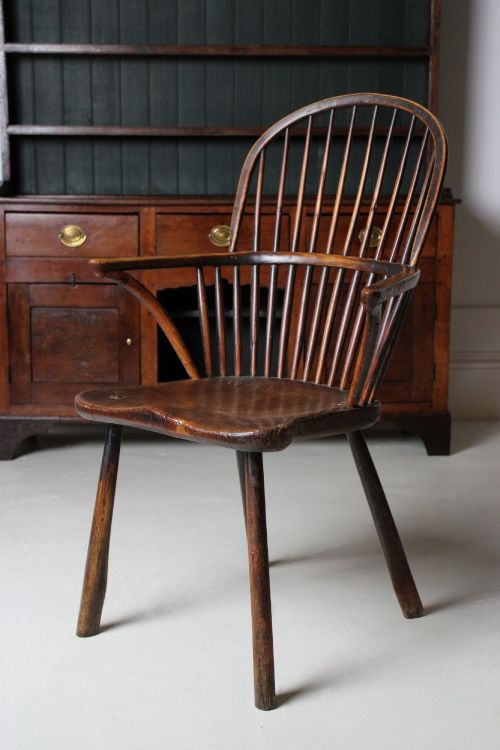
Regional variations include high back, low back, comb back, and hoop back designs, often featuring characterful stylistic traits associated with the Thames Valley or Nottinghamshire.
How they were made
Traditional makers relied on a combination of green woodworking techniques and seasoned timbers, turning spindles on a pole lathe and steam-bending flexible woods for the bow and arm rails. Elm was selected for the solid plank seat because its interlocking grain resisted splitting when legs and spindles were driven in.
Yew wood was prized for its warm figuring and strength, used extensively for the arched backs and arm supports. Secondary timbers such as ash, beech, and fruitwood appear frequently in the underframes and structural stretchers.
Yew Windsor Armchair Retail Price Guide 2026
Typical asking prices for yew windsor armchair among the pieces listed under this phrase on Sellingantiques today, from the lower quarter to the upper quarter. They describe what is for sale here now, not the wider market.
Listings feature regional variations including Thames Valley and Nottinghamshire chairs, utilising elm, ash, and figured yew wood.
What varies in quality
The distinction between ordinary and exceptional chairs rests upon the depth of the timber figuring and the grace of the turning work. Well-proportioned arm bow curves and finely tapered spindles demonstrate superior craftsmanship.
Original structural integrity and surface patination dictate desirability, with untouched waxed finishes preferred over heavily restored surfaces. The presence of a crinoline stretcher or stamped maker mark elevates a piece above standard provincial output.
J Spencer·Gabbitass Worksop·John Brand of Sleaford·Robert Prior
The Yew Windsor Armchair Glossary
- Crinoline stretcher
- A curved underframe connecting the legs of a Windsor chair that resembles a hoop skirt, providing substantial structural rigidity. This feature is particularly sought after by collectors of early pieces.
- Comb back
- A Windsor chair style where the vertical back spindles extend upward into a horizontal crest rail resembling the teeth of a comb. This form frequently dates to the eighteenth century.
- Hoop back
- A continuous steam-bent wooden bow that forms both the backrest and the arm supports in a single fluid curve. It offers both resilience and ergonomic comfort.
- Vernacular
- Furniture made by local provincial craftsmen using regional traditions and readily available local timbers rather than following strict metropolitan pattern books. These pieces reflect the practical needs of rural domestic life.
- Carver
- A traditional term for an armchair designed to match a set of dining chairs, usually placed at the head of a table. In Windsor seating, it denotes a chair featuring armrests.
Yew Windsor Armchair: Frequently Asked Questions
What is a yew windsor armchair?
A yew windsor armchair is a traditional wooden seat featuring a solid carved timber saddle-seat into which legs and back spindles are wedged directly. It combines regional English craftsmanship with distinct structural framing.
The use of yew wood for the upper framework provides a striking decorative grain, paired commonly with a sturdy elm seat for everyday domestic durability.
How do I date a windsor chair?
Dating relies on examining the construction methods, wood types, and stylistic evolution of the backrest. Early examples often feature comb backs and crinoline stretchers, while later Victorian versions tend toward high hoop backs and heavier turned underframes.
Tool marks left by adzes and drawknives on the underside of the seat offer further clues to the period of manufacture.
Were these chairs used at dining tables?
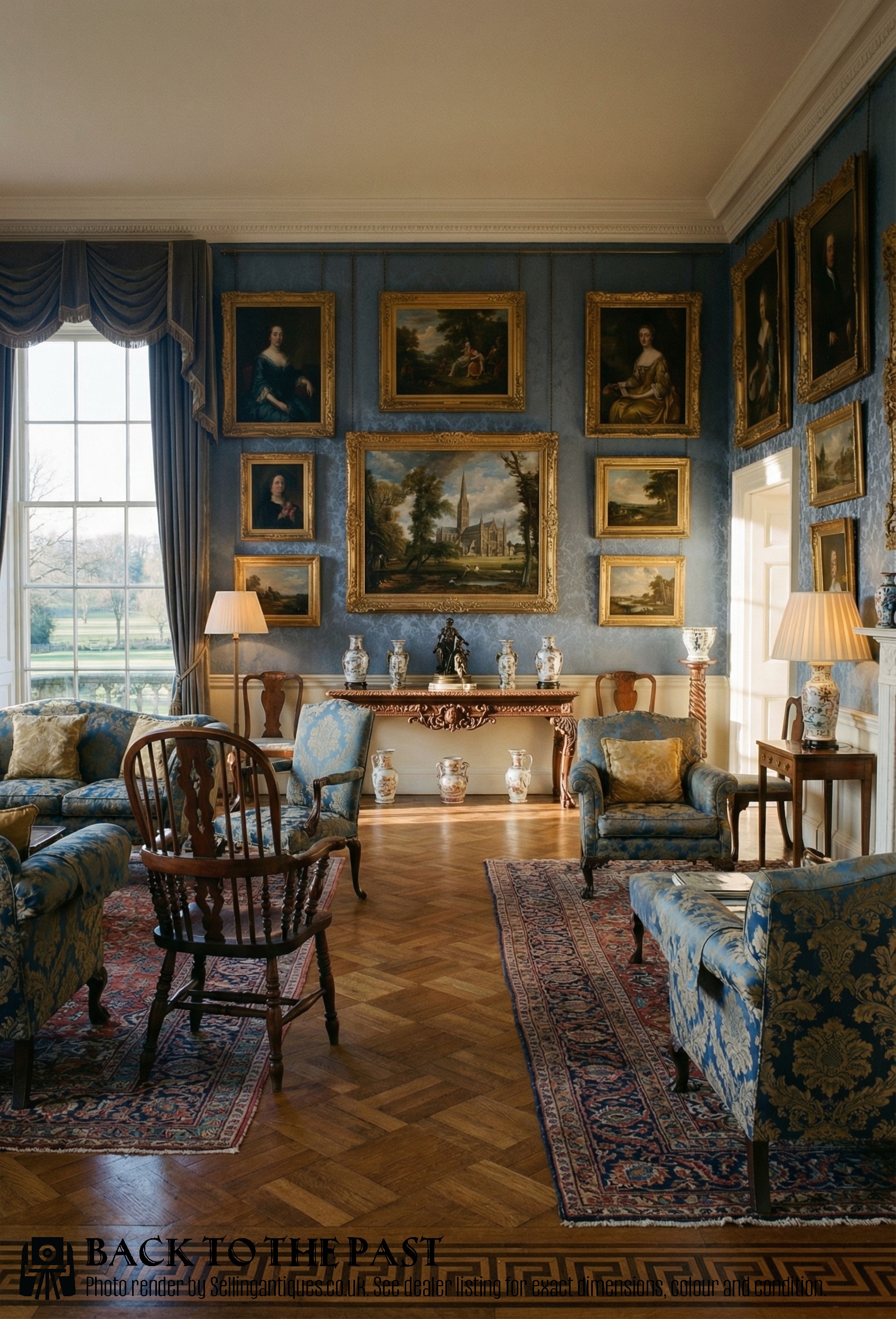
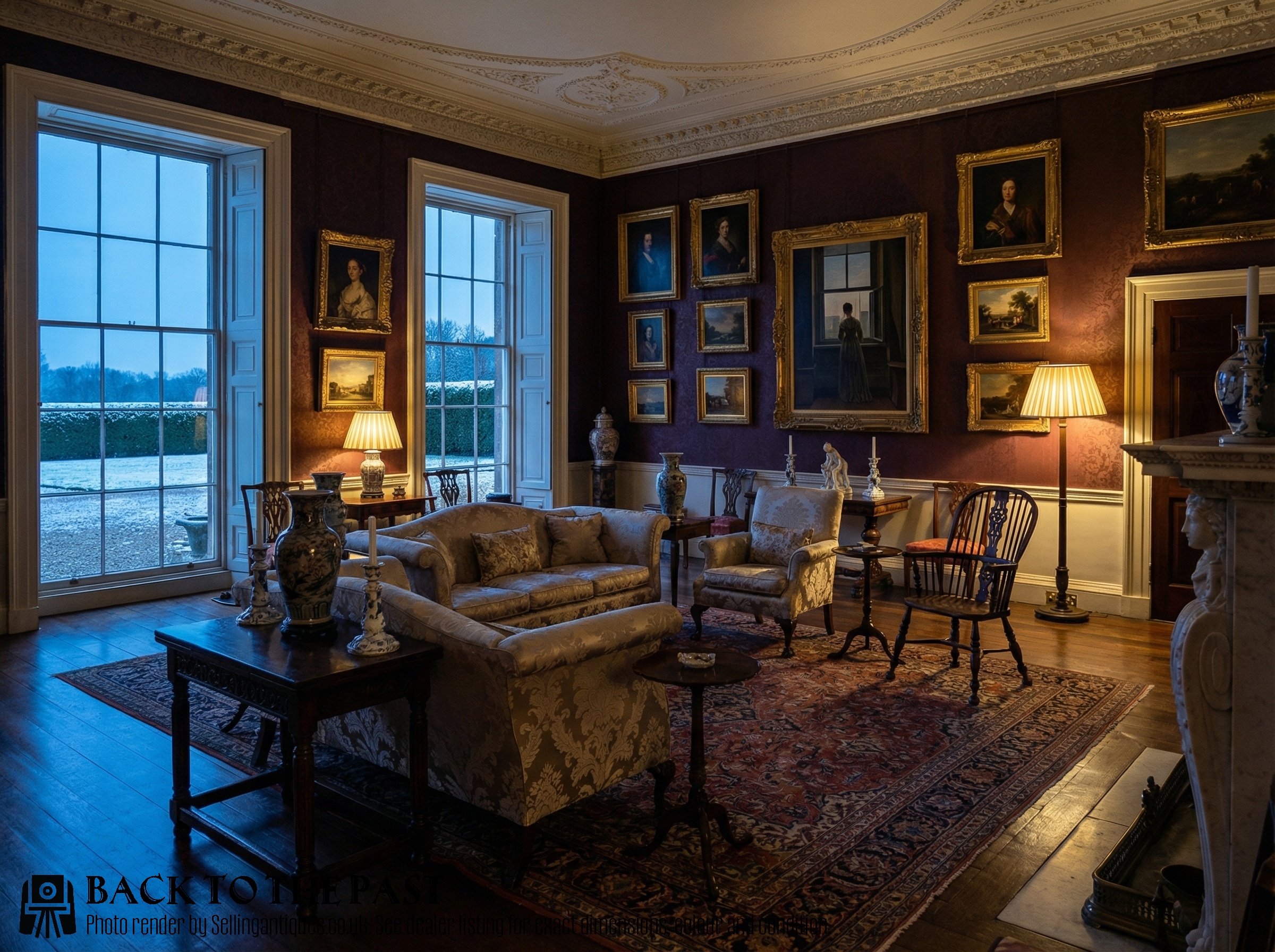
These armchairs served multiple purposes in country houses, acting as fireside seats, parlour chairs, or seating at the ends of large dining tables. Their sturdy construction made them suitable for heavy daily use.
Matching sets of armchairs combined with smaller side chairs were frequently commissioned for country dining rooms.
How do I care for antique yew wood?
Maintaining antique yew wood requires stable room humidity and protection from direct sunlight to prevent the timber from drying out or fading. Regular application of a traditional beeswax polish nourishes the surface and preserves the natural patination.
Avoid placing chairs near direct heat sources such as radiators to protect the historic glued joints and steam-bent components.