




Country Windsor Carver Chair
A country windsor carver chair brings vernacular seating tradition into a room, combining solid timber construction with an armchair form designed for comfort.
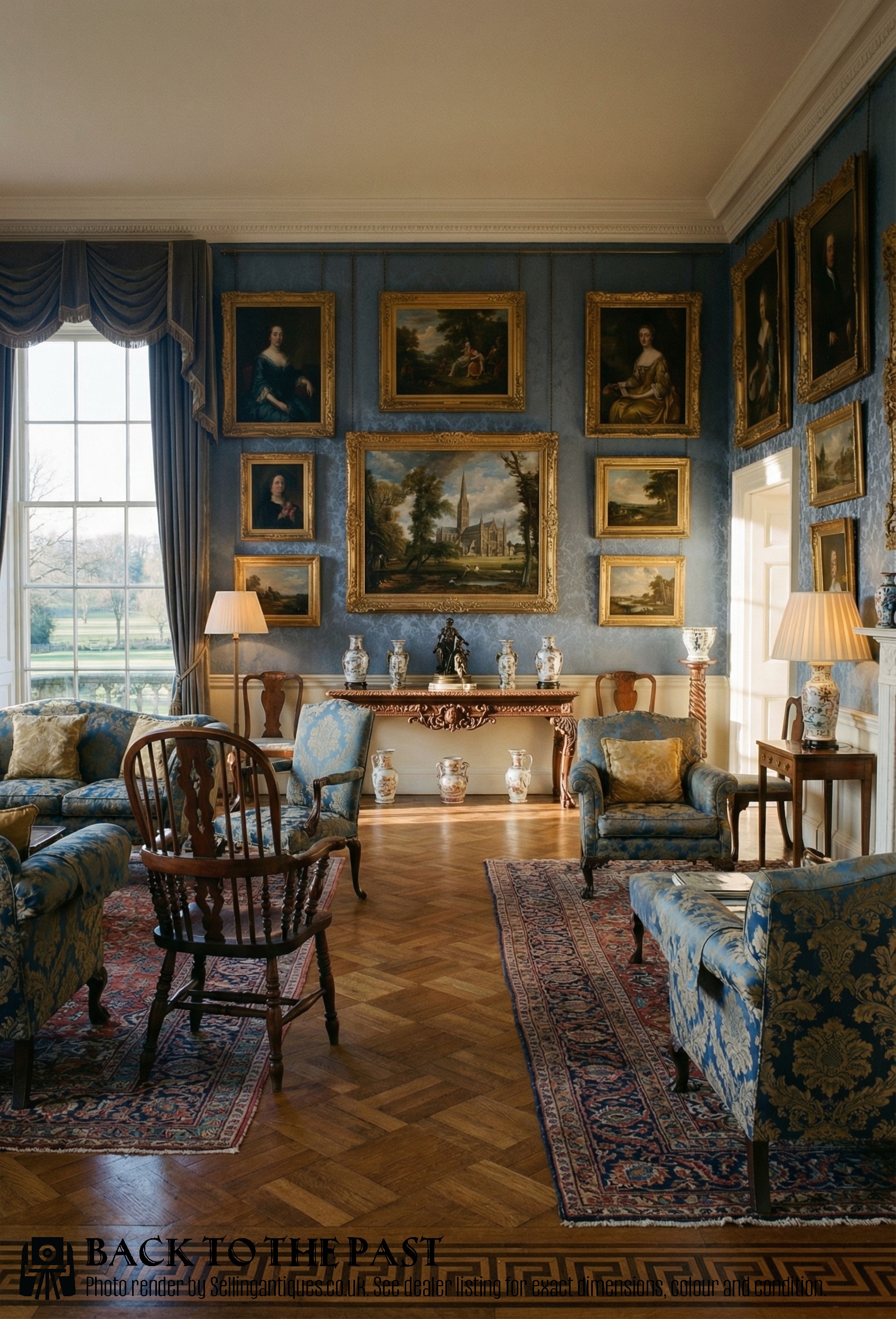
Country Windsor Carver Chair
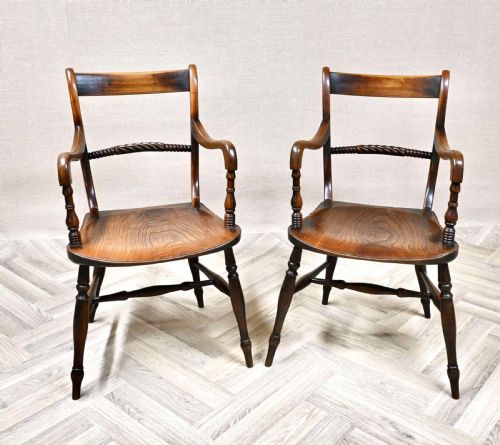
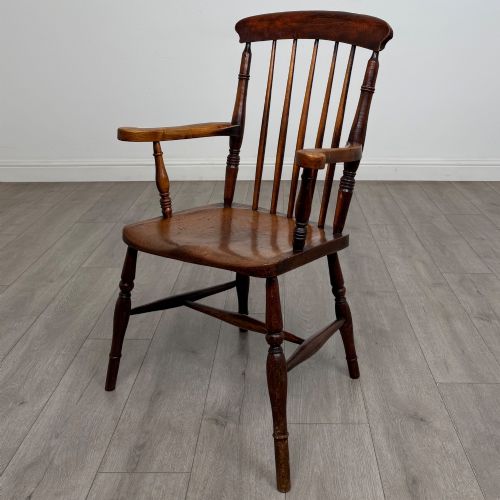
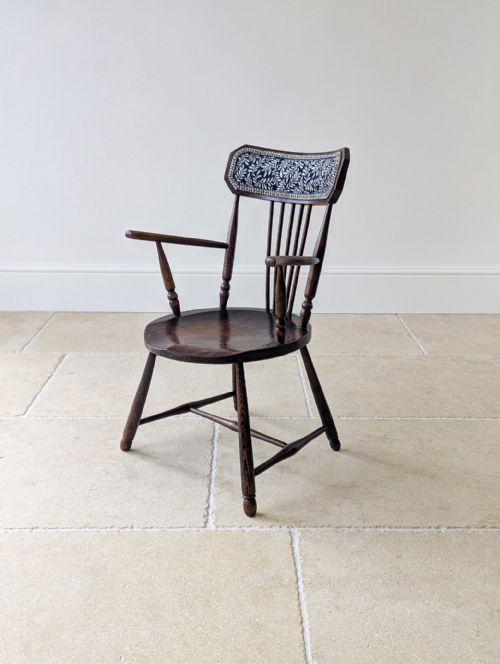
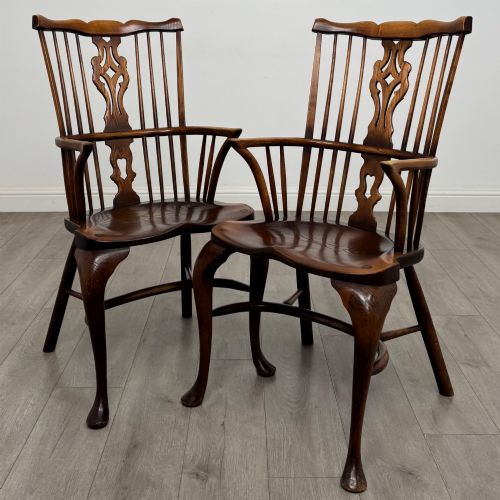
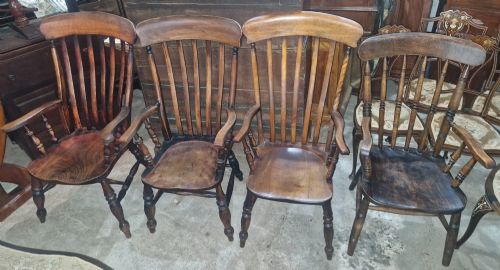
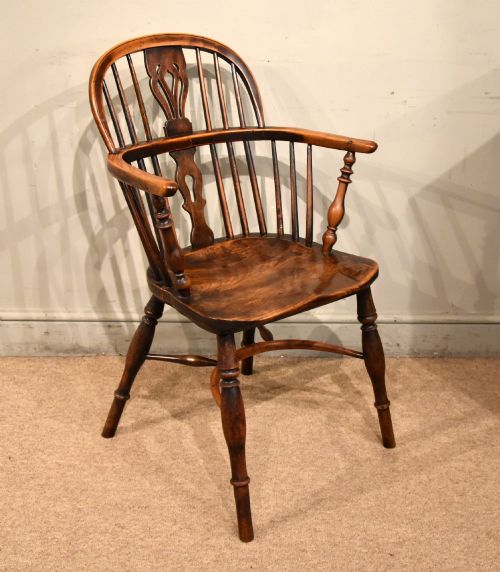
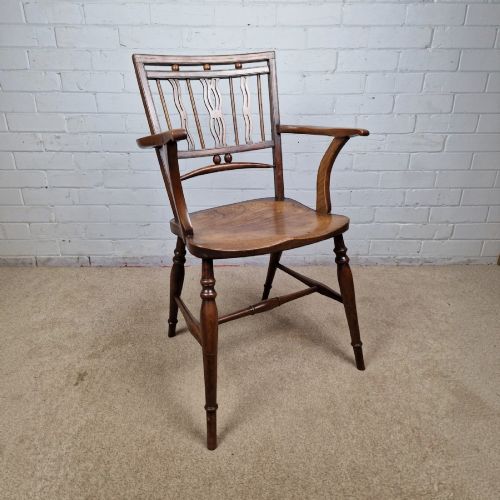
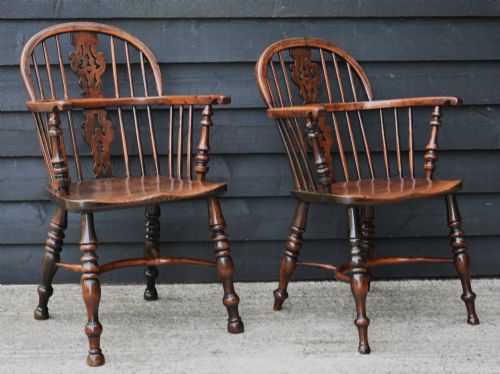
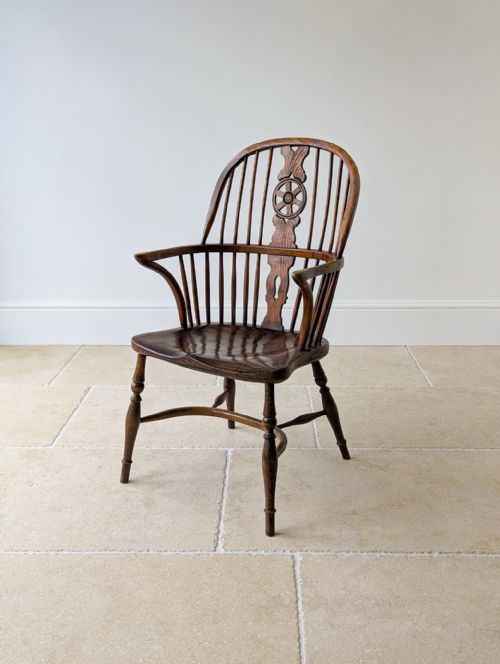
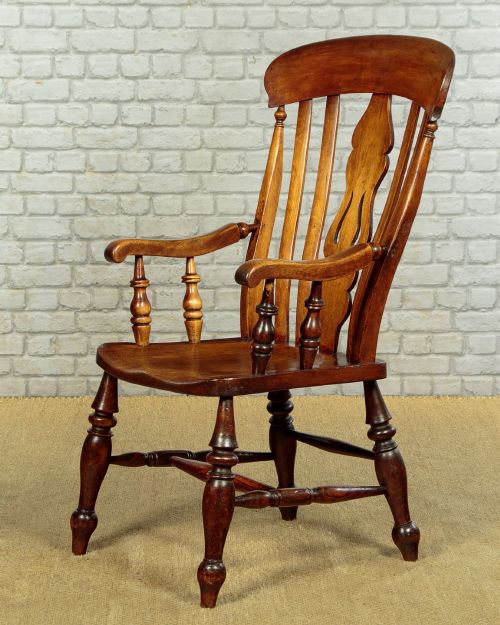
When you search for a country windsor carver chair, you are looking at sturdy seating rooted in English vernacular traditions spanning the eighteenth, nineteenth, and early twentieth centuries. These armchairs appear in various regional forms, including hoop back, comb back, stick back, wheelback, and bar back designs.
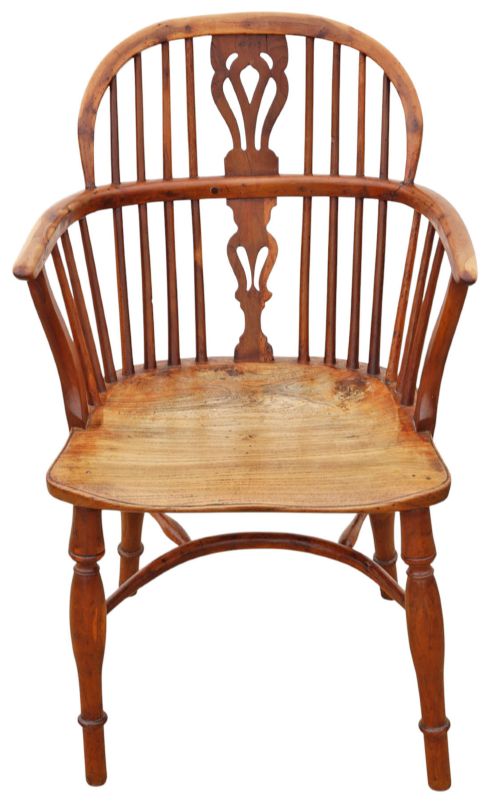
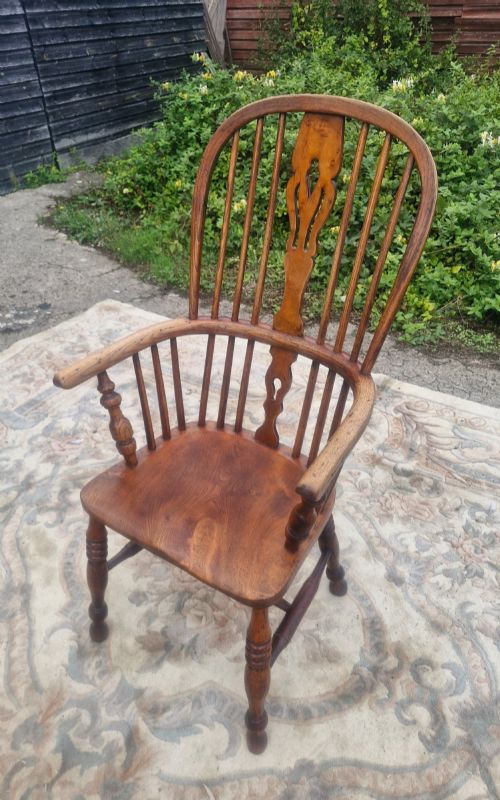
The version you are most likely to meet on this page is a nineteenth-century or Victorian farmhouse chair combining a solid elm seat with ash, beech, or yew components. They serve as practical elbow chairs for dining tables, reading corners, or farmhouse kitchens.
Makers across regions such as Mendlesham, Lincolnshire, and Nottinghamshire produced distinct local variants, ranging from low back forms to highback kitchen armchairs with crinoline stretchers.
How they were made
Country windsor carvers rely on a heavy solid wood seat, usually sculpted from elm, into which the legs, back spindles, and arm supports are wedged and pegged. This hurdle-construction technique ensures durability under daily domestic use.
Makers utilised a combination of timber species according to their specific structural strengths, pairing flexible ash or beech for bentwood hoops and spindles with durable fruitwood, oak, or yew for arms and decorative details.
Some nineteenth-century makers cleverly hid structural repairs using small oak pegs, turning a workshop fix into a charming mark of historical authenticity.
What varies in quality
Quality in a country windsor carver chair rests upon the depth of the seat's saddle shaping and the fluid grace of the bentwood hoop or comb back. Better examples display balanced proportions and crisp turning on the legs and spindles rather than heavy, utilitarian replacement parts.
The choice of timbers dictates the visual character, with figured yew wood or rich burr elm commanding greater appreciation than simpler utilitarian beech and ash mixtures. Matched sets and regional attribution also elevate a piece above standard farmhouse seating.
The Country Windsor Carver Chair Glossary
- Carver
- An armchair designed to match a set of dining chairs, typically featuring open arms and a wider seat.
- Hoop back
- A continuous bentwood bow forming the back and arm supports of a windsor chair, steam-bent from a single piece of ash or elm.
- Crinoline stretcher
- An arched underframe connecting the legs of a windsor chair, providing structural rigidity while resembling the shape of a crinoline skirt.
- Saddle seat
- A wooden seat base carved into a concave shape to fit the contours of the body for seating comfort.
- Spindle back
- A chair back constructed from multiple slender turned vertical wooden rods secured into the seat and top rail.
Country Windsor Carver Chair: Frequently Asked Questions
What is a windsor carver?
A windsor carver is an armchair featuring an elm saddle seat with inserted legs and back spindles, designed with open elbow rests.
These chairs originated in rural workshops and served as robust seating for kitchens, parlours, and dining tables.
How do I date a windsor chair?
Dating relies on identifying timber combinations, structural turning styles, and back forms such as comb backs or wheelbacks.
Early pieces often incorporate yew and feature crinoline stretchers, while later Victorian versions frequently utilise beech and elm with simpler stick backs.
Where were these chairs made?
Rural bodgers and provincial cabinet makers produced windsor chairs across various English counties, notably in the Thames Valley and East Anglia.
Regional centres like Mendlesham and Nottinghamshire developed distinct local characteristics in their splats and arm profiles.
Are these chairs comfortable for daily use?
The saddle-shaped wooden seats and supportive high or low backs make them surprisingly ergonomic for sitting over long periods.
Their solid timber construction ensures they easily withstand the demands of everyday use in a modern dining room.