



Woven Torba Face
A woven torba face is a fragment of a nomadic Turkmen storage bag that brings rich tribal geometry into a modern interior.
Woven Torba Face
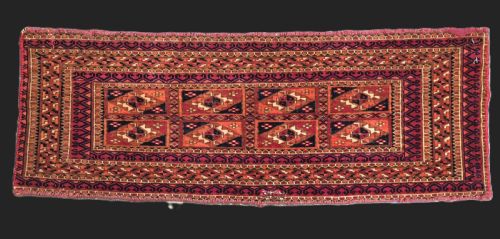
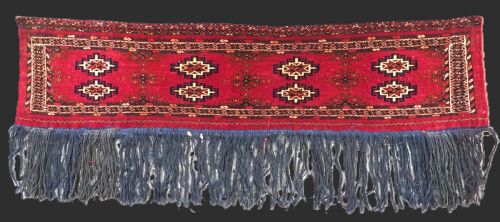
When searching for a woven torba face, collectors encounter the front panels of utilitarian Turkmen storage sacks used across the Central Asian steppes. These pieces originate primarily from tribal groups such as the Tekke, Yomut, Saryk, Ersari, and Chodor, dating from the nineteenth and early twentieth centuries. Most examples available now are individual bag faces detached from their original wool or flatweave backs, though occasional complete pieces and fragments also appear.
The visual vocabulary relies on traditional tribal motifs, including the iconic gul, the kedjebe design, and the curled leaf pattern. Specific tribal weaves display distinct design distributions, such as the kepse gul associated with Yomut work or the salor gul borrowed by Saryk and Tekke weavers. These textiles function effectively as compact wall hangings that display deep regional histories and intricate nomadic artistry.
How they were made
These textiles were constructed predominantly from hand-spun wool foundations paired with natural dyes that yield enduring regional palettes. Certain examples incorporate silk highlights and cotton details to accent specific motif elements within the field. The knotting technique varies from standard tribal densities to exceptionally fine weaves found on select Tekke pieces.
Weavers utilised structured looms within nomadic and village environments to produce durable storage sacks intended for daily utility inside yurt dwellings. Over time, the backs of these bags wore away, leaving the sturdy decorative faces preserved for later collection.
Current listings feature nineteenth- and early twentieth-century pieces produced by Turkmen tribes using wool, natural dyes, silk, and cotton.
What varies in quality
Quality rests upon the crispness of the drawing and the saturation of the natural dyes used across the field. Superior examples exhibit precise proportions within repetitive gul motifs and demonstrate clear, deliberate colour contrasts on the ground.
The fineness of the knotting and the tightness of the weave separate standard utilitarian sacks from masterworks of tribal textile art. Furthermore, the survival of complete borders, original side cords, and supporting structural integrity elevates the standing of an individual piece.
The Woven Torba Face Glossary
- Torba
- A small Turkmen storage bag traditionally used inside a tent for holding household goods. These bags were often mounted on tent poles or hung against lattice walls.
- Gul
- A primary medallion motif used in Turkmen carpet and textile design, often characteristic of specific tribes. Each clan employed distinct geometric arrangements to signal regional identity.
- Kedjebe
- A wedding camel-litter design frequently depicted on tribal bag faces in intricate detail. This pattern symbolizes the ceremonial transport of a bride during nomadic migration.
- Mafrash
- A rectangular storage box or bedding bag produced in flatweave or pile techniques. The severed faces of these containers frequently enter the textile market independently.
- Flatweave
- A textile constructed without pile by interlocking warp and weft threads to create a smooth surface. This technique appears in banded designs on various nomadic storage pieces.
Woven Torba Face: Frequently Asked Questions
What is a torba?
A torba is a traditional Turkmen storage bag utilised by nomadic tribes for domestic organisation within the yurt. These items held smaller personal possessions and valuables during seasonal migrations across the steppes.
Over decades of use, the functional rear panels deteriorated or were removed, leaving the decorative pile faces behind as collectible textile art. Today, these surviving fronts serve primarily as wall hangings or small display mats.
How do I identify different tribes?
Tribal attribution relies heavily on the specific gul motifs and colour palettes employed across the field. For instance, Yomut pieces often feature the kepse gul, while Tekke examples frequently display distinct multi-gul arrangements and fine knotting.
Familiarity with the structural habits and wool characteristics of groups like the Ersari, Saryk, and Chodor aids in distinguishing regional origins. Comparing secondary borders and minor ornaments provides additional clues to attribution.
Where should I hang these textiles?
These compact bag faces suit display locations where their intricate geometric patterns can be appreciated at close range. Many collectors mount them securely on neutral walls using non-damaging textile display methods.
Protection from direct, strong sunlight preserves the stability of the natural wool and dyed fibres over time. Placement away from excessive moisture ensures the longevity of the historical materials.
How old are these pieces?
The available examples date predominantly from the nineteenth century up to the early twentieth century. Nineteenth-century pieces typically exhibit traditional natural dye usage and older spinning methods native to Central Asia.
Pieces from the later periods around nineteen-ten or nineteen-twenty continue traditional tribal designs while reflecting the transition into the twentieth century. Dating is determined through stylistic analysis, material composition, and structural comparison.