


Woven Textile Art
Woven textile art encompasses centuries of hand-crafted tapestries, tribal bags, and wall hangings designed to bring texture and narrative depth to interiors.
Woven Textile Art
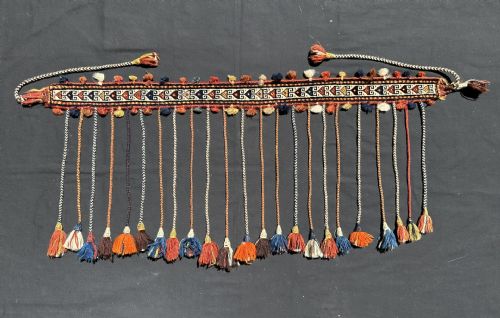
Woven textile art includes large wall hangings, verdure tapestries, and functional tribal weavings produced across Europe, Persia, and Central Asia. Buyers exploring this category encounter everything from grand Flemish landscape panels to nomadic saddle bags and horse decorations.
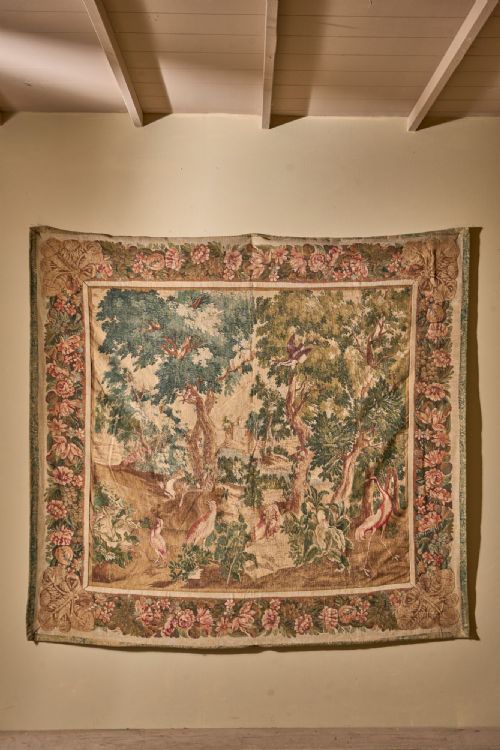
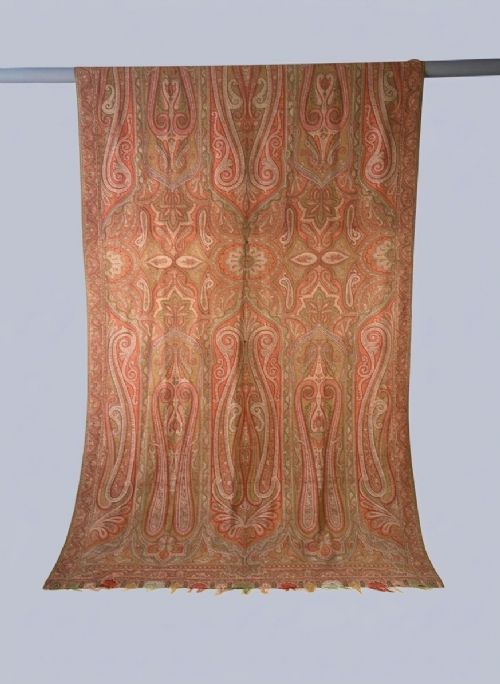
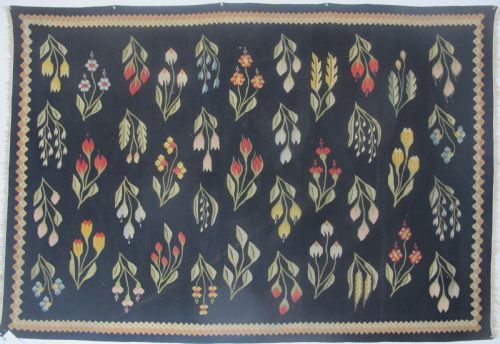
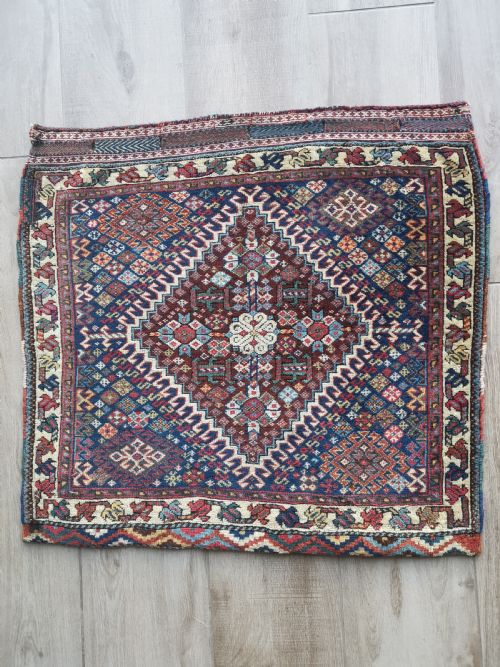
The selection ranges from seventeenth-century European verdure scenes depicting foliage and mythical motifs to nineteenth-century tribal bag faces and twentieth-century pastoral textiles. These works function primarily as architectural decoration, bringing historic narrative and rich colour palettes into domestic spaces.
Materials and construction
These textiles rely predominantly on natural fibres such as wool, silk, cotton, and linen, often enriched with hand-spun wool and natural dyes. Artisans constructed European tapestries on vertical or horizontal looms, while nomadic weavers utilised warp-faced and plain-weave techniques for utilitarian bags.
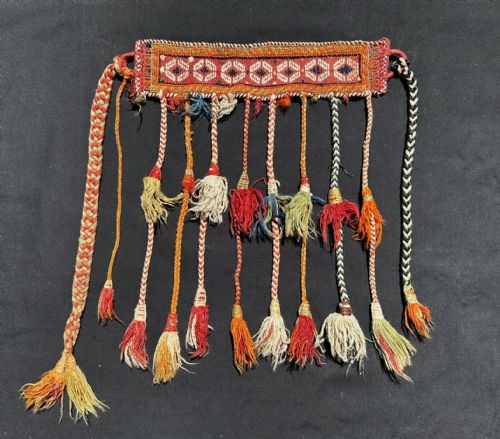
Many historical pieces incorporate specialised embellishments, including silk highlights on tribal torbas or linen backing mounts applied to fragmentary tapestry borders for structural support.
Listings feature works spanning the seventeenth century through the early twentieth century, incorporating French, Flemish, and Persian origins.
Assessing quality and execution
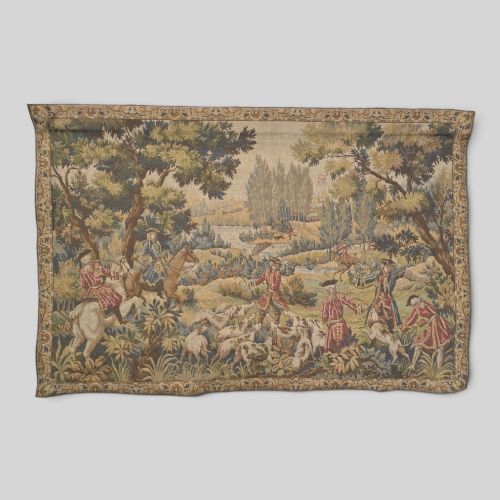
Quality rests upon the fineness of the weave, the complexity of the design, and the survival of the original materials and natural dyes. Superior European tapestries demonstrate sophisticated perspective and tonal variation within verdure foliage or figurative scenes.
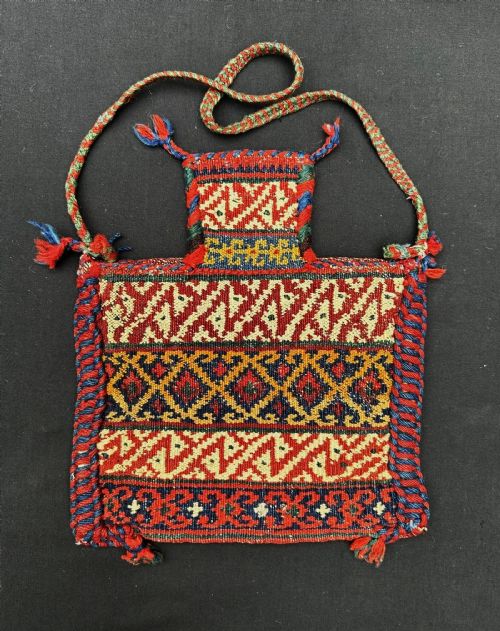
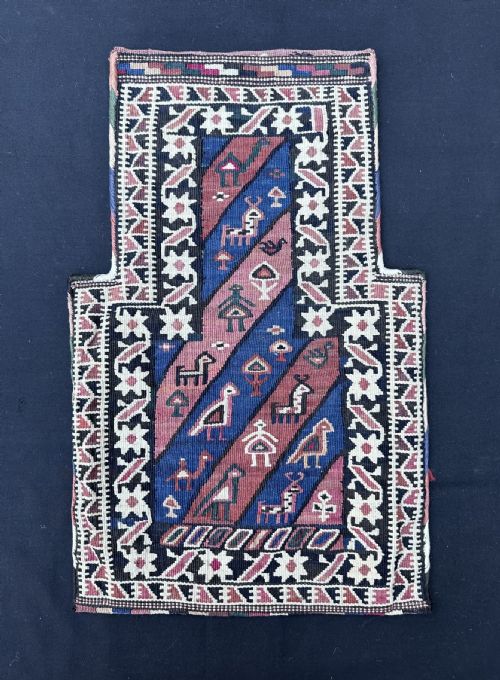
Nomadic pieces achieve distinction through intricate tribal iconography, tight structural knotting or weaving, and the balanced integration of contrasting silk highlights against wool grounds.
Stevens of Coventry
The Woven Textile Art Glossary
- Verdure tapestry
- A European wall hanging featuring landscape and foliage as the primary subject matter. These pieces frequently depict stylized trees, plants, and occasionally animals or architectural elements.
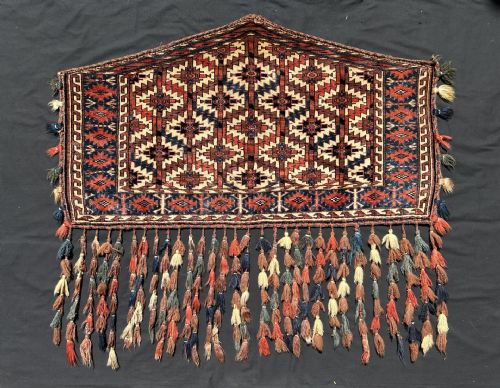
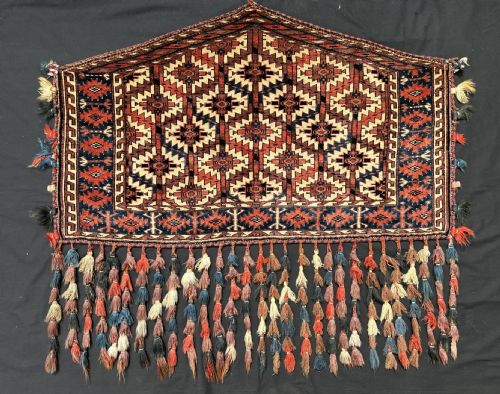
- Asmalyk
- A large, pentagonal trapping produced by Yomut Turkmen tribes. They were traditionally mounted on the flanks of a bridal camel during wedding processions.
- Torba
- A small, wide storage bag created by Turkmen and other tribal groups. They served utility in nomadic tents before becoming collected decorative items.
- Chanteh
- A small tribal vanity or carrying bag produced by Persian nomads. These pieces demonstrate the personal weaving skill of individual makers within tribal groups.
Woven Textile Art: Frequently Asked Questions
How do I hang a heavy tapestry?
Large wall hangings require even weight distribution to prevent fabric distortion over time. Professional framers or conservators typically stitch a supportive linen sleeve along the top reverse edge to accommodate a concealed metal rod.
Smaller textile fragments benefit from being mounted directly onto stretched linen or framed behind protective glass, depending on their structural stability and exposure to environmental light.
What is a verdure tapestry?
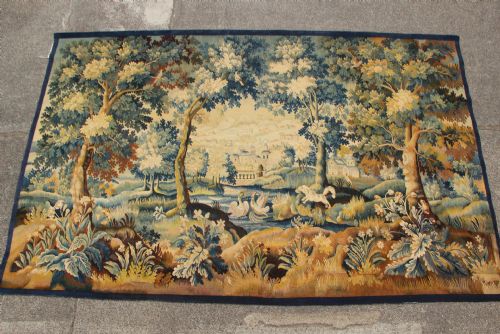
A verdure tapestry is a European wall hanging dominated by botanical motifs, foliage, trees, and landscapes. Originating largely in Flemish and French workshops during the seventeenth and eighteenth centuries, these pieces bring natural serenity indoors.
They often include subtle details like hidden birds or distant chateaus nestled within dense thickets of leaves rendered in fading greens and blues.
How should I care for antique woven textiles?
Antique textiles require protection from direct sunlight to prevent the fading of natural dyes in wool and silk fibres. Gentle, periodic vacuuming through a protective mesh screen helps remove dust without disturbing delicate warp and weft threads.
Avoid hanging textiles in areas with high humidity or fluctuating temperatures to preserve the structural integrity of historical vegetable-dyed materials.