

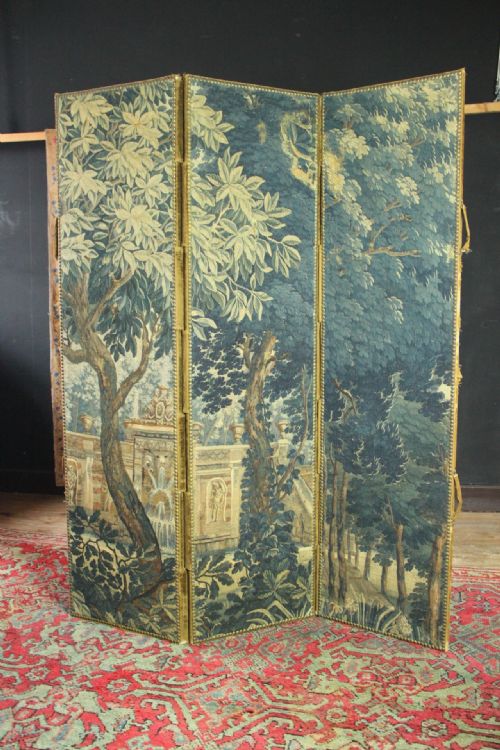


Flemish Verdure Tapestry
A flemish verdure tapestry brings woodland depth and muted foliage into a room through rich textile work.

Flemish Verdure Tapestry
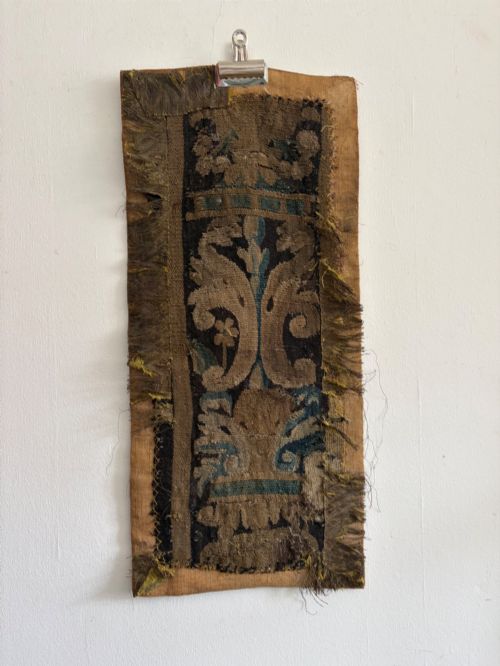
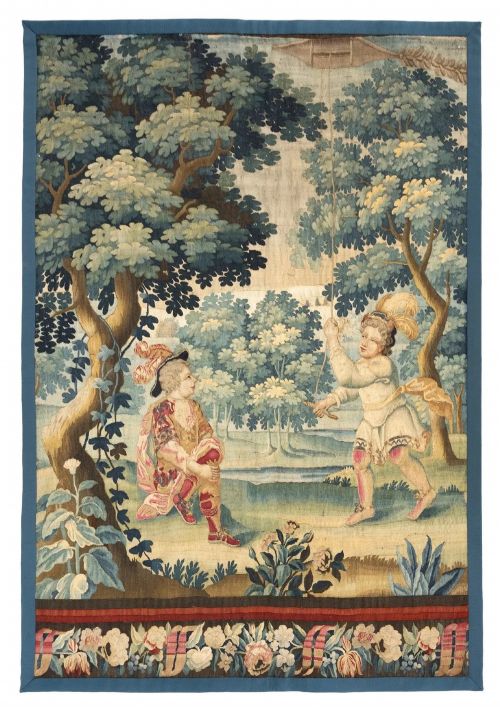
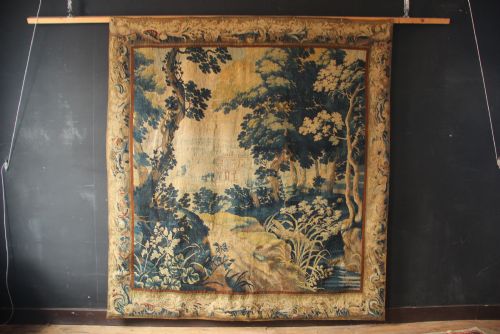
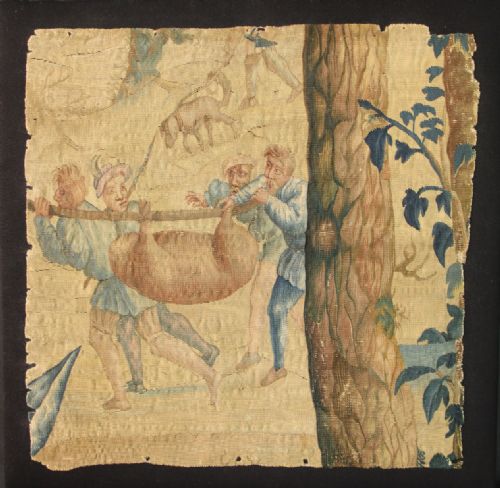
A flemish verdure tapestry depicts dense landscape foliage, often featuring trees, plants, and sometimes birds or distant architecture. These textile pieces originate primarily from the seventeenth and eighteenth centuries, reflecting the Flemish Baroque and eighteenth-century European styles.
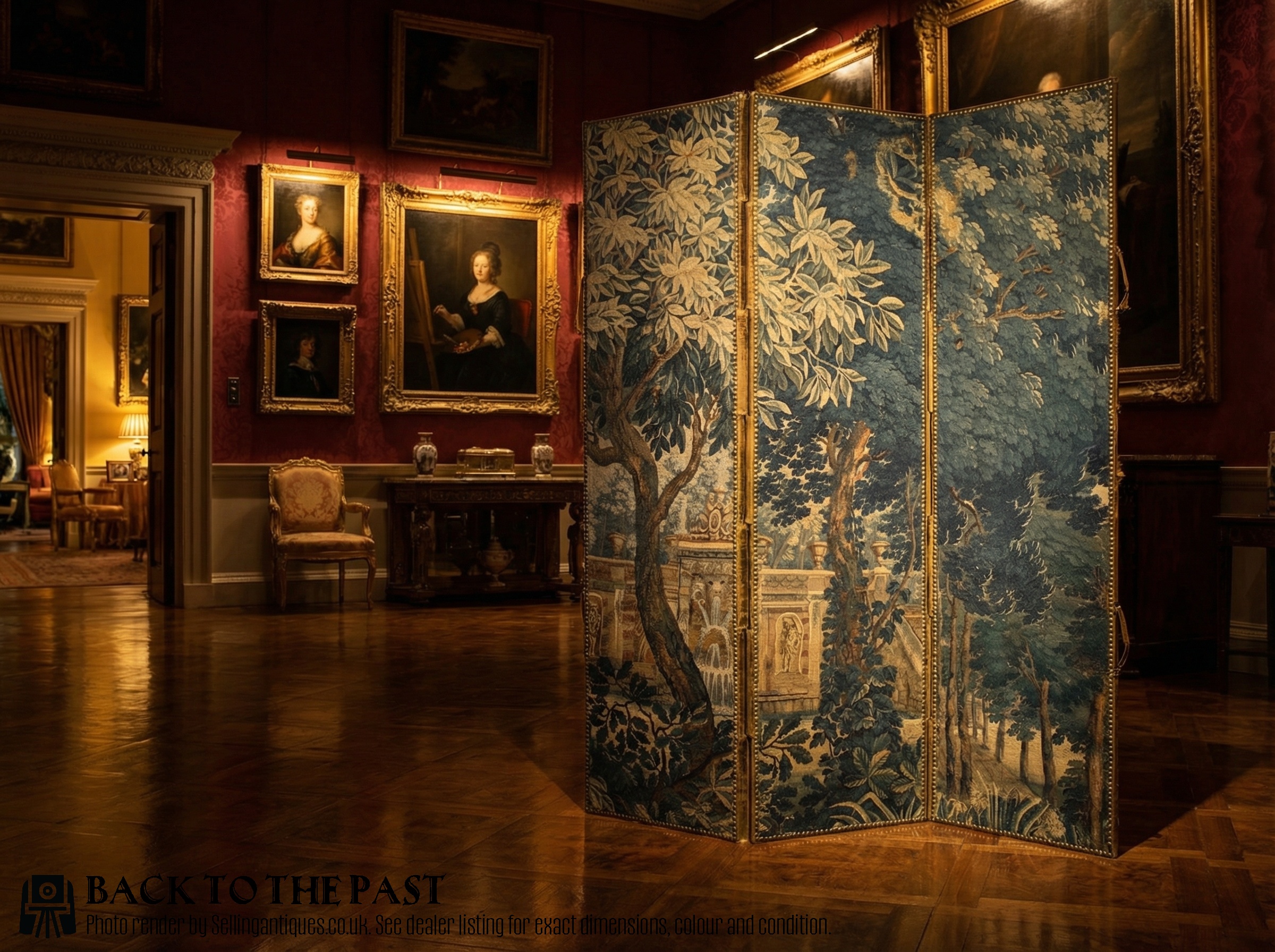
Buyers encounter these works in various formats on this page, including large wall tapestries, pairs of wall hangings, and mounted folding screens. The dimensions range widely, accommodating both expansive rooms and more intimate spaces.
The palette relies on natural landscape tones, dominated by greens, browns, and blues that have mellowed over time. These works serve as major decorative focal points, exactly as they did in historic interiors.
How They Were Made
The creation of these textiles involves weaving with a combination of wool and silk, supported by structural elements of linen. Wood and brass also appear in pieces structured as folding screens.
Weavers built up the complex landscape designs by hand on looms, blending different thread materials to achieve texture and depth within the foliage.
Flemish Verdure Tapestry Retail Price Guide 2026
Typical asking prices for flemish verdure tapestry among the pieces listed under this phrase on Sellingantiques today, from the lower quarter to the upper quarter. They describe what is for sale here now, not the wider market.
Several panels double as furniture, letting you fold up an entire forest and tuck it beside the wardrobe.
What Varies In Quality
The distinction between standard and superior pieces rests on the complexity of the landscape design and the fineness of the weave. The inclusion of silk alongside wool allows for finer detail and subtle light reflection in the foliage.
Scale and format also dictate the character of the piece, with larger wall tapestries and framed screens demanding greater workshop output than smaller compositions.
The Flemish Verdure Tapestry Glossary
- Verdure tapestry
- A textile design dominated by plant motifs, trees, and landscape scenery. These pieces focus on natural foliage rather than human figures or historical narratives.
- Flemish Baroque
- An artistic style originating in Flanders during the seventeenth century. It emphasises robust movement, drama, and rich detail, which translates into dynamic foliage patterns in weaving.
- Folding screen
- A movable partition composed of multiple panels hinged together. In this selection, such frames enclose textile panels to serve as functional room dividers.
- Linen
- A strong textile woven from flax fibres. It frequently provides structural support within heavy wall hangings and screens.
Flemish Verdure Tapestry: Frequently Asked Questions
Where were these tapestries hung?
These large textiles hung on stone or plaster walls in principal rooms to provide both insulation and decoration.
They helped retain warmth in drafty historic interiors while displaying wealth through intricate landscape artistry.
How do I care for a textile screen?
Keep these pieces away from direct sunlight to prevent the fading of natural wool and silk dyes.
Gentle dusting with a soft brush helps maintain the surface without disturbing the historic fibres.
What is a verdure scene?
A verdure scene depicts a lush, green landscape filled with stylized trees, shrubbery, and foliage.
Animals or distant castles occasionally hide within the dense woods of the composition.
How do I identify the period?
Dating relies on stylistic markers from the seventeenth and eighteenth centuries, such as Flemish Baroque details.
Material analysis of the wool, silk, and underlying linen also aids in establishing the age.