





Verdure Wall Hanging
A verdure wall hanging brings rich botanical motifs into a room through historic woven textiles.

Verdure Wall Hanging
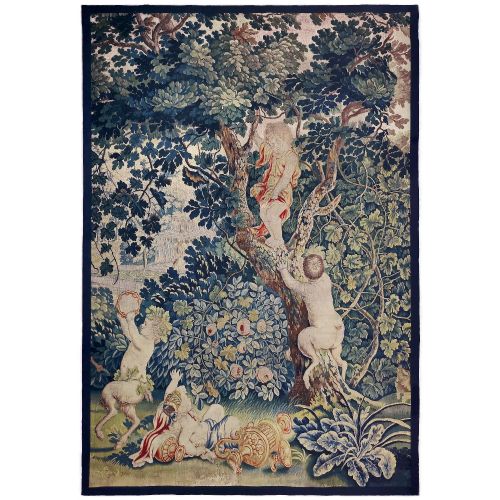
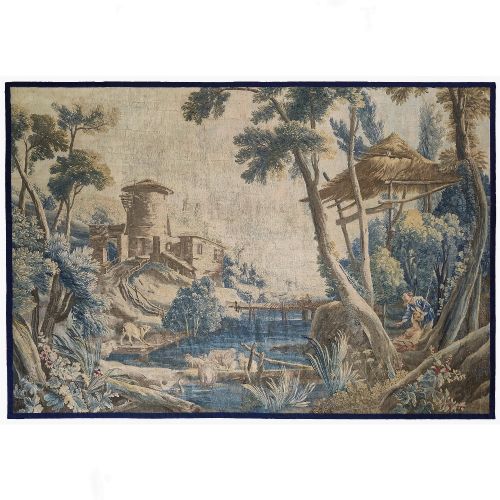
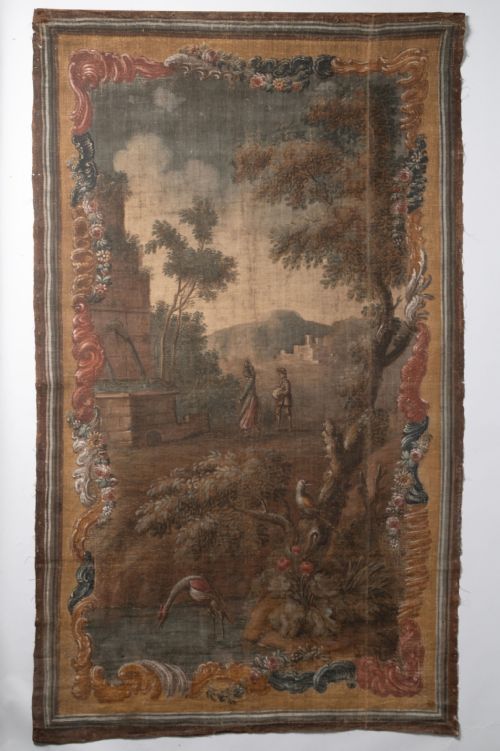
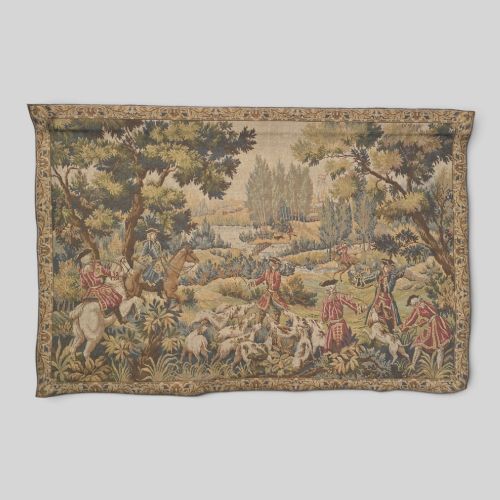
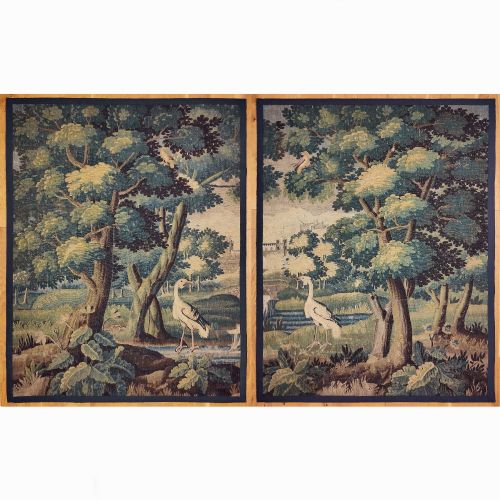
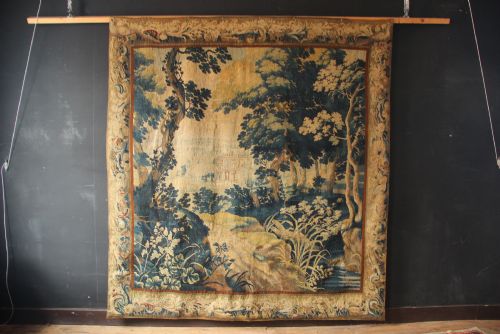
A verdure wall hanging depicts lush garden scenes, woodland landscapes, and foliage-filled vistas designed to ornament interior walls. When searching for a verdure wall hanging, buyers encounter woven tapestries spanning from the seventeenth century through to the early twentieth century. These pieces originate primarily from traditional weaving centres in France and Flanders.
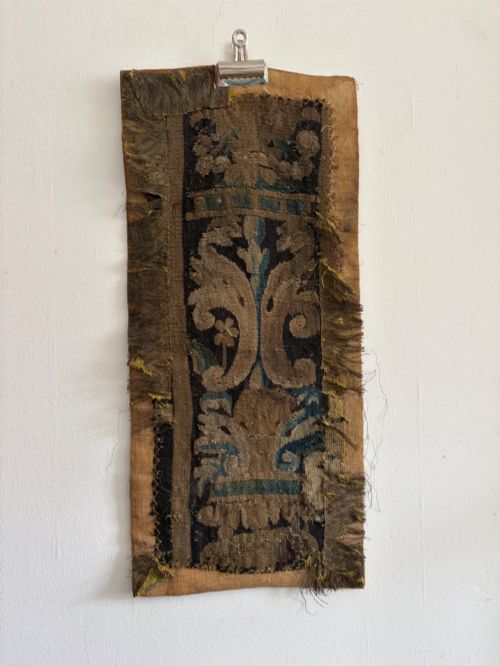
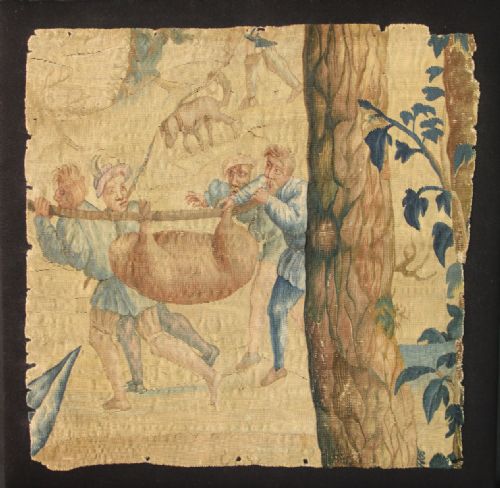
The selections available range from large room-scale panels down to smaller border fragments mounted on linen. French pieces often reflect Aubusson origins and later nineteenth-century revivals, while Flemish works frequently showcase seventeenth-century baroque aesthetics. Buyers meet both complete wall tapestries and elongated panels suitable for specific architectural spaces.
Materials and construction methods
These textiles rely on natural fibres, predominantly wool, silk, cotton, and linen, combined to create varied textures and depth within the landscape scenes. Weavers utilised these threads on vertical or horizontal looms, building up complex foliage and architectural elements through intricate weaving and needlework techniques.
Mounting methods often support fragile historical fragments, utilising secondary linen backings or wooden frames to preserve the integrity of the woven panels. The interplay of wool and silk threads allows certain leaves and botanical details to catch the light differently, enhancing the illusion of deep woodland undergrowth.
Verdure Wall Hanging Retail Price Guide 2026
Typical asking prices for verdure wall hanging among the pieces listed under this phrase on Sellingantiques today, from the lower quarter to the upper quarter. They describe what is for sale here now, not the wider market.
Current listings feature pieces spanning the seventeenth century through to nineteen-twenty, utilising wool, silk, cotton, linen, and wood.
Factors of quality and distinction
The distinction between pieces rests on the intricacy of the botanical detail, the subtlety of the colour palette, and the overall preservation of the woven surface. Earlier seventeenth-century Flemish examples often display denser, more complex foliage arrangements than later nineteenth-century interpretations.
Integrity of the textile also dictates standing, with complete panels holding greater architectural presence than border fragments or smaller mounted sections. The fineness of the weave and the skill in rendering naturalistic leaves and game parks separate standard decorative textiles from superior collector pieces.
The Verdure Wall Hanging Glossary
- Verdure
- A tapestry style featuring lush landscape and foliage motifs as the primary subject matter. These designs typically focus on stylized trees, plants, and distant chateaux or game parks.
- Aubusson
- A traditional centre of tapestry weaving in France known for producing distinctive landscape and pastoral scenes. Pieces from this origin often date from the seventeenth through to the nineteenth century.
- Flemish
- Pertaining to the historic region of Flanders, renowned for master weavers who produced intricate baroque wall hangings. These works frequently date to the seventeenth and eighteenth centuries.
- Border fragment
- A surviving section cut or separated from the decorative outer framing of a larger tapestry. These pieces are often mounted to linen for preservation and display.
Verdure Wall Hanging: Frequently Asked Questions
How do I hang a heavy tapestry?
Large tapestries require even distribution of weight across the upper edge to prevent distortion of the historic fibres. Stitching a strong cotton casing to the reverse allows a concealed batten or rod to support the textile securely against the wall.
Smaller panels and framed pieces utilise traditional picture hanging hardware attached directly to secure wall anchors. Ensuring the textile avoids direct, harsh sunlight prevents fading of the natural wool and silk threads.
Where were these tapestries originally made?
The pieces originate predominantly from specialised weaving workshops in France and Flanders. Historic centres such as Aubusson and Audenarde drove production across the seventeenth, eighteenth, and nineteenth centuries.
Flemish workshops are particularly noted for early seventeenth-century baroque landscapes, while French centres produced both baroque works and later pastoral revival panels.
How can I tell a seventeenth-century piece from a nineteenth-century one?
Seventeenth-century pieces typically exhibit denser Flemish baroque compositions with deep earthy tones and complex botanical layering. The weave structure and choice of wool and silk dyes reflect the technical constraints and artistic styles of that specific era.
Nineteenth-century examples often display brighter palettes, lighter French rococo or chateau influences, and more uniform mechanical consistency in the weave. Comparing the specific foliage motifs and border styles helps clarify the period of production.