



Baroque Landscape Tapestry
A baroque landscape tapestry brings the verdant, theatrical depth of seventeenth-century woodlands and mythological scenes directly onto a wall.

Baroque Landscape Tapestry
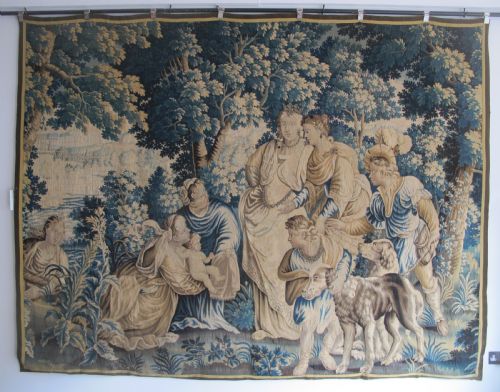
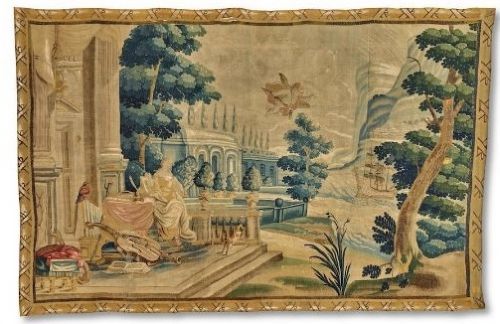
A baroque landscape tapestry presents grand, immersive outdoor vistas dominated by dense foliage, mythological figures, or biblical narratives. These textile works of art originate predominantly from the seventeenth century, capturing the rich aesthetic sensibilities of Flemish and French ateliers.
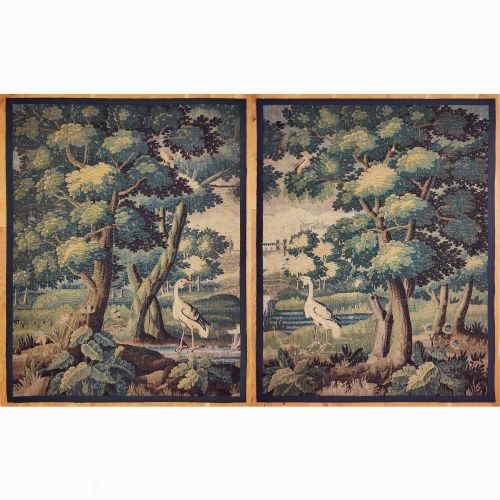
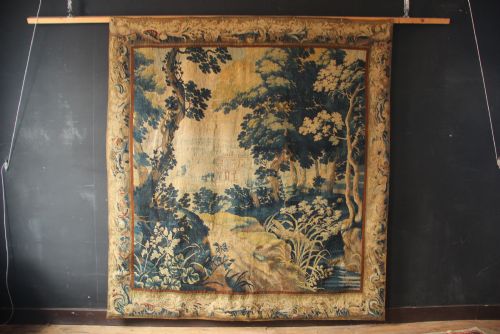
The version most commonly encountered in this selection is the verdure tapestry, which focuses on lush foliage, trees, and distant garden architectures or rolling countryside. Flemish and Aubusson examples form the core of these offerings, frequently rendered in impressive grand scales suited for substantial wall spaces.
Materials and construction
These textiles rely on a careful combination of wool, silk, and linen, woven by hand on high-warp or low-warp looms. Wool provides the heavy, durable structural foundation and dense body required for foliage and shadows, while silk introduces luminous highlights to skies, water, and garments.
Weavers utilised natural dyestuffs to achieve deep greens, browns, and earthy tones that have aged gracefully over centuries. Linen threads frequently reinforce the selvedges and support the hanging structure of these large wall hangings.
Judging quality in early textiles
Quality rests primarily in the complexity of the narrative composition and the finesse of the chromatic gradation across the foliage. Finer panels exhibit intricate detailing in the rendering of leaves, avian life, and architectural fragments, creating a convincing illusion of depth.
The survival of the original silk threads dictates much of the visual impact, as silk naturally deteriorates faster than wool. Superior examples retain their contrasting highlights and structural integrity, whereas lesser pieces suffer from extensive loss and heavy historical reweaving.
The Baroque Landscape Tapestry Glossary
- Verdure tapestry
- A wall hanging dominated by lush botanical scenes, featuring trees, plants, and often birds or animals without a primary human narrative. These compositions celebrate the natural world through dense, leafy designs.
- High-warp loom
- A vertical loom setup where the warp threads run vertically, allowing the weaver direct access to the design face and greater control over complex pictorial elements.
- Aubusson
- A traditional centre of tapestry weaving in France known for producing refined verdure and figurative panels during the seventeenth century. Pieces from this region often display a lighter, more decorative palette.
- Flemish
- Pertaining to the historic region of Flanders, renowned for master weavers who produced monumental seventeenth-century tapestries with rich tonal depth and elaborate borders.
- Warp
- The stationary vertical threads stretched upon a loom that receive the colourful horizontal weft yarns to form the pictorial cloth.
Baroque Landscape Tapestry: Frequently Asked Questions
How do I hang a large textile safely?
Large wall hangings require a weight-distributing support system, typically involving a hidden fabric sleeve sewn along the top edge through which a flat wooden batten slides. This method ensures the tension distributes evenly across the entire upper border rather than pulling on isolated points.
Conservation specialists recommend mounting the textile slightly away from the wall to permit air circulation and prevent moisture accumulation behind the fibres.
Where were these textiles displayed historically?
In seventeenth-century interiors, these grand wall coverings served a practical purpose alongside their decorative function by adding an extra layer of insulation to cold stone and timber rooms. Wealthy patrons hung them in principal reception rooms, galleries, and state bedrooms to demonstrate status and soften the acoustics.
Their substantial scale allowed them to transform entire chamber walls into continuous woodland panoramas or theatrical stage sets.
What causes the colours to shift over time?
Natural dyes used in the seventeenth century react over centuries to light exposure, causing fugitive colours like certain yellows and blues to fade or alter. This process frequently results in blues shifting towards green as the overlying yellow dye degrades.
Such tonal evolution is an expected characteristic of antique textiles and contributes to the harmonious, muted palette associated with age.
How can I distinguish French from Flemish work?
French panels, particularly those from Aubusson, often lean towards lighter, more decorative compositions with softer pastel influences and delicate floral borders. Flemish works tend to emphasise heavier, darker verdure with dramatic shadow play and densely packed botanical elements.
Border designs also offer clues, as Flemish weavers frequently employed robust architectural motifs while French workshops favoured ribbon and floral garlands.