

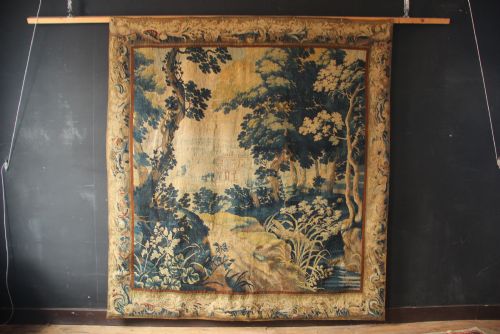


Forest Landscape Tapestry
These forest landscape tapestry examples bring centuries of woven woodland depth to interiors.
Forest Landscape Tapestry
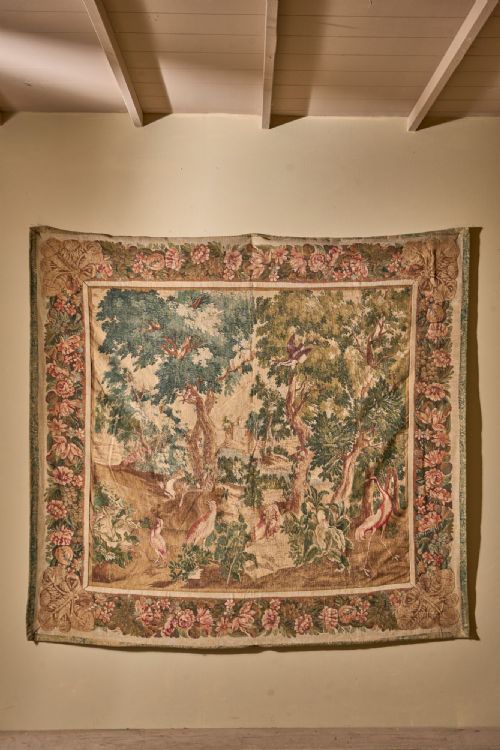
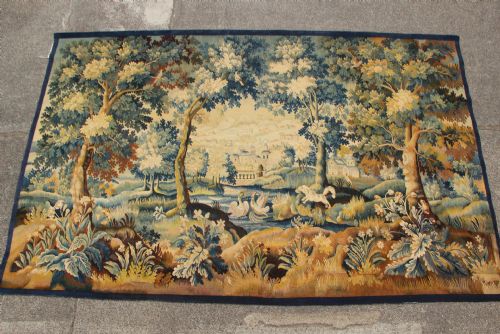
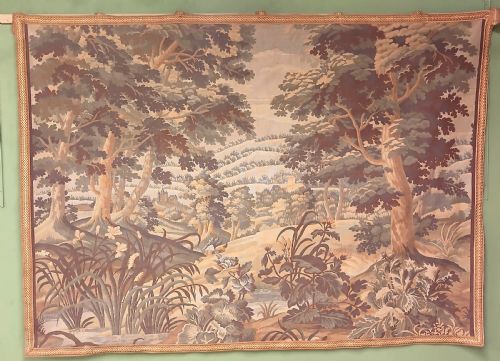
A forest landscape tapestry depicts verdant woodland scenes, foliage, and natural vistas woven into large textile wall hangings. These pieces draw the eye across leafy canopies, shaded groves, and distant views.
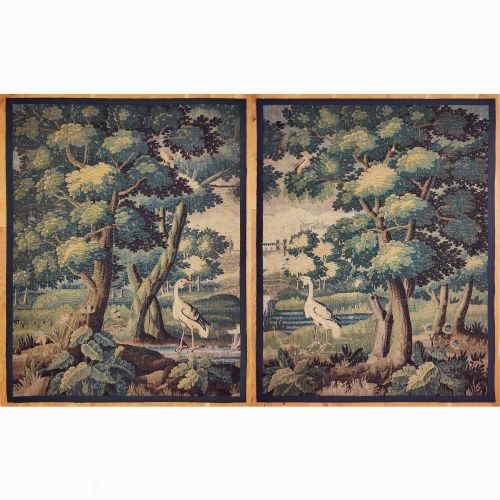
The selections here span from the late seventeenth century through to the nineteenth century, originating primarily from Flemish and French workshops. Buyers will encounter both grand room-sized wall hangings and narrower vertical panels.
Flemish Baroque and Aubusson traditions dominate the offerings, showcasing distinct regional approaches to botanical detail. Verdure compositions form the core of these listings, concentrating on lush greenery and naturalistic plant life rather than figures.
How they were made
Weavers constructed these textiles using combinations of wool, silk, cotton, and linen yarns on large looms. Wool provided the durable foundation for heavy foliage and tree trunks, while silk threads introduced highlights to leaves and water.
Dyers created varied palettes of green, ochre, and brown using natural substances before the advent of synthetic dyes. The interplay of these dyed threads generated the illusion of depth in deep woodland clearings.
The listings span from the seventeenth to the nineteenth century, featuring wool, silk, cotton, and linen across Flemish and French origins.
What varies in quality
The fidelity of the botanical drawing and the complexity of the leaf shading separate finer examples from simpler wall hangings. Superior weaving displays intricate detailing in individual fronds and layered canopy depths.
Material composition influences the visual richness, with silk content allowing for greater luminosity in highlights and water reflections. The integrity of the surviving weave and the survival of original colour tones determine the overall impact.
The Forest Landscape Tapestry Glossary
- Verdure
- A tapestry style featuring lush plant life, trees, and foliage as the primary subject matter. These scenes often focus entirely on woodland environments without human figures.
- Aubusson
- A town in France renowned for its tapestry weaving tradition since the fifteenth century. Pieces from this origin often exhibit lighter, more refined pastel colour palettes.
- Flemish Baroque
- A regional artistic style from the seventeenth century characterised by dramatic composition and rich, dense botanical detail. These works emphasise natural abundance and deep perspective.
- Warp
- The vertical threads stretched tightly on a loom that form the structural foundation of the textile. Weavers pass the coloured weft threads horizontally through these tensioned lines.
Forest Landscape Tapestry: Frequently Asked Questions
How do I hang a heavy tapestry?
Large wall hangings require even weight distribution across a sturdy wooden batten or a concealed metal support system. Stitching a broad strip of heavy cotton webbing along the top reverse edge provides a secure anchor for fixing.
Avoid hanging textiles directly in strong sunlight or against damp exterior walls to protect the natural fibres. Proper clearance from the wall surface also ensures adequate air circulation behind the piece.
What is a verdure tapestry?
A verdure tapestry is a decorative textile featuring a landscape dominated by trees, plants, foliage, and often birds or distant castles. These designs focus on creating immersive woodland scenes rather than historical or mythological narratives.
Originating largely in Flemish and French weaving centres, these pieces brought the outside world into grand interiors. The palette relies heavily on greens, browns, and blues that have mellowed over centuries.
How do I clean old textiles?
Historic woven wall hangings require professional conservation rather than standard domestic cleaning methods. Gentle surface dust removal with a soft brush attached to a low-suction vacuum through a mesh screen is the safest maintenance.
Water washing or chemical cleaning can cause severe shrinkage, dye bleeding, and structural failure in aged threads. Specialist textile conservators assess the individual fibre stability before undertaking any remedial treatment.
How are periods identified?
Dating relies on stylistic markers within the border designs, the weaving technique, and the complexity of the botanical motifs. Seventeenth-century Flemish examples typically feature dense, heavy foliage and darker colour scales.
Later nineteenth-century interpretations often show lighter palettes and refined French influences, reflecting the revival periods of that era. Comparing the weave density and material usage helps confirm the approximate century of production.