





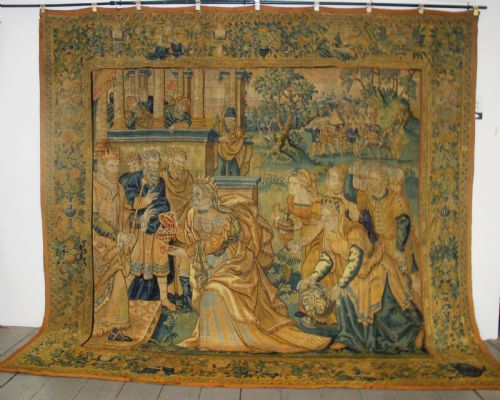
Blue Green Tapestry
A blue green tapestry brings historic textile artistry into modern spaces through woven scenes of foliage, mythology, and pastoral landscapes.
Blue Green Tapestry
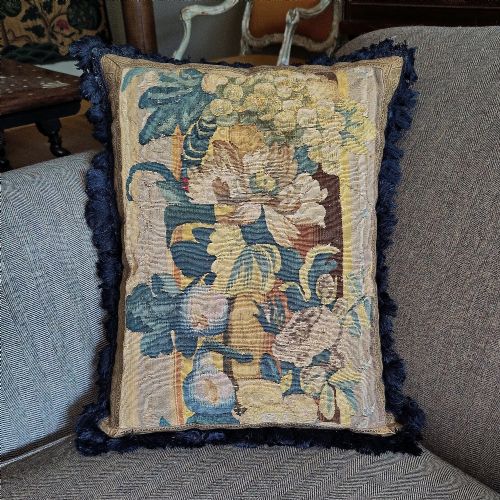
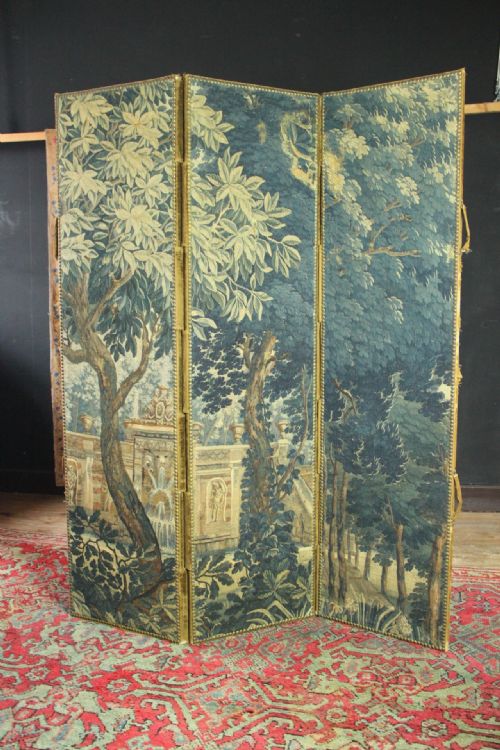
When searching for a blue green tapestry, buyers encounter historic woven works predominantly originating from Flemish and French workshops. The selection centres heavily on seventeenth-century and eighteenth-century pieces, including large wall hangings, verdure panels, folding screens, and decorative cushions.
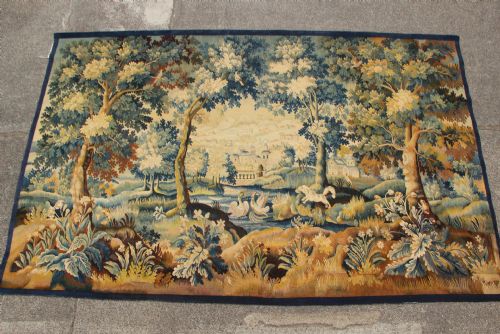
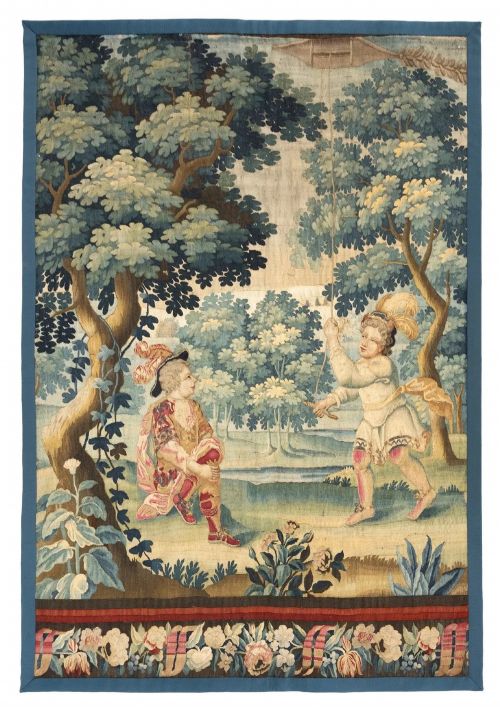
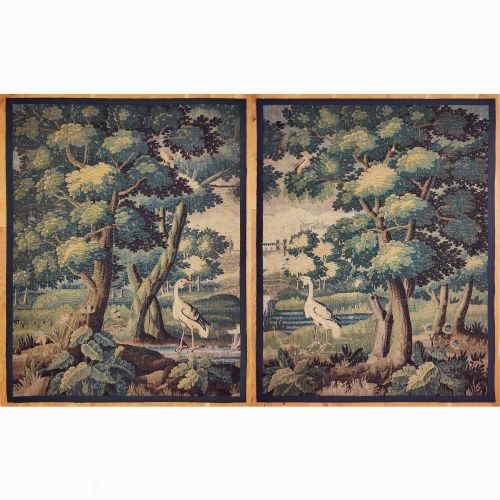
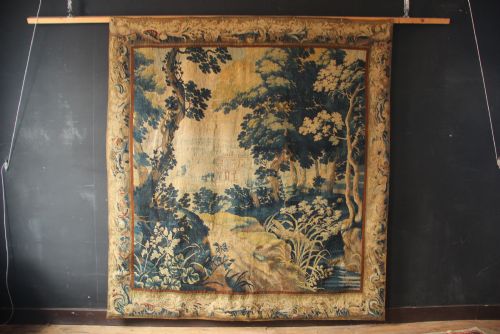
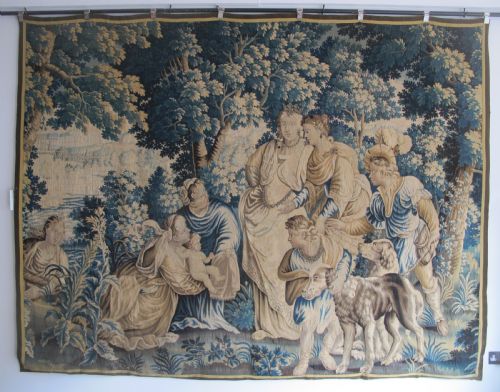
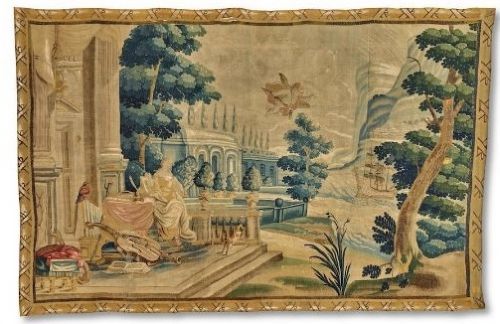
The most common formats on this page are verdure tapestries depicting lush woodland foliage and garden scenes in deep indigo, teal, and sage tones. Alongside these botanical landscapes, collectors find Biblical narratives, mythological tableaus, and fragments salvaged from larger historic textiles.
How these textiles were constructed
Master weavers constructed these pieces using combinations of wool, silk, and linen yarns on vertical or horizontal looms. Silk threads provided luminous highlights for foliage and garments, while sturdy wool and linen formed the foundational warp and dense weft structures necessary for longevity.
Structural elements like wooden frames support folding screens, and brass components finish specific mountings. The dying processes relied on natural pigments that aged to create the characteristic deep blues, vibrant greens, and earthy browns visible today.
Materials documented across the inventory include traditional combinations of wool, silk, and linen supported by wood and brass.
What separates standard panels from exceptional works
Quality in a blue green tapestry depends on the complexity of the narrative composition and the finesse of the chromatic shading. Finer pieces demonstrate meticulous colour blending across botanical elements and animal figures, achieving a sense of depth that simpler weaves lack.
The preservation of the original silk threads and the integrity of the borders significantly influence the standing of a piece. Complete wall hangings and large grand scale panels retain more of their original artistic intent than fragmented borders or heavily restored cushions.
The Blue Green Tapestry Glossary
- Verdure
- A tapestry featuring a dominant landscape of stylized trees, plants, foliage, and occasionally birds or animals. These forest scenes often transition into deep blue and green hues as the dyes age.
- Warp
- The strong stationary threads stretched vertically on a loom that hold the tension of the weave. The coloured weft threads pass over and under these structural lines.
- Weft
- The transverse threads woven horizontally through the warp to create the visible image and pattern. In antique pieces, these are primarily wool and silk.
- Aubusson
- A style of tapestry originating from the town of Aubusson in France, known for floral designs and pastoral landscapes. These works often incorporate muted blue and green palettes.
- Flemish
- Pertaining to the historic region of Flanders, renowned for producing intricate narrative and landscape tapestries during the sixteenth and seventeenth centuries.
Blue Green Tapestry: Frequently Asked Questions
How were old tapestries displayed?
Historic households hung these textiles directly onto stone walls to provide insulation against dampness and cold draughts during winter months. The large panels also served to decorate vast chamber interiors with rich scenes of nature and mythology.
Modern interiors generally mount them on specialised batten systems or display them behind protective framing. Folding screens offer an alternative freestanding method to incorporate textile art into room layouts.
Can I use a tapestry as a floor rug?
These historic textiles are constructed from delicate wool and silk fibres that cannot withstand the friction and heavy foot traffic associated with floor use. Placing them on the floor accelerates the wear of the delicate weft threads and destroys the structure.
They function strictly as wall hangings, decorative screens, or ornamental cushion covers. Keeping them vertical preserves the fragile material integrity.
How do I clean an antique textile?
Professional textile conservators should handle any deep cleaning or wet washing required by antique wall hangings. Domestic cleaning methods utilise harsh chemicals or water volumes that cause irreparable shrinkage and dye bleeding in seventeenth-century wool and silk.
Routine maintenance involves very gentle surface dusting with a soft brush or low-suction vacuum filtered through mesh. Preventing direct exposure to strong sunlight stops further fading of the blue and green dyes.
What is a verdure panel?
A verdure panel is a specific category of decorative weaving dominated by botanical subjects like dense leaves, trees, and garden shrubbery. These scenes occasionally feature small birds or distant chateaux nestled within the foliage.
The colour palette relies heavily on deep blues, greens, and ochres. They were exceptionally popular in Flemish and French workshops during the seventeenth and eighteenth centuries.