







Baroque Tapestry Panel
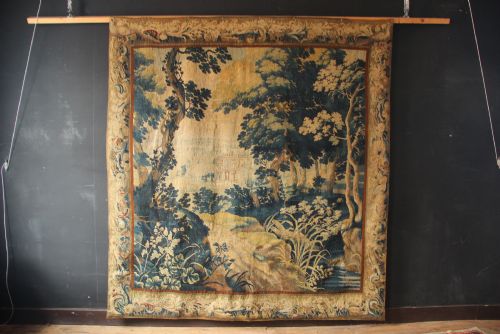
A baroque tapestry panel brings rich textile art into a room, offering centuries-old woven scenes of verdant foliage and classical figures.
Baroque Tapestry Panel
When you search for a baroque tapestry panel, you encounter historic wall hangings, framed textile art, and cushion covers originating from the seventeenth and eighteenth centuries. These pieces display the elaborate ornamentation and natural motifs characteristic of the period, ranging from full wall tapestries to smaller fragments.
Origins span across continental workshops, encompassing Flemish, French, Italian, and German pieces alongside later Victorian revivals. Whether mounted as wall art or utilised in soft furnishings, each panel preserves traditional textile techniques from centuries past.
Materials and construction
These textiles rely primarily on wool and silk threads, woven on looms or meticulously worked by hand as embroidery and needlework. Artisans built intricate pictorial surfaces by combining these natural fibres, often mounting the completed textiles onto canvas or framing them in wood and glass.
Certain panels incorporate rich variations such as ciselé silk velvet, adding tactile depth to the woven or embroidered design. The longevity of these pieces depends upon the quality of the original wool and silk yarns used by weavers in continental workshops.
Baroque Tapestry Panel Retail Price Guide 2026
Typical asking prices for baroque tapestry panel among the pieces listed under this phrase on Sellingantiques today, from the lower quarter to the upper quarter. They describe what is for sale here now, not the wider market.
Materials recorded across the inventory include silk, wool, linen, canvas, glass, and wood.
Judging quality and execution
The upper tier of these textiles displays exceptional pictorial clarity, where the interplay of wool and silk creates distinct depth within verdure landscapes and figures. Finer pieces maintain structural integrity across their woven ground, preserving the crisp details of classical masks and foliage.
Lesser examples show heavier wear to the fibres or more rudimentary needlework execution, though fragments still retain the characteristic palette of the period. The distinction lies in the finesse of the threadwork and the preservation of the original composition.
The Baroque Tapestry Panel Glossary
- Verdure tapestry
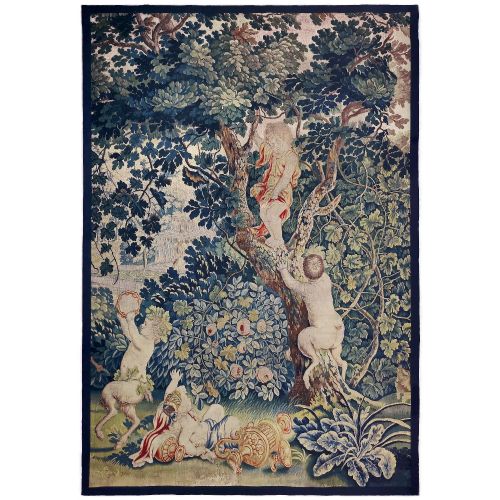
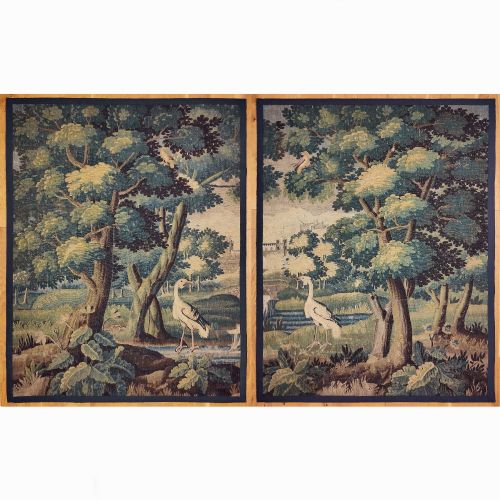
- A woven wall hanging featuring a landscape dominated by lush foliage, trees, and often birds or animals. These scenes form the most common type of survival from the period.
- Tapestry fragment
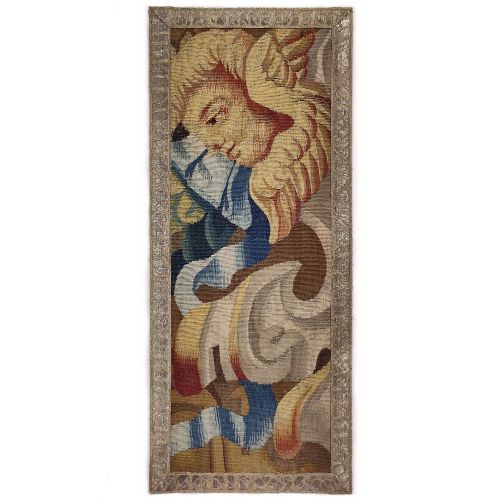
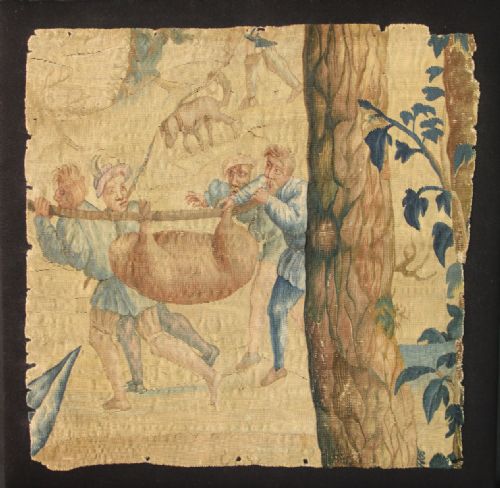
- A surviving portion of a larger wall hanging, salvaged and repurposed over the centuries. These pieces are often mounted or framed for modern display.
- Ciselé velvet
- A velvet textile where the pattern is created by combining cut and uncut loops of silk. This technique produces a textured, contrasting surface found in historic hangings.
- Needlework panel
- A textile design created by hand stitching yarn onto a canvas or linen ground, rather than being woven on a loom. Eighteenth-century examples frequently employ this method.
- Grotesques
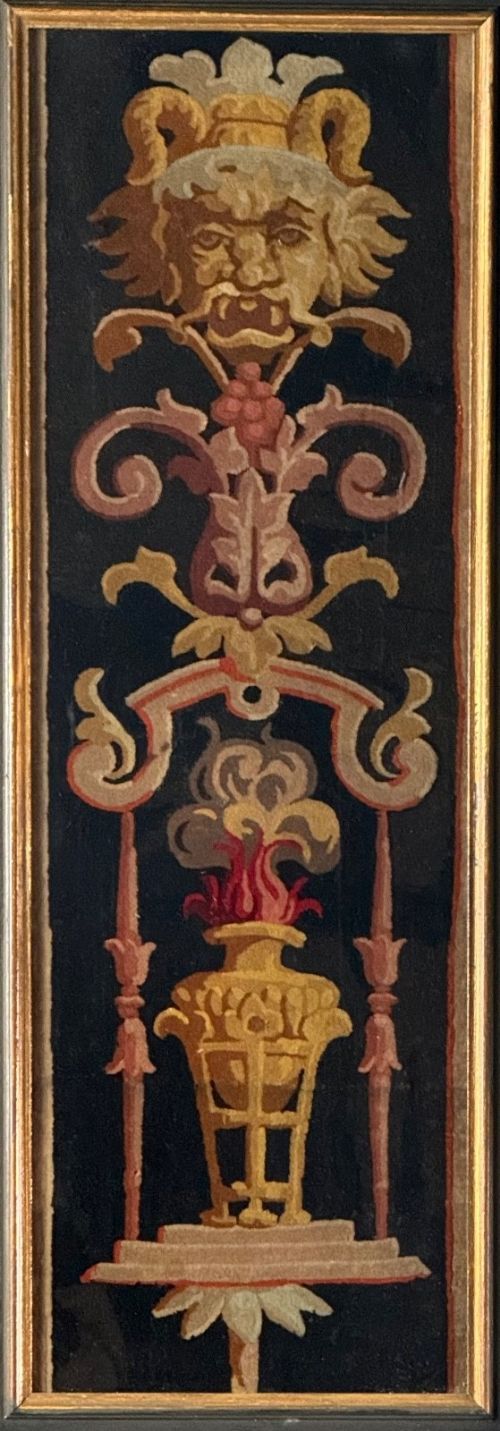
- Decorative motifs featuring fantastical combinations of human, animal, and floral forms. These classical designs appear frequently in seventeenth-century textile art.
Baroque Tapestry Panel: Frequently Asked Questions
How were baroque tapestry panels used?
Historic households utilised these textiles primarily as wall hangings to insulate stone rooms and display wealth through intricate narrative or landscape scenes. Larger pieces covered entire walls, whilst smaller fragments were often adapted into cushion covers and soft furnishings.
Over time, surviving sections were frequently salvaged from larger damaged hangings and framed as independent works of art. Today, they serve a decorative purpose as wall art or textile displays within traditional and contemporary interiors.
What is a verdure tapestry?
A verdure tapestry depicts a stylised forest landscape filled with lush trees, leafy plants, and occasionally small animals or birds. These naturalistic scenes were exceptionally popular across seventeenth and eighteenth-century Flemish and French workshops.
The colour palette relies heavily on greens, blues, and earth tones that have often mellowed gracefully over centuries. They bring a calm, organic element to interior spaces while showcasing traditional weaving techniques.
How do I distinguish seventeenth and eighteenth-century panels?
Seventeenth-century panels often exhibit dense, dramatic compositions with heavy chiaroscuro and elaborate architectural or classical motifs. Flemish and French pieces from this era frequently feature intricate verdure or mythological subjects.
Eighteenth-century examples tend toward lighter, more open compositions influenced by changing artistic tastes. Examining the weave structure, wool quality, and stylistic details helps clarify the period of origin.
Are tapestry cushions original?
Many cushions utilise authentic seventeenth or eighteenth-century tapestry fragments or needlework panels sewn onto later backing materials. These historic textiles were frequently repurposed from larger worn hangings to preserve the usable portions of the weave.
This practice allows collectors to live with antique textiles in a functional format. Each cushion preserves genuine period handiwork adapted for modern soft furnishings.
How do I care for a textile panel?
Protect antique textiles from direct sunlight to prevent fading of the delicate wool and silk threads. Wall-mounted panels should be hung securely away from sources of excessive moisture or heat.
Professional mounting behind conservation glass helps safeguard fragile needlework and woven fragments from dust and handling. Gentle maintenance ensures these centuries-old materials remain preserved.