
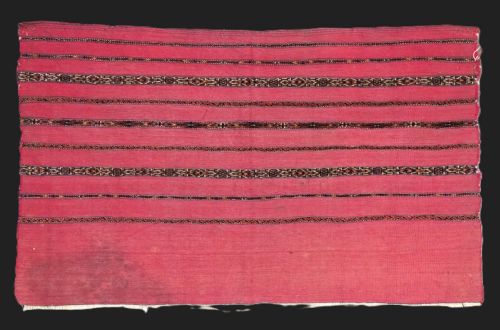


Woven Chuval Bag Face
When you search for a woven chuval bag face, you are looking at tribal Turkmen weavings designed for household storage in Central Asia.
Woven Chuval Bag Face
A woven chuval bag face represents the front portion of a traditional Turkmen storage sack used for domestic organisation within nomadic tents. These textile fragments and complete bag faces originate primarily from Central Asian tribal groups such as the Tekke, Ersari, Saryk, and Yomut. Surviving examples date from the eighteenth century through to the early twentieth century, reflecting a rich heritage of nomadic textile production.
The format typically displays repeating medallions known as guls arranged across the field, alongside subsidiary design elements like hanging loops or banded panels. Many pieces on this page are Tekke Turkmen productions, whilst others stem from Ersari or Yomut weavers. Collectors encounter formats ranging from square fragments to elongated rectangular wall hangings.
Materials and Construction
Weavers constructed these textiles primarily using wool foundations and pile, supplemented occasionally by cotton and silk highlights. Natural dyes provided the deep red, crimson, and white colourways characteristic of Turkmen weaving traditions.
The structural density varies considerably, with certain examples described as having a very fine weave. Artisans knotted the pile onto wool warps and wefts, finishing the edges with sturdy selvedges and sometimes retaining original hanging loops at the top.
Several survival examples retain their original hanging loops, ready to be hoisted straight back onto a tribal tent wall.
Assessing Quality and Merit
Quality in a woven chuval bag face depends upon the density of the knotting and the precision of the drawing within the guls. Pieces with very fine weaves and crisp geometric execution demonstrate superior technical skill by the tribal weaver.
The presence of scarce design variations, such as specific gul types or intricate elem borders at the base, elevates the interest of an individual textile. Colour retention and the thoughtful integration of white cotton and crimson silk details also distinguish finer examples from standard productions.
The Woven Chuval Bag Face Glossary
- Chuval
- A large tent storage bag made by Central Asian nomads. These sacks held household belongings and bedding inside the dwelling.
- Gul
- A primary medallion or repeating motif found across Turkmen rugs and bag faces. Different tribes utilised distinct gul patterns to signal their lineage.
- Torba
- A smaller storage bag compared to the chuval, used for specific household items. These pieces share similar tribal design vocabulary.
- Mafrash
- A rectangular storage bag or trapan piece used for bedding, sometimes constructed with panel designs. They form part of the broader category of Turkmen tribal containers.
Woven Chuval Bag Face: Frequently Asked Questions
What is a chuval bag face?
A chuval bag face is the decorated front section of a nomadic storage sack from Central Asia. These textiles were originally utilised by tribes for storing household goods inside tents.
Over time, the back panels wore away or were removed, leaving the decorative pile-woven face to survive as a textile fragment or wall hanging.
How were chuval bag faces used?
Nomadic families used these large bags within their dwellings to store bedding, clothing, and personal possessions. They stacked them inside the tent when moving camp.
Today, collectors remove them from active storage duties to display them as decorative wall art or flat textiles.
How do you identify different tribal origins?
Tribal attribution relies on the structure, colour palette, and specific gul motifs woven into the piece. Tekke, Ersari, Yomut, and Saryk weavers each employed characteristic design vocabularies.
Examining the secondary colours, wool quality, and border arrangements helps differentiate between these various Central Asian groups.
Are these pieces fragile?
Most antique bag faces consist of durable wool pile on sturdy foundations, designed for daily nomadic life. However, age and past use mean the condition can vary across individual fragments.
Gentle handling and appropriate mounting for wall display ensure these textiles remain stable for modern collectors.