


Red Wool Carpet Hanging
When a red wool carpet hanging catches the eye, it brings the rich textural depth of nomadic tribal weaving directly into an interior.
Red Wool Carpet Hanging
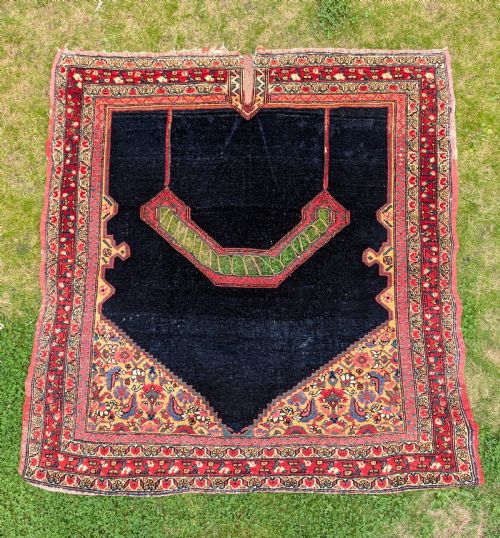
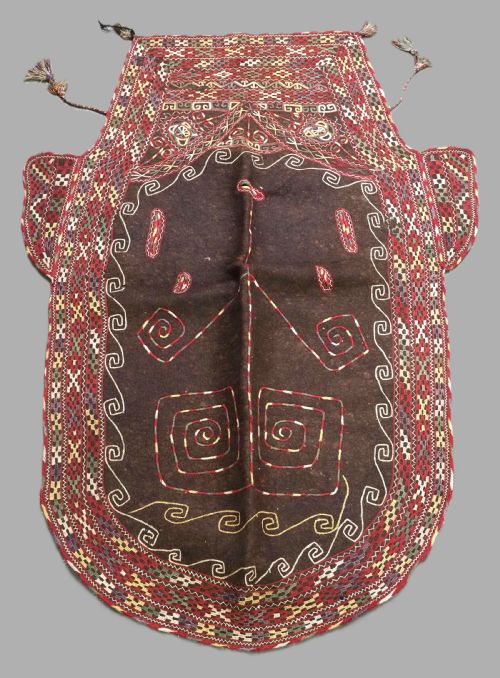
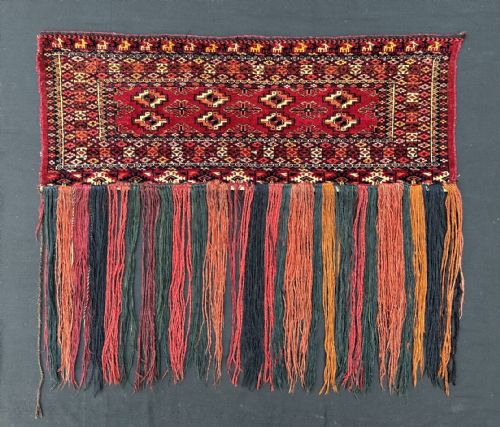
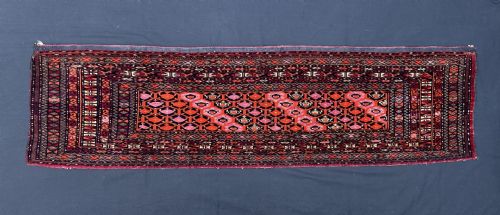
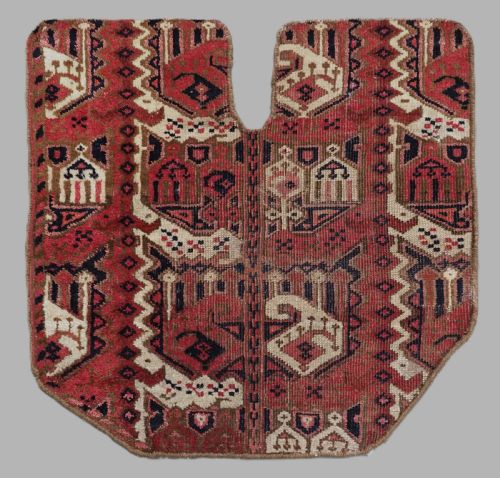
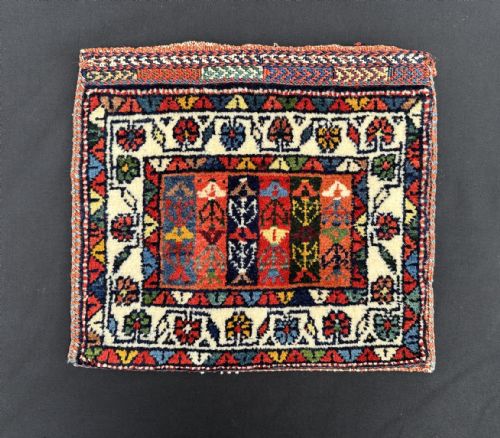
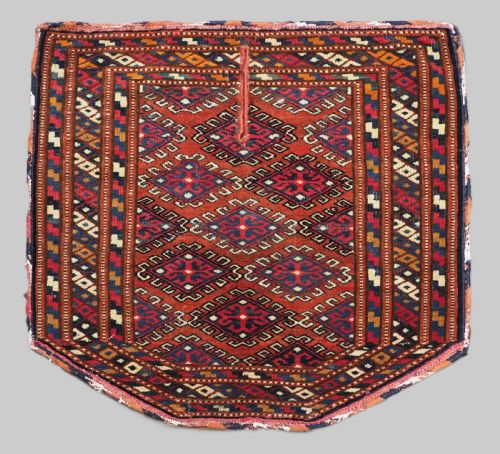
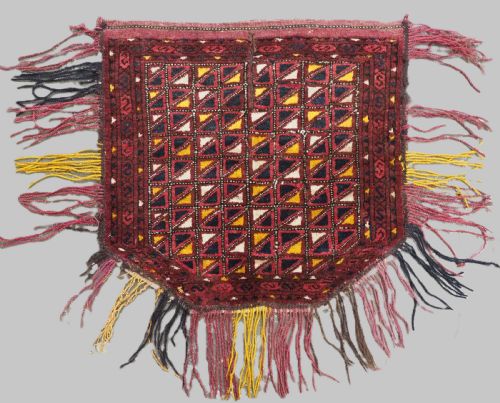
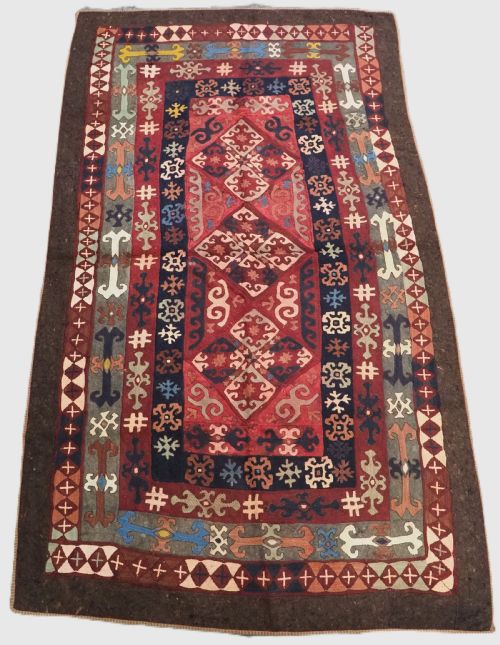
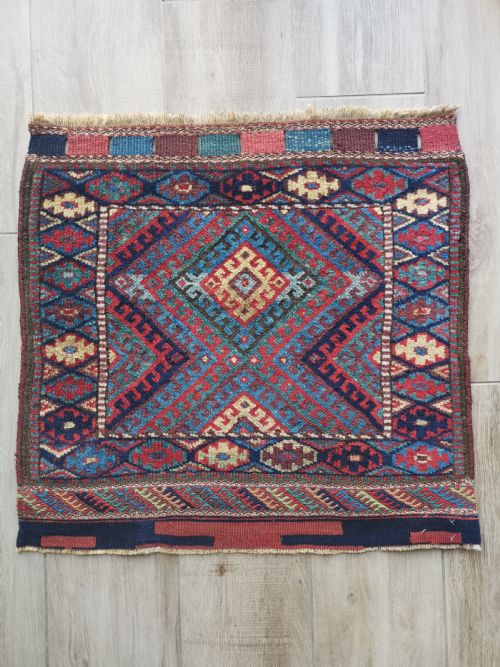
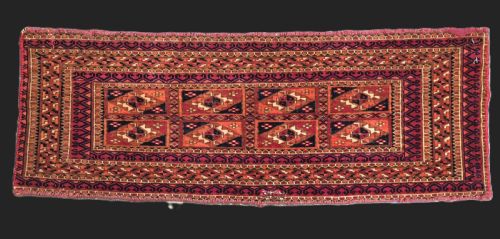
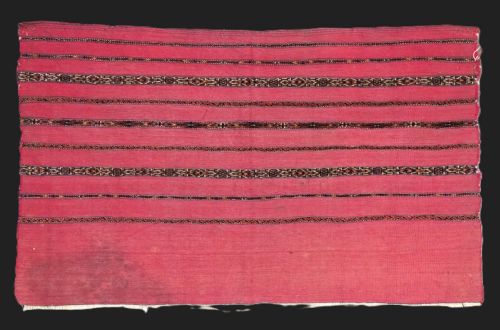
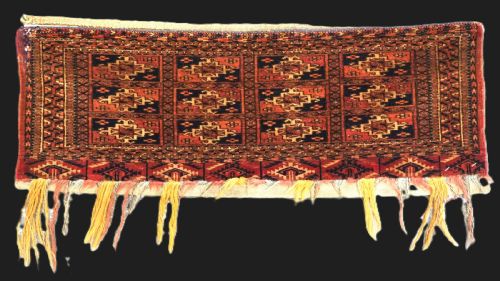
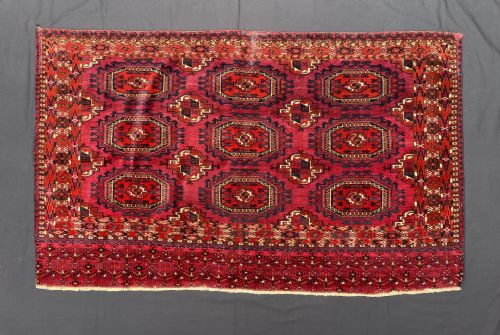
A red wool carpet hanging represents the utilitarian textiles, bags, and covers produced by nomadic and tribal groups across Central Asia, Persia, and the Caucasus. Items originally fashioned as horse blankets, saddle covers, tent bags, and storage compartments find new life today displayed upon walls.
The selections encountered on this page span the nineteenth and early twentieth centuries, encompassing tribal weaving traditions from Yomut, Tekke, Ersari, and Saryk makers. These items transition from functional nomadic equipment into decorative panels suited for modern domestic display.
How they were made
Weavers utilised hand-spun wool and natural dyes to construct these heavy textiles, often incorporating cotton and felted wool foundations. Embroidery techniques using silk thread and wool added intricate detail to ceremonial horse blankets and tent bags.
Nomadic groups relied on durable flatweave and pile-weaving structures designed to withstand rigorous daily use in transit. Natural colourants yielded deep madder reds and contrasting motifs that define the visual impact of the pieces.
Listings feature nineteen-century nomadic weavings produced from wool, cotton, and felted wool across Central Asian and Caucasian regions.
What varies in quality
The refinement of the knotting or embroidery density marks the distinction between standard utilitarian items and masterworks produced for tribal leaders or ceremonies. Finer weaves allow for sharper definition within complex geometric guls and border patterns.
The integrity of the natural dyes and the preservation of original tassels, borders, and flatweave backs heavily influence the character of each piece. Superior examples retain their saturated colour palettes and structural completeness despite decades of nomadic use.
The Red Wool Carpet Hanging Glossary
- Gul
- A medallion motif repeated across tribal weavings, often identifying the specific clan or oasis of the maker. These octagonal or polygonal designs form the backbone of Central Asian carpet geometry.
- Torba
- A small horizontal storage bag traditionally used inside a nomadic tent. They frequently display elaborate face designs while retaining plain-weave backs.
- Chuval
- A large tent storage bag utilised by Turkmen tribes for household provisions. Their face panels showcase traditional tribal iconography.
- Asmalyk
- A pentagonal ceremonial trapping mounted on the flanks of a bride's camel during wedding processions. These highly decorative pieces represent the pinnacle of tribal textile artistry.
- Engsi
- A tribal rug functioning as a tent door hanging rather than a floor covering. They feature a distinctive quartered field design separated by a candelabra motif.
Red Wool Carpet Hanging: Frequently Asked Questions
How do I hang a textile safely?
Mounting heavy wool textiles requires weight distribution across a fabric sleeve or custom wooden support rather than direct piercing. This prevents the warp threads from distorting under gravity.
Professional conservators recommend avoiding direct sunlight and heavy pinch-clips that damage delicate wool and cotton fibres over time.
What tribes made these weavings?
Nomadic and semi-nomadic confederations such as the Yomut, Tekke, Ersari, and Saryk produced the majority of these pieces across Central Asian oases and steppes. Other regional groups including the Afshar and Shahsavan contributed distinct Persian and Caucasian traditions.
Each tribe utilised characteristic colour combinations, wool qualities, and medallion structures that distinguish their output from neighbouring groups.
How should I clean my textile?
Surface dust is best removed through gentle suction with a low-power vacuum applied over a protective mesh screen. Professional textile cleaning remains necessary for deeper interventions.
Water and standard detergents can cause natural dyes to bleed or weaken ancient wool and cotton threads.
Are these pieces rugs or wall hangings?
Many items began their existence as functional objects such as saddle covers, horse blankets, or storage bags rather than floor carpets. Their transformation into wall hangings preserves fragile pile and embroidery from foot traffic.
Viewing them vertically allows the intricate repeat patterns and structural details of the weave to be fully appreciated.