
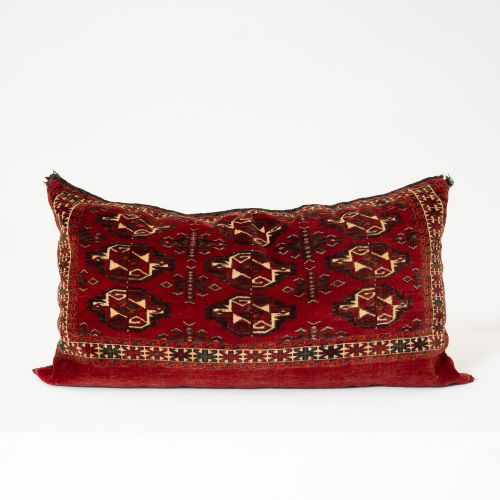
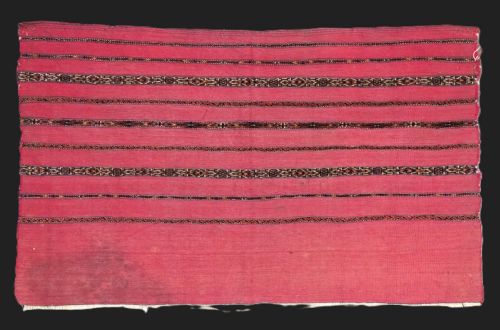
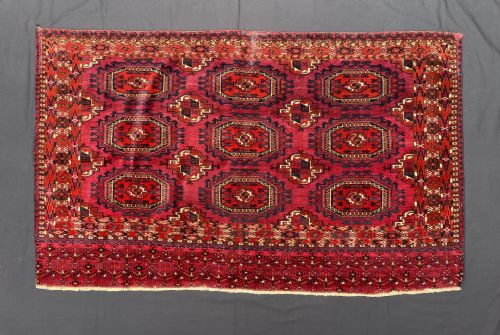


Wool Turkmen Chuval
Wool turkmen chuval items are traditional Central Asian tribal storage bags and bagfaces woven by nomadic groups for domestic utility and household organisation.
Wool Turkmen Chuval
A wool turkmen chuval is a large tent storage bag or bagface originating from Central Asian tribal groups such as the Tekke, Ersari, Yomut, and Saryk tribes. These pieces functioned within nomadic encampments to store household goods, bedding, and belongings inside traditional dwellings.
Most examples encountered here appear as surviving bagfaces or complete bags dating from the mid-nineteenth century through to the early twentieth century. Common formats include pieces featuring repeating primary guls, such as six, nine, or thirty gul arrangements, alongside complete examples retaining their plain weave backs and hanging loops.
Tribal weavers produced these textiles across various regional centres including the Akhal Oasis and the Beshir region. Variations range from fragments and cushion adaptations to large storage bagfaces incorporating specialised designs like the kizil or ak colour palette.
How They Were Made
Weavers constructed these tribal textiles primarily using hand-spun wool foundations paired with natural dyes to achieve deep crimson, red, and ivory tones. Cotton and silk occasionally appear as structural elements or supplementary highlights within specific tribal formats.
Production techniques relied on tight knotting and precise geometric layouts, resulting in durable pile surfaces designed to withstand heavy nomadic use. Many surviving pieces retain finished elem panels at the lower borders and plain weave flatweave backs.
Certain storage bagfaces preserve original hanging loops, ready to resume duty on a modern wall after a century or two of rest.
What Varies in Quality
Knot density and structural fineness define the upper tiers of these tribal weavings, where extremely tight weaving showcases intricate geometric layouts. Examples featuring scarce medallion variations or complete backs with original hanging loops demonstrate higher preservation levels.
The vibrancy and depth of the natural dyes separate standard utility pieces from exceptional tribal examples. The clarity of secondary motifs within the elem panels and the overall integrity of the wool pile further distinguish the range.
The Wool Turkmen Chuval Glossary
- Chuval
- A large tent storage bag produced by Turkmen tribes. These were traditionally used for domestic storage inside nomadic tents.
- Gul
- A repeating primary medallion motif characteristic of Turkmen carpet and textile design. Different tribal groups utilised distinct gul patterns.
- Torba
- A smaller nomadic storage bag format. These items served similar household storage functions to larger chuvals.
- Kizil
- A red-ground colour palette typical of specific Turkmen tribal weaving traditions. The term translates to red in Turkic languages.
Wool Turkmen Chuval: Frequently Asked Questions
What was a chuval used for?
Nomadic families utilised these large bags inside traditional tents to store bedding, clothing, and domestic belongings. They hung from the lattice framework or rested on the floor.
Over time, many bags were separated into individual bagfaces for display or adaptation into smaller furnishing items.
How do you identify tribal origins?
Specific design structures, primary guls, and colour distributions indicate which tribe wove a particular piece. Tekke, Ersari, Yomut, and Saryk groups each employed distinct decorative vocabularies.
Structural materials like cotton or silk usage also provide clues regarding regional production centres.
Are complete bags common?
Most surviving examples exist as flat bagfaces rather than complete storage containers. The constant friction of daily nomadic use meant pile fronts often outlived plain weave backs.
Examples retaining their original backs and hanging loops are less frequently encountered.
How should I care for a textile?
Keep tribal weavings away from direct sunlight to protect natural dye pigments from fading. Gentle vacuuming without a rotating brush helps remove surface dust safely.
Professional textile conservation specialists should handle any deep cleaning requirements.