



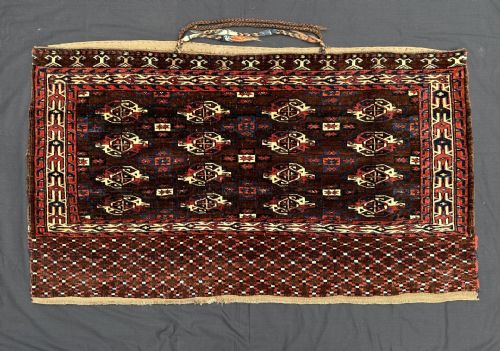

Trans Caspian Weaving
These trans caspian weaving pieces are tribal wool textiles from the steppes, offering rugged nomadic character and rich history for your walls.
Trans Caspian Weaving
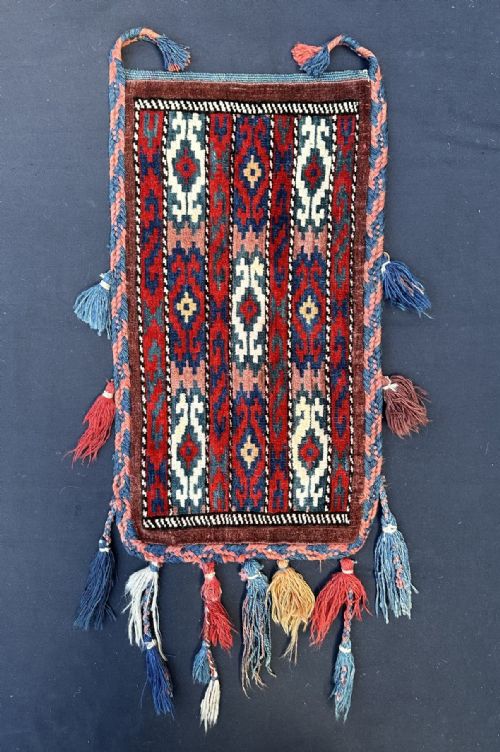
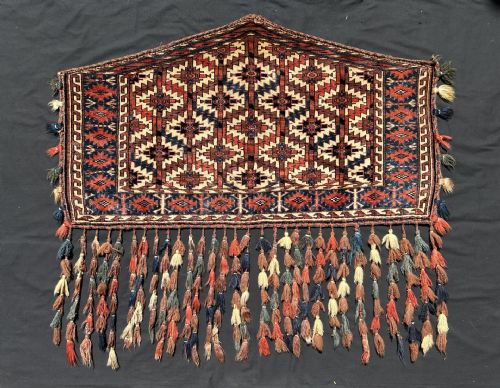
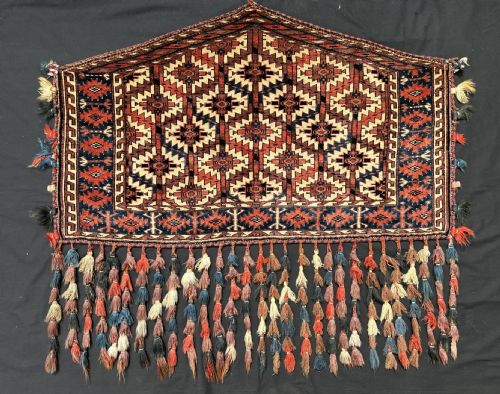
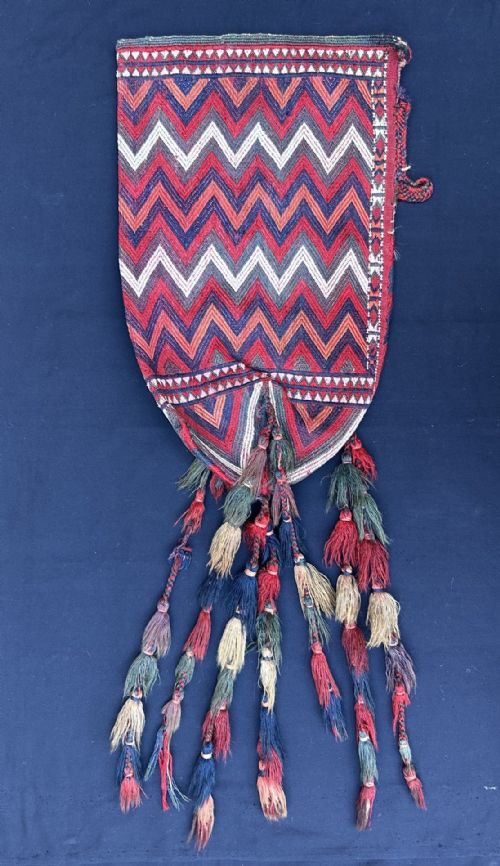
When you search for trans caspian weaving, you are looking at nineteenth-century tribal textiles originating from the Central Asian steppes and Turkmenistan. These nomadic works include utilitarian items such as spindle-bags, asmalyks, torbas, kap, uk bash, dizlyks, and storage-bags produced by the Yomut tribes. Most examples encountered here date from the decades between eighteen sixty and eighteen ninety.
These pieces function primarily as tribal textile art and wall hangings, carrying deep cultural meaning within nomadic life. The forms range from small spindle-bags to paired asmalyks, each serving specific domestic or ceremonial purposes. They reflect the traditional visual language of Turkmen tribal makers working in wool.
Materials and construction
The makers of trans caspian weaving relied primarily on hand-spun wool and standard wool fibres, combined with cotton for structural support. These natural materials provided the necessary durability for items subjected to rigorous nomadic daily use. Weavers utilised natural dyes to colour the wool, producing deep tones that developed rich patination over time.
The construction methods reflect traditional Turkmen tribal techniques handed down through generations. Artisans knotted and wove these textiles by hand on portable looms set up across the Trans-Caspian steppes. The resulting fabric is dense, resilient, and structurally suited to the demanding environments of Central Asian nomads.
Current listings feature pieces exclusively from the eighteen sixties, seventies, eighties, and nineties, employing wool, cotton, and natural dyes.
Distinctions in quality
The quality of trans caspian weaving depends largely on the tightness of the weave and the fineness of the hand-spun wool. Superior examples display precise knotting density and disciplined execution of traditional tribal motifs. Artisans who maintained strict control over their spinning and dyeing achieved greater visual clarity.
Material selection also dictates the distinction between ordinary and exceptional pieces. The purity of the natural dyes and the preservation of the original wool fibres influence the overall aesthetic power of the textile. Pieces retaining vibrant, stable natural colours and intact structural borders stand apart in any collection.
The Trans Caspian Weaving Glossary
- Asmalyk
- A large, pentagonal or trapeze-shaped camel caparison used in Turkmen wedding processions. These decorative hangings display intricate tribal patterns.
- Torba
- A small horizontal storage bag woven by Turkmen nomads for domestic use inside the yurt. They feature detailed geometric fields.
- Chuval
- A large tent-bag utilised for storing household goods and bedding within nomadic dwellings. These rectangular pieces exhibit field designs divided into guls.
- Uk bash
- A decorative wool textile designed to cover the wooden wall-lattice joints inside a Turkmen yurt. They represent specialised nomadic interior furnishings.
- Yomut
- One of the major Turkmen tribes inhabiting the Trans-Caspian steppes. Their weaving is distinguished by specific palette choices and geometric layouts.
Trans Caspian Weaving: Frequently Asked Questions
What is trans caspian weaving?
Trans caspian weaving refers to nineteenth-century wool textiles created by nomadic tribes in Central Asia and the Trans-Caspian steppes. These handmade works include functional bags, tent decorations, and wall hangings.
Produced by groups such as the Yomut tribe, these pieces utilise natural dyes and hand-spun wool. They embody the traditional aesthetic of Turkmen tribal art.
How were these textiles used?
Nomadic families utilised these woven pieces for practical storage, interior decoration within tents, and ceremonial processions. Items like spindle-bags held working tools, while asmalyks adorned wedding camels.
These textiles served vital roles in daily nomadic existence and cultural rituals. They combined utility with symbolic tribal identity.
How do I hang these textiles?
These pieces function well as wall hangings due to their flat-woven or piled construction and manageable dimensions. Proper mounting requires professional conservation methods that distribute weight evenly across the textile.
Avoid direct sunlight to protect the natural dyes used in the wool. Using a cotton sleeve stitched to the reverse prevents distortion over time.
How do I date these pieces?
Dating relies on examining the materials, structural wear, and dye types visible in the weave. Nineteenth-century examples typically show hand-spun wool and early natural colour palettes.
Stylistic conventions and tribal attributions also help narrow the period of origin. Comparing structure against known nineteenth-century Turkmen examples provides reliable temporal markers.