


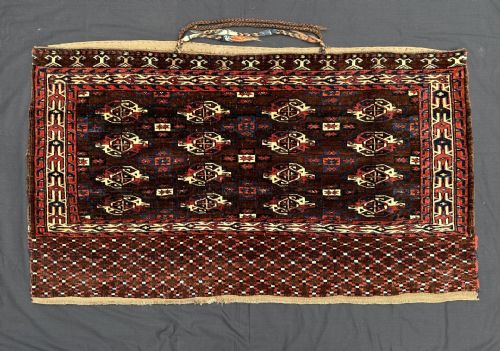


Nomadic Tent Storage
Nomadic tent storage consists of tribal bags and trappings woven by Central Asian groups to organise possessions inside portable dwellings.
Nomadic Tent Storage
When you search for nomadic tent storage, you encounter functional tribal textiles that served practical purposes within portable dwellings across Central Asia. These items include large storage bags known as chuvals, smaller torbas, and specialised tent pole bags.
The pieces available on this page originate from tribal groups such as the Yomut, Ersari, Tekke, and Saryk. Dating from the mid-nineteenth century to around nineteen hundred, these textiles reflect the utilitarian needs of nomadic life.
Most examples survive as individual faces or complete bags retaining their plain weave backs. Collectors encounter various formats designed for specific household tasks within the Turkmen tradition.
Factors of Quality
The refinement of the knotting and the crispness of tribal guls separate exceptional pieces from standard examples. Finer execution in the weaving enhances the clarity of geometric motifs across the bag face.
Completeness also influences the character of a piece, as examples retaining their original plain weave backs offer a more complete representation of tribal utility. The vibrancy and retention of natural dye colours further distinguish superior nomadic storage items.
The inventory spans the mid-nineteenth century to nineteen hundred, focusing on Yomut and Ersari bag faces.
The Nomadic Tent Storage Glossary
- Chuval
- A large nomadic storage bag used by Turkmen tribes for bedding and household goods. These pieces typically feature multiple rows of guls.
- Torba
- A smaller horizontal storage bag traditionally hung inside the tent. They often display intricate border patterns and central medallions.
- Gul
- A primary medallion or repeating motif used in Turkmen carpet and bag design. Each tribal group utilised distinct forms.
- Kepse
- A specific geometric gul pattern frequently associated with Yomut weaving. It presents a diamond lattice structure.
Nomadic Tent Storage: Frequently Asked Questions
What were nomadic storage bags used for?
Nomadic families utilised these woven bags to store clothing, bedding, and household provisions inside their portable tents. The sturdy construction protected contents from dampness and dust during seasonal migrations across the steppes.
Different formats served specific household roles, from large tent bags to smaller utility pouches and specialised covers for structural poles.
How do I identify different Turkmen tribes?
Tribal attribution relies on specific design vocabulary, particularly the repeating guls and secondary motifs woven into the piece. Yomut, Ersari, Tekke, and Saryk weavers each employed distinct structural layouts and colour combinations.
Examining the handling of wool, border arrangements, and structural details helps differentiate between the various Central Asian groups.
Can I hang these bags on the wall?
Many collectors display these tribal textiles as wall art to showcase their intricate geometry and texture. Their flat structures adapt well to vertical display provided proper mounting methods distribute the weight evenly.
Pieces complete with their original backs or specialised shapes offer a direct link to their functional origins in nomadic dwellings.
What is the difference between a chuval and a torba?
A chuval is a large rectangular storage bag designed for heavy household items and bedding within the tent. These typically feature prominent rows of primary guls across the face.
A torba is notably smaller and wider in proportion, intended for lighter storage and specific domestic uses. They often display finer detail and varied border compositions.