






Yomut Carpet Bag
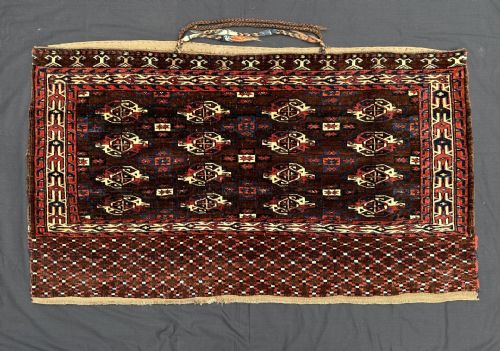
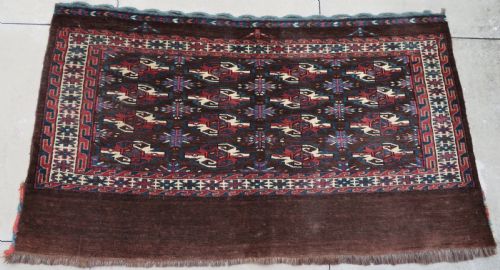
These yomut carpet bag examples are tribal weavings from Central Asia created for nomadic life, prized by collectors for their striking geometric designs.
Yomut Carpet Bag
When you search for a yomut carpet bag, you encounter various forms of Turkmen storage weavings originating from the Trans-Caspian Steppes. These nomadic items include pieces designated as torbas, chuvals, kap structures, and spindle bags.
The objects on this page span several decades from the nineteenth century into the early twentieth century. They represent the tribal and nomadic output of Turkmen makers working in Central Asia.
How they were made
These textiles rely on hand-spun wool and cotton foundations combined with natural dyes and dyed yarn. Artisans wove them using traditional tribal methods suited to nomadic utility.
Makers utilised flatweave techniques alongside piled construction to create durable storage bags. The structures range from banded flatweaves to finely woven pile pieces featuring distinct tribal motifs.
Listings feature cotton foundations alongside hand-spun wool and natural dyes.
What varies in quality
Quality depends upon the fineness of the weave and the clarity of the primary motifs, such as the kepse gul or multi-gul layouts. Tightly packed knots and precise geometric execution elevate certain examples above standard utilitarian items.
The preservation of the natural dyes and the integrity of the plain weave backs or remaining borders also influence the character of each piece. Greater precision in the structural execution distinguishes the finer tribal textiles.
The Yomut Carpet Bag Glossary
- Chuval
- A larger Turkmen tent bag designed for storing bedding and heavy goods. These rectangular storage sacks often display multiple gul medallions.
- Kap
- A general term for a Turkmen bag or container used in nomadic daily life. Such items served practical storage functions in Central Asian tents.
- Gul
- A repeating primary medallion or octagonal motif characteristic of Turkmen carpet design. Each tribal group utilised distinct gul patterns to signify lineage and origin.
- Flatweave
- A textile constructed without pile by interlacing warp and weft threads together. Banded flatweave examples display smooth surfaces rather than knotted pile.
Yomut Carpet Bag: Frequently Asked Questions
What is a yomut carpet bag used for?
These nomadic textiles served practical storage functions inside traditional Turkmen tents on the Trans-Caspian Steppes. Families used them to hold personal belongings, spindle tools, or household bedding.
Today, collectors often display these storage bags as decorative wall art rather than using them for utility. Their distinctive geometric guls provide striking visual focal points in modern interiors.
How do I date a yomut carpet bag?
Dating relies on assessing the materials, natural dye saturation, and structural wear consistent with nineteenth and early twentieth-century tribal production. Pieces from this era typically exhibit hand-spun wool and traditional vegetable dye palettes.
Examining the construction methods and tribal attribution helps narrow the period of origin. Most available examples date from the late nineteenth century up to the early decades of the twentieth century.
What are torbas and chuvals?
Torbas and chuvals are specific functional forms of Turkmen tribal storage bags. A torba is generally smaller in format, while a chuval is built larger for heavy bedding and household goods.
Both forms utilise traditional knotting or flatweave techniques and display characteristic tribal gul designs. Their size and proportions reflect their original domestic purpose within the nomad camp.
How should I care for a tribal bag?
Keep textile pieces out of direct sunlight to protect the natural dyes from fading over time. Gentle vacuuming with a low suction setting helps remove dust without damaging the wool pile.
Avoid hanging heavy pieces by a single point to prevent strain on the antique foundation. Professional textile conservation cleaning is recommended if deep maintenance becomes necessary.