
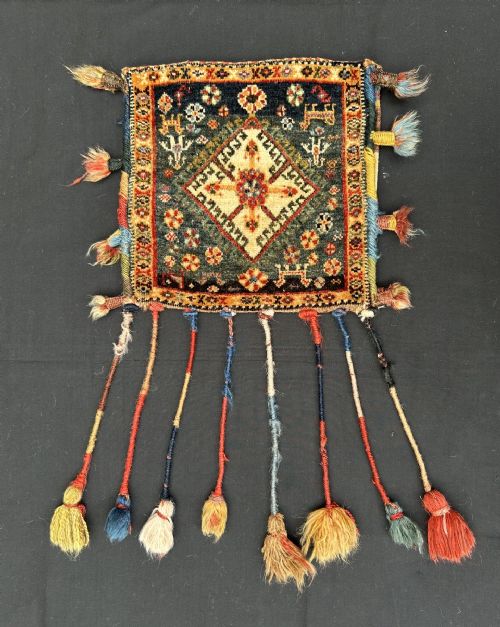
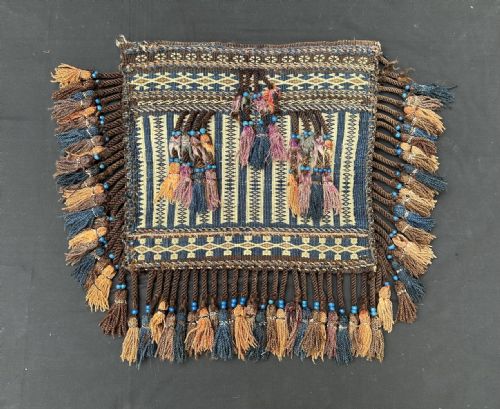
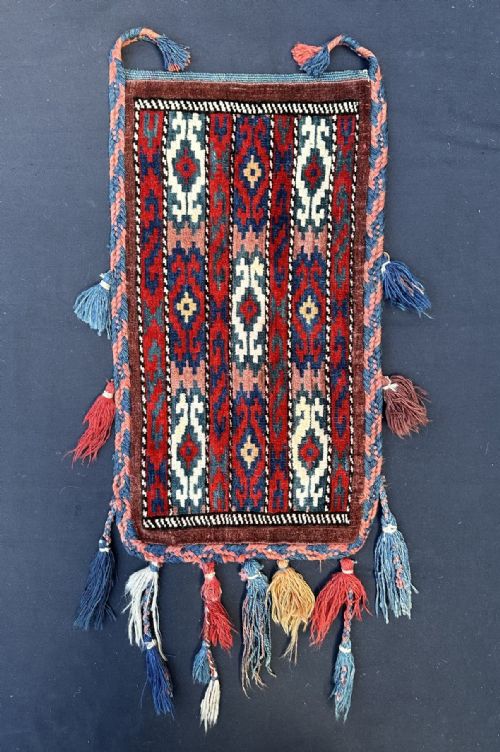
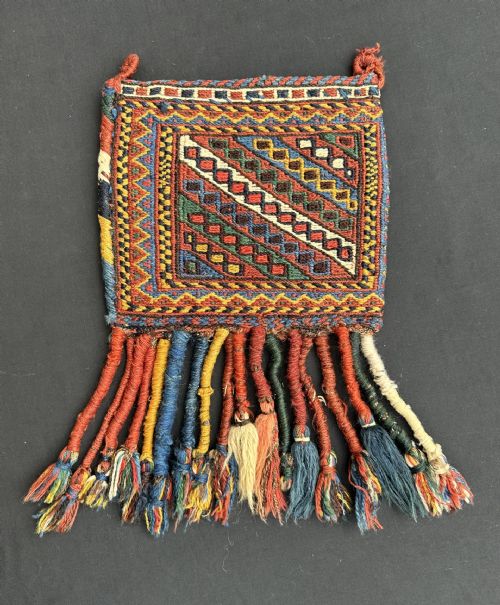


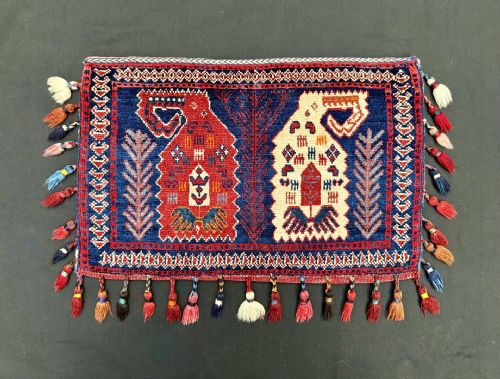
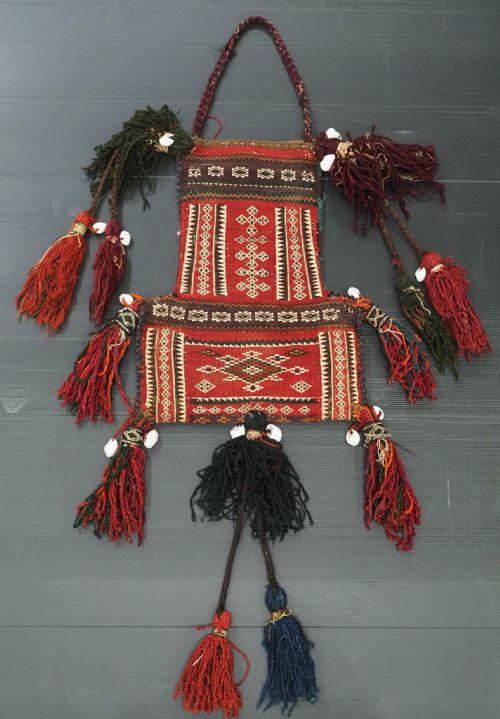


Handwoven Tassel Bag
These handwoven tassel bag examples are tribal carriers and pouches worked in wool, cotton and silk, offering nomadic craft for daily use or display.
Handwoven Tassel Bag
When you search for a handwoven tassel bag, you encounter utilitarian textile items made by nomadic and tribal groups across Persia, Afghanistan, Central Asia and Turkmenistan. These pieces span from the late nineteenth century into the early twentieth century, including items made between 1880 and 1920.
The forms found in this category include vanity bags, storage pouches, spindle bags, salt bags, tent-pole bags, purses and bag face cushions. Groups such as the Qashqa'i Confederacy, Baluch tribes, Yomut Turkmen and Afshar nomads produced these objects for functional household and travel needs.
You are most likely to meet tribal bags bearing traditional regional patterns, often finished with fringes, hanging tassels and decorative elements like cowrie shells or glass beads. These textiles served practical roles in nomadic life before transitioning into decorative pieces.
How they were made
The makers relied on natural dyes to colour the wool, cotton and silk fibres used in the construction of each handwoven tassel bag. These materials provided the structural foundation for intricate pile and flatweave surfaces.
Weavers incorporated decorative flourishes such as glass beads, cowrie shells and detailed silk or wool tassels into the finished structures. Techniques varied from double-sided weaving to specialised pouch construction depending on the specific tribal tradition.
Nomads added cowrie shells to bags because they believed the small shells warded off the evil eye while bouncing along.
What varies in quality
The distinction between standard examples and finer items rests in the tightness of the weave and the complexity of the tribal design. Tighter knotting or weaving yields greater durability and sharper geometric definition.
The vibrancy and depth of the natural dyes used in the wool and silk contribute significantly to the visual merit of the piece. Additionally, the survival and integration of original tassels, cowrie shells and glass beads affect the overall integrity of the textile.
The Handwoven Tassel Bag Glossary
- Natural Dyes
- Colourants derived from plants, insects and minerals rather than synthetic compounds. These substances produce subtle tonal variations across wool and cotton textiles.
- Cowrie Shells
- Small marine shells frequently sewn onto tribal bags for decorative and protective symbolism. They indicate traditional nomadic embellishment practices.
- Vanity-Bag
- A small personal pouch used by nomads for carrying personal items or grooming tools. These pieces often feature compact proportions and suspension loops.
- Spindle-Bag
- A specialised container designed for holding spinning tools and raw fibres during travel. Yomut Turkmen groups commonly produced these elongated pouches.
- Flatweave
- A textile constructed without pile by interlocking warp and weft threads. This technique creates a smooth, durable fabric surface used in many tribal trappings.
Handwoven Tassel Bag: Frequently Asked Questions
What is a handwoven tassel bag used for?
These textiles served practical functions in nomadic households, acting as storage pouches for salt, spindles, or personal items during daily life and travel.
Over time, many of these utilitarian containers transitioned into decorative objects appreciated for their textile artistry and cultural heritage.
How do I care for a tribal bag?
Keep textile pieces away from direct sunlight to prevent natural dyes from fading over extended periods. Gentle vacuuming through a mesh screen helps remove dust without disturbing delicate wool fibres and hanging tassels.
Avoid using water or chemical cleaners on antique organic materials. Professional textile conservation is recommended for any significant cleaning needs.
How can I tell different tribal styles apart?
Distinctive geometric motifs, structural proportions and colour palettes link specific pieces to particular regions such as Persia, Afghanistan or Turkmenistan.
Examining the specific weave structure alongside materials like silk, cotton or wool helps associate a pouch with groups like the Baluch, Yomut Turkmen or Afshar nomads.
Are these bags made of wool?
Many examples are constructed primarily from wool, often combined with cotton foundations and occasional silk elements depending on the specific tribal origin.
Natural dyes and embellishments such as glass beads and cowrie shells frequently accompany the wool construction.