



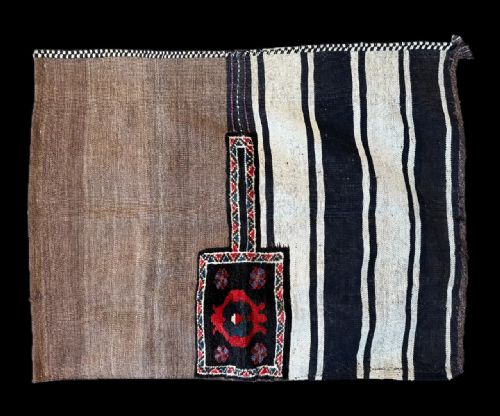
Tribal Flatweave Wall Art
These tribal flatweave wall art pieces are authentic nomadic textiles offering rich colour and texture to interior spaces.
Tribal Flatweave Wall Art
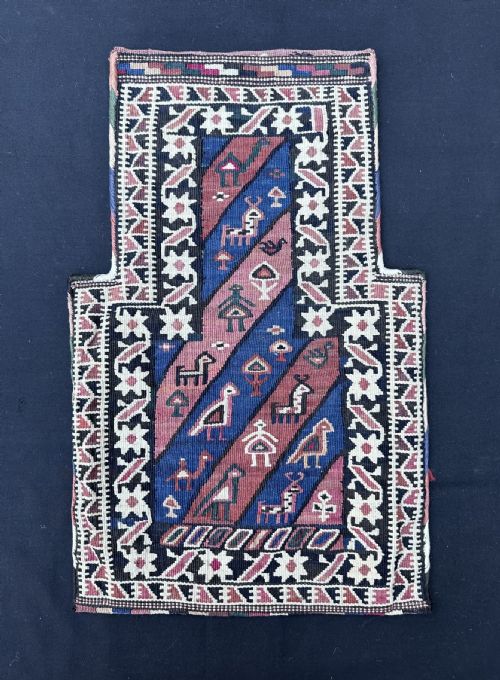
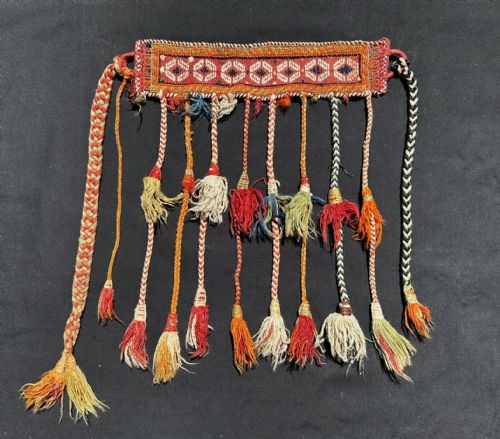
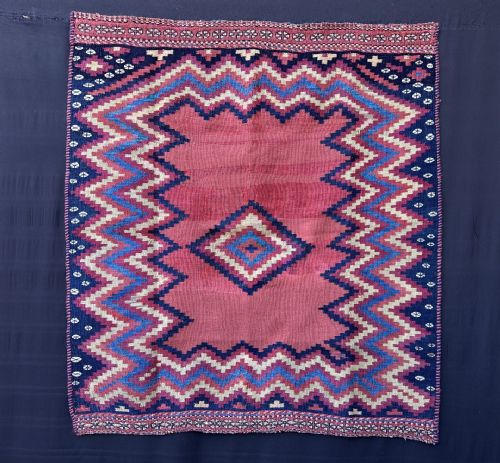
When you search for tribal flatweave wall art, you encounter utilitarian nomadic items such as salt-bags, horse decorations, saddle-bags, bread sofreh, and jajim repurposed for display. These pieces originate from Persian, Caucasian, and Central Asian nomadic groups including the Qashqa'i, Shahsevan, Turkmen, and Afshar tribes.
The items span the nineteenth and early twentieth centuries, showcasing regional weaving traditions and geometric or pictorial designs. Most examples function as mounted textile art or framed panels designed to highlight the flatweave structure and traditional patterns.
What varies in quality
Quality depends upon the fineness of the weave, the complexity of the design, and the vibrancy or depth of the natural dyes used. Pieces with distinct iconography, such as birds and dragons, or exceptional structural integrity display superior craftsmanship.
The condition of the wool or silk, the precision of the geometric layout, and the originality of the mounting influence the overall character and visual impact of each textile.
Nomadic weavers occasionally included miniature saddle-bags in their work, packing practical utility into surprisingly diminutive formats.
The Tribal Flatweave Wall Art Glossary
- Flatweave
- A textile produced without knots by interlacing warp and weft threads together. This technique creates a thin, durable fabric typical of nomadic bags and covers.
- Soumak
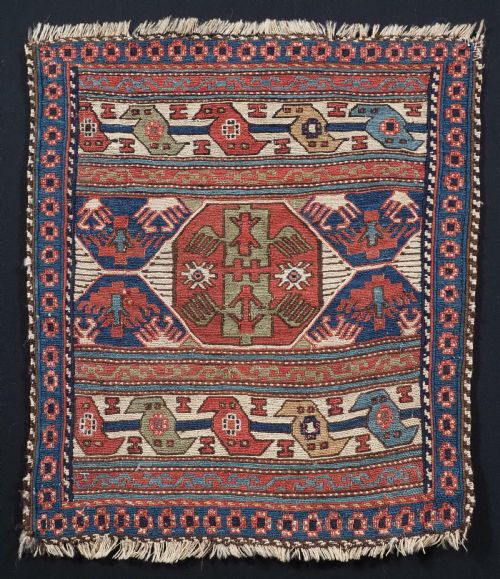
- A brocade-like weaving technique where pattern threads are wrapped over and under the warp threads. It provides a raised texture and robust structure.
- Sofreh
- A woven spread or cloth traditionally used for eating bread or serving meals. These utilitarian items often feature striking geometric field designs.
- Mafrash
- A large rectangular storage bag or bedding chest face produced by nomadic tribes. They are frequently woven in flatweave or soumak techniques.
- Jajim
- A brightly coloured striped flatweave textile traditionally used as a cover or blanket. Examples are frequently mounted for display on walls.
Tribal Flatweave Wall Art: Frequently Asked Questions
What is tribal flatweave wall art?
These items are antique nomadic textiles, including salt-bags, bread sofreh, and saddle-bag faces, repurposed from utilitarian objects into decorative wall hangings.
They display the traditional flatweave and soumak techniques of Persian, Caucasian, and Central Asian tribes from the nineteenth and early twentieth centuries.
How do I hang these textiles?
Many pieces arrive mounted on fabric or backing boards suitable for standard picture framing or hanging systems. This method protects the structure of the antique wool or silk weave while displaying the design.
Consult a professional framer to ensure conservation-grade mounting that avoids adhesive damage to the original fibres.
Which tribes made these pieces?
The inventory includes works by nomadic and village groups such as the Qashqa'i, Shahsevan, Afshar, Turkmen, and Bakhtiari-Lor tribes. Each group utilised distinct regional colour palettes and geometric motifs.
Identifying the tribe relies on recognising specific weaving structures, border arrangements, and wool preparation methods characteristic of particular provinces.
How are natural dyes identified?
Natural dyes produce rich, complex tones that age gracefully and often exhibit subtle variations in shade known as abrash. These colours come from local plants, roots, and insects gathered by nomadic dyers.
Examining the individual yarn fibres under magnification reveals how deeply and evenly the dye penetrated the wool or cotton.