
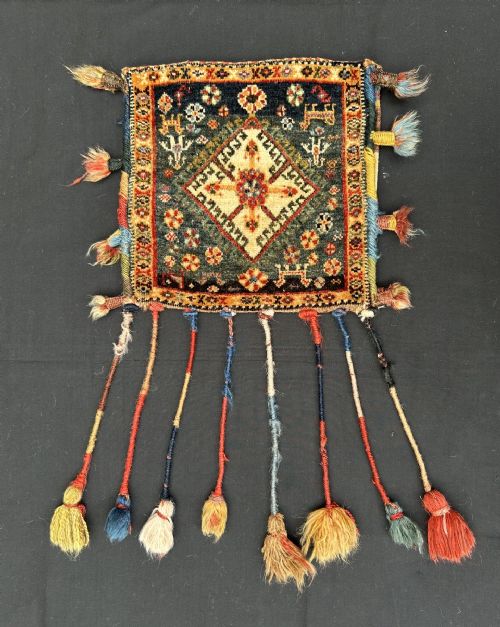
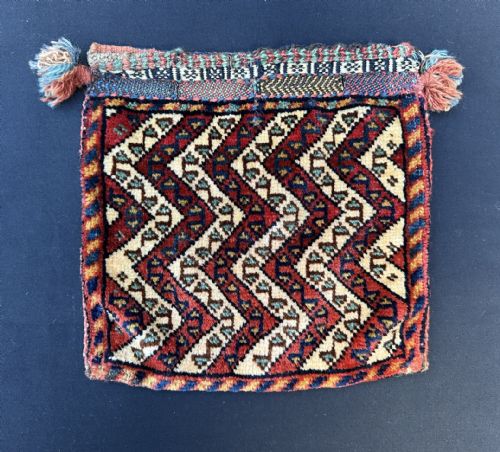
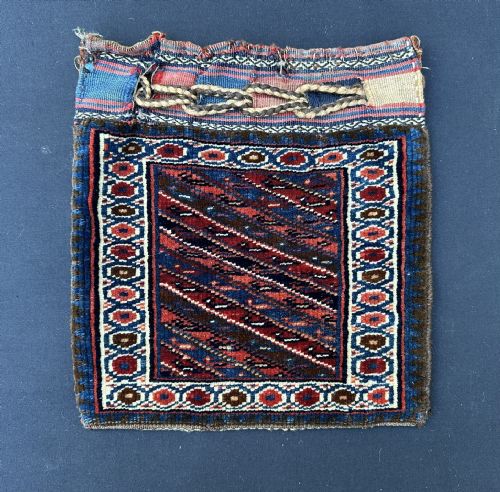
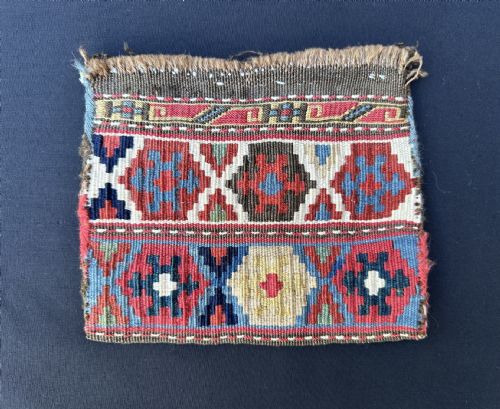




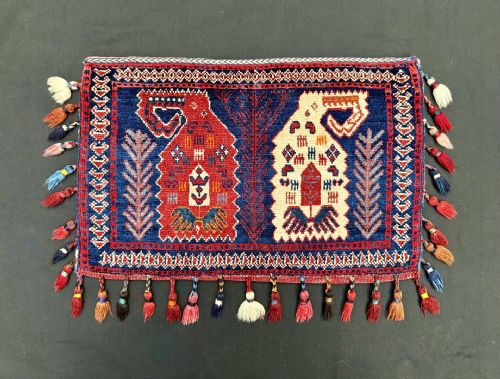
Wool Tribal Vanity Bag
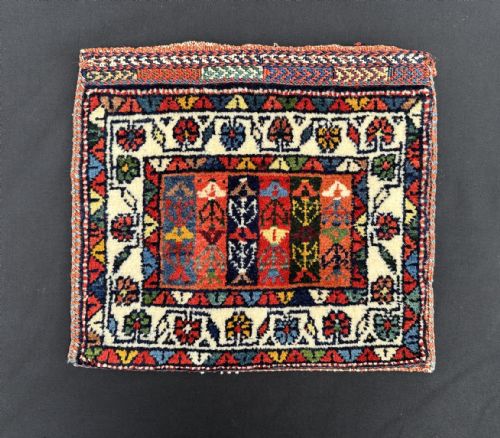
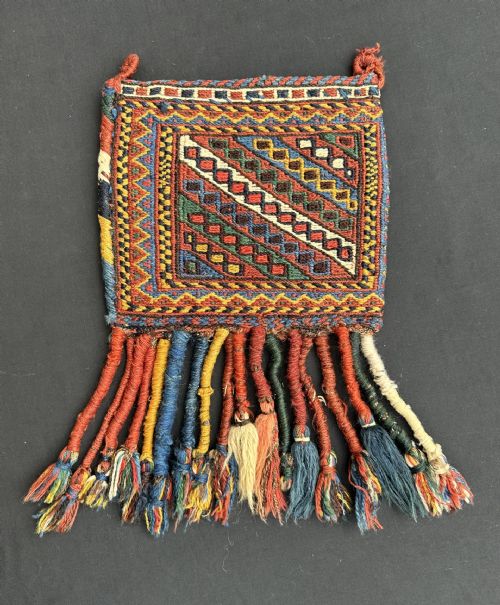
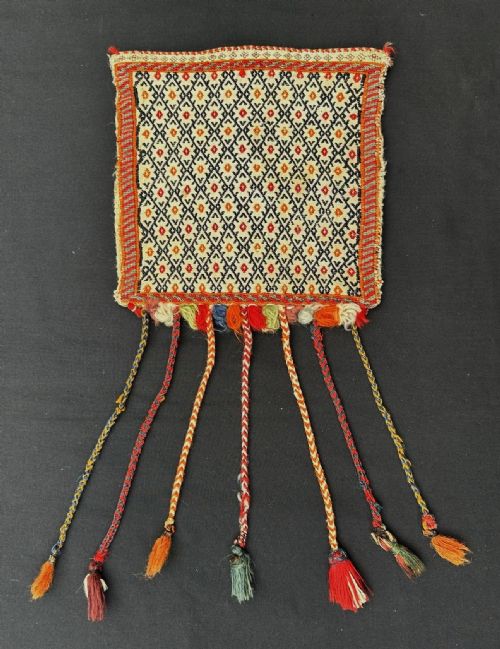
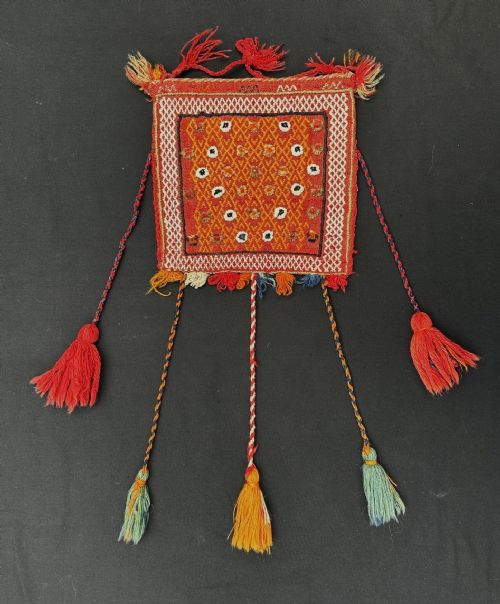
These wool tribal vanity bag examples are portable pouches woven by nomadic weavers across Persia, prized for their dense geometric patterns and practical origins.
Wool Tribal Vanity Bag
A wool tribal vanity bag is a compact woven container made by nomadic groups across Persia, including the Qashqa'i Confederacy, Shahsevan nomads, Afshar tribes, and Baluch communities. These pouches served functional roles within nomadic households and camps, often used for storage or personal items.
The pieces on this page span several decades from the late nineteenth century into the early twentieth century, originating from regions such as Fars, Kerman, Azerbaijan, and Khorassan. They typically appear as small bags, storage pouches, or double-sided vanity bags reflecting distinct tribal identities.
What Varies in Quality
Quality in a wool tribal vanity bag rests upon the tightness of the weave, the clarity of the tribal motifs, and the depth of the natural dyes. Finer knotting and well-balanced proportions separate exceptional weaving from simpler utilitarian examples.
The integrity of the original wool, the survival of decorative cowrie shells, and the precision of the geometric layout dictate the standing of each individual pouch.
Small cowrie shells stitched onto nomadic pouches served as traditional embellishments to ward off misfortune during long seasonal migrations.
The Wool Tribal Vanity Bag Glossary
- Vanity bag
- A small portable pouch used by nomadic groups for personal storage. These items reflect the specific weaving traditions of their makers.
- Natural dyes
- Colourants derived from plants, insects, and minerals rather than synthetic compounds. They produce organic tones that age with characteristic depth.
- Hand-spun wool
- Fleece processed manually into yarn using a drop spindle or simple wheel. This method creates varied yarn thickness and natural texture.
- Cowrie shells
- Small marine mollusc shells utilised across tribal textiles for decoration and protection. They are sewn directly onto the woven surface.
- Pile weave
- A technique where individual yarn tufts are knotted onto the warp threads and clipped to form a soft surface. It creates distinct contrast against flat-woven sections.
Wool Tribal Vanity Bag: Frequently Asked Questions
What were wool tribal vanity bags used for?
Nomadic weavers used these small pouches to store personal items, small utensils, or precious possessions while moving camp.
Their portable size and durable construction made them practical containers for everyday nomadic life.
How do I identify different tribal origins?
Tribal attribution relies on specific geometric motifs, colour combinations, and regional weaving structures tied to groups like the Qashqa'i, Afshar, or Shahsevan.
Each confederacy or sub-tribe utilised distinct design vocabularies passed down through generations of weavers.
Are these bags made with natural dyes?
The examples from this period utilise natural dye sources derived from local flora and fauna to achieve traditional earth tones and reds.
These colourants interact with wool fibres to develop nuanced patination over decades of age.
How should I display a vanity bag at home?
These small textiles suit careful mounting on a wall or placement on a neutral surface where the weave remains protected.
Keeping them away from direct sunlight preserves the natural wool fibres and vegetable dyes.