
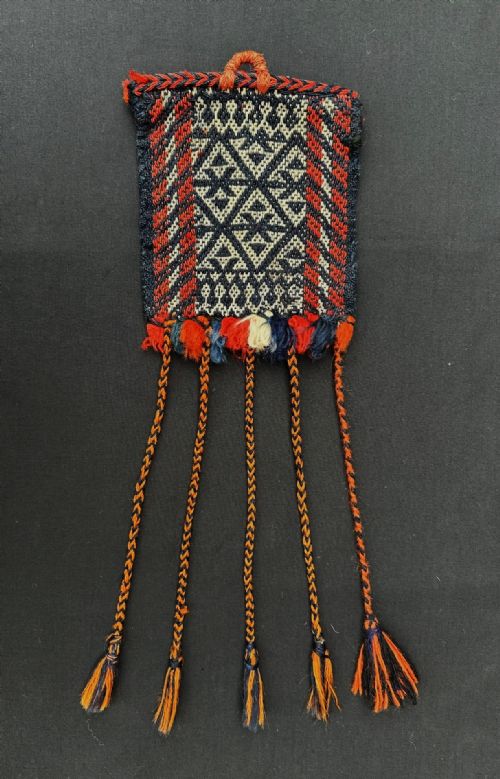
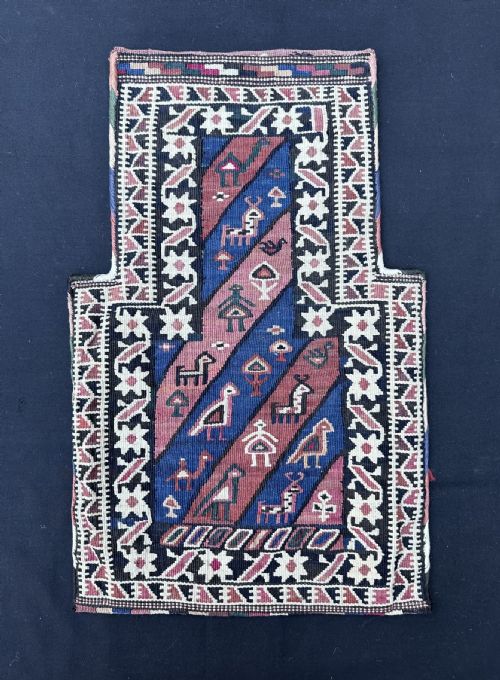

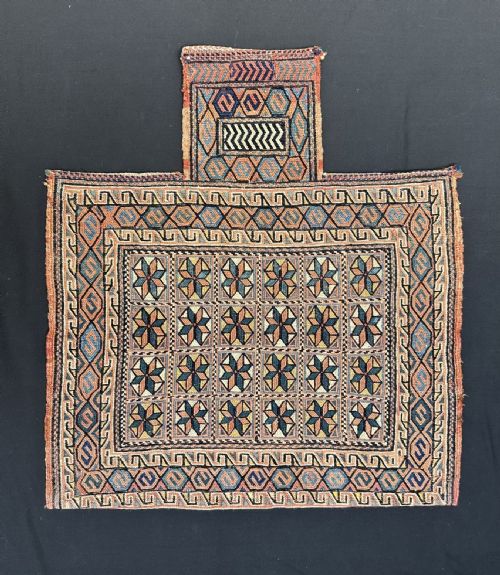


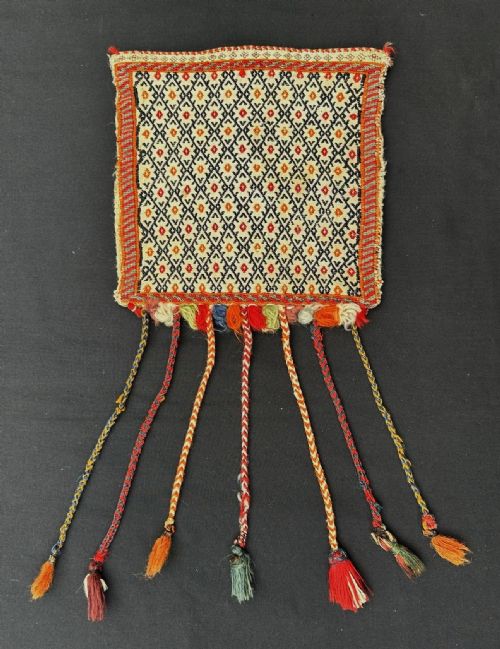


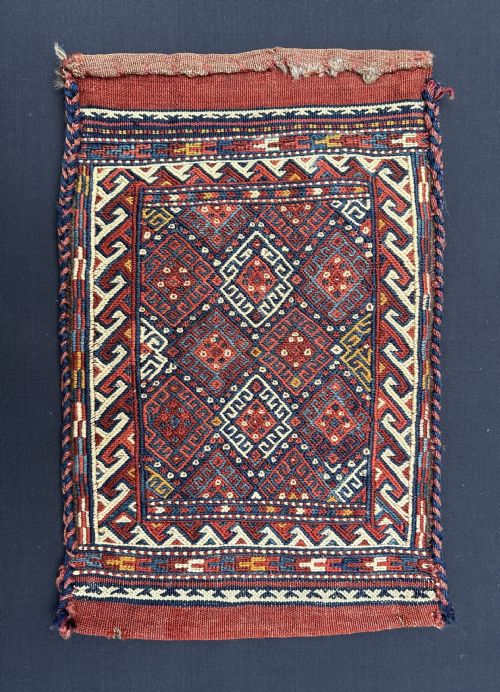

Persian Flatweave Pouch
These persian flatweave pouch examples are utilitarian nomadic textiles woven by tribal groups, offering a genuine glimpse into historical village craftsmanship.
Persian Flatweave Pouch
Collectors frequently encounter these textiles structured as miniature saddle-bags or specialised hanging pouches produced between the late nineteenth century and the early twentieth century. Each item reflects the distinct geographical traditions and tribal identities of the makers spanning Khorassan, Azerbaijan, Fars, and Kerman provinces.
Materials and Construction Methods
Weavers utilised local wool and cotton foundations, employing techniques such as Soumak work, banded weft design, and flatweave kilim construction to build durable surfaces. Natural dyes provided the characteristic colour palettes found across these historical pieces.
Certain textile bags incorporate additional decorative elements like cowrie shells onto the woven structure, enhancing the utility items with traditional tribal ornamentation.
Materials documented across the inventory consist primarily of wool, cotton, natural dyes, and occasional cowrie shells.
Distinctions in Quality
The standard of a persian flatweave pouch depends upon the tightness of the weave, the clarity of the tribal motifs, and the preservation of original backs and hanging loops. Superior examples maintain intact structures and vibrant natural dye colours that show minimal structural thinning.
Fine regional execution by specific tribal confederacies demonstrates greater precision in pattern symmetry and complexity within the flatweave or Soumak technique, separating standard utility containers from exceptional nomadic works.
The Persian Flatweave Pouch Glossary
- Chanteh
- A small tribal vanity or personal bag woven in flatweave or pile techniques, used by nomads for carrying small possessions.
- Soumak
- A wrap-weft weaving technique that produces a durable textile surface resembling hand-knitting on the face with floats on the reverse.
- Kilim
- A tapestry-woven carpet or flatweave textile produced without a pile, common in nomadic and village traditions across Persia.
- Tubreh
- A traditional Persian term denoting a bag or sack, often utilised for provisions, salt, or personal belongings during travel.
Persian Flatweave Pouch: Frequently Asked Questions
What were persian flatweave pouch items used for?
These woven bags served practical storage purposes within nomadic households, carrying items such as salt, personal vanity articles, spoons, and water-pipes. Tribespeople utilised them daily for organising provisions and possessions during seasonal migrations.
Because they were built for active utility, each pouch was constructed with durable flatweave or Soumak techniques to withstand constant handling and hanging inside tents.
How do I identify different tribal origins?
Distinctive regional palettes, structural methods, and specific geometric motifs point directly to the producing tribe, such as the Afshar, Shahsevan, or Qashqa'i confederacies. Examining the specific regional provenance noted in the weaving traditions clarifies these geographic attributions.
Certain structural formats, like specialised salt-bags or vanity bags, also align closely with the domestic habits of particular tribal groups residing in specific provinces like Fars or Kerman.
How should I display a textile bag?
These flatweave pouches can be mounted safely on neutral backing fabrics or hung using padded dowels that distribute the weight evenly across the top edge. Keeping them away from direct sunlight protects the natural dyes from fading over time.
Allowing the piece to breathe and periodically checking the original wool and cotton foundations ensures the textile remains stable in a domestic environment.
Are original backs important for these bags?
Surviving with an original back significantly preserves the historical integrity and complete form of a nomadic pouch. It demonstrates the item has retained its intended three-dimensional utility structure rather than being separated into a flat front panel.
This completeness offers a clearer understanding of how the tribal weaver originally constructed and finished the container for practical deployment.