
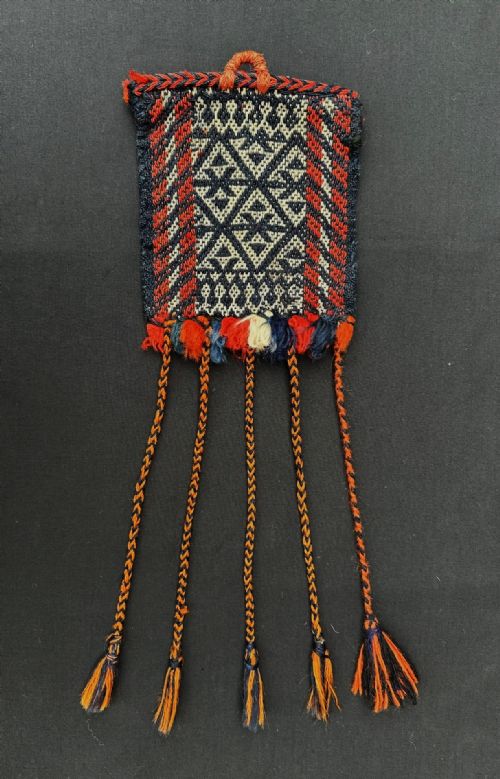
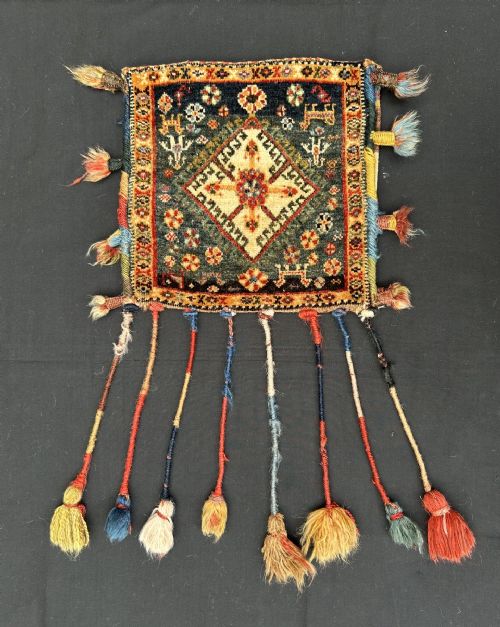
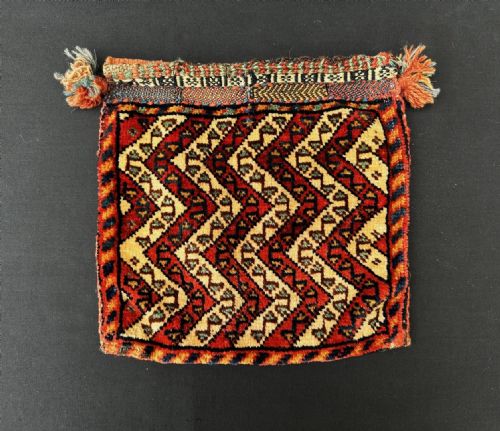
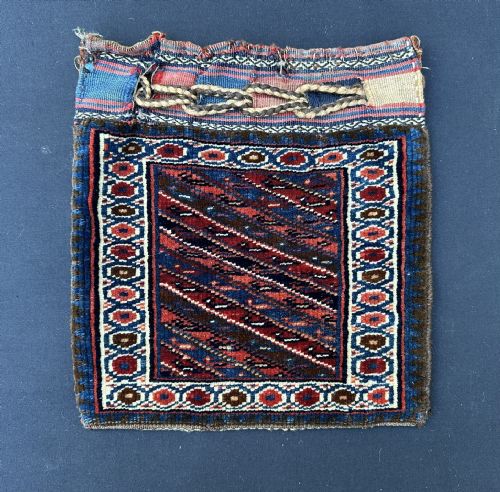

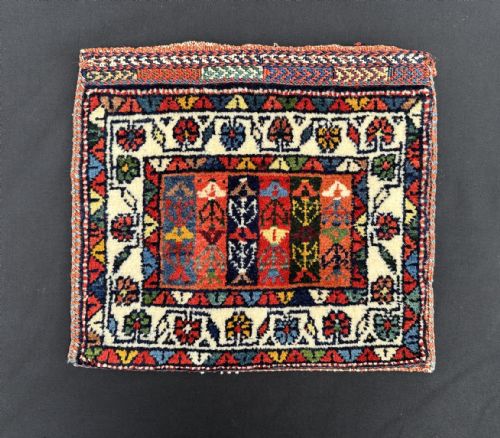

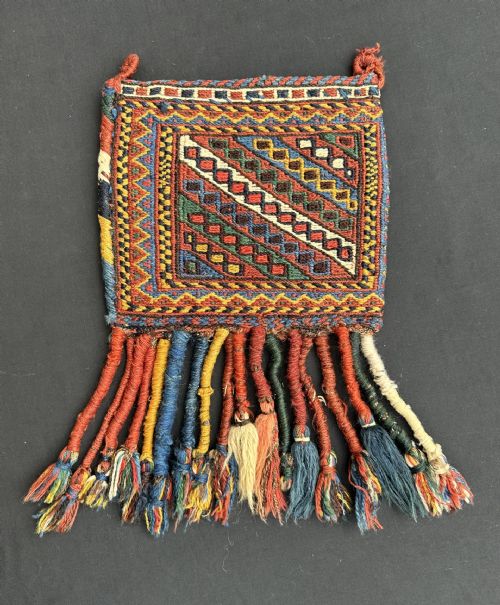
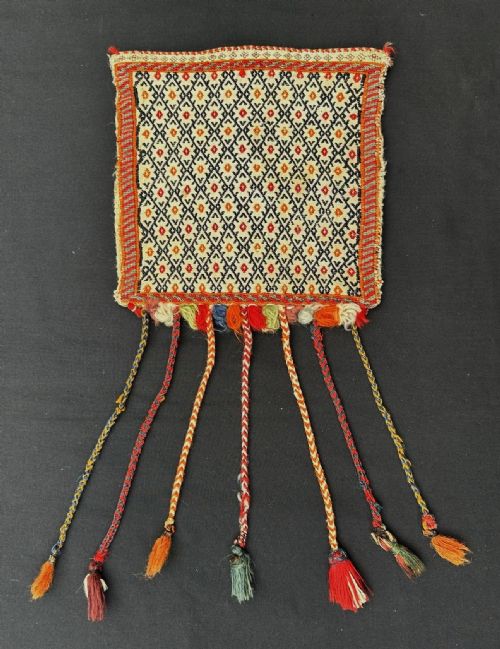
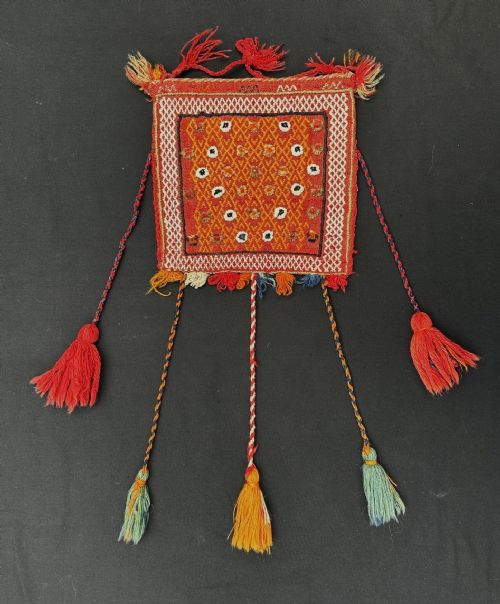


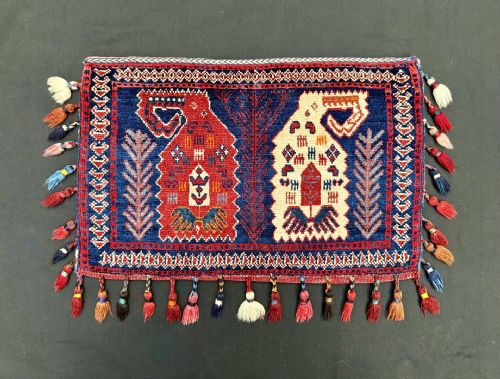
Persian Tribal Vanity Bag
A persian tribal vanity bag is a nomadic textile pouch that offers a tangible connection to the weaving traditions of nineteenth and early twentieth century Persia.
Persian Tribal Vanity Bag
A persian tribal vanity bag is a portable textile piece produced by nomadic and confederacy groups across Persia. These pouches served functional storage roles within tribal camps and travelling households.
The versions most commonly met on this page originate from tribal confederacies and regional groups such as the Qashqa'i, Afshar, and Baluch. Their geographical origins span from the Fars Province and Kerman to Khorassan and Varamin.
Object forms appear variously as single pouches, storage containers, and double-sided vanity bags. They reflect the utilitarian art of weavers working within specific regional traditions during the late nineteenth and early twentieth centuries.
Materials and construction
The primary materials recorded in these listings are wool and cotton foundations combined with natural dyes. Weavers utilised locally sourced animal fleece and plant colourants to create the patterned surfaces.
Certain pieces incorporate cowrie shells as decorative embellishments along the textile structure. These construction techniques align with the tribal and nomadic methods of nineteenth-century Persian textile production.
Listings span production dates from eighteen-sixty to nineteen-twenty, featuring wool, cotton, natural dyes, and cowrie shells across Persian tribal styles.
Variations in standard
Quality in a persian tribal vanity bag relates to the tightness of the weave and the clarity of the tribal pattern. Finer examples display precise execution in the geometric or regional motifs characteristic of specific sub-tribes.
The depth and preservation of natural dye colours also distinguish different pieces within the range. Greater complexity in structural design and integrated decorative elements such as cowrie shells separate standard utility pieces from more resolved works.
The Persian Tribal Vanity Bag Glossary
- Confederacy
- A union of allied nomadic tribes operating under shared leadership in Persia. This political structure influenced the distinct design repertoires found in tribal weaving.
- Vanity bag
- A small portable storage pouch used by nomadic groups for personal items. These textile pieces combined practical utility with traditional tribal ornamentation.
- Natural dyes
- Colourants derived from plants, roots, and minerals rather than synthetic compounds. Their use produces the characteristic varied patination seen in older Persian textiles.
- Cowrie shells
- Marine shells occasionally attached to tribal textiles for ornamentation or symbolic protection. They represent an added decorative layer on specific nomadic storage bags.
- Baluch tribal
- A designation for textiles originating from Baluch weaving groups. These pieces often feature dark ground colours and distinct geometric iconography.
Persian Tribal Vanity Bag: Frequently Asked Questions
What is a persian tribal vanity bag?
A persian tribal vanity bag is a small woven pouch made by nomadic groups in regions such as Fars, Kerman, and Khorassan during the nineteenth and early twentieth centuries.
These textiles functioned as personal storage containers within tribal settings, utilising wool, cotton, and natural dyes to form distinct regional patterns.
How were vanity bags used?
Nomadic weavers utilised these small pouches to hold personal possessions, grooming items, or small valuables while travelling or within tribal encampments.
Their portable form made them practical items for daily life, combining utilitarian storage with the decorative motifs of specific confederacies.
Which tribes made these bags?
The listings show pieces attributed to various Persian nomadic groups, including the Qashqa'i Confederacy, Afshar nomads, and Baluch tribes.
Specific sub-tribes and regional factions such as the Bolvardi, Kashkuli Tayefeh, and Darrehshuri Tayefeh produced distinct variations of these storage pouches.
What materials are used?
Construction relies primarily on wool and cotton foundations woven by hand. Natural dyes provide the colour palette across the surviving examples from the nineteenth and early twentieth centuries.
Some pouches also incorporate cowrie shells into their decorative scheme, adding textural detail to the textile surface.
How do I date these textiles?
Dating relies on recorded production periods spanning from the mid-nineteenth century through the early twentieth century. Structural characteristics, material wear, and traditional dye usage help establish these approximate timelines.
Comparing regional styles from groups like the Afshar or Qashqa'i provides further context for when a specific pouch was made.