




Wooden Striking Wall Clock
These wooden striking wall clock examples bring mechanical movement and rich timber cases together on the wall, shaped by centuries of horological design.
Wooden Striking Wall Clock
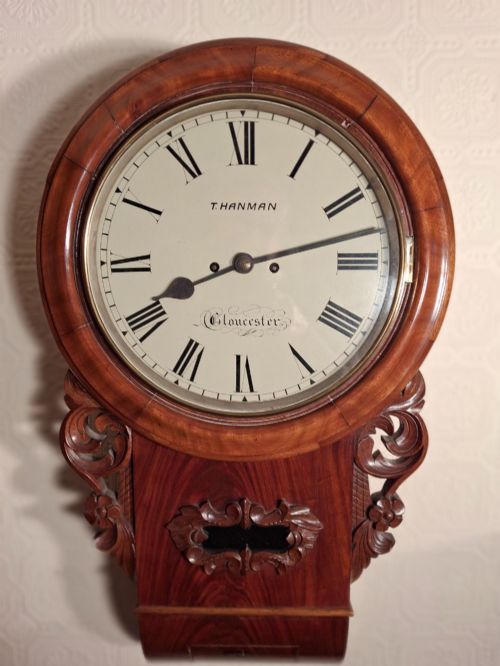
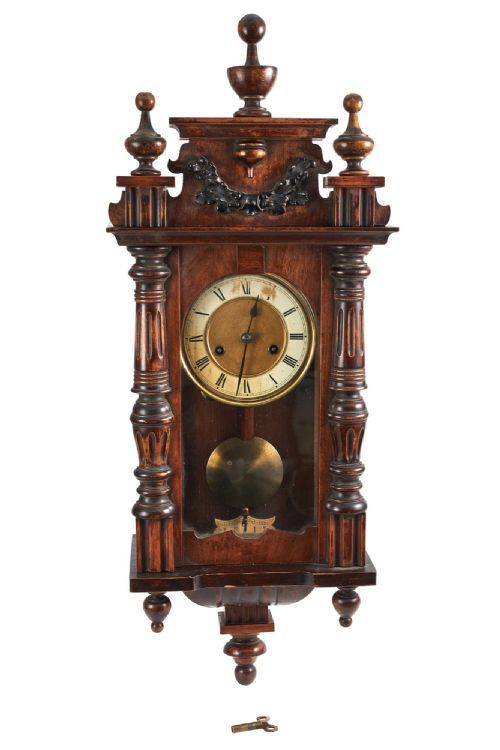
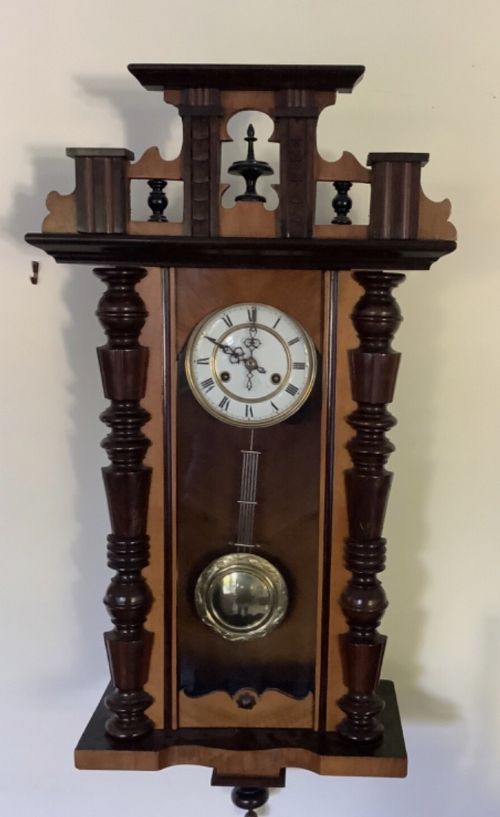
A wooden striking wall clock combines a functional timekeeping movement with a timber housing designed to be mounted directly onto a wall. Buyers searching for a wooden striking wall clock will encounter pieces spanning the Victorian era, the Art Deco period, and Arts and Crafts movements.
The selection ranges from robust oak dial clocks and mahogany cases to walnut Vienna regulators and Biedermeier wall clocks. These timepieces rely on weights or springs to drive both the going train and the striking mechanism that marks the hours.
Most examples originate from the nineteenth and twentieth centuries, utilising traditional cabinet timbers alongside brass and glass components. The forms vary from simple round dial clocks to architectural regulator cases with hanging pendulums.
Materials and construction
Cabinetmakers built the housings for these timepieces using solid and veneered timbers such as walnut, oak, and mahogany. The timber cases often feature glass viewing doors and brass bezels that protect the dial and movement inside.
The internal mechanics rely heavily on brass for wheels, plates, and escapements, paired with iron or steel for springs and arbors. Enamel or metal dials display the numerals, whilst suspended wooden or brass pendulums regulate the beat of the movement.
Listings feature walnut, oak, and mahogany cases alongside brass and enamel components across multiple decades.
Judging the work
The distinction between ordinary and superior wall clocks lies in the precision of the movement and the execution of the timber case. Finer examples feature complex double fusee movements or delicate Vienna regulator mechanisms rather than simpler spring-driven setups.
Cabinet quality separates standard production pieces from higher-grade workshop output, visible in the selection of figured walnut or mahogany veneers and the crispness of carved wooden details. Original signed dials and well-finished brass components elevate the overall standard of the clock.
Johann Baptist Beha·J W Benson·Thomas Gibbs
The Wooden Striking Wall Clock Glossary
- Striking movement
- A clock mechanism that audibly chimes the hours or half-hours using a gong, bell, or rack-controlled hammer. This system requires a separate gear train driven by its own weight or spring.
- Regulator
- A precision timekeeping clock designed for high accuracy, typically featuring a long case and a clear pendulum window. These units often use a deadbeat escapement for steady performance.
- Fusee
- A conical pulley used in better-quality clocks to equalize the diminishing power of a mainspring as it unwinds. This ensures consistent force is delivered to the gear train throughout the power reserve.
- Dial
- The visible face of the clock where the hours and minutes are displayed. Dials on these pieces are frequently made of white enamel or brushed metal with painted numerals.
Wooden Striking Wall Clock: Frequently Asked Questions
How do I wind a wall clock?
Most mechanical wall clocks require a key inserted into holes on the dial to wind the spring or lift the driving weights. Care must be taken not to overwind the mechanism.
Different movements require winding at varying intervals, typically ranging from eight-day durations to thirty-hour setups depending on the internal train.
Where should I hang a wall clock?
Mount the clock securely to a solid wall stud or use heavy-duty wall anchors capable of supporting the full weight of the timber case and movement. Position it away from direct sunlight and damp areas to protect the wood and internal metal parts.
The clock must hang completely plumb against the wall so the pendulum swings evenly without catching on the case sides.
Why does my clock not strike correctly?
Striking mechanisms can fall out of synchronization if the hands are moved backward or if the clock is allowed to run down completely. The countwheel or rack system needs to align with the position of the hour hand.
Professional adjustment or servicing is often required to restore the correct relationship between the going train and the striking train.
How do I identify the period of a clock?
The style of the timber case, the shape of the dial, and the construction methods of the movement offer clear clues to the age of the piece. Victorian models often display heavier architectural moulding, whilst Art Deco examples favour geometric simplicity and lighter oak tones.
Signatures on the dial or movement backplate can also point directly to the maker and the active operating decade.