



Carved Wood Vienna Clock
A carved wood vienna clock brings the precise engineering of the nineteenth century into a room, offering both reliable timekeeping and rich cabinetwork.
Carved Wood Vienna Clock
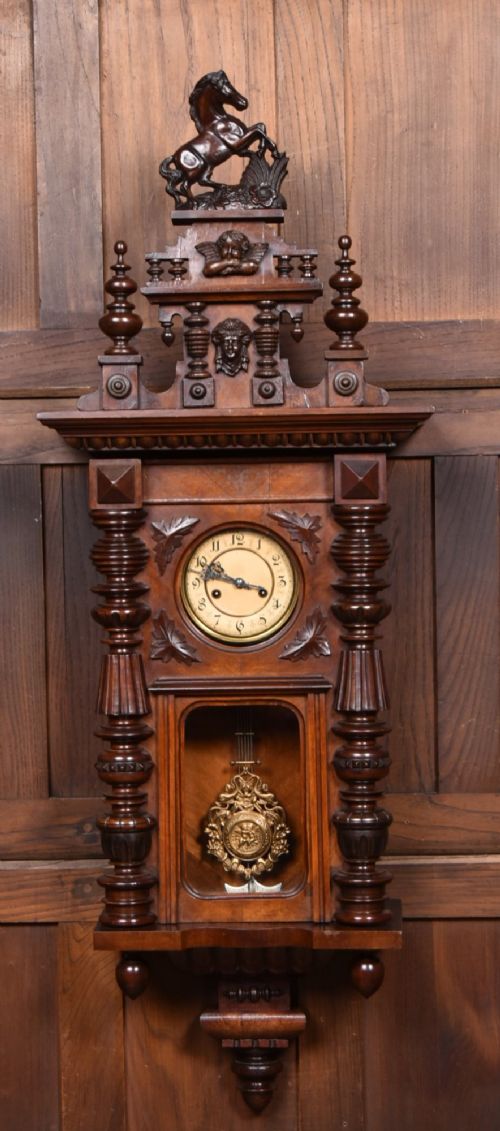
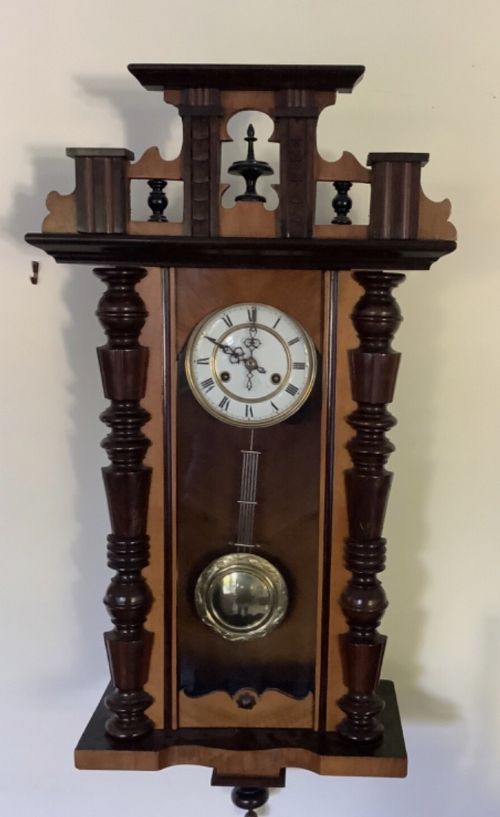
A carved wood vienna clock is a wall-hanging timepiece originating from the nineteenth century, encompassing Victorian and Biedermeier design traditions. These wall clocks combine large glass viewing panels with detailed wooden cases to showcase both the pendulum and the dial.
The versions most commonly met on this page date from the Victorian era, particularly the decades spanning 1860 to 1900. They typically take the form of wall clocks or regulators, often driven by single or double weight movements.
Materials and construction
Cases are constructed from walnut and burr walnut, providing a dark, figured wooden foundation that highlights the grain. These wooden frames are frequently enriched with hand-carved details and applied mouldings.
Internal mechanical assemblies integrate brass for the movement plates and gears, paired with white enamel dials and bevelled glass doors. Pendulums and weights are similarly cast in polished brass to complement the warm tones of the timber.
Listings feature walnut, burr walnut, brass, and glass across wall clocks produced between 1860 and 1900.
Assessing quality and craftsmanship
The distinction between standard examples and superior pieces rests on the complexity of the cabinetwork and the refinement of the movement. Higher quality items feature carefully selected burr walnut veneers, deep architectural carvings, and named maker signatures on the dial or movement.
Dial legibility and the crispness of the brass castings also dictate the standing of a clock. Well-executed pieces maintain proportional harmony between the dial, the trunk, and the lower glass door, whereas lesser examples rely on simpler, plain timber surfaces.
GUSTAV BECKER·JOHANN BAPTIST BEHA
The Carved Wood Vienna Clock Glossary
- Vienna Regulator
- A precision pendulum clock developed in the nineteenth century, prized for its accurate timekeeping and visible pendulum swing. These wall clocks were built with meticulous attention to mechanical performance.
- Burr Walnut
- A timber harvested from the wart-like growths on walnut trees, yielding swirling, highly decorative grain patterns. It was sliced into thin veneers to face the primary panels of high-grade clock cases.
- Enamel Dial
- A clock face made by fusing powdered glass to a metal substrate at high temperatures, creating a smooth, white surface. Roman or Arabic numerals are typically painted onto this base.
- Double Weight
- A movement driven by two suspended weights rather than one, powering both the timekeeping train and the striking mechanism. This configuration requires a taller, sturdier wooden case.
Carved Wood Vienna Clock: Frequently Asked Questions
How do I wind a vienna clock?
Most eight-day models require a key to wind the springs or pull the cords to elevate the weights every week. Care must be taken not to overwind the mechanism.
Ensuring the clock hangs plumb on the wall keeps the pendulum beating evenly and prevents the movement from stopping.
Where should I hang a wall clock?
These timepieces need a sturdy interior wall capable of supporting the combined weight of the timber case and internal metal movement. Avoid damp spaces and direct sunlight to protect the walnut veneer and glass.
Secure the case firmly using appropriate wall fixings so the pendulum can swing without interference from vibrations.
What is an eight day striking clock?
An eight-day movement runs for just over a week before needing to be wound again. The striking train sounds the hours and sometimes the halves on a gong or bell.
This function adds mechanical complexity to the interior layout, requiring separate gear trains for time and sound.
How do I tell nineteenth century styles apart?
Earlier Victorian pieces often display restrained lines influenced by Biedermeier preferences, while later examples incorporate heavier carving and architectural pediments. Examining the grain of the walnut and the shape of the bezel helps place the clock in a specific decade.
Maker marks stamped on the backplate offer definitive clues regarding the origin and exact period of production.