


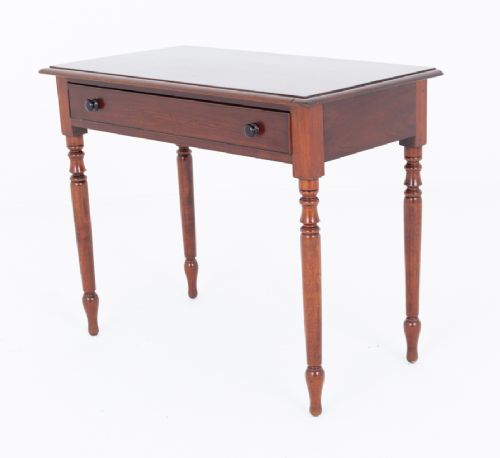
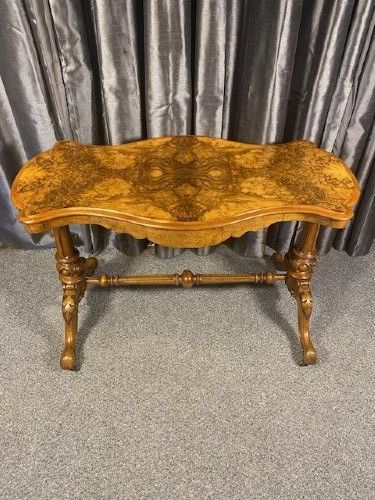
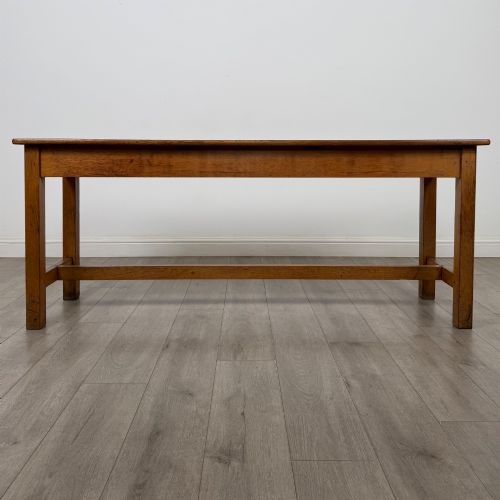
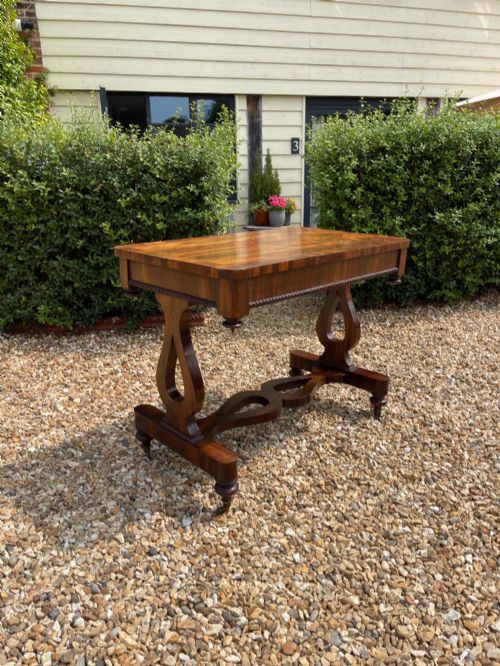

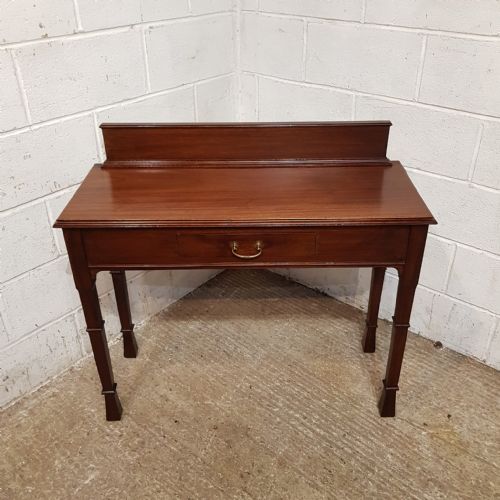
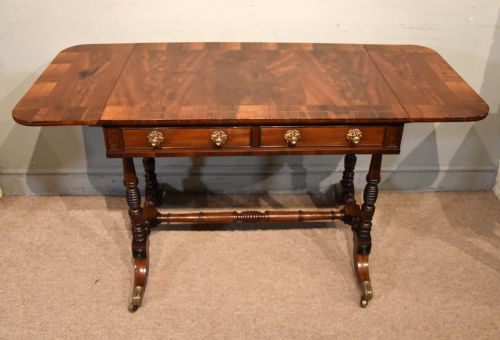
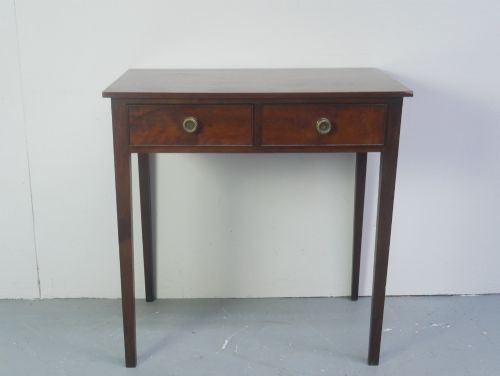
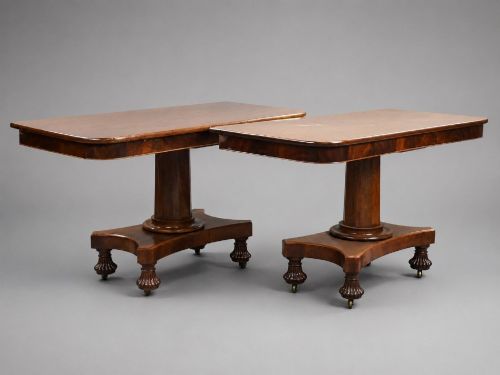
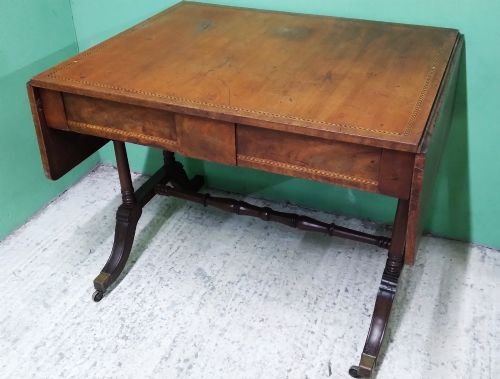
Wooden Sofa Console Table
These wooden sofa console table pieces bring slender proportions and rich timber grain to narrow hallways and sitting rooms.
Wooden Sofa Console Table
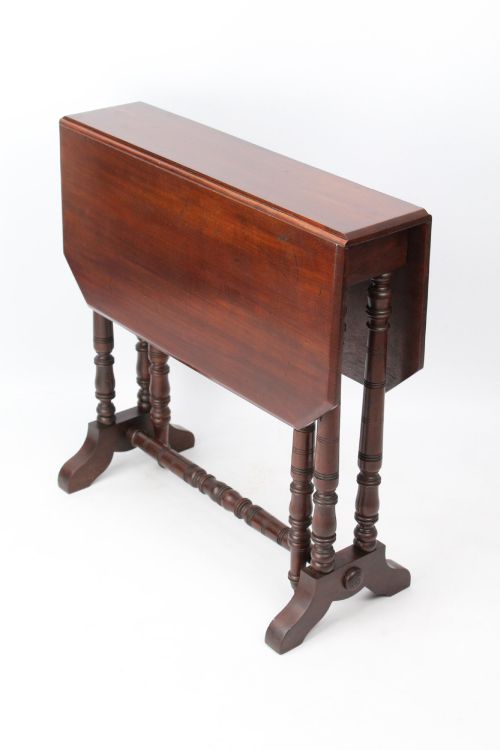
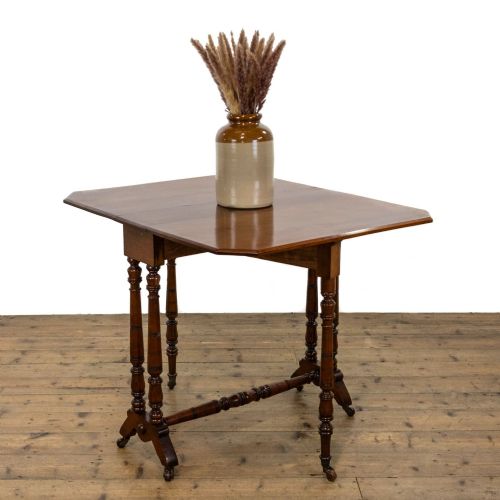
A wooden sofa console table serves as a versatile surface originating from periods spanning the Georgian era through to the Edwardian years. These forms encompass drop-leaf sofa tables, narrow hall consoles, and library or side tables designed to stand against walls or behind seating.
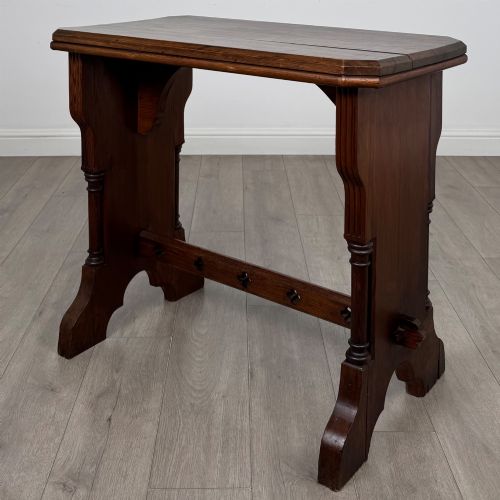
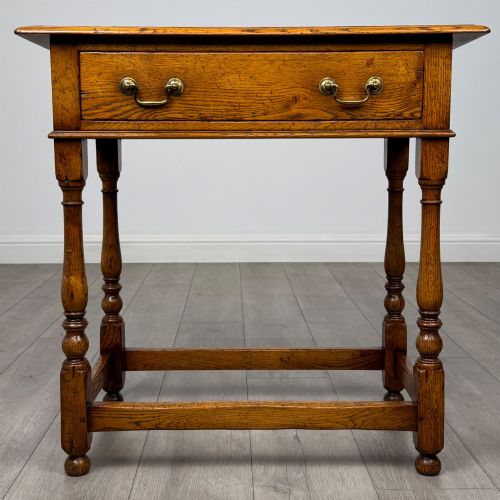
The versions most frequently met on this page include mahogany pieces from the Victorian and Edwardian periods, alongside earlier Regency and William IV examples. Buyers encounter variations ranging from simple oak side tables to elaborate inlaid or crossbanded designs.
Materials and construction
Cabinetmakers relied heavily on mahogany, walnut, and oak, frequently selecting figured veneers and burr walnut to create striking top surfaces. Inlay work, brass mounts, and ebonised details are common embellishments found across these tables.
Drop-leaf mechanisms, single drawers, and pedestal bases require precise joinery to ensure stability, particularly on narrow console and sofa tables. Timbers such as pitch pine, rosewood, and cherrywood also appear, shaped by traditional hand-carving and turning techniques.
Listings feature timbers including mahogany, walnut, oak, rosewood, and painted wood across periods from the Georgian era to the Edwardian years.
Assessing quality
The standard of a wooden sofa console table rests upon the selection of timber figures and the crispness of any inlaid decoration. Superior examples display symmetrical grain patterns, particularly on burr walnut or flame mahogany surfaces, which indicate careful selection by the maker.
Construction details such as drawer linings, the integration of drop leaves, and the weight of the base determine the overall integrity. Pieces that remain steady without wobble and retain their original brass or wooden hardware demonstrate superior workshop practice.
James Mein of Kelso
The Wooden Sofa Console Table Glossary
- Drop leaf
- A table top with hinged flaps that fold down to save space when not in use. These leaves are supported by swing brackets or pivoting legs.
- Console table
- A table designed to be fixed against a wall, often supported by brackets or slender legs. They frequently serve narrow spaces like hallways and landings.
- Sofa table
- A small rectangular table originally designed to stand in front of or behind a sofa. They typically feature drop leaves and end supports joined by a stretcher.
- Veneer
- A thin layer of figured wood applied to a secondary timber base to create a decorative surface. Burr walnut and flame mahogany veneers are common examples.
- Inlay
- A technique where pieces of contrasting wood or other materials are inserted into depressions in the base wood to form decorative patterns.
Wooden Sofa Console Table: Frequently Asked Questions
Where should I place a sofa console table?
These tables fit well behind a living room sofa, against an entrance hallway wall, or serving as a compact writing desk. Their narrow profiles allow them to occupy tight spaces without obstructing movement.
Because many feature finished backs or drop leaves, they adapt easily to central room placement or folded storage against a partition.
How do I identify a Regency table?
Regency tables generally display classical restraint, often incorporating dark mahogany, brass stringing, and heavy pillar supports with sabre legs. Look for clean geometric lines influenced by ancient Greek and Roman designs.
Proportions tend to be elegant and formal, reflecting the aesthetic preferences of the early nineteenth century.
What is the difference between a console and a side table?
Console tables traditionally stood against a wall, sometimes secured with brackets, while side tables are freestanding pieces meant to stand beside other furniture. Over time, these terms have often become interchangeable in listings.
Both serve similar functional roles for displaying lamps, books, and decorative objects in domestic interiors.
How do I care for antique wood surfaces?
Maintain antique timber by dusting regularly with a soft, dry cloth and avoiding direct sunlight or excessive heat sources that cause wood to dry out. Occasional applications of appropriate wax help nourish the polish and preserve the grain.
Keep moisture away from the surface by using coasters and wiping spills immediately to protect vulnerable veneers.