
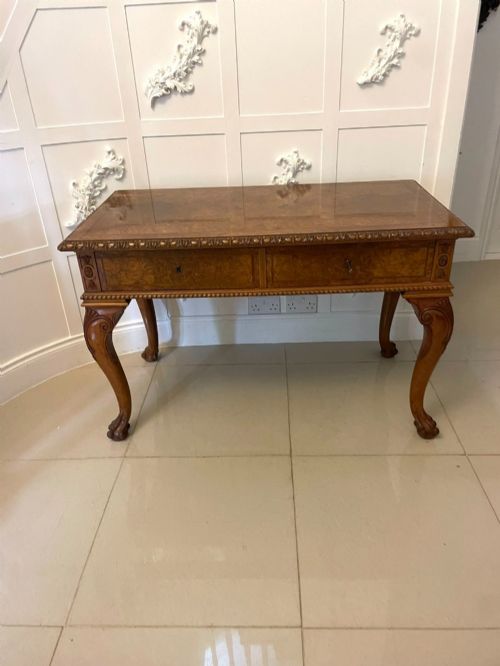
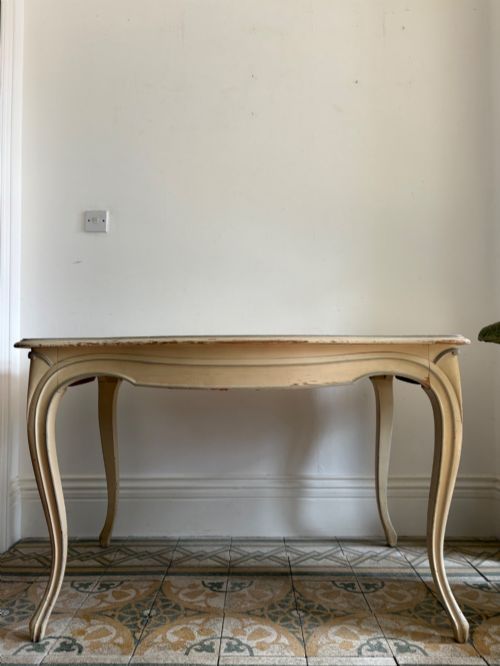
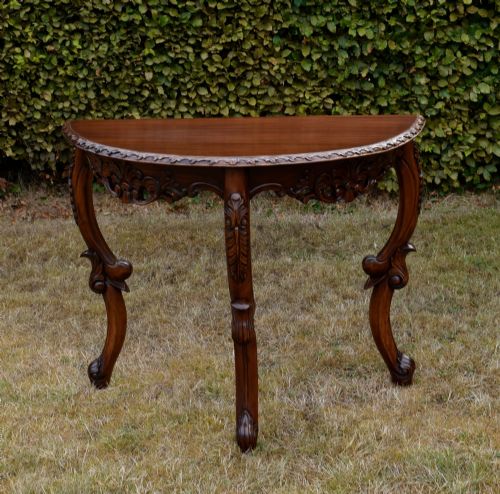
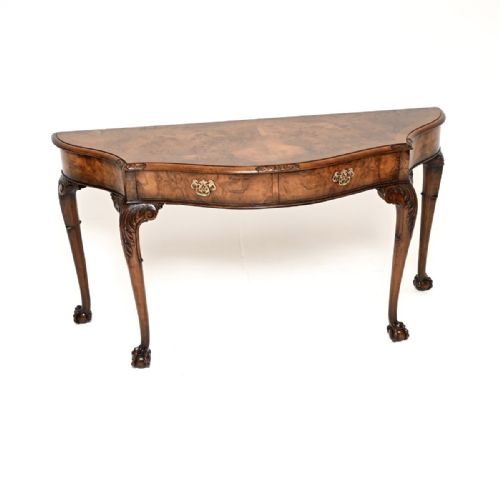





Cabriole Leg Entry Table
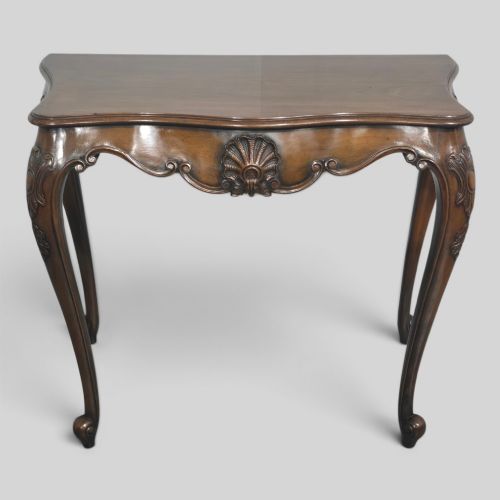
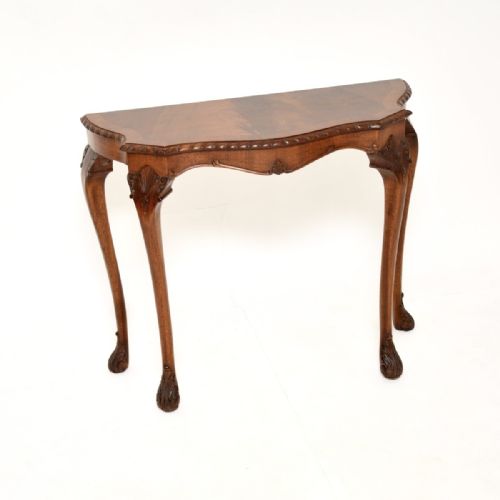
A cabriole leg entry table brings organic curvature and period character to a hallway, utilising classic scroll-shaped supports derived from classical design.
Cabriole Leg Entry Table
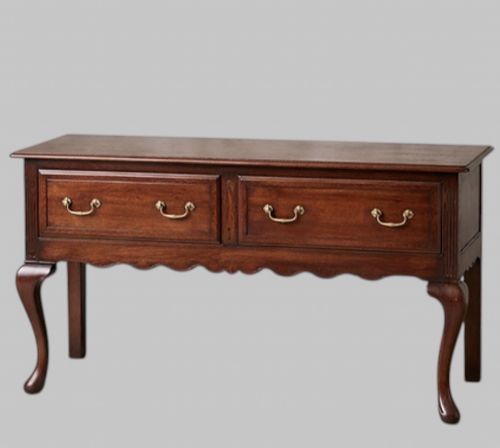
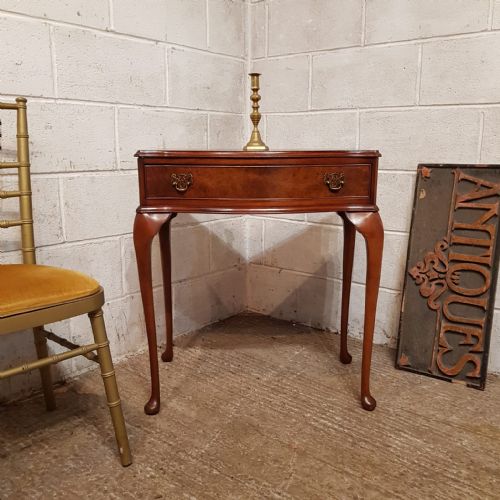
When you search for a cabriole leg entry table, you encounter console tables, side tables, and lowboys designed to stand against walls or in hallways. These pieces draw heavily on 18th century forms, with revivals from the Victorian era and the 1920s dominating the current selection.
Makers adapted these forms into various formats including demi-lune, bow front, and serpentine shapes. Walnut, burr walnut, and mahogany provide the primary timber foundations, often accompanied by French painted finishes and marble tops.
The aesthetic leans towards Queen Anne, Chippendale, and French provincial styles, bringing distinct historical lineage to domestic spaces. Buyers frequently find freestanding models suited for central hallway placement alongside traditional console formats.
Materials and construction methods
Cabinet makers utilised dense hardwoods such as mahogany, oak, and walnut, frequently selecting figured burr walnut veneers for decorative surfaces. These timbers were shaped into serpentine and bow front profiles using traditional joinery techniques.
Carved wooden legs with characteristic double curves form the defining structural element across these pieces. Surface treatments range from clear polish on timber grain to applied paint and gilding on French provincial models.
Several tables manage to look as though they are perpetually tiptoeing across the hallway on polished wooden knees.
Judging the range
Quality separates through the crispness of carved detail on the knee and foot of the cabriole support, alongside the selection of figured burr veneers. Superior examples display balanced proportions and refined proportions across serpentine or bow fronts.
The integration of secondary materials like inset suede tops, marble surfaces, and brass hardware distinguishes standard utility pieces from high workshop output. Cabinet work precision and timber matching across the top surface dictate the standing of an individual table.
Maple and Co.·Epstein and Co
The Cabriole Leg Entry Table Glossary
- Cabriole leg
- A furniture support featuring a double curve, typically swelling outward at the knee and tapering inward to a pad or scroll foot. This shape derives from ancient animal leg forms.
- Console table
- A table designed to be fixed against a wall or supported by front legs, frequently used in entrance halls. Many historical examples stand on two legs and require wall attachment.
- Burr walnut
- Timber taken from the warted excrescence of a walnut tree, yielding intricate, swirling grain patterns highly prized for cabinet veneers. It appears frequently on 1920s revival pieces.
- Lowboy
- A small oak or walnut table with drawers, standing on four tall legs, commonly utilised as a side table or serving piece. Georgian examples frequently feature cabriole supports.
- Demi-lune
- A half-moon shaped furniture form designed to sit flush against a wall in narrow spaces like entryways and halls.
Cabriole Leg Entry Table: Frequently Asked Questions
What is a cabriole leg entry table used for?
These tables serve primarily as functional furniture pieces in hallways and entryways, providing a surface for keys, correspondence, and decorative objects. Their narrow profiles allow them to fit restricted circulation spaces without obstructing movement.
Historically, they also functioned as serving or card tables depending on the specific top construction and internal mechanisms. Their decorative presence established an immediate stylistic tone upon entering a home.
How do I distinguish 18th century from revival pieces?
Distinguishing original 18th century pieces from Georgian Revival, Victorian, and 1920s interpretations requires close examination of timber seasoning, tool marks, and construction hardware. Revival pieces often utilise machine-sawn internal components and standardised veneer thicknesses.
Original pieces show hand-cut joinery and timber movement consistent with prolonged age and historic hand-working methods. Stylistic proportions also shift subtly across the different revival periods.
Where should I place a console table?
Console tables sit naturally against hallway walls, beneath mirrors, or in reception rooms where floor space is at a premium. Freestanding variants can also anchor the centre of large entrance foyers.
Because many historical console designs incorporate finished backs or require wall fixing, placement depends on whether the piece is fully freestanding.
What is the difference between a console and a side table?
Console tables traditionally stood against a wall, sometimes relying on structural wall brackets for support rather than rear legs. Side tables possess four fully independent legs and stand freely without wall attachment.
In modern terminology, the terms frequently overlap as makers adapted console proportions into versatile four-legged formats.