






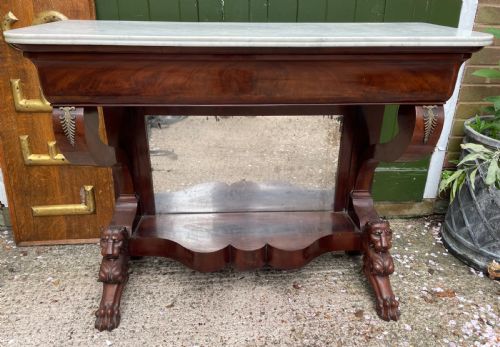
Carved Hall Table Mirror
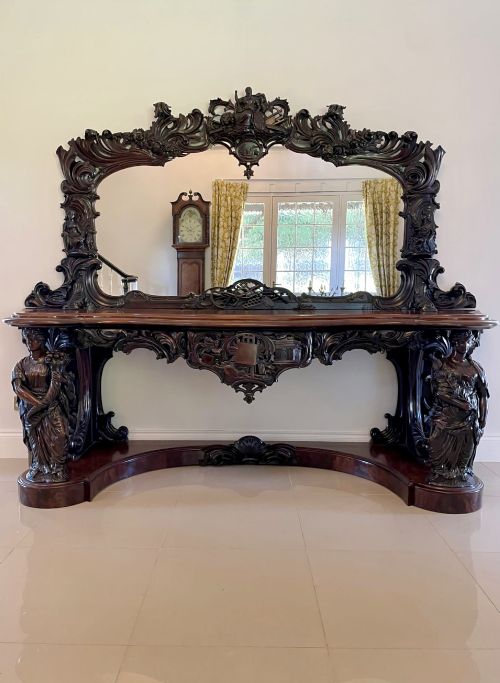
A carved hall table mirror brings together a striking surface and a matching frame to anchor an entrance hall.
Carved Hall Table Mirror
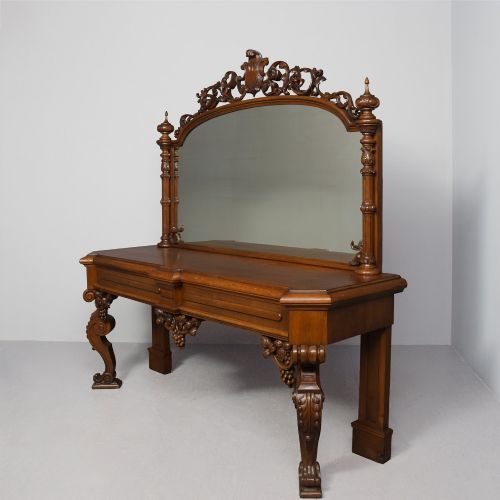
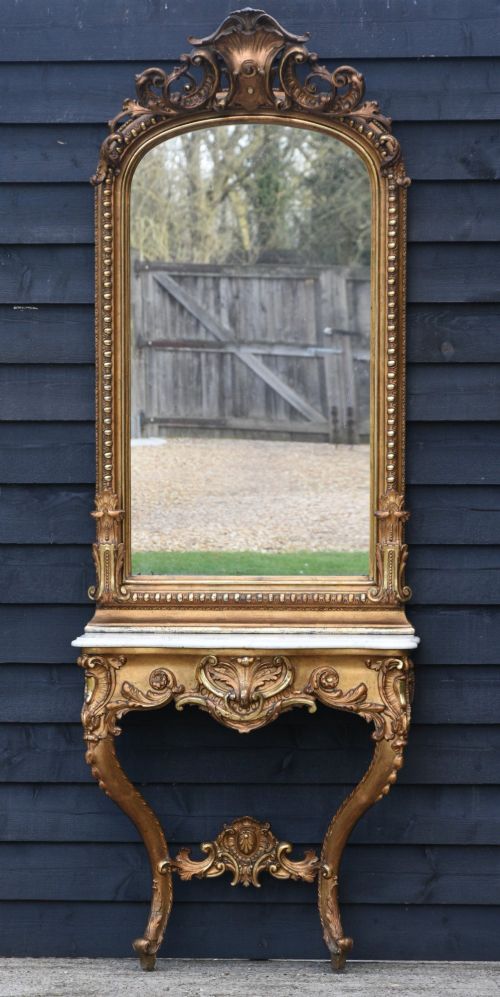
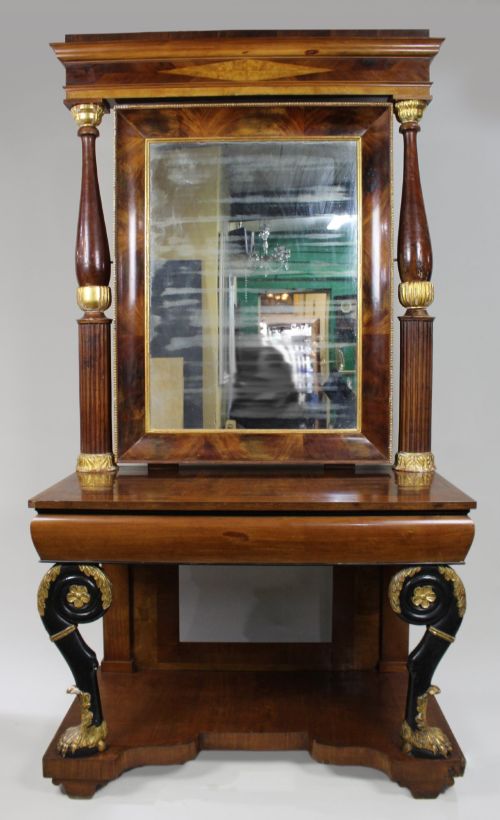
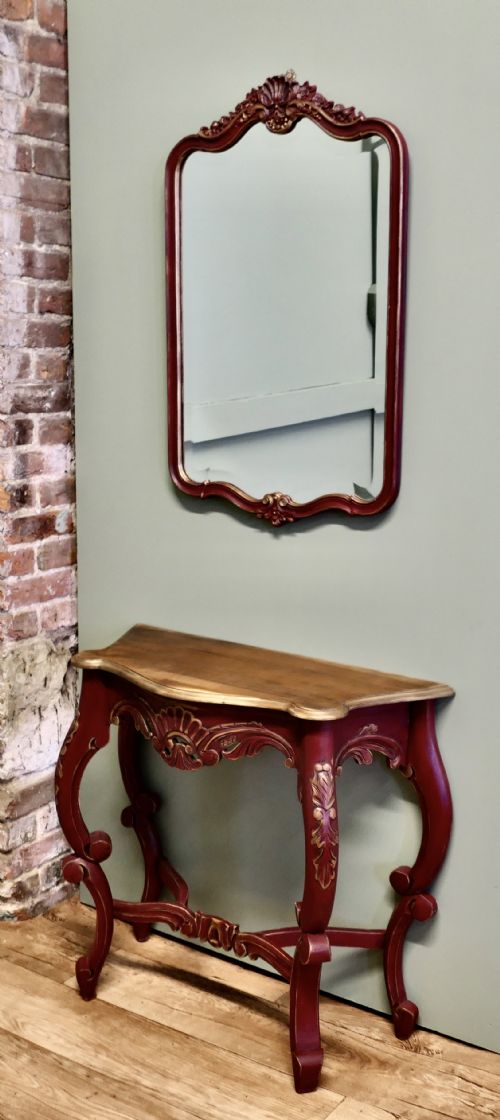
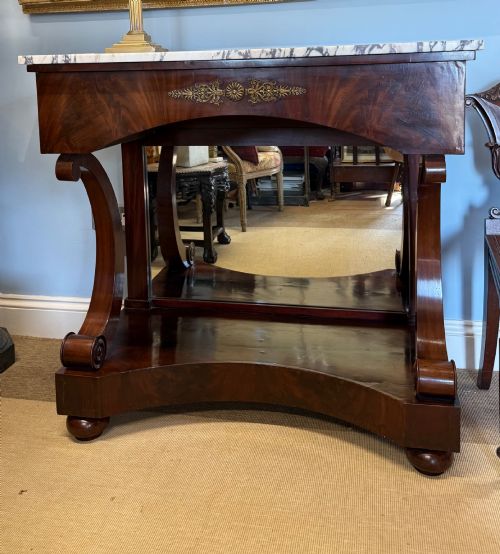
A carved hall table mirror search brings to light substantial entrance furniture, most frequently appearing as nineteenth-century console tables paired with mirror backs or matching wall mirrors. These pieces combine a solid wooden table base with integrated or hanging glass, designed specifically for hallways and grand reception spaces.
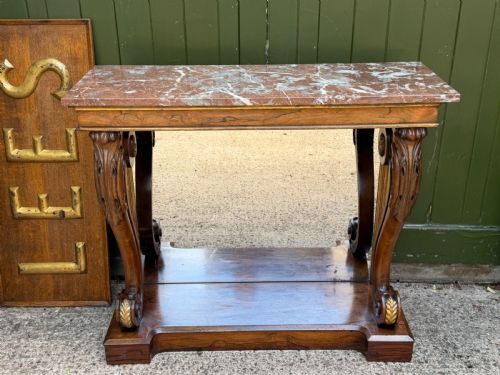
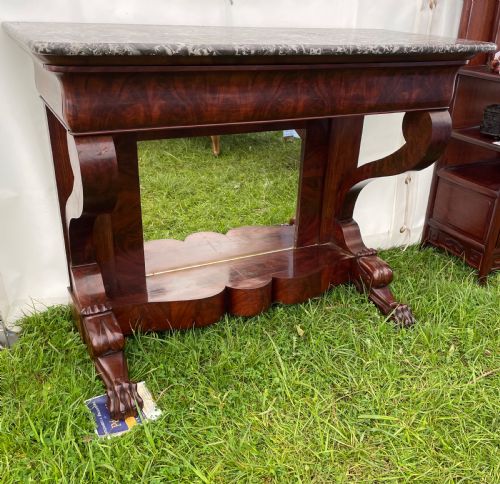
The inventory on this page relies heavily on nineteenth-century examples alongside items from the Regency and Victorian periods, often taking the form of console tables with marble tops and pier mirrors. Alongside these integrated sets, buyers will encounter related entrance furnishings such as carved oak and mahogany hall stands.
Originating from French, Italian, and British workshops, these items span styles from Rococo Revival and William IV to Grand Regency. The common thread is a functional surface paired with prominent vertical glass, intended to create a sense of light and proportion in a narrow space.
Materials and construction
Makers built these tables and frames using dense timbers like mahogany, rosewood, and walnut, often selecting figured veneer for the table aprons and pedestals. Giltwood and parcel-gilt treatments appear frequently on the frames and carved flourishes, adding reflective warmth alongside the glass.
Heavy stone tops, specifically carrara and figured marble, provide the functional surface for the console tables, resting securely upon carved wooden bases. Mirror glass is fitted into tall, heavily carved wooden frames, sometimes secured directly to the rear of the table structure as a single unified piece.
Carved Hall Table Mirror Retail Price Guide 2026
Typical asking prices for carved hall table mirror among the pieces listed under this phrase on Sellingantiques today, from the lower quarter to the upper quarter. They describe what is for sale here now, not the wider market.
Listings feature periods spanning from the Regency era through the Victorian period and into the early twentieth century, utilising mahogany, rosewood, oak, and marble.
Assessing quality
The standard of carving defines the upper tier of these pieces, distinguishing crisp, deep relief work in wood or giltwood from softer, machine-moulded ornamentation. Mastery in the hand-carving of foliage, scrolls, and rococo motifs signals a workshop of higher ambition.
Materials also dictate the grade of a piece, with heavy figured marble slabs and well-figured flame mahogany or rosewood marking out superior examples. The integration between the table base and the mirror back reveals the joiner's skill in creating a stable, harmonious unit.
The Carved Hall Table Mirror Glossary
- Console table
- A table designed to stand against a wall, frequently supported by wall brackets or front legs because the rear is secured to the structure of the room. They often feature matching mirrors mounted directly above or behind them.
- Pier mirror
- A tall mirror specifically designed to hang on the pier, the solid wall space between windows. In hall settings, these mirrors are paired with console tables to maximise light.
- Giltwood
- Wood that has been covered with a thin layer of gold leaf or gold paint. This finish is typical of elaborate nineteenth-century revival frames.
- Parcel-gilt
- A decorative treatment where only specific carved details or highlights of a wooden object are gilded, leaving the underlying timber grain visible elsewhere.
- Marble top
- A slab of polished limestone fitted to the upper surface of a console table. It provides a durable, cool surface that contrasts with the warm tones of mahogany or rosewood.
Carved Hall Table Mirror: Frequently Asked Questions
How do I style a hall table mirror?
Position the console table flat against the main wall of your entrance hall with the mirror secured above or attached to the back. Keep the marble surface largely clear, perhaps adding a small tray or a single decorative bowl.
Allow the carved frame and timber grain to act as the primary visual focus for guests entering the home. Ensure the height of the mirror aligns with the proportions of your hallway to maximise natural light.
Were these tables always fixed to the wall?
Traditional console tables often required wall attachment for stability because their front legs carried the main load while the rear relied on the wall. Many surviving examples retain brackets or fixing points designed for this purpose.
Freestanding variations do exist, particularly in later nineteenth and twentieth-century interpretations, but checking the rear construction remains essential for proper placement.
What is the difference between a pier table and a console table?
A pier table is traditionally built to fit precisely against the wall space between two windows, frequently accompanied by a matching pier mirror. A console table is a broader term for any table meant to sit flush against a wall.
In many antique listings, the two terms overlap significantly, especially when describing nineteenth-century entrance furniture with mirror backs.
How do I care for the marble top?
Clean the marble surface using a soft, damp cloth with mild, pH-neutral soap, avoiding acidic cleaners that can etch the polished stone. Wipe up spills promptly to prevent staining on porous varieties like carrara.
Apply a specialist stone wax occasionally to maintain the sheen and protect the surface from everyday wear in a busy hallway.
How do I identify the period of the wood?
Examine the grain, colour, and construction methods of the timber base, noting the deep red-brown patination typical of nineteenth-century mahogany or the rich purplish hues of rosewood. Regency and William IV pieces often display crisp, classical carving details.
Later revival pieces from the early twentieth century may show machine assistance in the joinery alongside softer timber selection.