




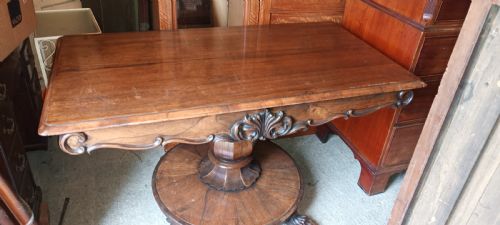

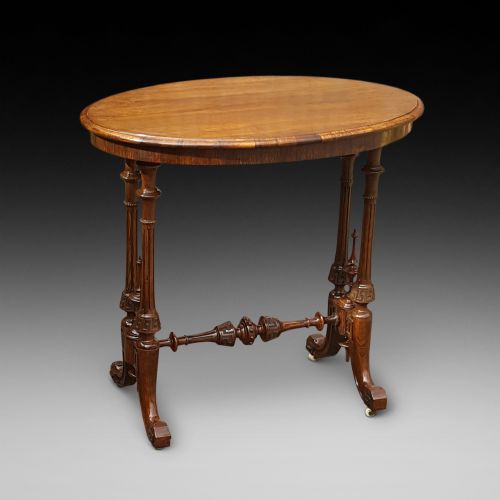
Brown Timber Sofa Table
These brown timber sofa tables bring centuries of craftsmanship and practical surface space into a room.
Brown Timber Sofa Table
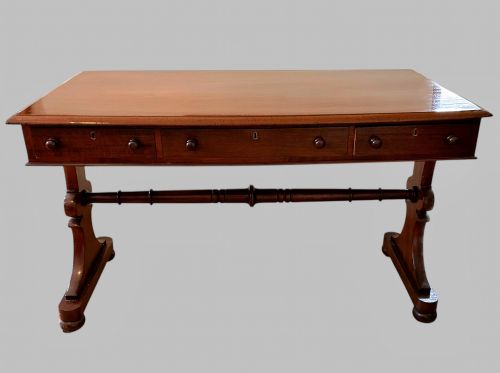
A brown timber sofa table is a versatile surface historically designed to sit behind a sofa or stand free in a room. The items gathered under this phrase span periods from the Georgian era through the Victorian period and into the early twentieth century.
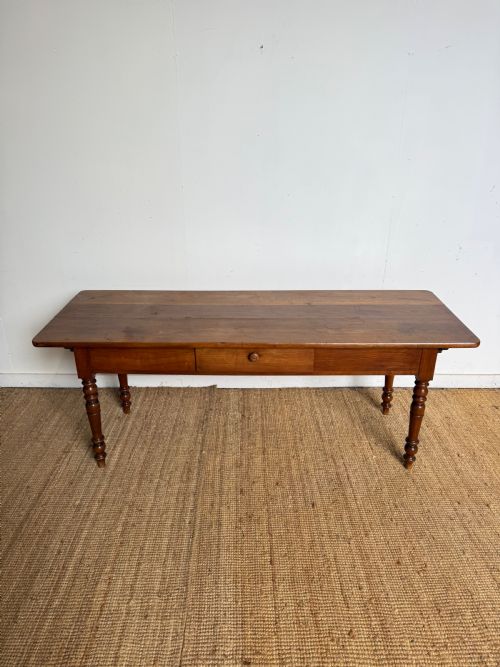
Most examples you encounter here are formed from timbers such as mahogany, walnut, and rosewood, often featuring useful drawers or drop leaves. Forms range from library and console tables to serving and occasional tables.
Origins stretch across British and continental workshops, encompassing styles from strict George III designs to French provincial interpretations and later revivals.
Materials and construction methods
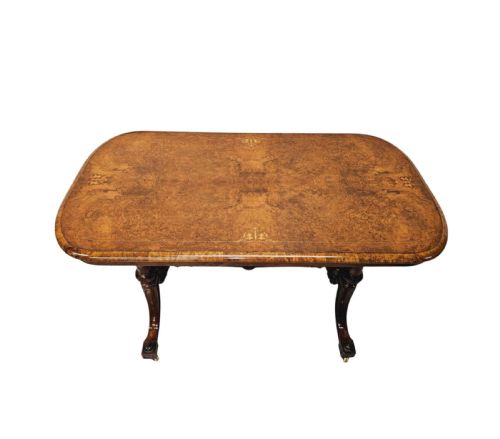
Cabinetmakers utilised dense hardwoods like mahogany and rosewood, chosen for their durability and rich grain patterns. Burr walnut and satinwood veneers were frequently applied to tabletops to create striking decorative panels.
Joinery techniques relied on traditional dovetailing for drawers and mortise and tenon joints for frames. Brass fittings, including castors and handles, were standard additions to enhance mobility and utility.
Many of these tables retain their tiny original brass castors, designed to let servants glide them across carpets without waking the master.
Judging quality in timber tables
Quality rests in the selection of the timber and the depth of the grain, where finely figured burr veneers elevate a piece above plain surfaces. The crispness of carved details and the neatness of inlaid work demonstrate the maker's hand.
Structural integrity is evident in how smoothly drawers operate and how firmly the legs join the frame without movement. Original brass castors and untouched patination further separate superior examples from later or heavily restored pieces.
The Brown Timber Sofa Table Glossary
- Sofa table
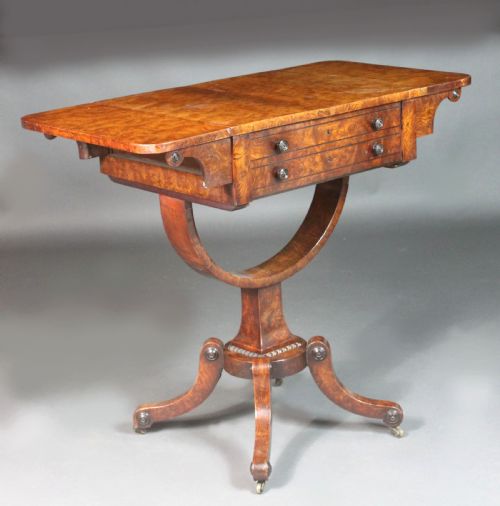
- A rectangular table traditionally placed behind a sofa, often fitted with two small drawers and drop leaves at either end. It originated in the late eighteenth century for writing or needlework.
- Burr walnut
- A highly prized wood taken from the burl growth of a walnut tree, producing swirling, intricate patterns. Cabinetmakers used it for decorative veneer panels on high-status furniture.
- Drop leaf
- A hinged flap on the side of a table that can be raised to extend the surface area or lowered when space is restricted. It relies on pivoting wooden brackets or swing legs for support.
- Dovetail
- A traditional joint used in drawer construction, formed by interlocking wedge-shaped fingers. It provides exceptional tensile strength against being pulled apart.
Brown Timber Sofa Table: Frequently Asked Questions
What was a sofa table originally used for?
These tables were positioned behind sofas in the drawing room to hold candles, books, or writing materials. Their drop leaves allowed them to be expanded when needed and tucked away afterward.
Over time, their utility adapted to various rooms, serving as small desks, side tables, or freestanding display surfaces.
Can I use a antique table every day?
These tables were built from solid hardwoods and designed for daily domestic service in period homes. Routine use for lamps, drinks, or decorative items poses no threat to a structurally sound piece.
Applying coasters and keeping timber away from direct heat sources ensures the polish and wood remain protected over time.
What woods are most common?
Mahogany is the predominant timber found in these listings, valued for its strength and deep reddish-brown tone. Walnut, rosewood, and pine also appear frequently across different regional styles and periods.
Exotic veneers like satinwood and burr ash were reserved for decorative accents on finer tables.