

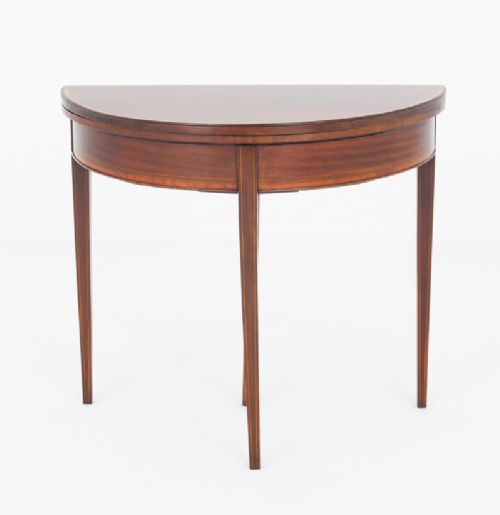


Georgian Revival Console Table
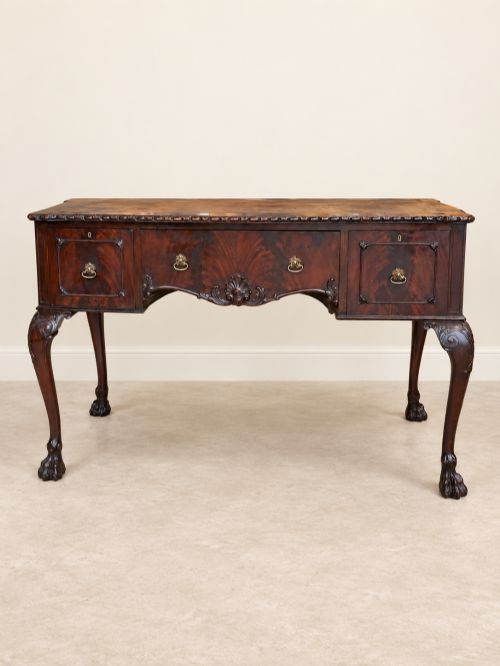
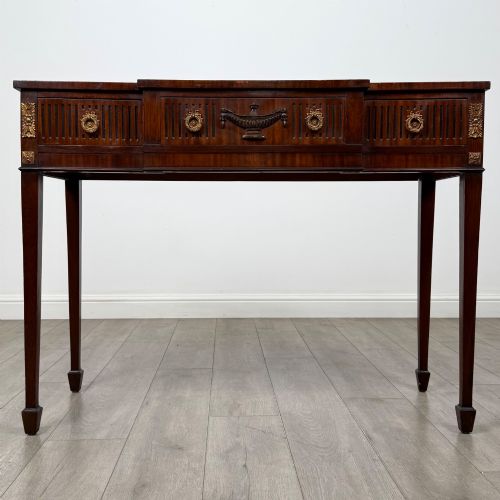
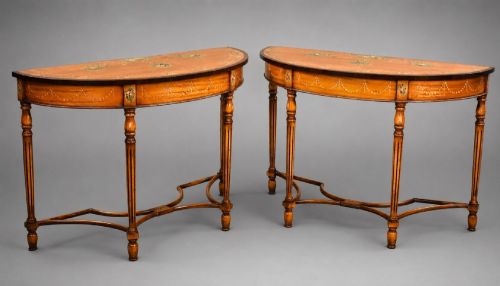
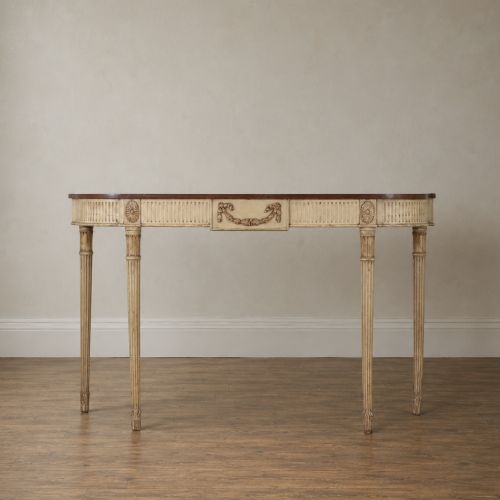
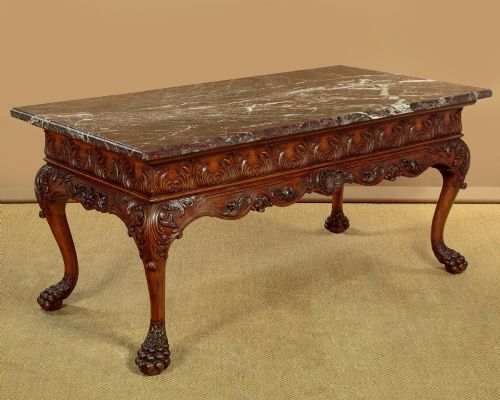
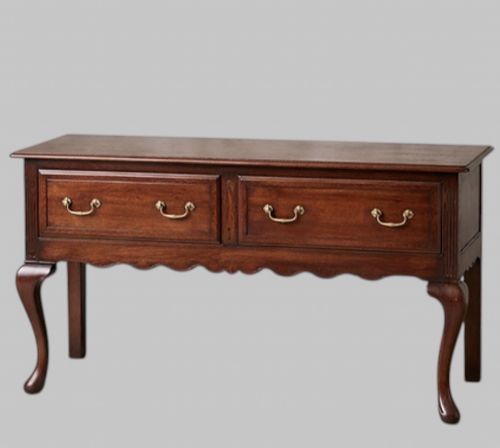
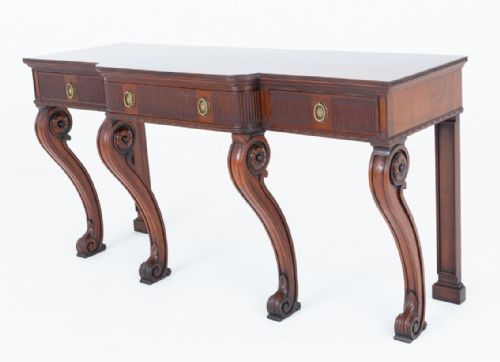
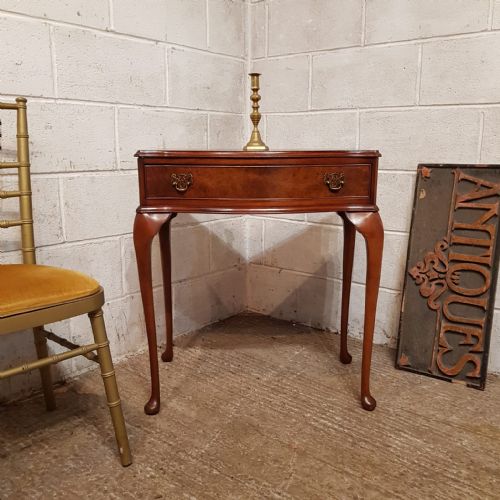
These pieces are a georgian revival console table, bringing eighteenth-century classical lines into later homes through solid timber and carved detail.
Georgian Revival Console Table
A georgian revival console table draws directly upon the architectural forms and ornamental vocabulary of the eighteenth century, reinterpreted by makers from the nineteenth and early twentieth centuries. The pieces on this page span the Victorian, Edwardian, and later periods up to the 1930s, reflecting a sustained domestic appetite for classical symmetry and proportion.
The term encompasses a variety of related forms beyond the pure console, including side tables, serving tables, lowboys, and card tables sharing the same stylistic ancestry. Mahogany predominates among the surviving timber choices, alongside walnut, burr walnut, satinwood, and oak.
Materials and construction methods
Cabinet makers built these tables primarily using mahogany, walnut, and oak, often applying finely figured veneers such as burr walnut or satinwood to primary display surfaces. Secondary timbers like deal or pine appear in structural carcases and drawer linings, consistent with period workshop practices.
Decorative surface treatments relied on traditional craft techniques, including boxwood stringing, cross-banding, hand-carved mahogany foliage or ball-and-claw feet, and occasional painted and gilded gesso finishes. Folding card tables incorporate hinged wooden frameworks and baize or felt playing surfaces.
Georgian Revival Console Table Retail Price Guide 2026
Typical asking prices for georgian revival console table among the pieces listed under this phrase on Sellingantiques today, from the lower quarter to the upper quarter. They describe what is for sale here now, not the wider market.
Listings on this site span the nineteenth century through the 1930s, featuring mahogany, burr walnut, satinwood, and marble.
Distinctions in construction and design
Quality rests upon the selection of timber and the precision of the cabinet work, particularly in figured veneers and hand-carved details. Pieces with dense mahogany grain, balanced proportions, and crisp carving depart significantly from simpler commercial production.
The integration of secondary materials, such as heavy marble tops or intricate brass hardware, distinguishes standard utility items from more ambitious cabinet pieces designed for formal reception rooms.
Edwards & Roberts
The Georgian Revival Console Table Glossary
- Console table
- A table designed to stand against a wall, frequently supported by wall brackets or distinct front legs. They often feature decorative aprons and marble or timber tops.
- Lowboy
- A small seventeenth or eighteenth-century style side table with one or more rows of drawers beneath the top. Revival examples retain the characteristic cabriole legs and petite proportions.
- Card table
- A folding table engineered for games, featuring a hinged top that opens to reveal a finished playing surface. Many examples incorporate concertina actions or swing-leg supports.
- Satinwood
- A pale, lustrous exotic timber native to India and Ceylon, prized for inlay and veneering during the Sheraton revival period. It provides a striking contrast when banded with darker mahogany.
- Cross-banding
- A decorative border technique where veneer strips are laid transversely to the grain of the central panel. This frames table tops and drawer fronts with deliberate geometric contrast.
Georgian Revival Console Table: Frequently Asked Questions
Where should I place a console table?
These tables suit hallways, living rooms, and dining spaces where surface area is required without blocking circulation. Their shallow depth allows them to sit flush against walls beneath mirrors or artwork.
In dining rooms, serving tables function effectively as sideboards for food and drink during gatherings, matching the proportions of larger reception areas.
How do I distinguish revival periods?
Dating relies on timber selection, secondary woods, construction hardware, and specific stylistic revivals. Edwardian and Victorian pieces often show machine-sawn elements alongside hand-finishing.
Later pieces from the 1920s and 1930s tend towards simplified proportions while maintaining traditional mahogany or oak construction methods.
Were these tables used for dining?
Console tables served primarily decorative and display purposes in formal rooms, holding lamps, porcelain, or decorative objects against the wall.
Card tables and serving tables fulfilled active domestic functions, providing temporary surfaces for evening entertainment or meal service.
How do I care for wooden surfaces?
Routine maintenance requires dusting with a dry, soft cloth and avoiding direct sunlight or excessive moisture. Periodic application of traditional wax helps preserve the timber finish.
Marble tops benefit from immediate wiping of spills to prevent staining, while veneered sections require protection from extreme temperature shifts.