
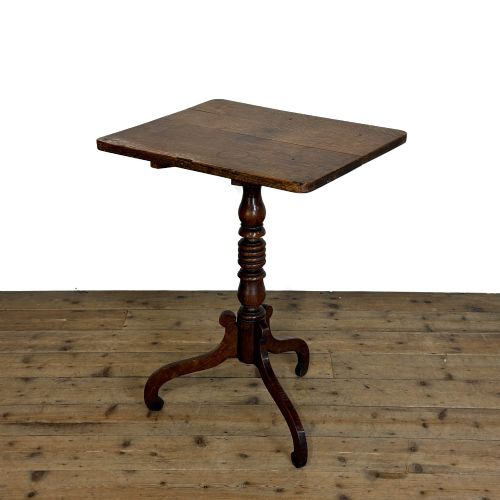
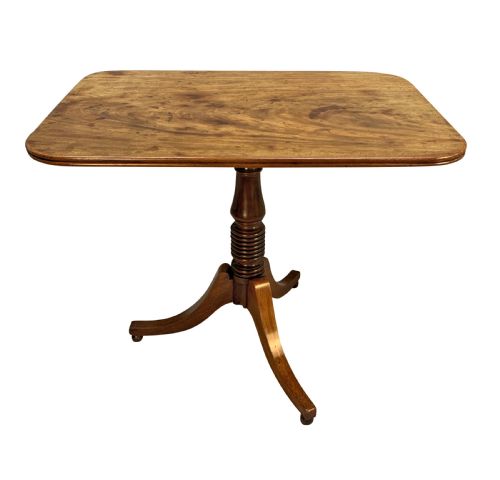
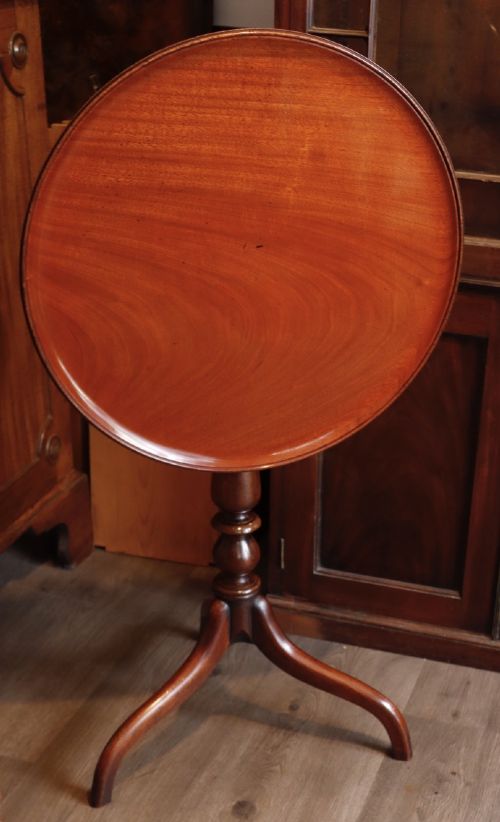
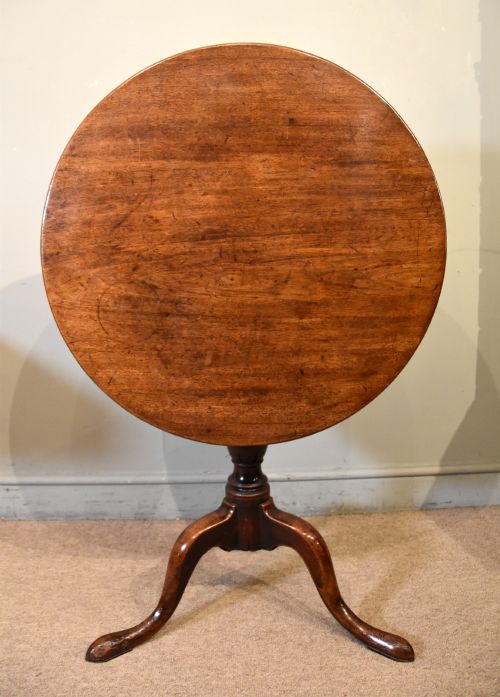


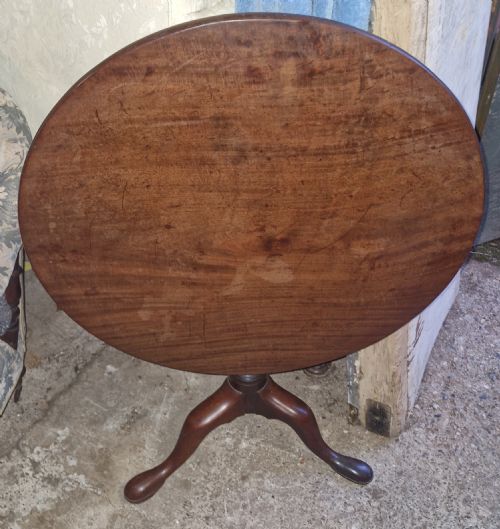
Wooden Snap Top Table
A wooden snap top table gives you a clever pivoting surface that drops flat when you need it and folds away vertical when floor space matters.
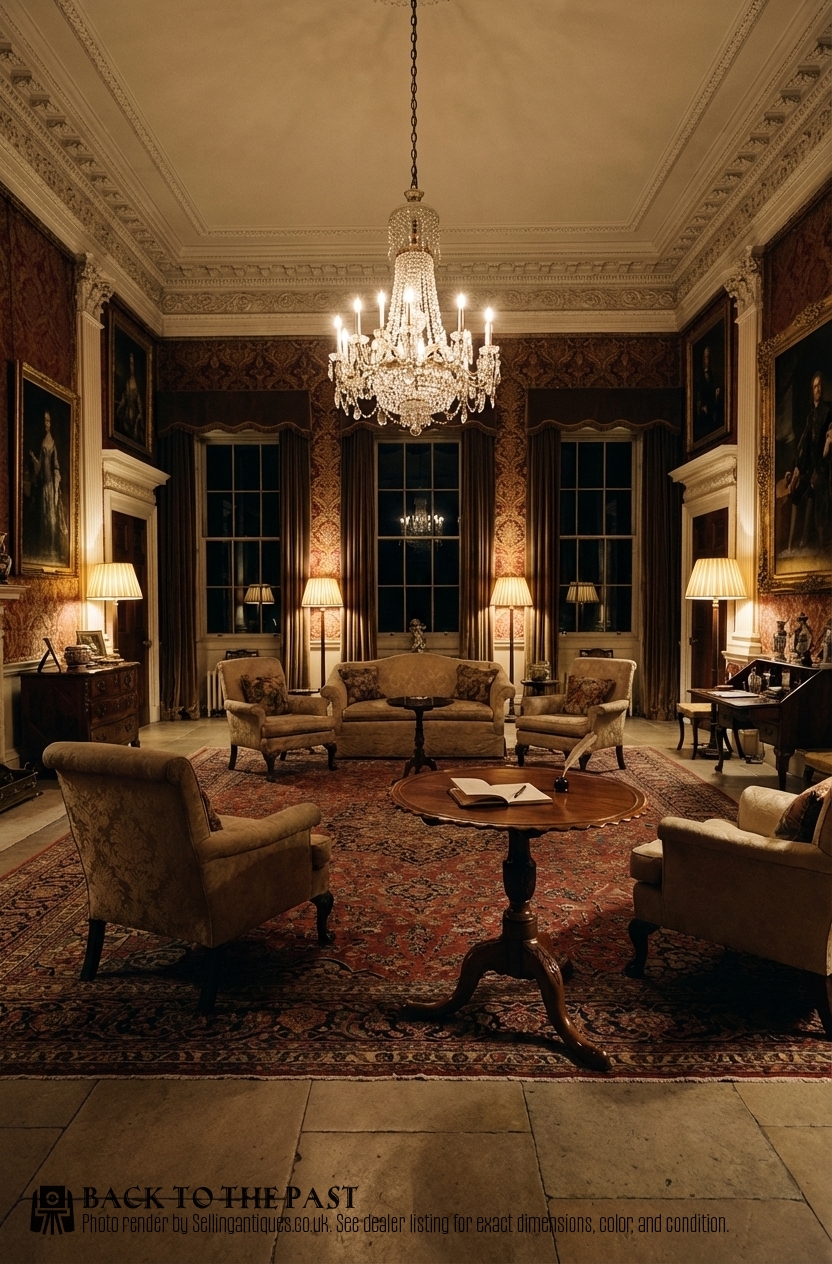
Wooden Snap Top Table
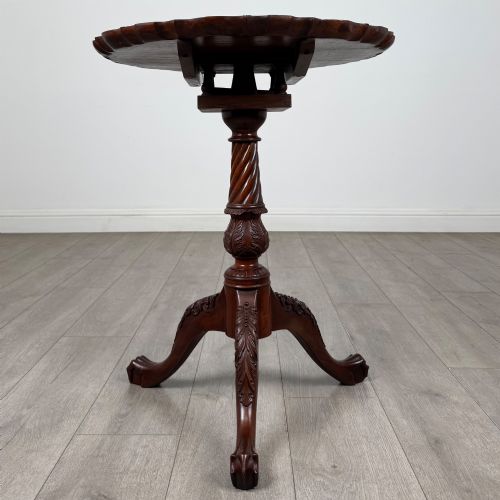
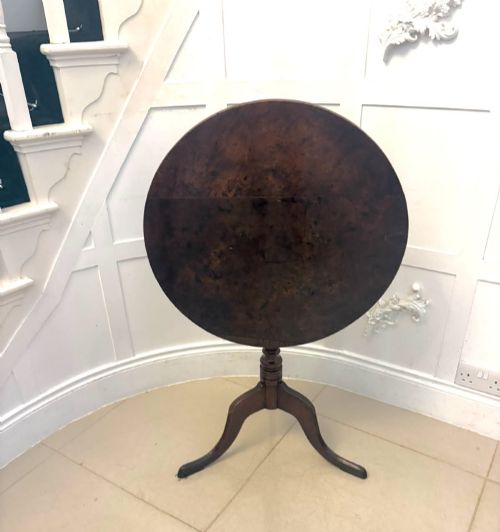
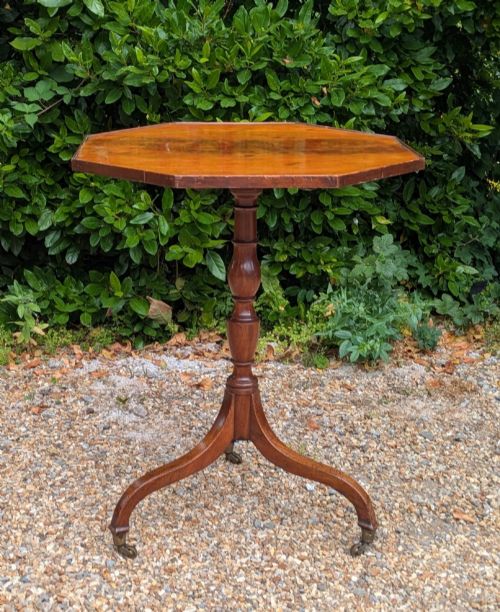
A wooden snap top table combines a circular or octagonal top with a pivoting mechanism that allows the surface to tilt upright against the pedestal base when not in use. This clever space-saving design makes these pieces versatile additions to reception rooms, dining areas, and corners.
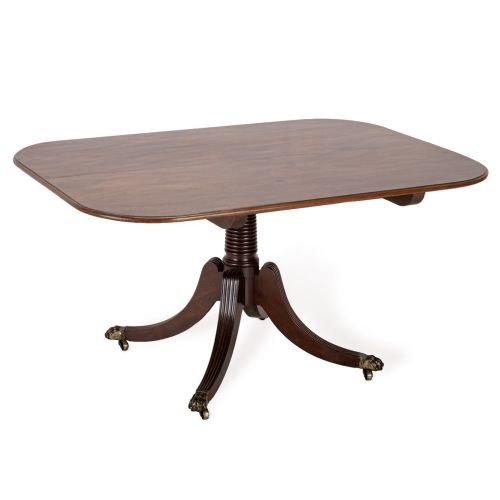
The versions you meet most frequently on this page belong to the Georgian and 19th-century periods, often executed in rich timbers like mahogany or oak. These tables typically stand on tripod bases supporting a central pillar, ranging in scale from compact lamp tables to large dining surfaces.
How they were made
Cabinet makers utilised dense hardwoods such as mahogany, rosewood, and burr oak to construct the tops and turned pedestals, occasionally employing pine for internal framing or secondary elements. Timber selection dictated the weight and presence of each piece, with figured grains receiving careful attention during finishing.
Mechanisms range from simple pivoting blocks to sophisticated brass birdcage assemblies that allow the top to rotate as well as tilt. Joinery on the tripod bases involved sturdy tenons and dovetails to ensure stability under daily use.
Listings feature pieces spanning from the 18th century through the Georgian, Regency, and Victorian eras into Edwardian and 1930s revivals.
What varies in quality
The refinement of the timber and the handling of the edge dictate the distinction between standard examples and finer works. One-piece solid timber tops and carved piecrust edges require exceptional skill from the cabinet maker, whereas multi-board tops represent more utilitarian production.
The complexity of the mechanism also marks the grade of the piece, with brass birdcage fittings and delicately turned pedestals indicating workshop output of higher ambition.
John Bivins
The Wooden Snap Top Table Glossary
- Snap-top
- A table top fitted with a catch mechanism that locks the surface horizontally or releases it to tilt vertically. This allows the furniture to stand flat against a wall when not required for dining or writing.
- Tripod base
- A support structure comprising three legs radiating from a central turned column. It provides steady contact on uneven floorboards.
- Birdcage
- A timber framework placed beneath the table top that enables it to rotate horizontally in addition to tilting. This ingenious fitting is typical of finer 18th-century examples.
- Piecrust edge
- A decorative raised border carved into the perimeter of a circular table top with scalloped indentations. It resembles pastry work and demands considerable skill from the woodcarver.
- Plum pudding mahogany
- A highly figured tropical hardwood displaying dense, mottled markings that resemble the fruit in a Christmas pudding. Cabinet makers reserved this striking timber for pieces of elevated status.
Wooden Snap Top Table: Frequently Asked Questions
What is a wooden snap top table used for?
These tables served primarily as supper, lamp, or occasional tables in Georgian and Victorian interiors where rooms needed to adapt quickly for different activities.
When the meal or evening ended, the top tilted upright so the furniture occupied minimal floor space against the perimeter wall.
How do I tell an 18th-century table from a 19th-century one?
Eighteenth-century examples often display finer proportions, hand-turned tripod legs, and occasionally one-piece timber tops with birdcage actions.
Nineteenth-century pieces tend toward heavier pedestals, octagonal forms, or rosewood veneers associated with Victorian and Regency output.
Will a tilt top table stay level?
The pivoting mechanism relies on a catch or wedge that secures the top in the horizontal position against the central column.
Over decades of use, these wooden and brass fittings settle, so proper alignment depends on the original precision of the workshop mechanism.
What timbers should I look for?
Mahogany is the material most frequently encountered across Georgian and Regency periods, offering stability and deep colour.
Other examples utilise oak, burr oak, rosewood, cherrywood, or plum pudding mahogany depending on the regional origin and date of manufacture.