
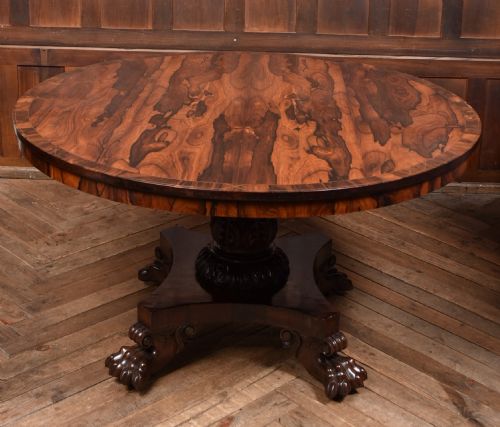


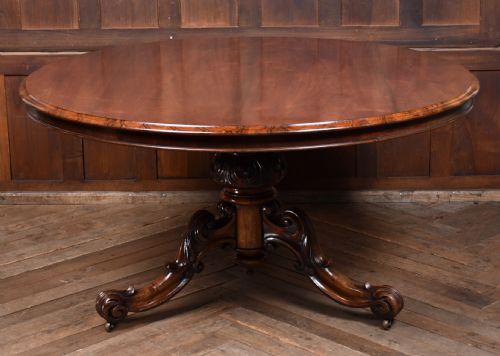


Snap Top Dining Table
A snap top dining table is a versatile piece designed to tilt upright when not in use, saving valuable floor space.
Snap Top Dining Table
A snap top dining table combines the utility of a standard dining surface with a clever mechanism that allows the top to tip vertically, which historically helped clear rooms quickly after meals.
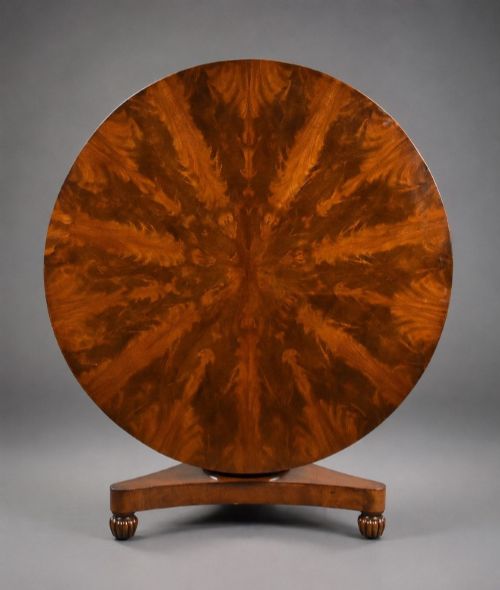
Most examples found here hail from the Georgian, Regency, and Victorian periods, manifesting primarily in mahogany, rosewood, and walnut timbers.
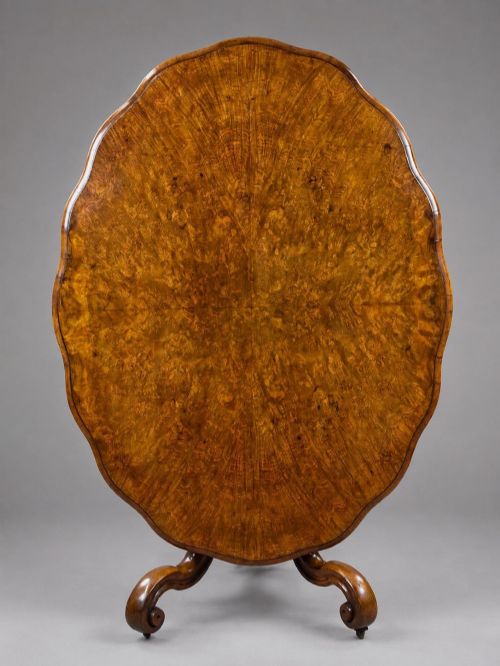
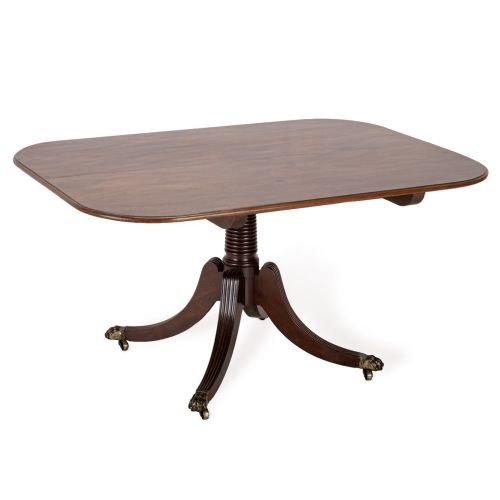
Buyers encounter circular breakfast tables, rectangular dining versions, and oval loo tables, all sharing the distinctive pedestal base and tilting mechanism.
How they were made
Cabinet makers utilised solid timbers and choice veneers like flame mahogany, burr walnut, and rosewood applied to stable secondary woods, ensuring rich surface figures.
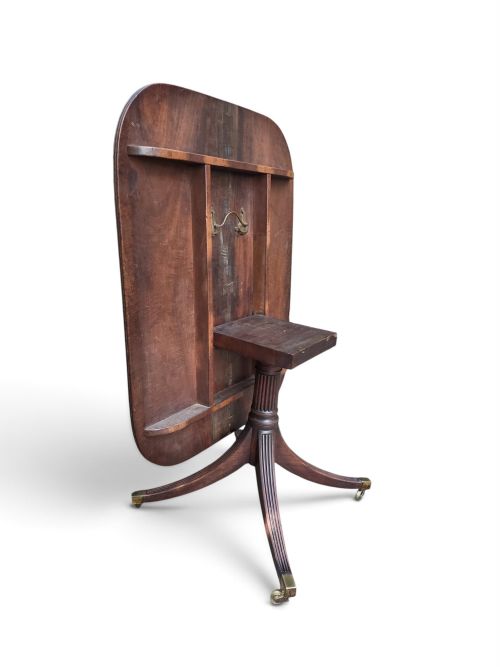
The pivoting mechanism relies on sturdy wooden or brass catches and blocks fitted to a central turned column, which typically rests on tripod or splayed legs often terminating in brass castors.
What varies in quality
Quality rests in the crispness of the turning on the central pedestal, the elegance of the splayed legs, and the natural figuring of the timber chosen for the top.
Superior execution shows in the seamless operation of the snap-top catch and the stability of the pillar when locked flat for dining.
The Snap Top Dining Table Glossary
- Snap-top
- A table mechanism allowing the top to pivot upright on a catch. This design enables the table to store flat against a wall when not in use.
- Tilt-top
- An alternative term for a snap-top table. It describes any occasional or dining table where the surface tilts on its pedestal.
- Loo table
- A Victorian round table originally intended for the card game loo. These often feature elaborate burr walnut veneer and heavy pillar bases.
- Breakfast table
- A dining table designed for morning meals in smaller rooms. They frequently feature tilt mechanisms dating from the Georgian and Regency eras.
- Centre table
- A freestanding table meant to be viewed from all sides. These pieces often occupy the middle of a grand reception room.
Snap Top Dining Table: Frequently Asked Questions
How do you operate the snap top?
A small wooden or brass catch beneath the surface releases the table top from the pedestal block. Once disengaged, the top pivots smoothly into a vertical position.
Securing the table flat for dining involves lowering the top until the catch clicks firmly back into place, locking the surface to the pedestal.
Can I use this daily for dining?
These tables served primarily for dining or breakfast historically and remain fully functional for everyday meals today. Their sturdy pedestal construction provides reliable support.
Protecting the polished wood surface with placemats helps preserve the antique finish during regular family dinners.
How do I distinguish Regency from Victorian pieces?
Regency tables generally display cleaner classical lines, simpler brass inlay, and restrained mahogany or rosewood surfaces inspired by ancient Greek and Roman forms.
Victorian versions often embrace heavier proportions, more ornate carving, and decorative veneers such as burr walnut or figured mahogany.
What rooms suit a tilt top table?
Dining rooms and large living spaces accommodate the expanded flat position comfortably. Their ability to tilt upright makes them practical for smaller rooms or hallways when space is needed.
Placing one in a library or study creates a functional surface that easily moves out of the way.