
Wooden Farm Kitchen Table
A wooden farm kitchen table brings centuries of domestic utility and robust charm into a modern home.
Wooden Farm Kitchen Table
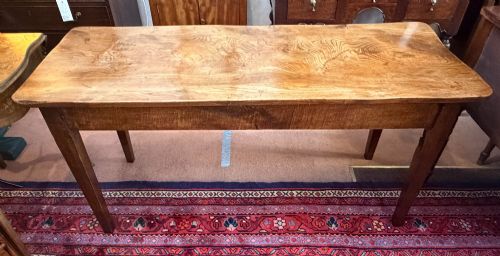
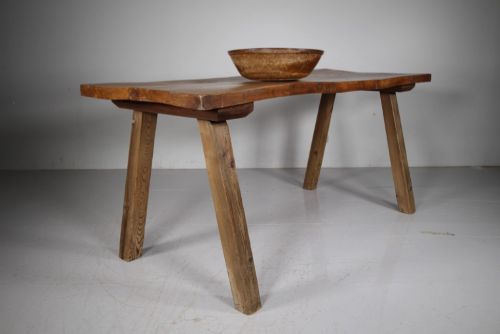
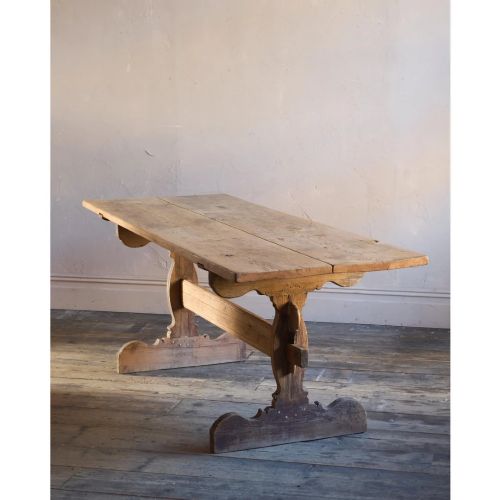
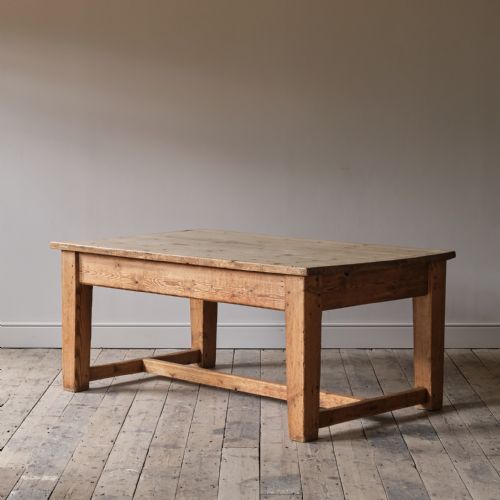
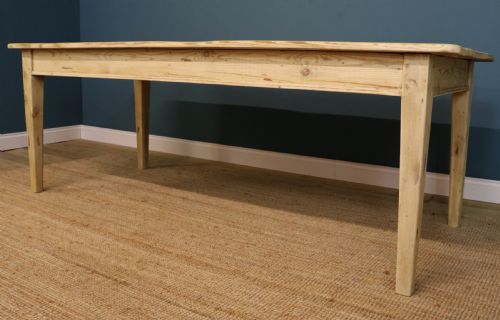
A wooden farm kitchen table serves as the central gathering surface for daily domestic life, originating from working country houses and rural properties. These surfaces range from utilitarian dairy preparation counters to grand refectory boards designed for communal meals.
Regional variations span English harvest boards, French provincial refectories, and Scandinavian country styles. Each origin brings distinct proportions and timber choices, reflecting local agricultural traditions and available regional woods.
Construction and Materials
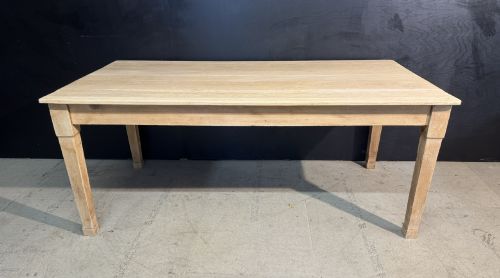
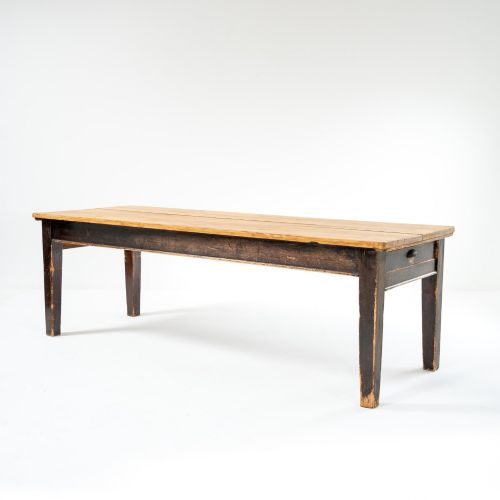
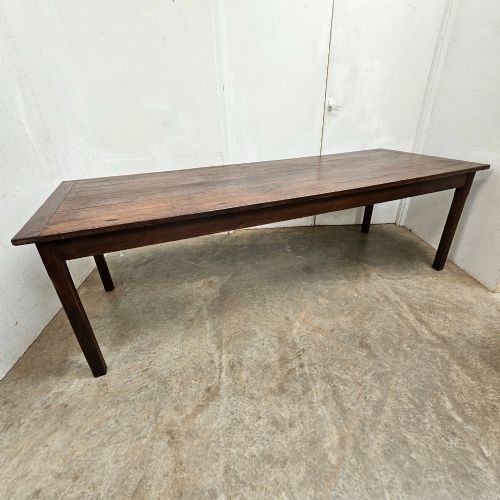
Carpenters built these tables using durable domestic hardwoods and softwoods including oak, elm, pine, cherrywood, and fruitwood. Single plank tops frequently appear on earlier pieces, joined with traditional pegged mortise and tenon joints to withstand heavy pressure.
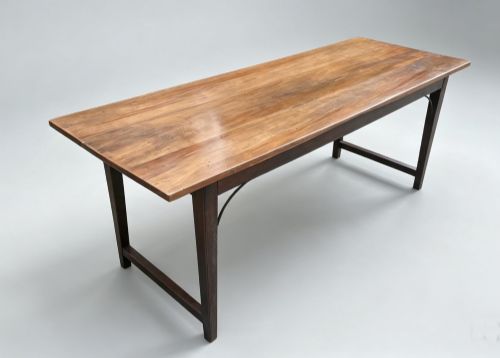
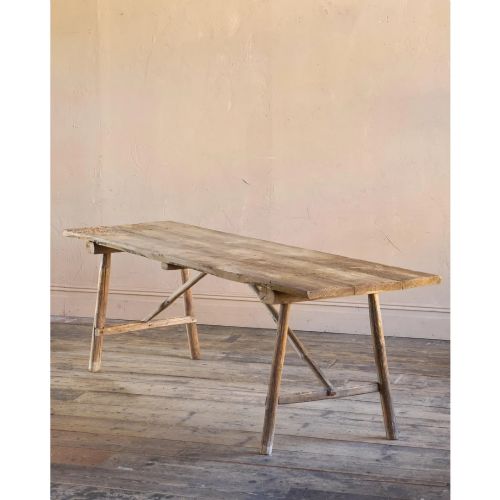
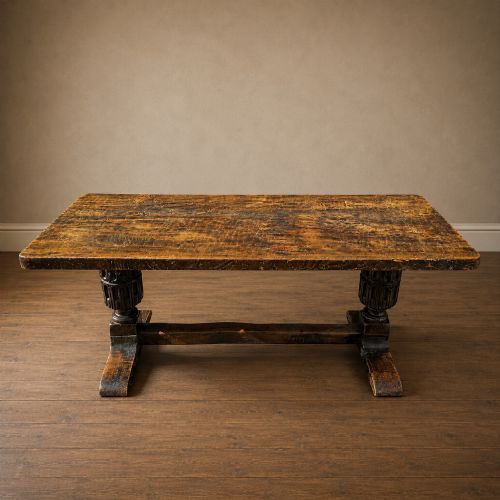
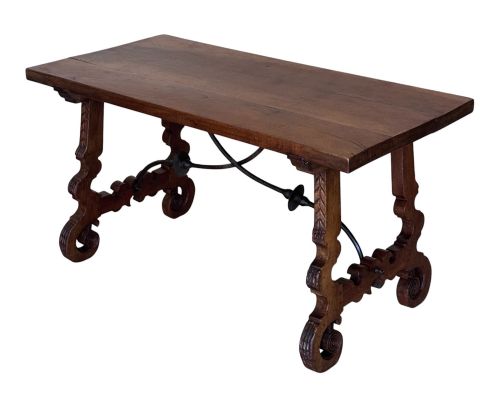
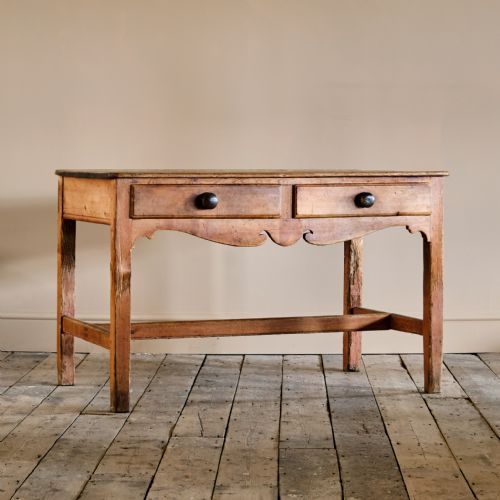
Subframes utilise robust supporting structures such as trestle ends, turned legs, or stretcher bases fixed with wooden pins. Secondary materials like wrought iron and brass appear occasionally in structural brackets or functional drawer pulls.
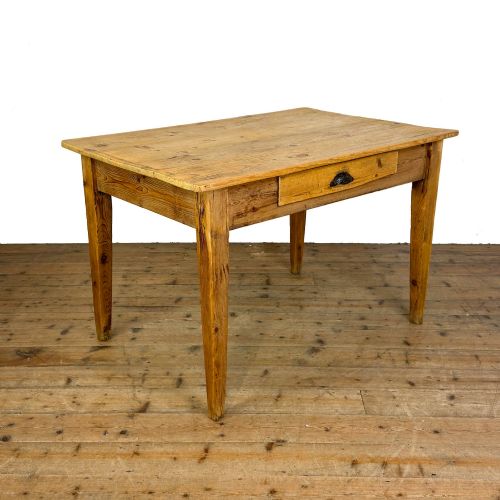
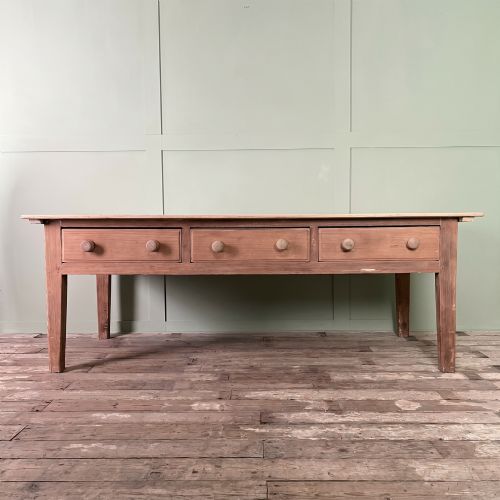
Surfaces receive various traditional finishes ranging from bare scrubbed timber to layers of historic paint, such as Swedish Falu red. Carpenters integrated functional elements like side drawers directly into the aprons for storing kitchen implements.
Evaluating Quality
Quality separates through the integrity of the original timber and the proportion of the structure. Tables retaining their original single plank tops or untouched timber thickness command greater interest than those heavily sanded or altered.
The sophistication of the joinery and base construction dictates the standard of the piece. Firmly fitted stretchers and hand-cut peg joints demonstrate superior craftsmanship compared to later or purely utilitarian replacements.
Original surface treatments, including undisturbed layers of old paint or deep waxed patinas accumulated over centuries, elevate the standing of the table. Excessive restoration or modern stripping diminishes the historical character of the wood.
Heals Of London
The Wooden Farm Kitchen Table Glossary
- Trestle table
- A table consisting of two or more vertical supports connected by a horizontal beam. This design provides maximum legroom along the length of the board.
- Dairy prep table
- A specialised functional work table used in agricultural dairies for cheese or butter making. These pieces typically feature scrubbed softwood or sycamore tops resistant to moisture.
- Falu paint
- A traditional deep red paint originating from copper mines in Sweden. It preserves and protects outdoor and indoor timber surfaces.
- Draw leaf table
- A dining table equipped with sliding leaves stored beneath the main surface. These pull out from the ends to extend the overall seating capacity.
Wooden Farm Kitchen Table: Frequently Asked Questions
How do I clean a pine farm table?
Wash the surface using warm water and a mild soap with a damp cloth. Avoid harsh chemical cleaners that strip the historic wax and dry out the old softwood.
Dry the timber thoroughly immediately after cleaning to prevent moisture damage. Periodically apply a natural beeswax to maintain the protective sheen of the wood.
Are these tables suitable for daily dining?
These tables were constructed specifically for heavy everyday use by rural households and working families. Their robust timber frames and thick tops easily withstand the demands of modern meals.
Use protective mats under hot dishes to preserve the aged finish. Minor marks and dents only add to the ongoing history of the piece.
How do I identify a refectory base?
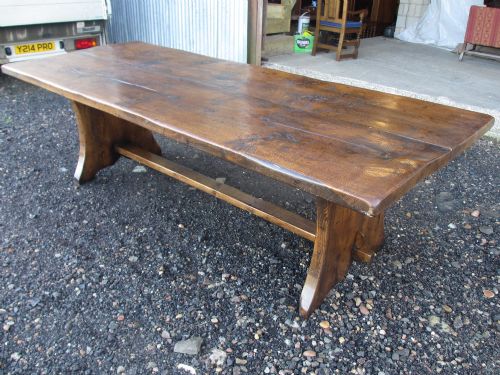
A refectory base typically consists of straight legs connected near the floor by a continuous horizontal wooden stretcher. This arrangement distributes weight evenly and prevents the long top from sagging.
Earlier examples often feature shaped trestle ends rather than four separate legs. Check beneath the top to observe how the frame locks into the underside.
What is a single plank top?
A single plank top consists of one wide board running the full length of the table rather than multiple smaller boards joined together. These large boards require mature trees and skilled conversion by historical carpenters.
Finding a wide single plank on older oak or elm tables indicates a superior grade of timber. Over time, these wide boards develop natural warping and character.