

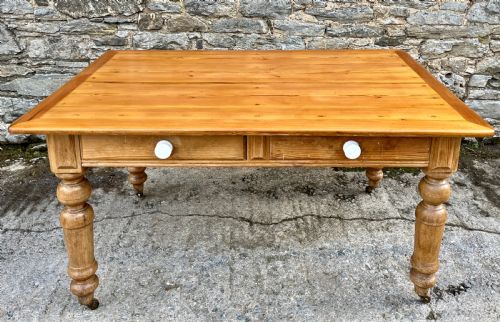


Large Rustic Prep Table
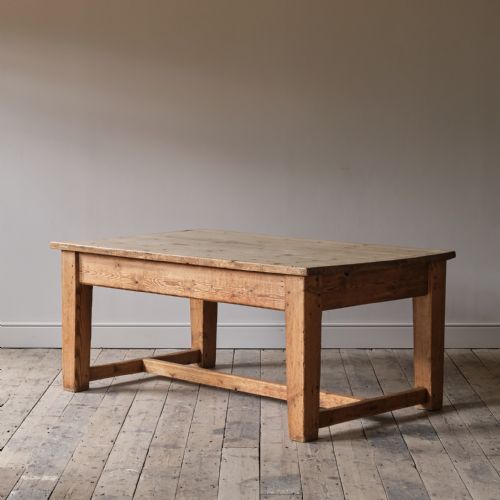
A large rustic prep table brings solid workspace and history into a room, offering the sturdy utility demanded by earlier kitchens.
Large Rustic Prep Table
When you search for a large rustic prep table, you find heavy working furniture built for serious kitchen tasks, sculleries, and domestic service. These pieces originate across the nineteenth and early twentieth centuries, spanning English, French, Scandinavian, and Italian traditions.
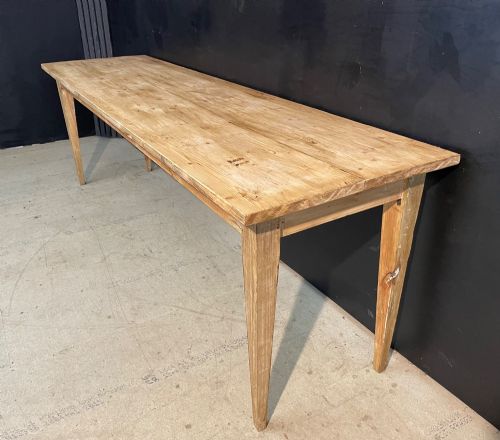
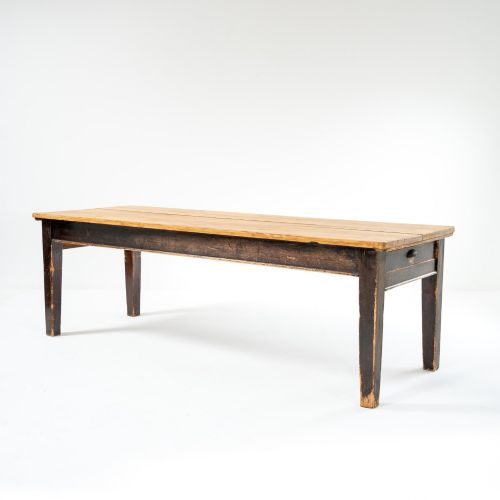
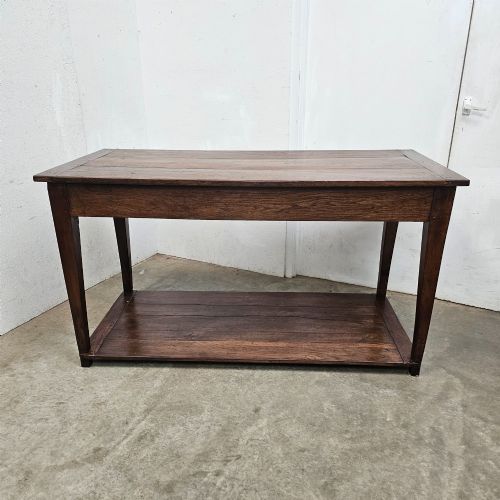
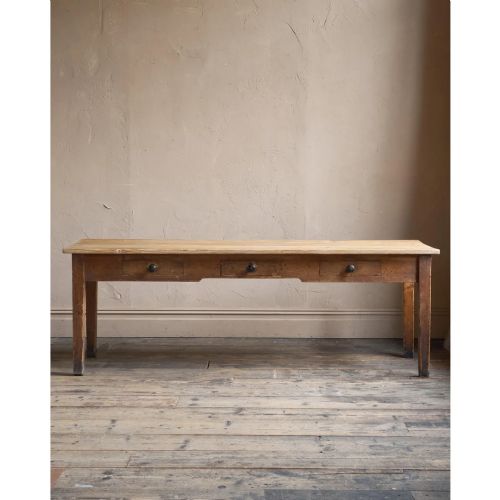
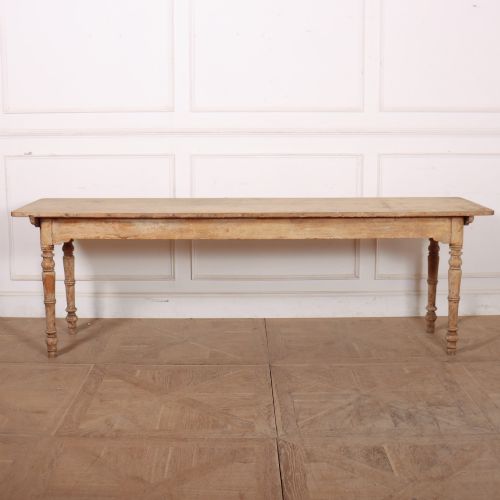
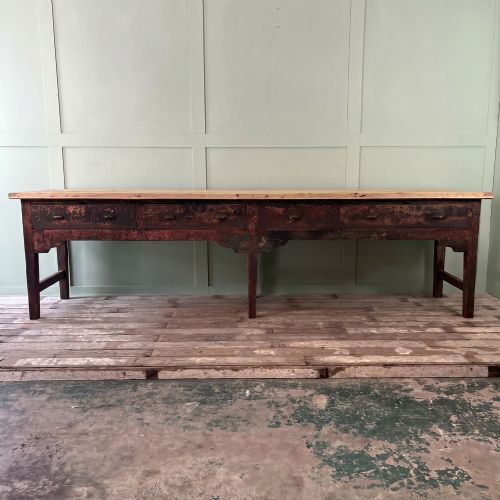
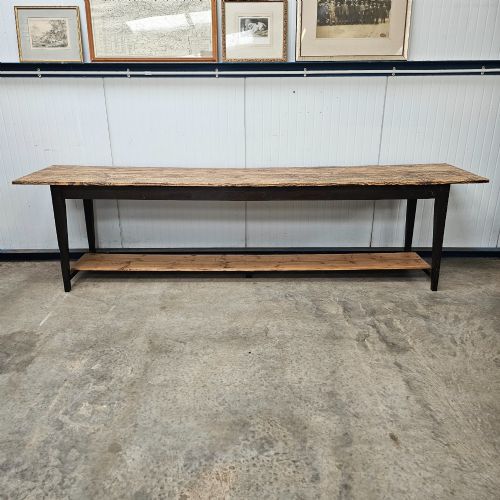
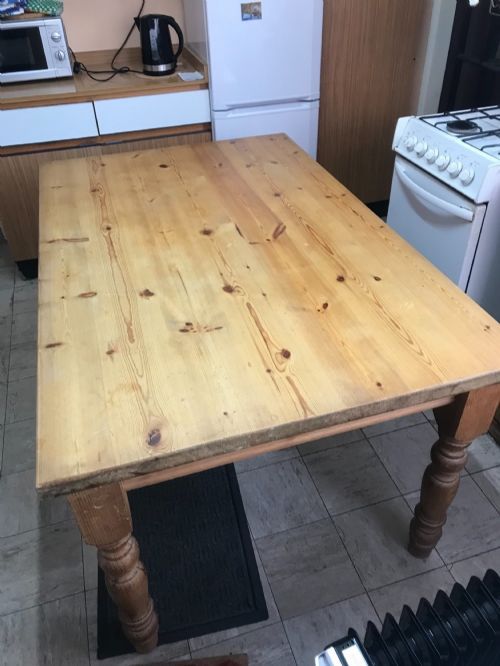
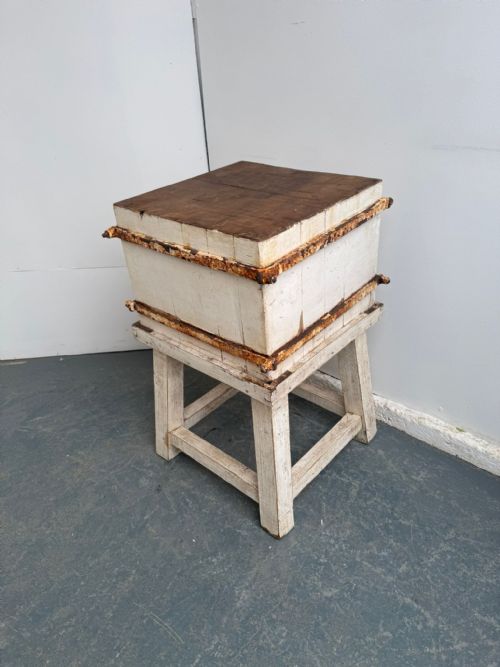
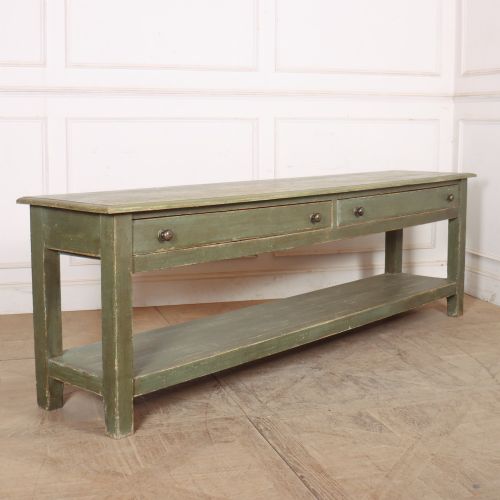
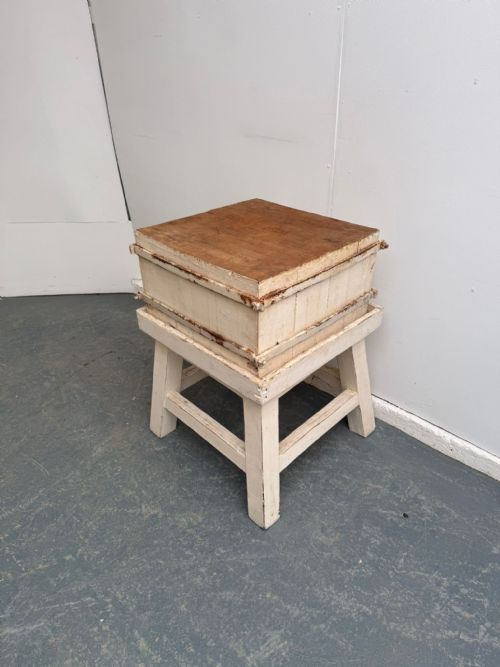
The version you meet most often on this page is a substantial pine farmhouse or kitchen table, frequently scrubbed, featuring drawers, potboards, or two-tier storage. Oak examples appear alongside painted timber and elm forms, shaped as drapers tables, harvest tables, and butchers blocks.
Styles lean toward rustic farmhouse, English country, and French provincial, reflecting practical domestic needs rather than formal parlor display. Each piece carries the marks of heavy food preparation, baking, and daily household work on its surfaces.
How they were made
Carpenters built these tables using solid pine, oak, and elm, selecting timbers for strength and resilience under heavy daily use. Square section supports and sturdy legs carried thick tops designed to withstand chopping, kneading, and scrubbing.
Makers incorporated functional elements such as drawers for utensils, lower potboards, and second tiers to maximise utility in busy kitchens. Iron and brass hardware added structural reinforcement where needed, while painted finishes protected the underlying wood.
Listings feature nineteen-century pieces alongside Victorian, Edwardian, and early twentieth-century examples up to nineteen-thirty.
What varies in quality
The distinction between ordinary utility items and superior examples lies in the integrity of the timber and the honesty of the wear. Tables retaining their original scrubbed pine surfaces or authentic painted finishes show greater character than altered pieces.
Proportion and scale dictate the success of a table, with longer formats like harvest and drapers tables demonstrating balanced construction. Original fixtures, such as drawers with period pulls and intact potboards, elevate the architectural merit of the piece.
The Large Rustic Prep Table Glossary
- Scrubbed pine
- Pine timber cleaned repeatedly with soap and water over generations, leaving a pale, tactile surface. This process removes surface grime while preserving the deep grain.
- Potboard
- A low slatted shelf fitted between the legs of a serving or prep table. It provided accessible storage for heavy pots and kitchen earthenware.
- Drapers table
- An elongated, narrow work table traditionally used for folding textiles. Their generous length and shallow proportions suit modern kitchen islands.
- Harvest table
- A large dining table built to seat many farm labourers during seasonal gatherings. They combine long spans with sturdy structural supports.
- Butchers block
- A thick-topped cutting table engineered from end-grain blocks of wood. They absorbed the heavy impact of cleavers and heavy butchery.
Large Rustic Prep Table: Frequently Asked Questions
How were prep tables used?
Prep tables served as the central workstation for domestic tasks, from kneading bread dough to butchering meat and preparing vegetables. Their robust surfaces were designed to endure rigorous daily labour in sculleries, kitchens, and large country houses.
Lower shelves and drawers held essential utensils, pots, and ingredients close to hand. Unlike formal dining furniture, these tables were tools of production rather than symbols of status.
Are these tables suitable for modern kitchens?
These large tables function exceptionally well as kitchen islands, providing expansive working space and character. Their generous proportions accommodate modern food preparation while anchoring the room with historical presence.
Pairing them with stools or chairs creates a natural gathering point for casual dining. The durable timber surfaces handle daily domestic life just as they did a century ago.
How do I identify a 19th-century table?
Nineteenth-century tables display construction methods typical of pre-industrial workshops, including hand-cut joints and naturally aged timber. Tool marks, uneven board widths, and deep patination point toward this era.
Styles from this period often align with Victorian or continental country traditions, featuring heavy pine, oak, or elm. Iron and brass fixings, where present, show period-appropriate manufacturing techniques.
What is a drapers table?
A drapers table is a long, narrow work table originally utilised in mercers shops and textile houses for measuring and folding cloth. Their distinctive long spans and shallow depths made them ideal for handling bolts of fabric.
Today, these elongated proportions translate well into narrow kitchens and hallway spaces. They frequently feature lower tiers or multiple drawers for storage.