


Vintage Pine Refectory Table
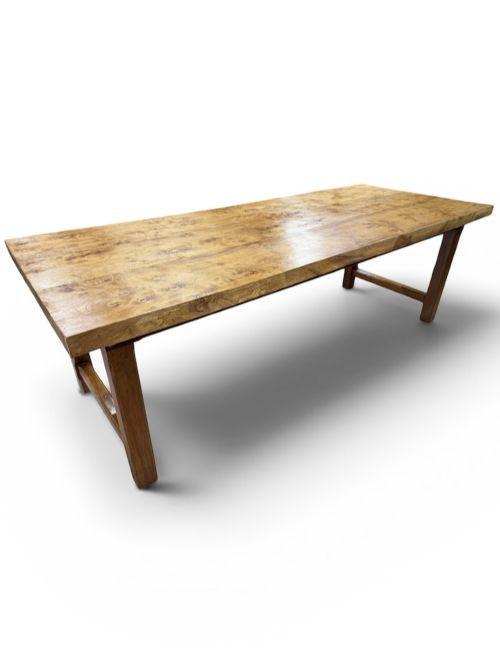
A vintage pine refectory table brings sturdy proportions and practical utility into a dining room or kitchen.
Vintage Pine Refectory Table
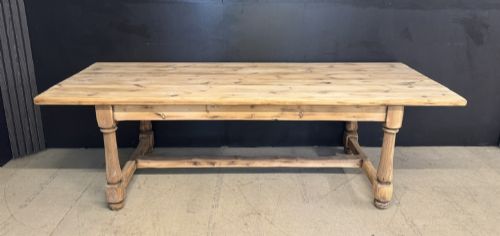
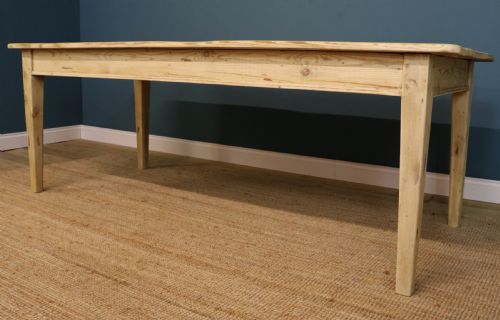
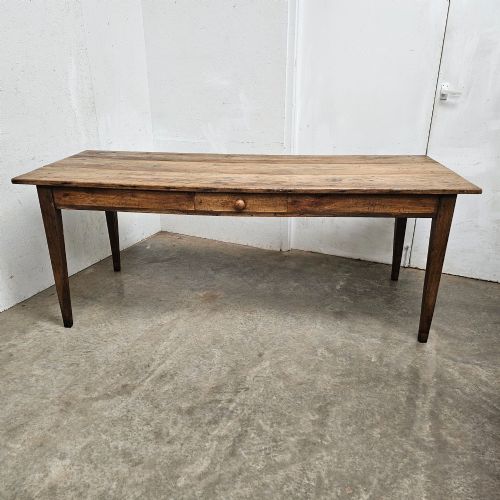
A vintage pine refectory table typically presents as a long dining surface designed for communal gatherings, drawing on historical forms from the nineteenth century up through the early twentieth century. These pieces often carry descriptive labels such as farmhouse, harvest, or tavern tables, reflecting their robust origins in domestic and public spaces.
The versions most commonly met on this page span the Victorian era and the broader nineteenth century, alongside early twentieth-century examples. Construction styles range from English country house iterations to French provincial designs, frequently featuring scrubbed timber tops or painted bases.
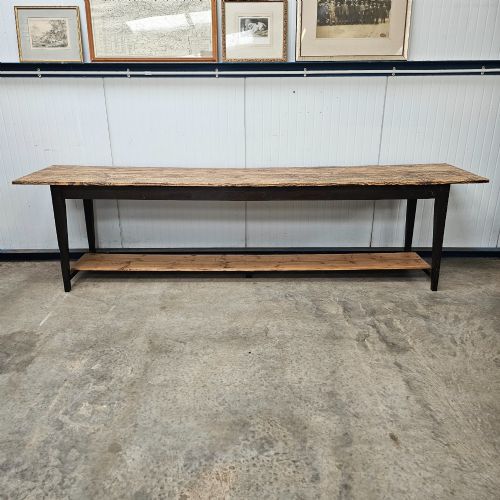
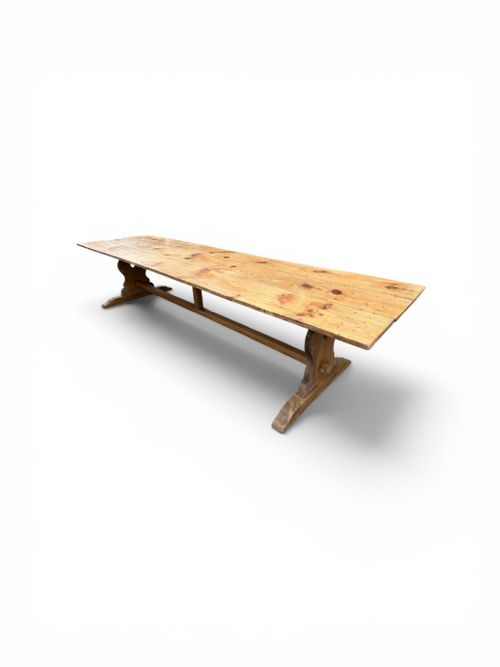
Buyers encounter substantial lengths, sometimes stretching to over twelve feet, which suit large kitchens and open-plan dining rooms. Shorter six-foot variants also appear, accommodating more modest spaces while retaining the characteristic heavy wooden top and sturdy supports.
Materials and construction
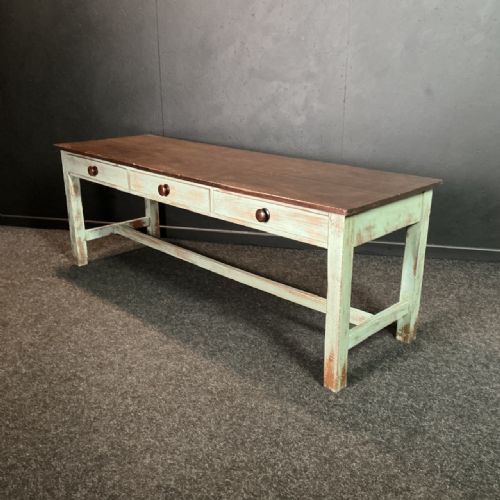
Pine serves as the primary material for the tops and structural elements, frequently paired with oak or chestnut for added strength in framing and supports. Some examples incorporate iron hardware or utilise painted finishes on the wooden bases.
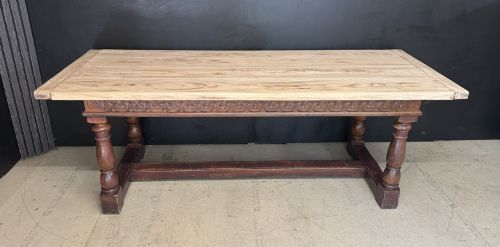
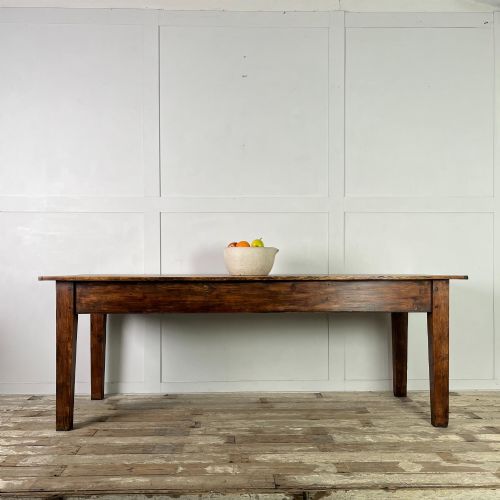
Carpenters constructed these tables using thick timber planks, often joined with cleated ends to maintain stability across wide surfaces. Support systems vary from square section legs to X-framed tavern configurations and multi-drawer arrangements.
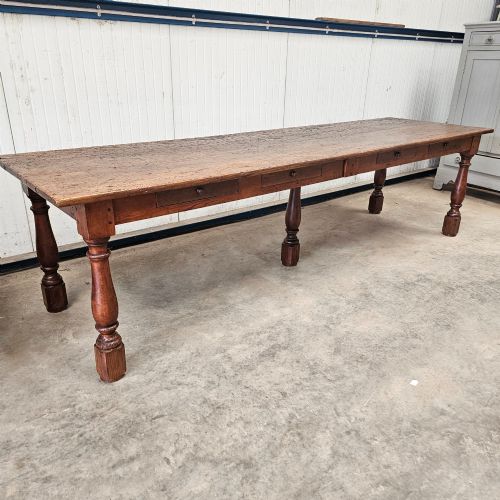
One exceptional dining table includes eight built-in drawers, proving that eighteenth and nineteenth-century cooks appreciated kitchen storage just as much as we do today.
Distinctions in quality
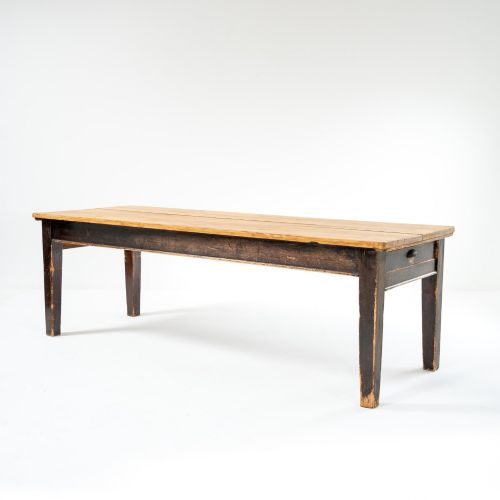
Quality rests primarily on the integrity of the timber and the depth of its patina, developed through decades of actual use in kitchens and dining halls. Tables with well-scrubbed original pine tops show a pleasing grain texture that dry, brittle wood lacks.
Proportional balance and structural soundness differentiate superior examples from simpler utilitarian pieces. Strong joinery at the frame and properly secured top planks ensure the table remains stable during daily use.
The Vintage Pine Refectory Table Glossary
- Refectory table
- A long dining table traditionally used in monastic or institutional dining halls, adapted for domestic farmhouse use in later centuries. These pieces emphasise length and communal seating.
- Scrubbed top
- A wooden tabletop cleaned repeatedly with water and a stiff brush, removing surface dirt and leaving a pale, raw timber finish. This process creates a distinctive tactile texture on old pine.
- Harvest table
- A narrow, elongated dining table traditionally employed during seasonal agricultural gatherings. They allow diners to sit closely together along extended wooden spans.
- Tavern table
- A smaller, sturdy table form historically used in public houses and inns, often built with cross-braced supports or X-legs for enhanced stability on uneven floors.
- Cleated ends
- Wooden battens fixed across the grain at the ends of a tabletop to prevent warping and splitting. This traditional technique accommodates the natural expansion and contraction of timber.
Vintage Pine Refectory Table: Frequently Asked Questions
How do I choose the right length?
Consider the dimensions of your room and the number of people you intend to seat regularly. Long community tables require substantial clearance around all sides to allow comfortable movement.
Shoter variants fit more compact dining spaces while still offering the depth and character associated with nineteenth-century pine furniture.
Are these tables suitable for daily family use?
These tables were originally built for heavy domestic work, dining, and communal gatherings. Their solid pine construction handles everyday activity with ease.
Existing marks and patinas acquired over generations mean that normal family use adds to their history rather than damaging a fragile surface.
How should I clean a scrubbed pine top?
Maintain a scrubbed pine surface by wiping it down with a damp cloth and mild soap when necessary. Avoid harsh chemical cleaners that strip the natural character from the timber.
Allow the wood to dry naturally after cleaning to preserve the pale, historic finish of the pine planks.
How can I tell the period of a table?
Examine the construction methods, tool marks on the underside, and the type of wood used in the frame. Nineteenth-century examples often display hand-planed surfaces and traditional joinery.
Look at the wear patterns on the legs and top edge to understand how the piece has aged over time.