

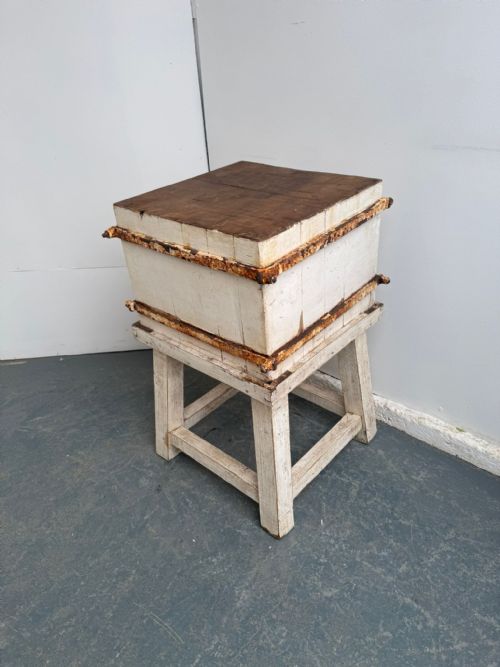
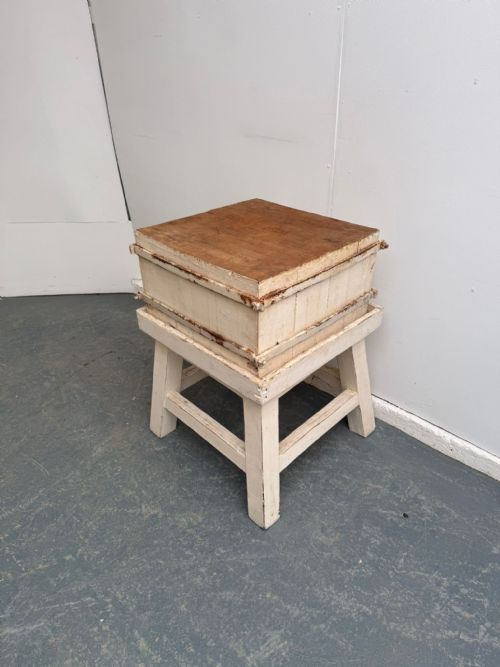

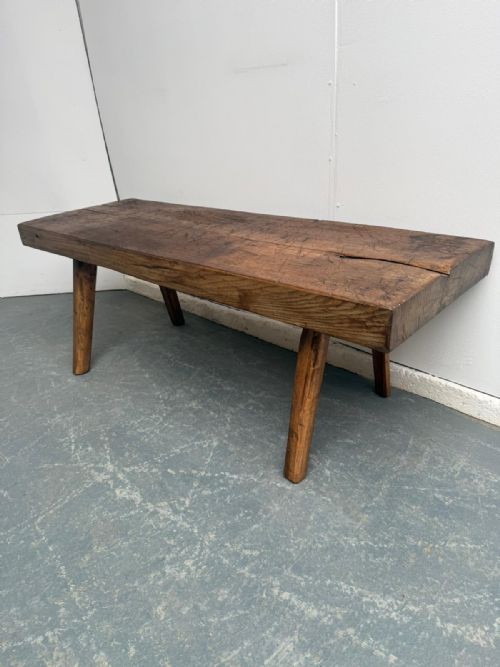


Vintage Butcher Table
A vintage butcher table brings industrial weight and authentic utility into a kitchen, prized for heavy timber surfaces shaped by decades of real work.
Vintage Butcher Table
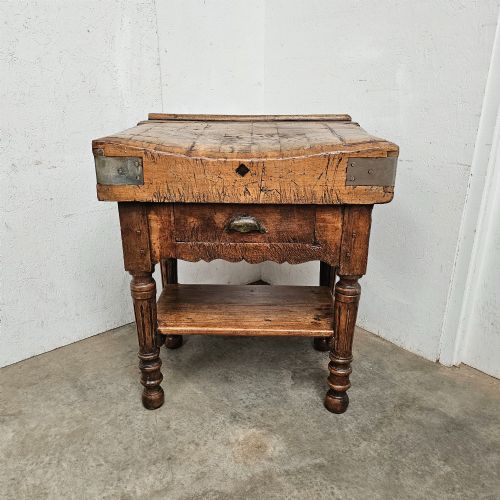
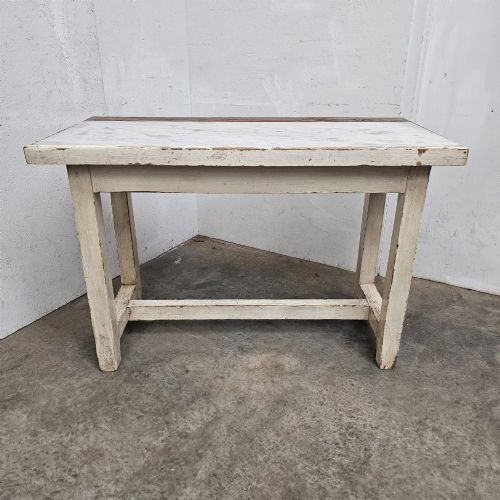
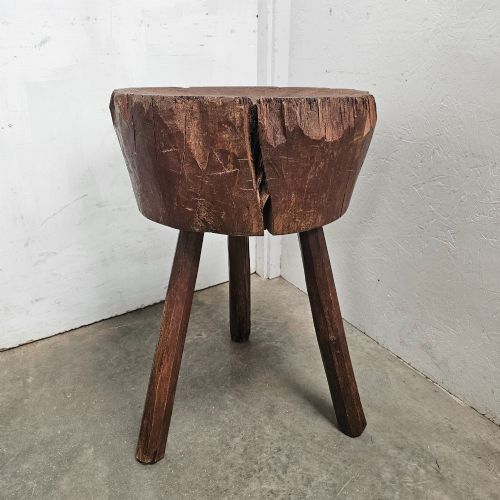
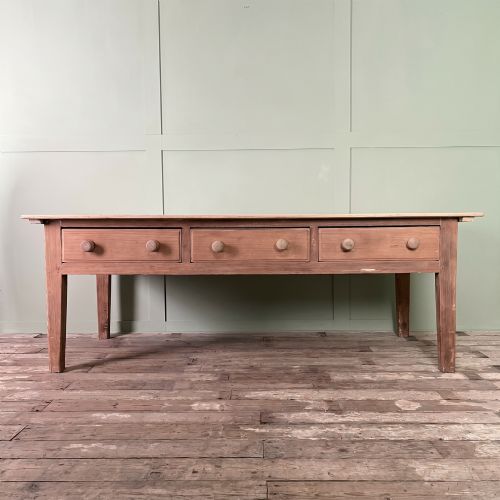
A vintage butcher table spans sturdy work surfaces, thick chopping blocks, and narrow pig benches originating from nineteenth-century France, Victorian Britain, and Hungary. When you search for a vintage butcher table, you encounter robust forms built for heavy preparation work, from French game blocks on decorative bases to English oak pastry tables.
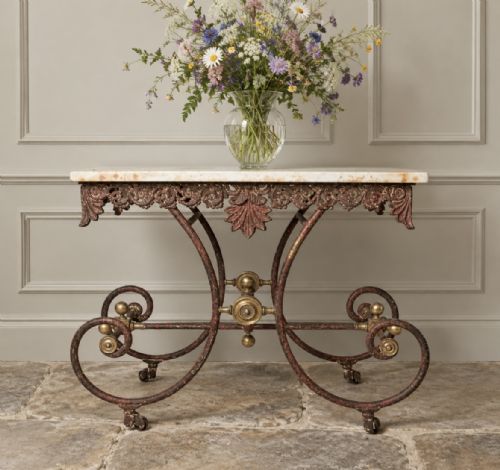
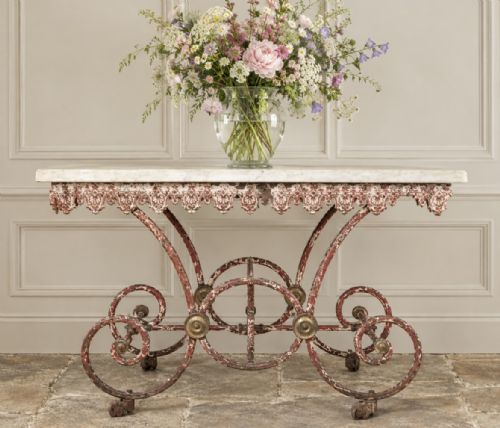
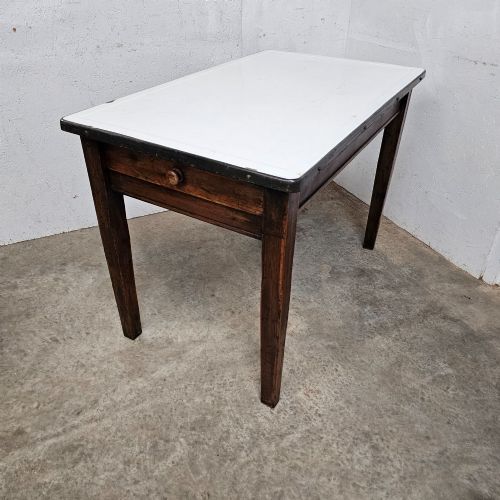
The pieces on this page lean heavily toward French provincial and Victorian industrial origins, utilising thick hardwood tops paired with sturdy wooden stands, iron, or metal frames. Common variants include scrubbed sycamore and elm trestle tables, marble top charcuterie prep tables, and massive tree trunk chopping blocks.
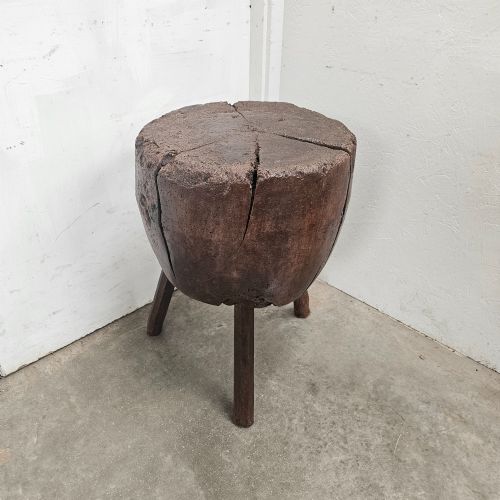
Many examples double as kitchen islands, console tables, and servers, retaining the scars and patinas accumulated through active daily use. Their forms vary from circular tripod blocks to long, narrow benches designed originally for processing meat and pastry.
Assessing quality and character
Quality rests in the original integrity of the timber top and the weight of the supporting base. A superior block retains its substantial thickness, deep working patina, and original stand without excessive structural compromise.
Finer examples demonstrate maker signatures, specialised mounts like bronzed brass, or uncommon forms such as circular tripod bases and integrated drawers. The transition from utilitarian workshop furniture to decorative kitchen centerpiece depends on how cleanly the original surface wears its history.
Listings incorporate nineteenth-century French, Victorian, and mid-twentieth-century eras, utilising oak, beech, elm, sycamore, pine, iron, marble, and brass.
Trussant & Cie·Hennes France
The Vintage Butcher Table Glossary
- Butchers block
- A thick, heavy wooden block designed specifically for meat chopping and preparation, usually constructed from dense end-grain hardwood.
- Pig bench
- A narrow, long wooden table traditionally used in rural settings for butchering and processing game or livestock.
- Charcuterie prep table
- A specialised work table featuring a marble top, valued for keeping meats cool during preparation.
- Trestle table
- A table comprising two or more support frames connected by a horizontal beam, commonly seen in French sycamore and elm pieces.
- Game block
- A heavy timber section, often cut directly from a tree trunk, utilised in France for dressing wild game.
Vintage Butcher Table: Frequently Asked Questions
Can I use a vintage butcher table for daily cooking?
These tables were built for heavy kitchen labour, making them exceptionally durable for daily food preparation.
Regular oiling keeps the thick hardwood surfaces sealed and conditioned against moisture and knife marks.
How do I clean a vintage wood chopping block?
Scrape the surface gently to remove debris and wipe down with warm water and mild soap, avoiding harsh chemicals.
Dry the timber thoroughly immediately after washing to prevent warping or cracking in the dense grain.
What is the difference between a pig bench and a chopping block?
A pig bench is long and narrow, designed originally for resting whole carcasses during rural butchery.
A chopping block is compact, exceptionally thick, and square or circular to absorb downward striking force.
How do I date a nineteenth-century prep table?
Dating relies on examining tool marks, timber shrinkage, construction joints like hand-cut dovetails, and iron hardware.
French and Victorian pieces often show distinct regional carpentry styles and wear patterns unique to their era.