
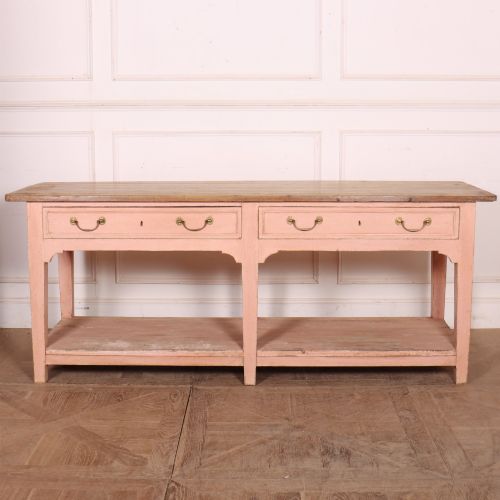
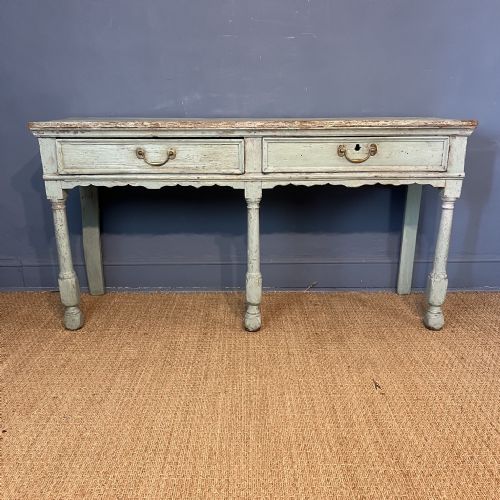
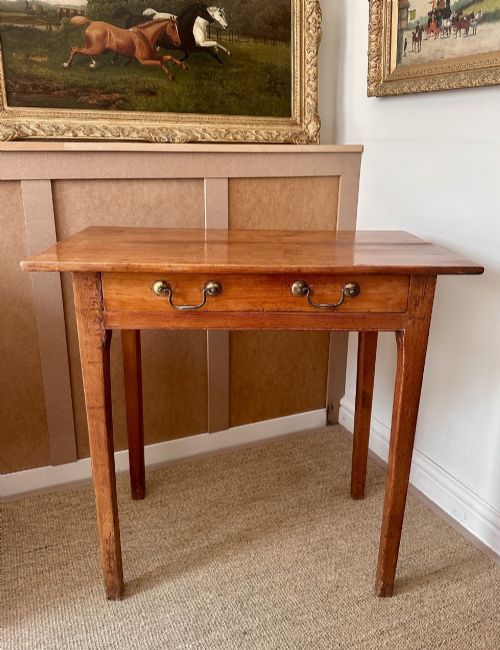
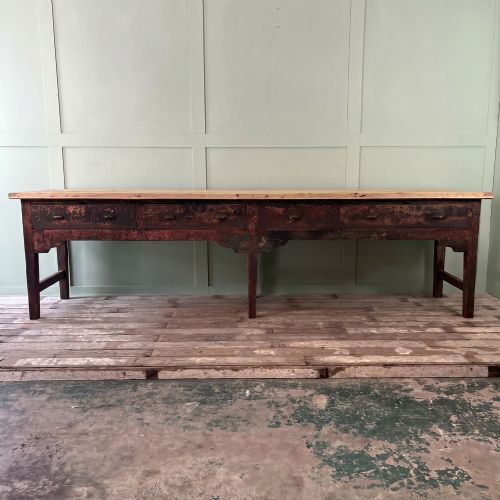
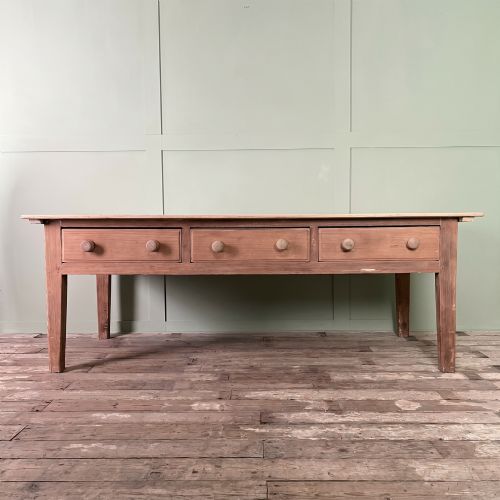

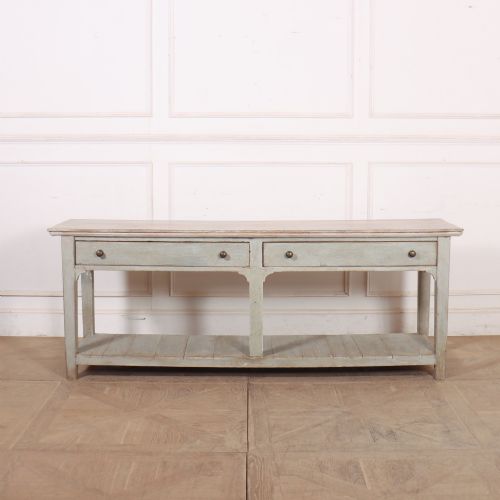


Georgian Pine Console Table
A georgian pine console table brings honest country craftsmanship and practical utility into a room, offering warm timber surfaces and enduring utility.
Georgian Pine Console Table
When you search for a georgian pine console table, you are looking at sturdy side tables, serving tables, and dresser bases produced during the eighteenth and nineteenth centuries. These pieces reflect domestic utility, often designed for use in hallways, kitchens, or dining spaces where a reliable surface was needed.
The items you will most frequently encounter on this page span from early eighteenth-century examples with original painted finishes down to later nineteenth-century country pieces. They combine utilitarian forms with the softer, aged character of pine and sycamore.
Makers constructed these tables for practical households, resulting in straightforward forms like potboard bases, drop-leaf tables, and three-drawer formats. Their appeal lies in this straightforward utility and the honest patina accumulated over generations of use.
Materials and construction methods
Carpenters built these tables primarily using solid pine, occasionally incorporating secondary woods like sycamore for prep surfaces or incorporating brass and iron hardware. Construction relied on traditional joinery methods suited to domestic furniture that needed to withstand daily household labour.
Many examples retain their original painted finishes, applied to protect the timber and provide a decorative surface that has aged through time. The combination of painted timber and exposed pine grain defines the visual character of these utilitarian tables.
Listings span the eighteenth and nineteenth centuries, featuring side tables, serving tables, and dresser bases made from pine, sycamore, and painted timber.
Distinguishing quality in country furniture
Quality in a georgian pine console table rests upon the proportion of the piece, the integrity of its construction, and the survival of early or original surfaces. Tables that retain their original paint layer without heavy restoration command greater interest from collectors.
Finer examples show thoughtful joinery details and balanced proportions even within utilitarian forms, whereas lesser pieces display coarser repairs or unsympathetic later stripping. The depth of the timber's patina and the honesty of its wear ultimately separate standard utility furniture from exceptional survivals.
The Georgian Pine Console Table Glossary
- Potboard base
- A dresser base featuring an open lower shelf near the floor, traditionally used for storing pots and heavy kitchen utensils.
- Patina
- The surface sheen and softening of colour developed by timber and paint over centuries of handling, cleaning, and exposure to light.
- Drop-leaf table
- A table with hinged flaps on either side that can be raised to extend the surface area when required.
- Serving table
- A large side table placed in dining rooms or hallways to hold dishes and food during meals.
- Sycamore
- A dense hardwood native to Britain, frequently used for kitchen and dairy preparation surfaces due to its resistance to splitting.
Georgian Pine Console Table: Frequently Asked Questions
What is a georgian pine console table used for?
These tables served as functional surfaces in hallways, dining rooms, and kitchens for holding household items or serving food.
Today, they function well as hallway tables, lamp tables, or writing surfaces in living spaces.
How do I date a pine table?
Dating relies on observing construction methods, tool marks, joinery styles, and the nature of any surviving paint finishes.
Eighteenth-century examples often display hand-sawn boards and pegged joinery, whereas nineteenth-century pieces may show machine-sawn elements.
Is original paint important?
Original paint finishes provide historical context and a distinct decorative character that collectors value highly.
Surviving early paint layers show the authentic colours used in period homes before later stripping became common.
How do I care for antique pine?
Keep antique pine away from direct heat sources and sudden humidity changes to prevent the timber from splitting or warping.
Dust with a dry cloth and avoid harsh chemical polishes that can damage aged surfaces and original paint.