





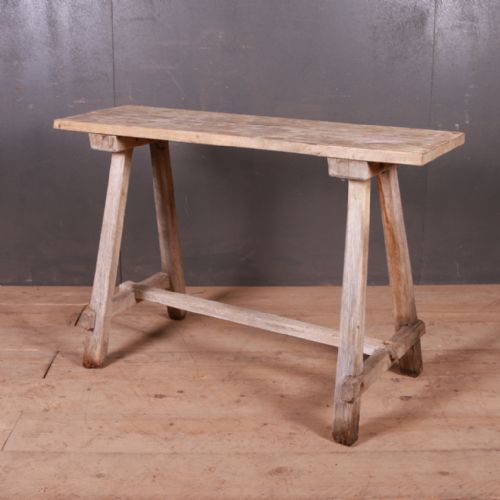

Provincial Pine Desk
These provincial pine desk examples bring honest utility and regional character into a room.
Provincial Pine Desk
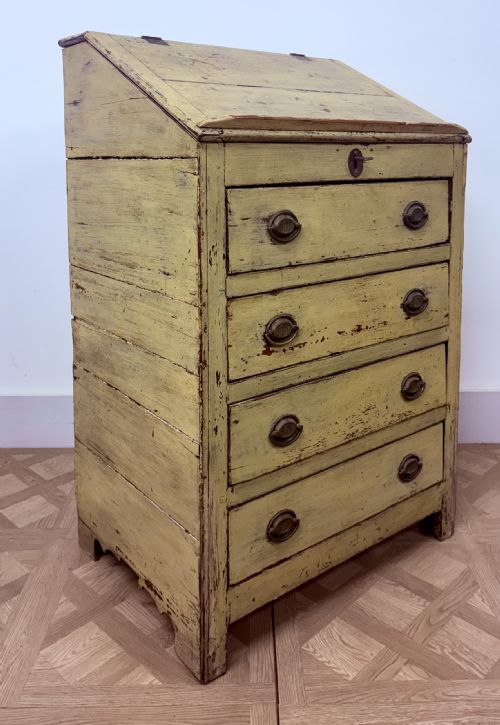
A provincial pine desk search reveals utilitarian tables and writing surfaces shaped by regional traditions across Britain, France, Italy, and Sweden. These pieces arrive from periods spanning the Georgian era, Regency, and through the nineteenth century down to 1920.
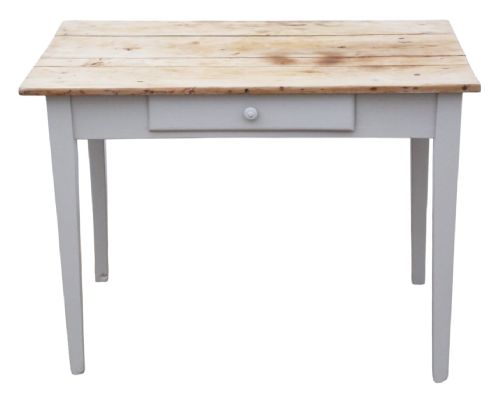
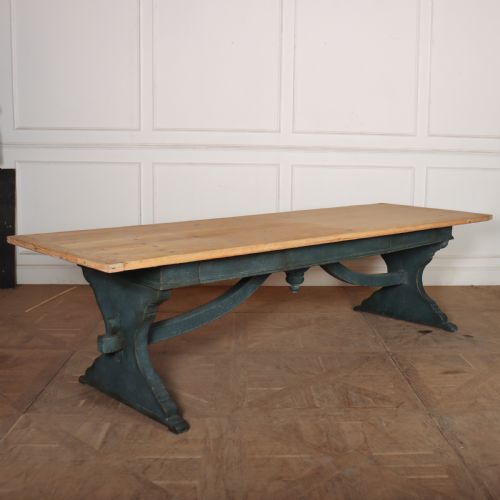
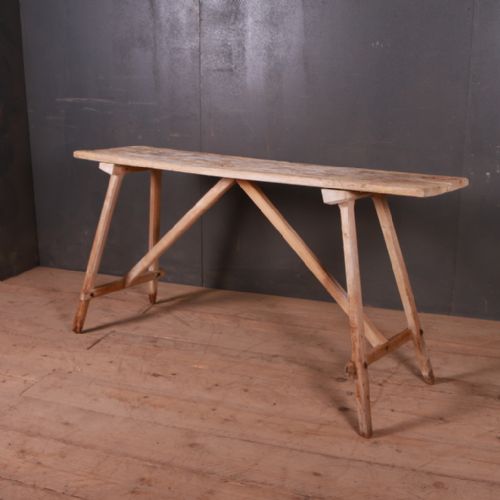
Buyers frequently encounter French country forms, trestle tables, and scrub-top kitchen tables functioning as work areas alongside specific writing furniture such as bureaux and dressing tables. The materials combine simple timber and pine with painted finishes.
The selection reflects both rustic country workshops and refined regional styles like French Provincial and Scandinavian Country. Each surviving item demonstrates the robust construction required for daily domestic labour.
Materials and construction methods
Makers utilised pine and timber as the primary structural components for these country desks and tables. Surfaces often featured scrub-top timber construction designed for heavy scrubbing and daily use.
Applied paint finishes, original painted timber, and hand-painted decoration appear frequently across French, English, and Swedish pieces. Brass hardware occasionally supplements the wooden framework on drawers and writing slopes.
Cobblers benches bring the scent of old leather workshops straight into the sitting room.
Assessing quality in provincial furniture
Quality rests in the survival of original painted surfaces versus later overpainting, alongside the integrity of the timber joints. Pieces retaining their early or original paint schemes command greater interest among purists.
Proportion and structural balance separate basic utilitarian benches from finer regional examples like Georgian writing furniture. The honesty of the timber grain and the crispness of the hand-painted details determine the upper tier of the range.
The Provincial Pine Desk Glossary
- Pine
- A softwood timber commonly used in regional and country furniture for its accessibility and workability. It forms the primary body of these desks and tables.
- Scrub-top
- A solid wooden tabletop left bare and cleanable through repeated washing with water and stone. This finish is typical on hard-working kitchen and work tables.
- Trestle table
- A table structure consisting of two or more supports connected by a horizontal beam holding a board top. This ancient form remains prevalent in French and Italian country pieces.
- Bureau
- A sloping desk often fitted with internal compartments and drawers for correspondence. Georgian examples demonstrate more formal cabinet-making traditions.
- Regency
- An English stylistic period spanning the early nineteenth century noted for classical restraint. Pieces from this era blend provincial utility with refined proportions.
Provincial Pine Desk: Frequently Asked Questions
How do I care for antique pine furniture?
Antique pine requires a stable indoor environment away from direct heat sources and dramatic humidity shifts to prevent timber splitting. Regular dusting with a dry cloth keeps the surface clean without damaging older finishes.
Wax can be applied sparingly to unpainted timber surfaces to nourish the wood and maintain a soft sheen. Painted pieces should be kept away from harsh cleaning agents to preserve the historic pigment.
Are these desks suitable for daily work?
Many of these country tables and desks offer sturdy working surfaces that easily accommodate modern writing and laptop use. Their robust timber construction was originally designed for heavy domestic labour.
Buyers should check the height and leg clearance of individual tables to ensure comfortable seating. Many examples provide generous surface areas superior to modern flat-pack alternatives.
How can I tell the period of a pine desk?
Dating relies on examining construction joints, hardware, and the character of the pine timber itself. Georgian and Regency pieces often display more formal proportions and refined joinery compared to later nineteenth-century country items.
Paint analysis and tool marks left on the wood provide further clues regarding age and origin. French and Scandinavian examples carry distinct regional traits in their carpentry and painted palettes.