
Wooden Church Pew
A wooden church pew brings architectural character and generous linear seating into a domestic interior.
Wooden Church Pew
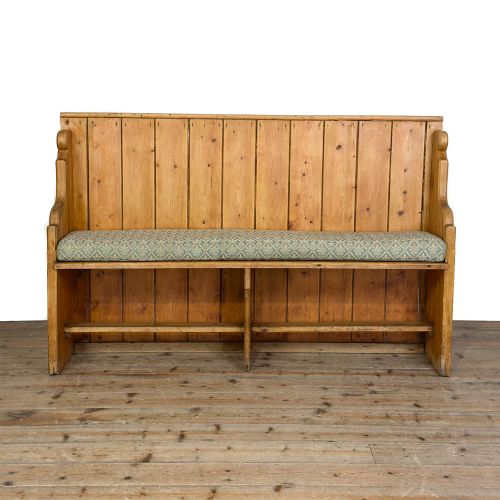
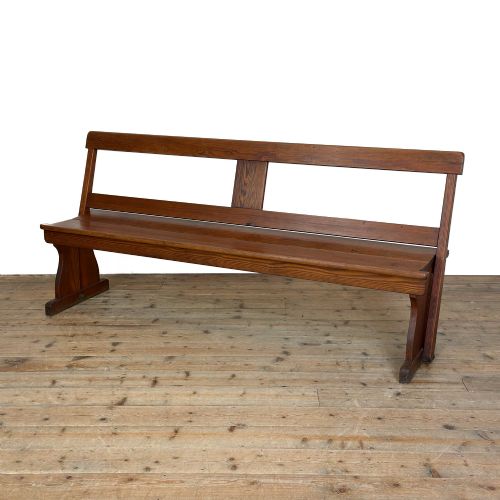
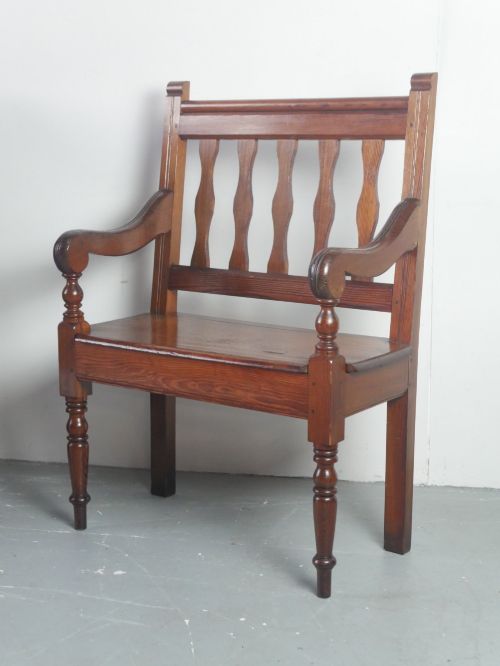
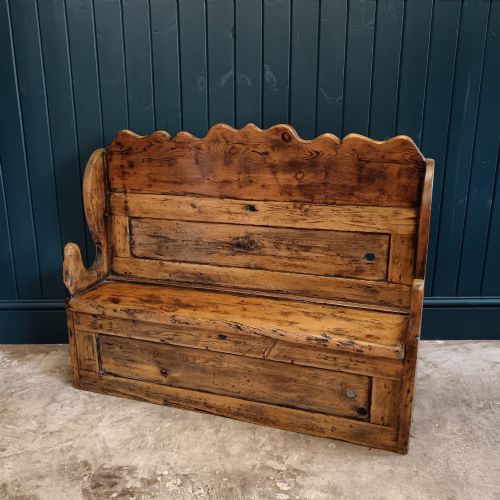
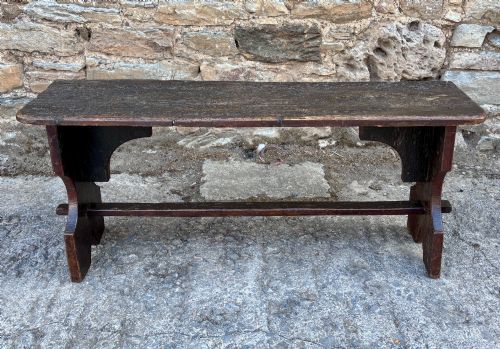
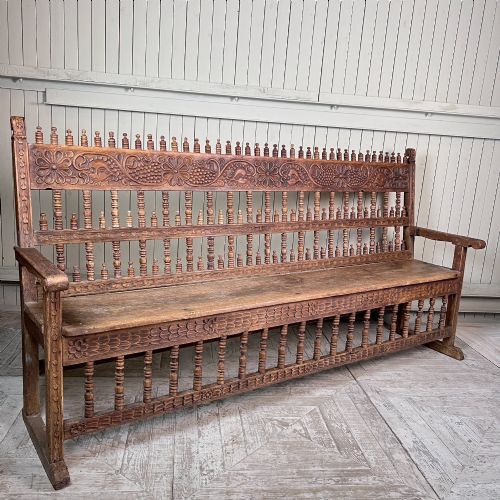
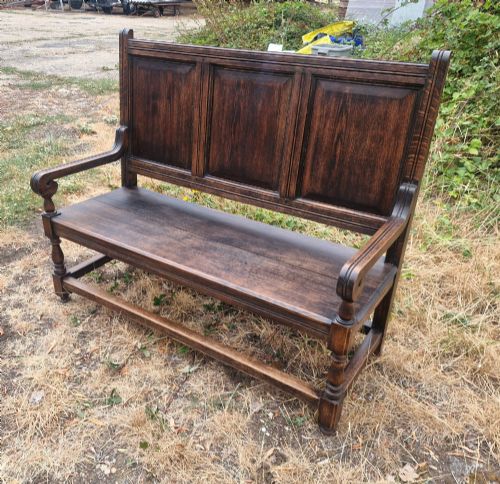
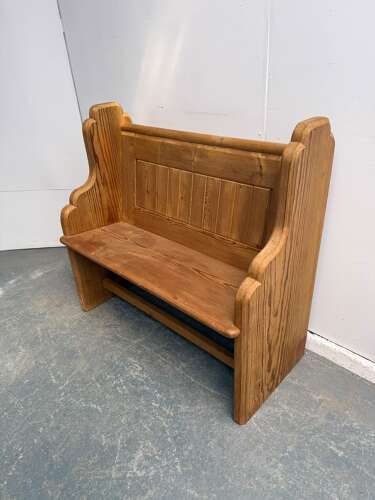
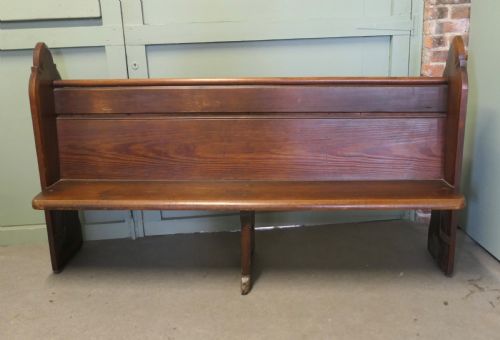
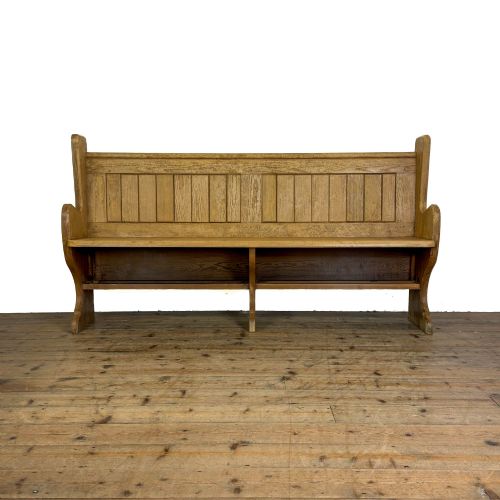
A wooden church pew is a long linear bench designed for ecclesiastical spaces, appearing here primarily in Victorian and Edwardian iterations alongside earlier pine and oak examples.
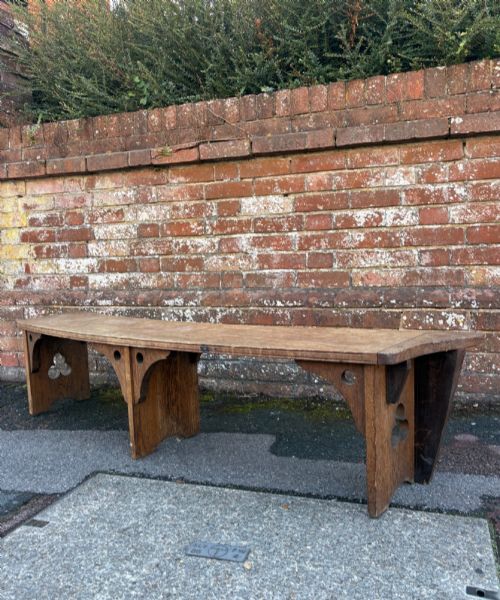
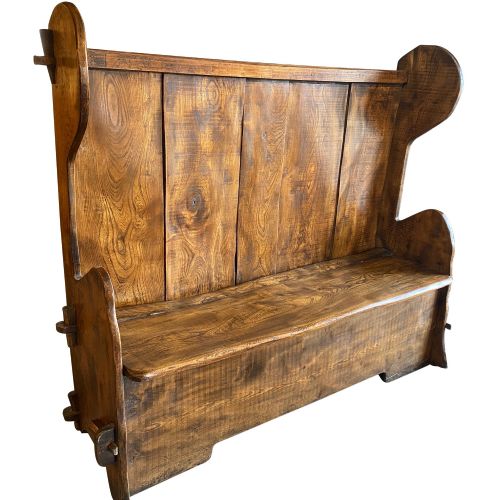
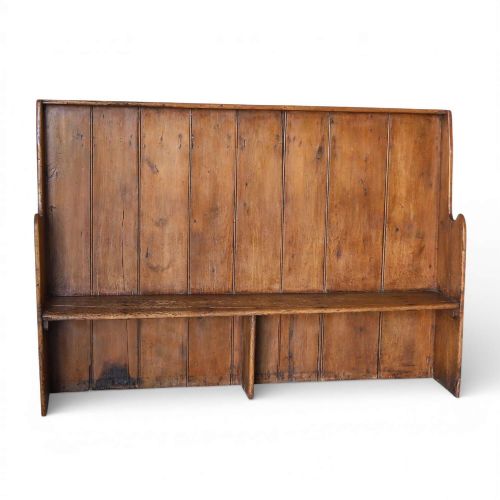
Buyers encounter sturdy pine and pitch pine chapel pews, alongside oak benches bearing Gothic Revival details and smaller elm or chestnut hall settles.
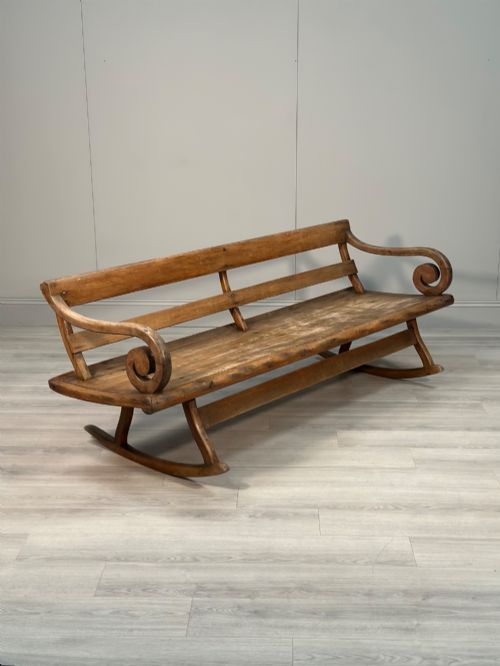
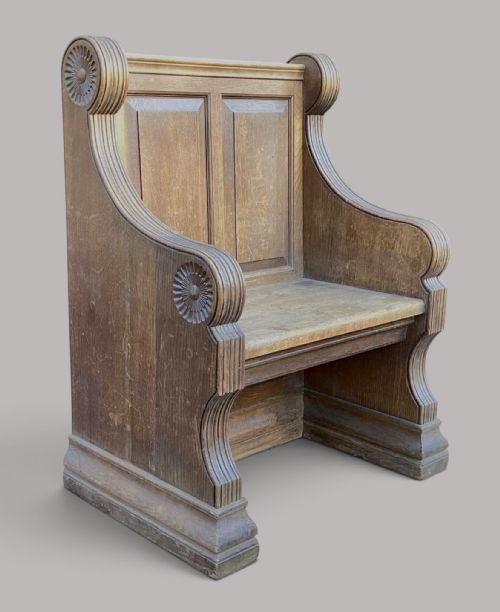
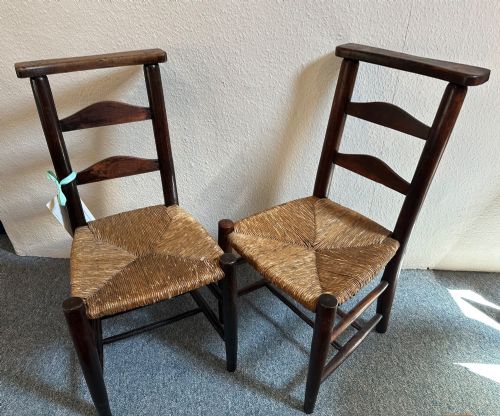
The selection ranges from compact single-seater chapel chairs to substantial multi-seated country pews and curved architectural forms.
Judging the build
Quality rests upon the choice of timber and the integrity of the original joints, with solid oak and heavy pitch pine retaining a crisper edge than softer utilitarian woods.
Finer pieces display thoughtful architectural detailing, such as carved tracery, curved structural elements, and untouched patination built up through decades of handling.
Some cathedral seating arrives bearing inked inventory marks straight from St Paul's.
The Wooden Church Pew Glossary
- Settle
- A wooden bench featuring a high solid back to block draughts and enclosed arms or storage beneath the seat. These were traditionally placed near firesides in public houses and farmhouses.
- Pitch pine
- A resinous, durable softwood sourced largely from North America, prized for its distinct grain pattern and structural strength in nineteenth-century ecclesiastical furniture.
- Gothic Revival
- An architectural and decorative style popular during the Victorian era that revived medieval forms including pointed arches, trefoils, and traceried panels.
- Trefoil
- A three-lobed decorative ornament resembling a clover leaf, commonly pierced or carved into the wooden supports of nineteenth-century church benches.
Wooden Church Pew: Frequently Asked Questions
Where should I place a church pew?
A wooden church pew functions effectively in a hallway, along a dining table, or against a living room wall where its linear profile adds strong architectural lines.
Because these benches were built for public buildings, check the overall length and depth carefully to ensure adequate clearance for your room layout.
Are these pews comfortable for daily sitting?
Most antique church pews feature upright wooden backs and solid seats designed for formal posture rather than lounging.
Many owners soften the seating by adding a custom squab cushion or scatter pillows while keeping the timber back visible.
How do I care for waxed church pews?
Maintain the wood by dusting with a dry cloth and applying a traditional beeswax paste occasionally to nourish the dry timber and preserve the patina.
Avoid placing antique pews directly next to active heat sources to prevent the old pine or oak from splitting.
How can I tell the period of a pew?
Dating relies on observing timber selection, tool marks, and stylistic clues such as Victorian Gothic Revival tracery or Edwardian pegged joinery.
Pine examples often date from the nineteenth century, whilst heavier panelled oak variants can point towards earlier craftsmanship.