
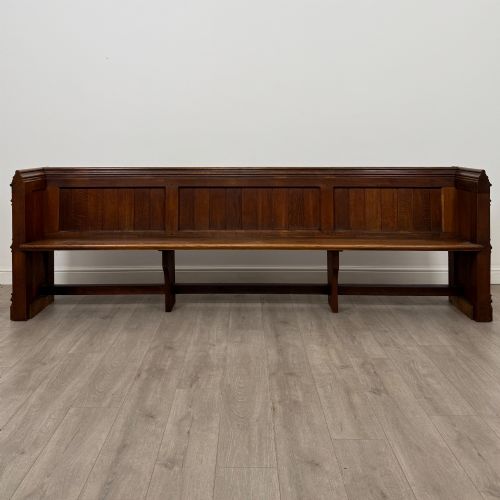


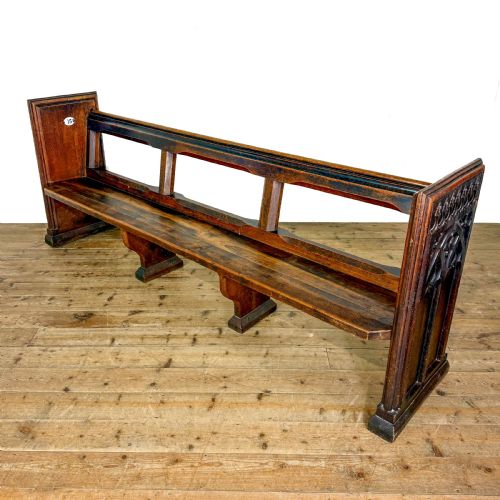


Oak Church Pew
An oak church pew brings the architectural gravity of ecclesiastical interiors directly into domestic spaces.
Oak Church Pew
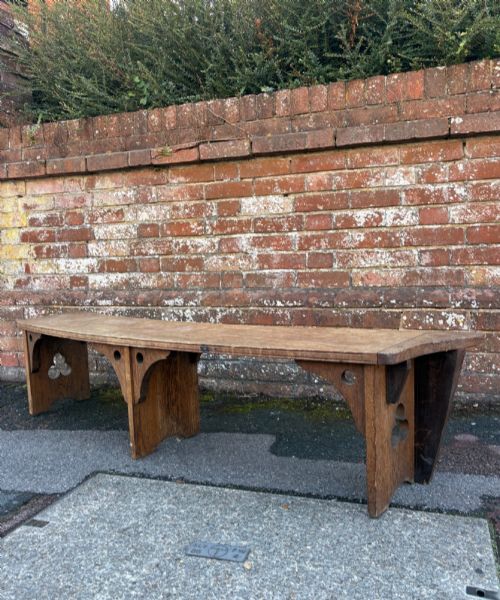
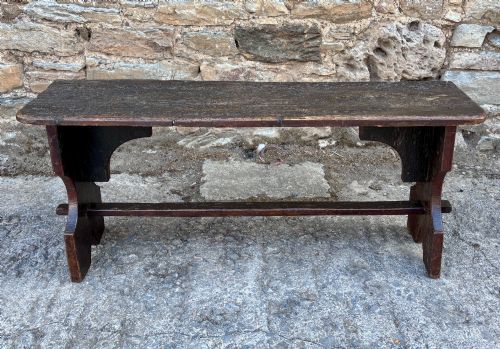
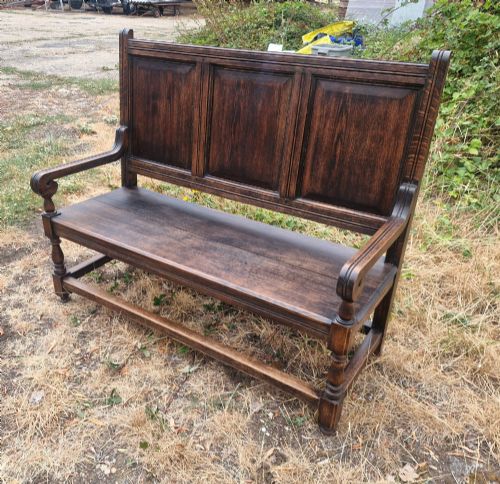
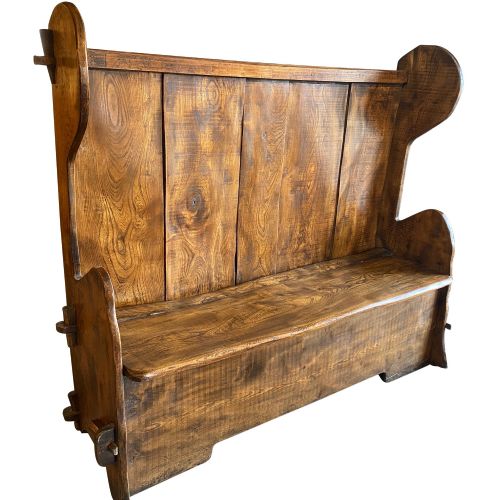
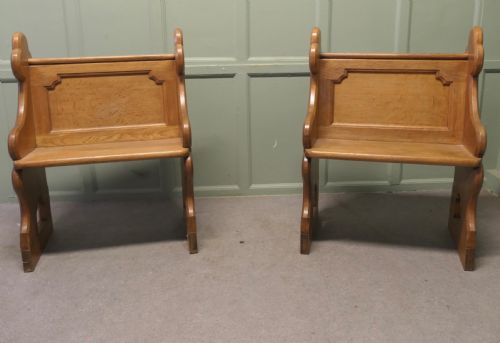
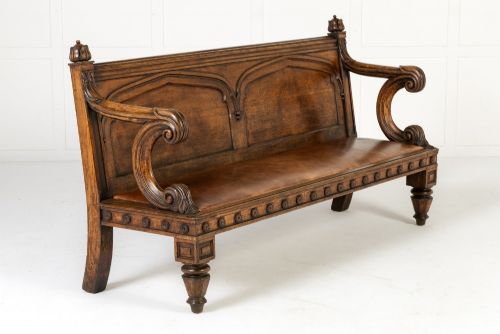
When you search for an oak church pew, you examine robust linear seating originally constructed for corporate worship in chapels and cathedrals. The forms on this page span straightforward panelled benches from the Victorian era to curved Arts and Crafts seating influenced by Gothic Revival design.
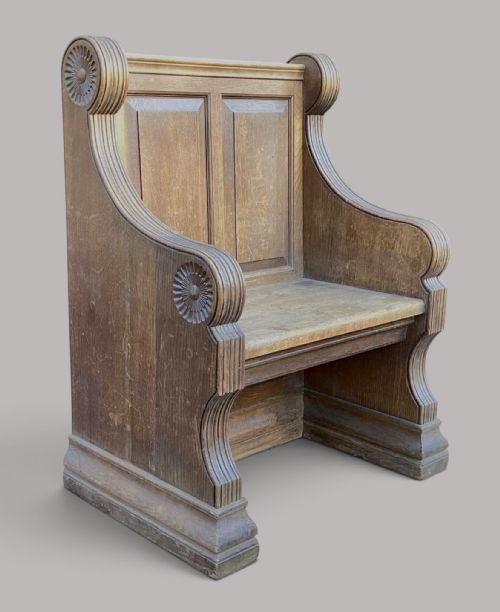
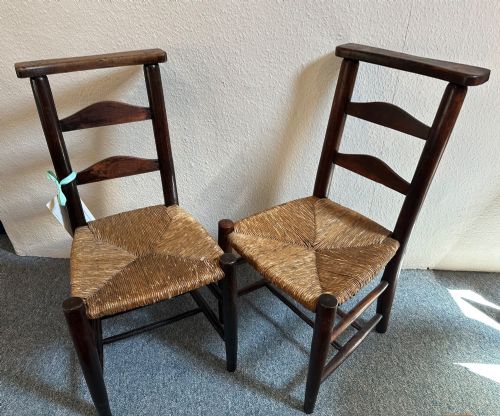
Makers often utilised solid timber alongside auxiliary materials like brass and rush, shaping benches, settles, and choir stalls. Pieces frequently emerge from specific ecclesiastical contexts, carrying provenance from locations such as St Paul's Cathedral and regional parish churches.
Materials and construction
Carpenters relied predominantly on solid oak, supplemented occasionally by elm, chestnut, and pine for internal or secondary framing. Construction techniques involved heavy tongue-and-groove panelling, pegged joints, and architectural supports designed to withstand centuries of communal use.
Surface ornamentation ranges from plain surfaces intended for wax finishes to intricate carved details like poppy heads, foliate motifs, and trefoil supports. Metal elements such as brass appear periodically in structural brackets or commemorative plaques.
Several pews preserve stubborn marks left by centuries of knees, hymnals, and the occasional restless chorister.
Judging quality
Quality rests upon the integrity of the timber and the depth of the architectural carving executed by the maker. Examples displaying hand-carved poppy heads, tracery, or documented church provenance command greater regard than plain utility seating.
The proportion of original timber preserved through alterations dictates the standing of a piece. Retaining standard length, unmodified bench ends, and genuine period fixings separates standard seating from heavily restored examples.
St Pauls Cathedral·Lincoln Cathedral
The Oak Church Pew Glossary
- Poppy head
- An ornamental carved capping on the upper end of a bench or pew. This architectural detail often takes floral, foliate, or grotesque animal forms.
- Settle
- A wooden bench with a high back and solid arms designed to deflect draughts. These seating forms frequently incorporate enclosed box storage beneath the seat.
- Gothic Revival
- An architectural and decorative movement drawing inspiration from medieval design. Pieces in this style utilise pointed arches, trefoils, and structural tracery.
- Choir stall
- Specialised seating arranged in the chancel of a church for clergy and choristers. These pieces often feature integrated armrests and carved misericords.
Oak Church Pew: Frequently Asked Questions
How do I place an oak church pew at home?
Position these long benches against a hallway wall or pair them with a refectory table for dining seating. Their linear geometry requires adequate floor space to let the architectural ends remain visible.
Ensure placement avoids direct heat sources that might dry out historic timber. Rugs placed underneath help anchor the substantial weight of solid oak frames.
Were all church pews made from oak?
While oak remains the predominant timber found in ecclesiastical seating, carpenters also utilised elm, chestnut, pine, and minor amounts of secondary woods. Selection depended on regional timber availability and the budget commissioned by the parish.
Later Victorian and Edwardian workshops often mixed woods within internal framing while keeping primary visible surfaces in oak. Inspecting the underside reveals the secondary materials used in construction.
How do I distinguish 18th-century pews from Victorian ones?
Earlier pieces from the eighteenth century or George III period display hand-cut joinery marks and deeper patination acquired through centuries of use. The timber grain tends to show denser growth rings and distinct tool signatures.
Victorian pieces often reflect Gothic Revival uniformity through machine-assisted planing alongside precise architectural tracery. Examining the peg placement and panel shrinkage helps indicate the true age.
What maintenance do these wooden benches require?
Apply traditional beeswax periodically to nourish the dry oak surfaces and maintain a soft lustre. Avoid modern silicone polishes that can seal the grain and attract dust.
Keep humidity levels stable in the room to prevent timber splitting or movement in the solid joints. Periodic dusting with a soft cloth preserves the historic wax finish.