




Gothic Revival Oak Pew
These gothic revival oak pew listings bring solid timber church benches and related seating straight into domestic halls and libraries.
Gothic Revival Oak Pew
A gothic revival oak pew represents heavy ecclesiastical and domestic seating shaped by historicist church architecture and revival movements. The pieces on this page span the eighteenth century through to the Edwardian period, capturing centuries of woodworking traditions.
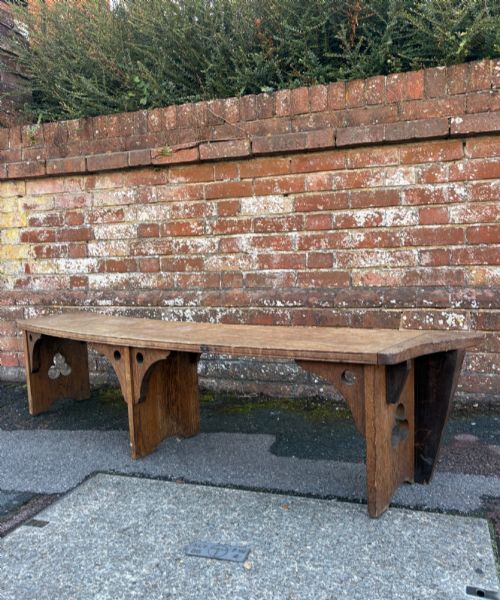
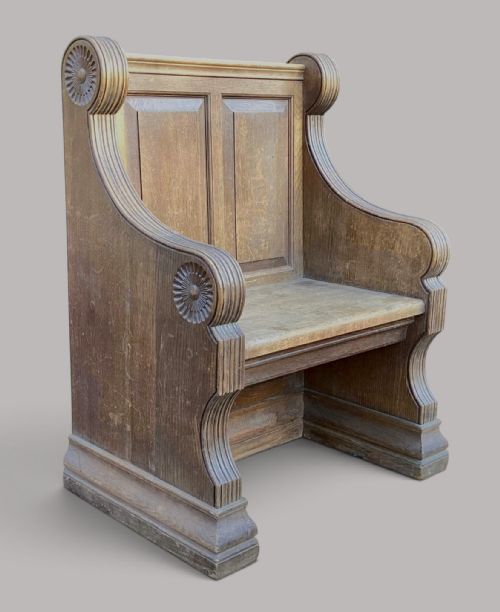
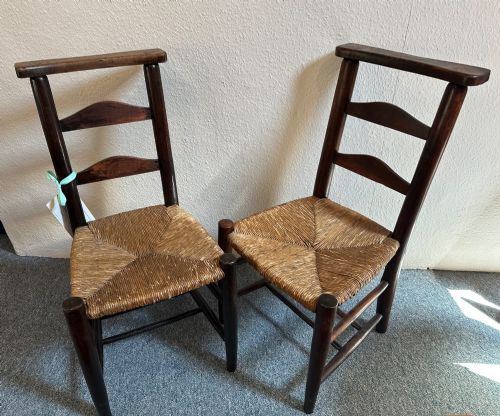
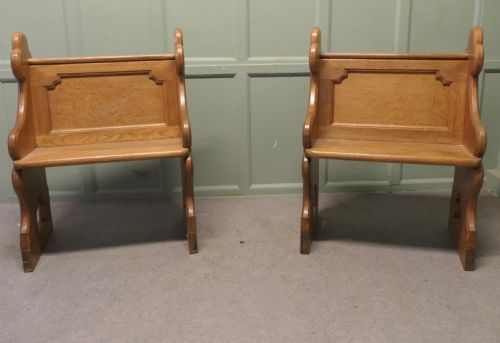
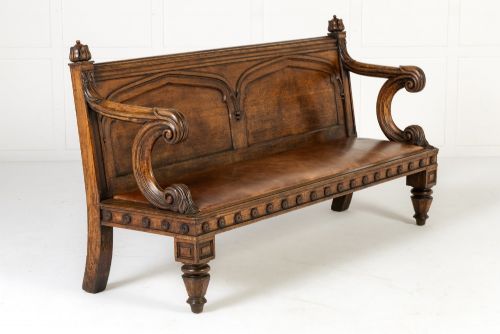
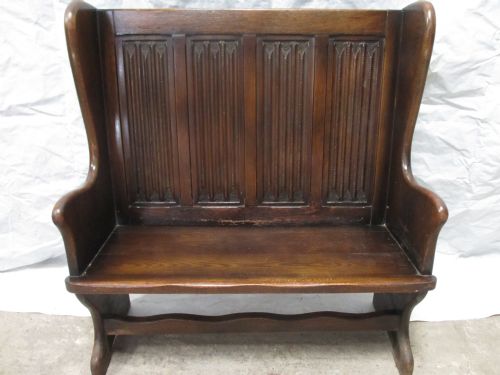
You will encounter various forms ranging from curved benches with trefoil carved supports to architectural hall seats and high back settle seats. Many items derive directly from ecclesiastical contexts, including church chairs and benches marked from notable cathedrals.
What varies in quality
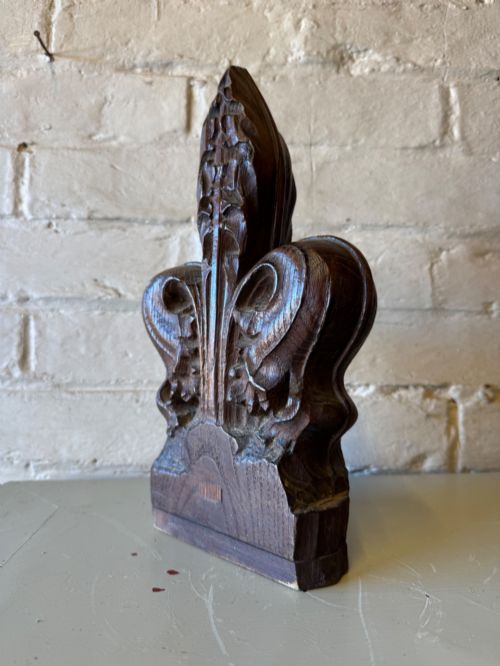
Quality rests upon the depth and precision of the carved details, such as trefoil supports and poppy head finials, compared to plain or mechanically altered timber. The integrity of the solid oak construction and the clarity of architectural proportions also define the standard.
Provenance and specific historical association elevate certain items, particularly those bearing direct marks from institutions like St Paul's Cathedral. Pieces retaining their original structural form without excessive later modification command greater traditional interest.
Gothic Revival Oak Pew Retail Price Guide 2026
Typical asking prices for gothic revival oak pew among the pieces listed under this phrase on Sellingantiques today, from the lower quarter to the upper quarter. They describe what is for sale here now, not the wider market.
Some cathedral seats carry literal proof of their past employment, stamped with the very name of St Paul's.
The Gothic Revival Oak Pew Glossary
- Poppy head
- An ornamental finial carved on the top end of a bench end, typically featuring stylized leaf or bud motifs. It is a defining decorative feature of medieval and revival ecclesiastical seating.
- Trefoil
- A graphic ornament composed of three overlapping rings or leaf-shaped lobes. This geometric motif appears frequently in the pierced and carved supports of gothic revival furniture.
- Settle
- A wooden bench with a high back, solid arms, and often a storage box beneath the seat. In oak, these pieces provided draft-proof seating in large halls.
- Architectural salvage
- Building elements or church fittings rescued from demolition or refurbishment for reuse in interior schemes. Many pews and benches originate from these ecclesiastical contexts.
Gothic Revival Oak Pew: Frequently Asked Questions
How do I date a gothic revival oak pew?
Dating relies on examining the specific stylistic markers, construction methods, and any recorded provenance or maker stamps. Pieces spanning the eighteenth to the early twentieth century often display subtle shifts from strict Victorian revivalism to Arts and Crafts interpretations.
Material patination and the tooling visible on the solid oak surfaces also provide reliable indicators of age. Comparing architectural proportions helps distinguish authentic nineteenth century ecclesiastical production from later reproductions.
Where should I place a church bench at home?
These substantial oak benches suit large hallways, landings, or spacious living rooms where their architectural presence can be appreciated. Their linear forms work well against plain walls or beneath tall windows.
Pairing a bench with a library table or utilising it for hall seating makes practical use of its long form. Ensure the floor space can accommodate the depth and weight of solid timber furniture safely.
Are these benches comfortable for daily use?
Ecclesiastical seating was originally designed for upright posture during services rather than lounging. Consequently, high back settles and pews offer firm, supportive seating rather than cushioned ease.
Many owners add loose squab cushions in wool or leather to soften the wooden seat for extended sitting. The sturdy solid oak construction ensures they easily withstand regular domestic use.
What is the difference between a settle and a pew?
A pew is typically a fixed or movable bench designed for rows in a church, featuring open or semi-enclosed ends. A settle incorporates solid wooden sides and a high panelled back intended to block draughts in domestic settings.
Both utilise solid oak framing, but settles frequently include enclosed lower sections or integrated storage. Revival pieces often blur these lines by adapting ecclesiastical bench designs for domestic halls.