
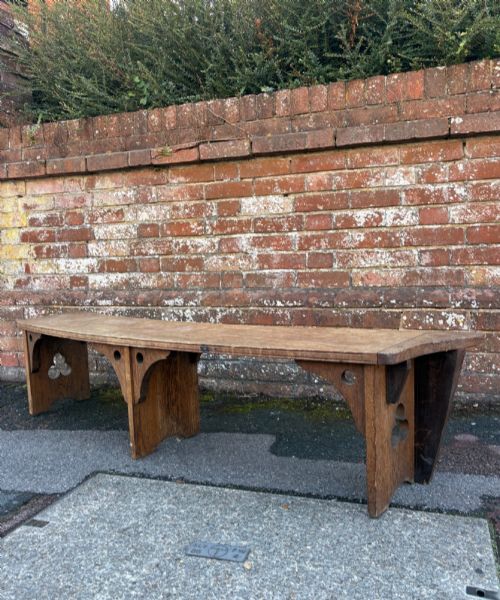
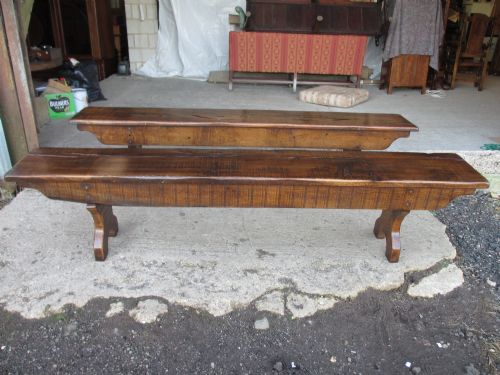
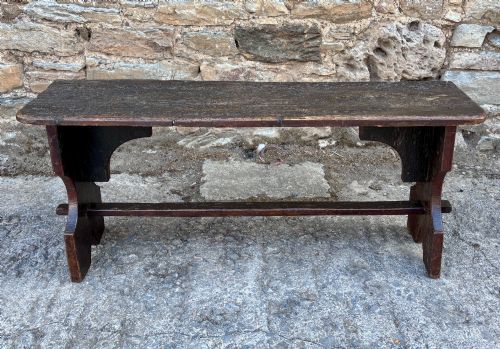
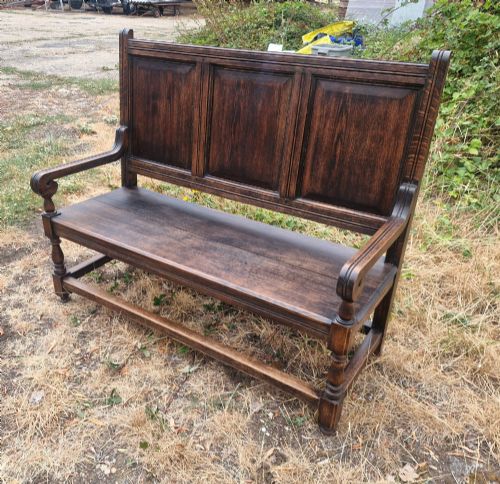




Oak Church Bench
When you search for oak church bench, you are looking at sturdy wooden seating shaped by ecclesiastical design from the eighteenth, nineteenth, and early twentieth centuries.
Oak Church Bench
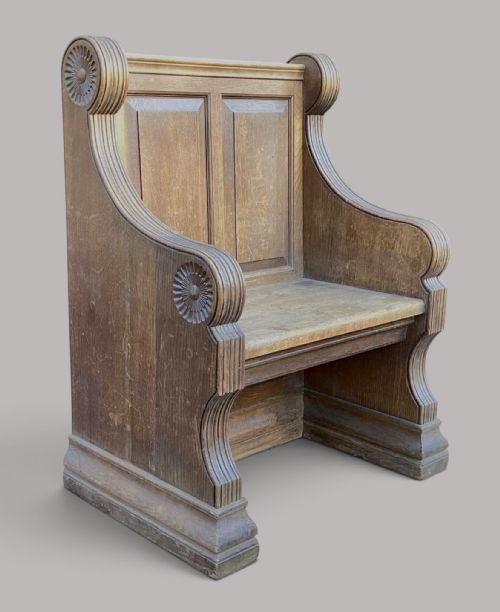
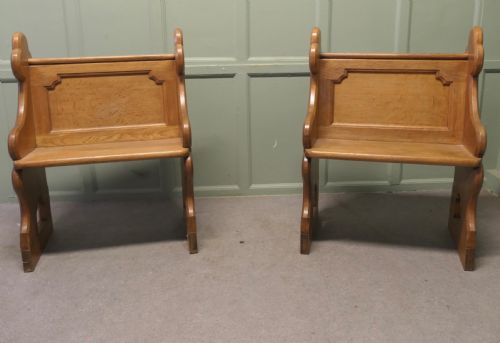
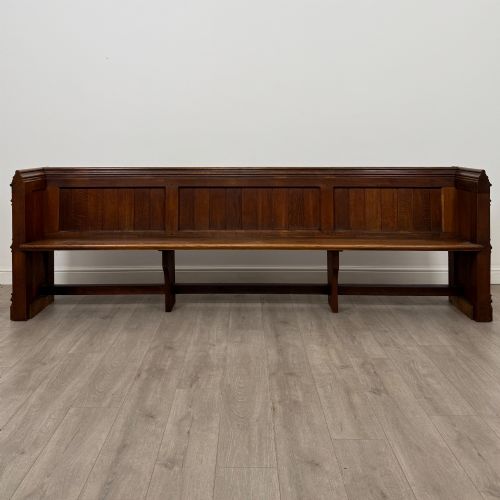
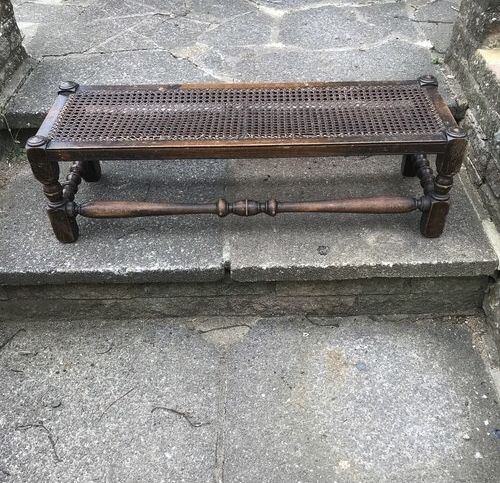
An oak church bench is a solid seating form created for places of worship, assembly, or ecclesiastical use, often appearing alongside settles, hall seats, and prayer desks. When you search for oak church bench, you encounter pieces spanning the eighteenth, nineteenth, and early twentieth centuries, with Victorian and Gothic Revival examples appearing frequently.
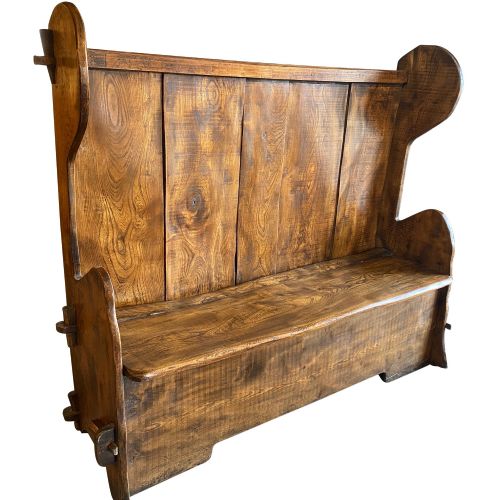
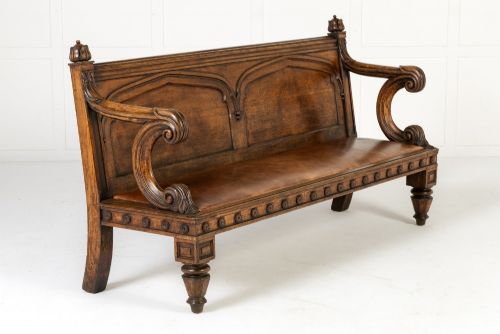
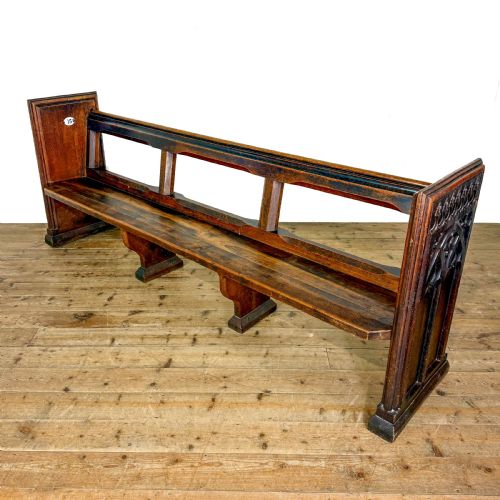
The materials and construction reflect utilitarian strength and devotional design, utilising heavy timbers such as oak, elm, and chestnut alongside occasional brass or leather details. Many examples display architectural forms, shaped trestle ends, panelled backs, or specific provenance from historical churches and palaces.
How they were made
Maker's hands shaped these pieces using solid oak, elm, and chestnut timbers, joined with traditional carpentry methods to endure heavy daily use in chapels, churches, and public halls. Structural strength relied on thick planks, solid panels, and sturdy trestle or turned supports.
Decorative work on these pieces incorporates carved details such as trefoils, poppy heads, and architectural panelling inspired by Gothic Revival and Jacobean styles. Surfaces often show the natural grain of the wood, sometimes finished with historic polish or left with a bleached appearance.
Listings feature pieces spanning the eighteenth century through to the Edwardian period and the early twentieth century.
What varies in quality
The standard of a piece depends heavily on the integrity of its timber and the depth of its architectural carving, ranging from simple utilitarian pews to highly articulated Gothic Revival designs. Pieces retaining their original structural framing and authentic provenance command greater attention from collectors.
Proportion and scale also separate ordinary seating from exceptional examples, with longer tavern benches, high-back settles, and matched pairs offering distinct architectural presence. The crispness of hand-carved details like poppy heads and trefoil supports distinguishes finer workshop output.
The Oak Church Bench Glossary
- Gothic Revival
- An architectural and design movement drawing inspiration from medieval Gothic forms, featuring pointed arches, trefoils, and ecclesiastical motifs. This style heavily influences nineteenth-century church seating.
- Settle
- A wooden bench with a high back, solid arms, and often an enclosed base or storage compartment below the seat. It provided shelter from draughts in domestic and ecclesiastical interiors.
- Prie-Dieu
- A devotional desk or chair designed for kneeling during prayer, typically featuring a sloping shelf for books and a padded kneeling rail. They often incorporate carved oak panels.
- Poppy Head
- An ornamental carving forming the top of a bench end or pew seat, usually shaped like a stylised leaf, flower, or bud. It is a traditional feature of Gothic church woodwork.
- Trestle
- A structural support consisting of a horizontal beam balanced on two splayed legs, used to hold up heavy bench seats and refectory tables. It provides stability for long timbers.
Oak Church Bench: Frequently Asked Questions
What is an oak church bench?
An oak church bench is a sturdy timber seat originally constructed for ecclesiastical spaces, chapels, or public assembly rooms.
These pieces range from simple nineteenth-century pews to elaborately carved Gothic Revival settles and panelled hall seats.
How were oak church benches used?
They served primarily as communal seating for congregations during services, prayers, and gatherings in churches and chapels.
Over time, many have transitioned into domestic settings, acting as hall benches, dining seating, or architectural statements in large rooms.
How do I identify the period?
Dating relies on construction methods, timber patination, and stylistic markers associated with eighteenth, nineteenth, and early twentieth-century workshops.
Earlier eighteenth-century pieces often display hand-carved Flemish or regional details, while Victorian examples frequently show Gothic Revival ornamentation.