
Wooden Casket Box
A wooden casket box offers a tangible connection to past domestic rituals, holding letters, jewellery or keepsakes with quiet dignity.
Wooden Casket Box
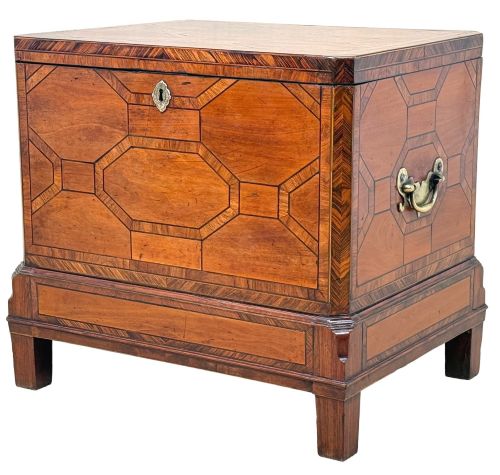
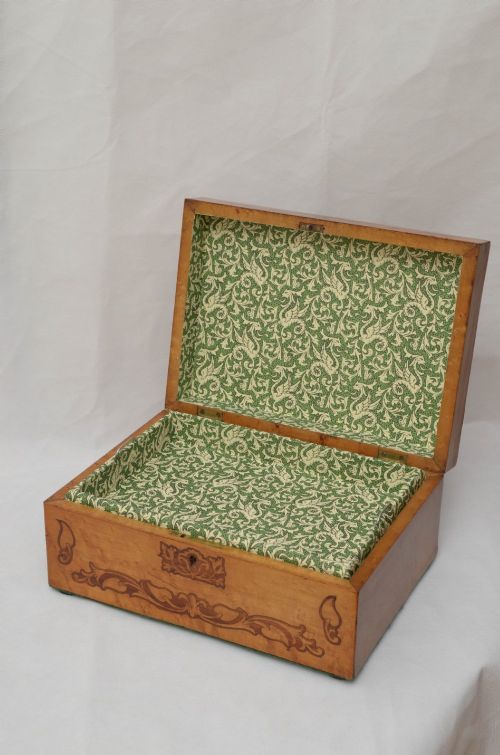
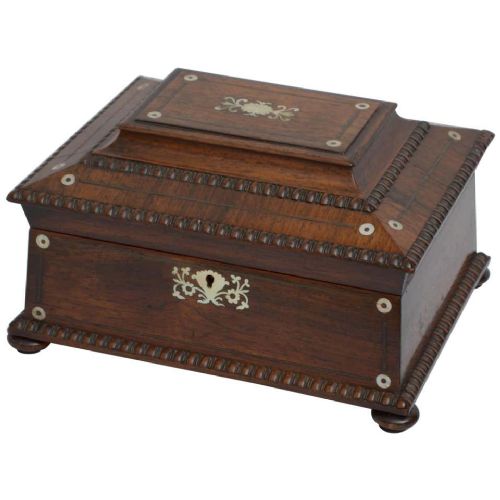
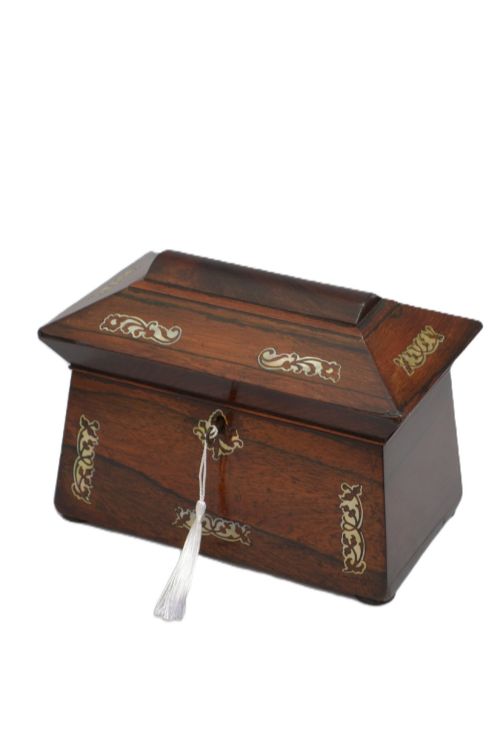
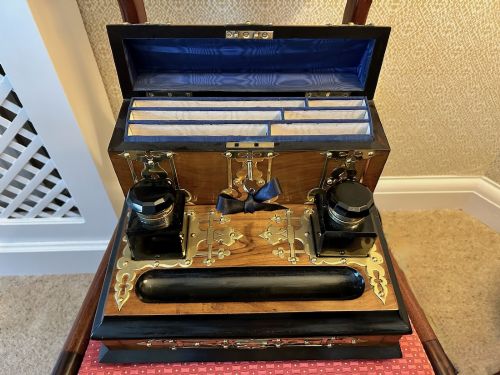
A wooden casket box serves varied domestic roles, appearing as jewellery cases, tea caddies, stationery boxes and cellarettes across centuries of craftsmanship.
The pieces on this page span from the seventeenth century through the Victorian era, showing how utility merged with decorative ambition in British and continental households.
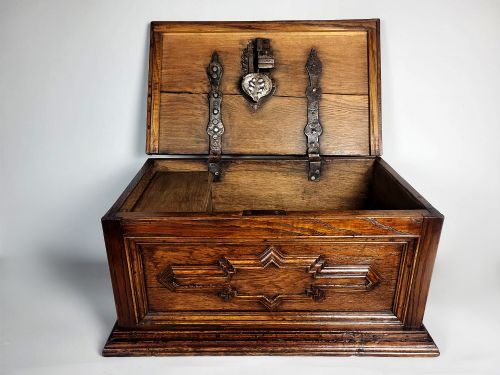
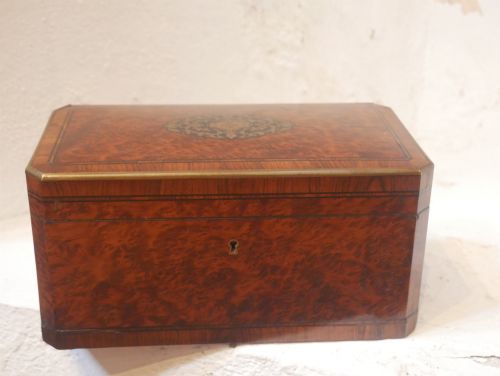
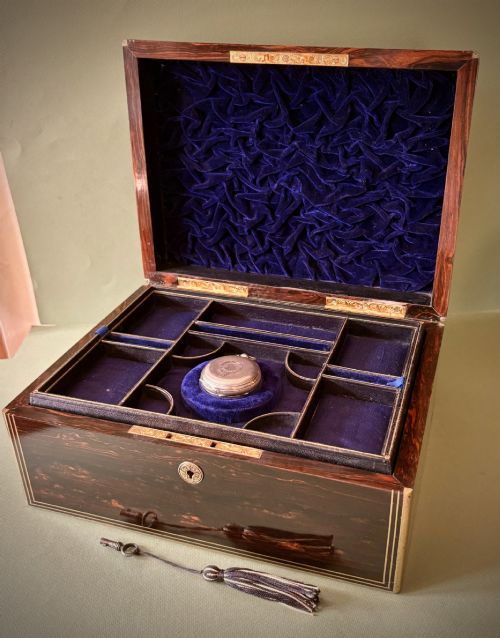
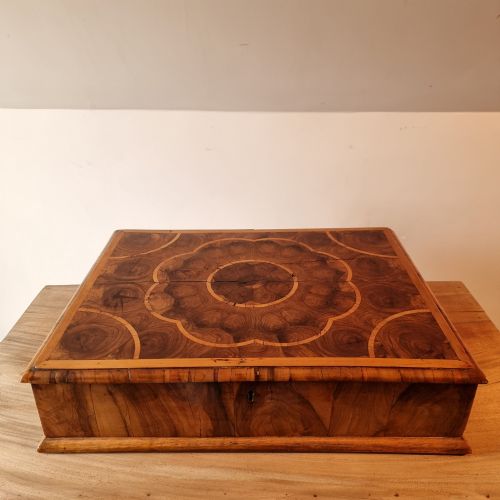
Objects range from simple oak Bible boxes to heavily inlaid burr walnut and rosewood caskets fitted with trays and mirrors.
Materials and Construction
Cabinet makers utilised dense hardwoods like mahogany, walnut, rosewood and oak, often enhancing surfaces with contrasting veneers of satinwood, kingwood or tulipwood.
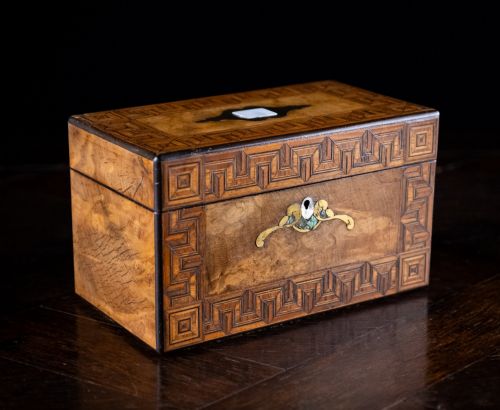
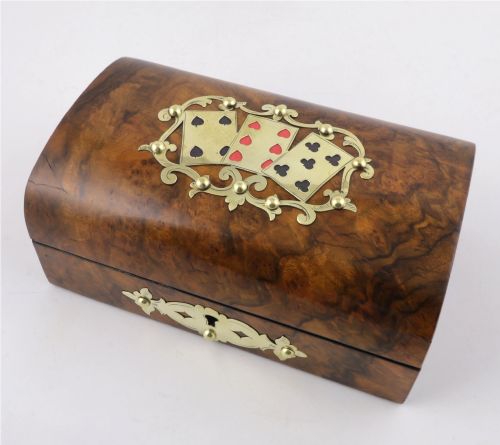
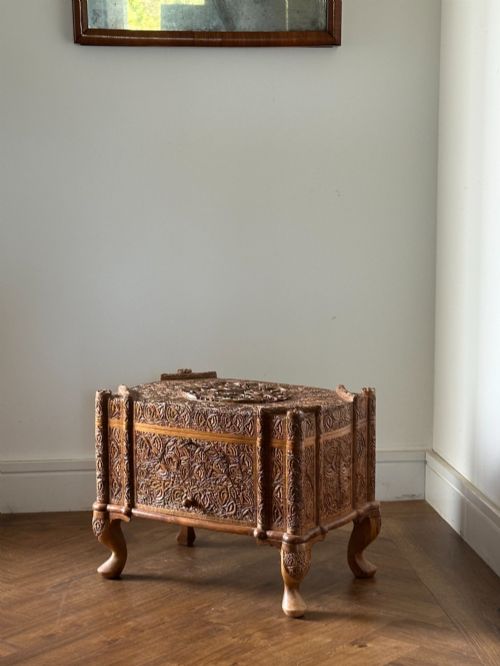
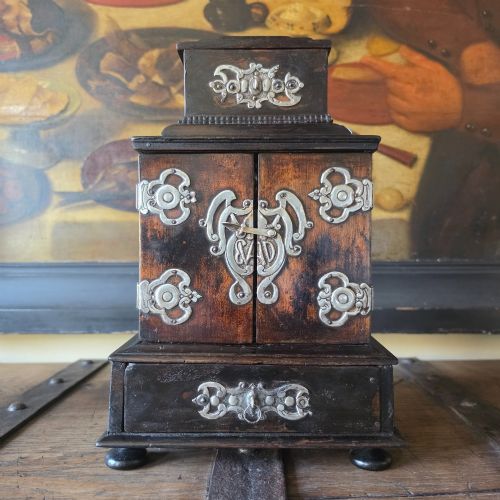
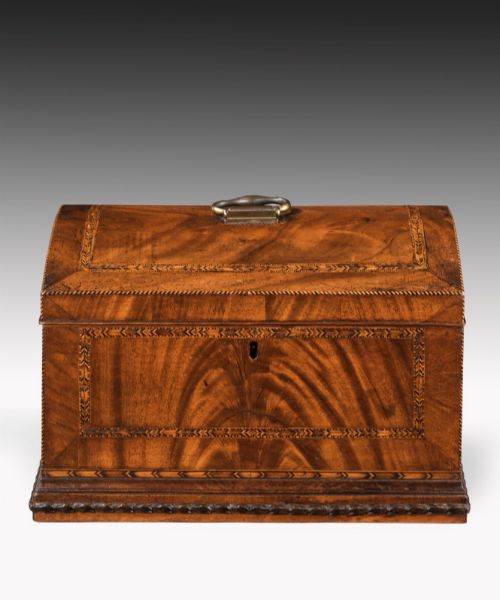
Decorative detailing relies on brass mounts, parquetry, intricate Tunbridge ware marquetry and carved elements seen in Black Forest and Anglo-Indian examples.
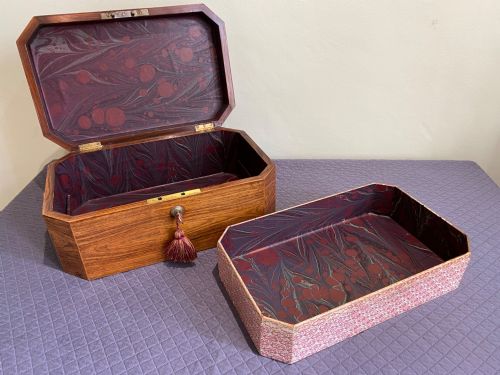
Interiors frequently feature fitted compartments, velvet or leather linings and hidden drawers constructed to safeguard valuables.
Objects span multiple centuries, ranging from seventeenth-century oak Bible boxes to twentieth-century carved sandalwood caskets.
Markers of Excellence
Quality rests upon the precision of the cabinet work, particularly the tightness of dovetail joints, the alignment of parquetry and the stability of the timber over time.
Superior examples display thoughtful selection of grain patterns, such as burr walnut or flame mahogany, matched symmetrically across the lid and panels.
The sophistication of the internal fittings and the original integrity of brass hardware or locks distinguish high-status pieces from simpler utilitarian containers.
Tahan Paris·Edmund Nye·Erhard and Sohne
The Wooden Casket Box Glossary
- Casket
- A small decorative box or chest used for holding jewels, letters or other valuables. These vessels often feature secure locks and ornate exterior decoration.
- Parquetry
- A geometric mosaic of wood pieces used for decorative floors or box lids. Makers arrange contrasting timbers to create striking optical patterns.
- Cellarette
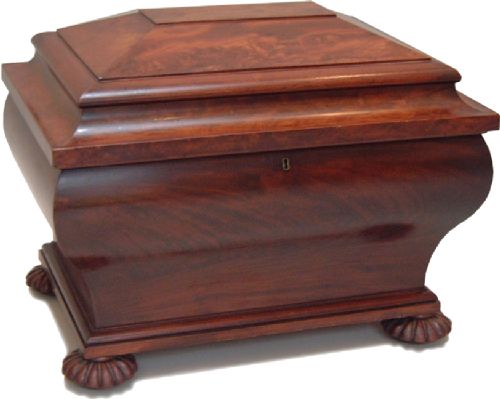
- A lockable container designed to hold bottles of wine or spirits. Georgian and Victorian examples often take the form of sarcophagus-shaped boxes.
- Tunbridge Ware
- A form of decorative woodwork produced in Kent, characterised by tiny mosaic tiles forming pictorial or geometric designs. Artisans assemble thousands of tinted wood blocks to achieve the effect.
- Marquetry
- The art of applying pieces of veneer to a structure to form decorative patterns or pictures. Craftsmen cut various woods to fit together precisely within the surface.
Wooden Casket Box: Frequently Asked Questions
What were wooden casket boxes originally used for?
These boxes served to protect and organise precious items such as jewellery, documents, tea, playing cards or correspondence.
Their secure construction and fitted interiors ensured that valuable personal possessions remained safe from dust and prying eyes in the home.
How do I date a wooden casket box?
Dating relies on observing the timber species, construction methods like dovetailing, and decorative styles typical of periods such as the Georgian era or Victorian times.
Hardware elements, locks and internal linings also provide reliable clues to the decade of manufacture.
Are these boxes suitable for daily use?
Many sturdy examples remain entirely practical for holding modern jewellery, watches or keepsakes on a dressing table or desk.
Care should be taken to protect antique finishes from excessive moisture, direct sunlight and sudden temperature changes.
What is the difference between a box and a casket?
While the terms often overlap, a casket traditionally implies a more decorative or secure container, frequently with a domed or sarcophagus-shaped lid.
Boxes tend to encompass a broader range of utilitarian forms, including flat-topped stationery desks and plain storage containers.