
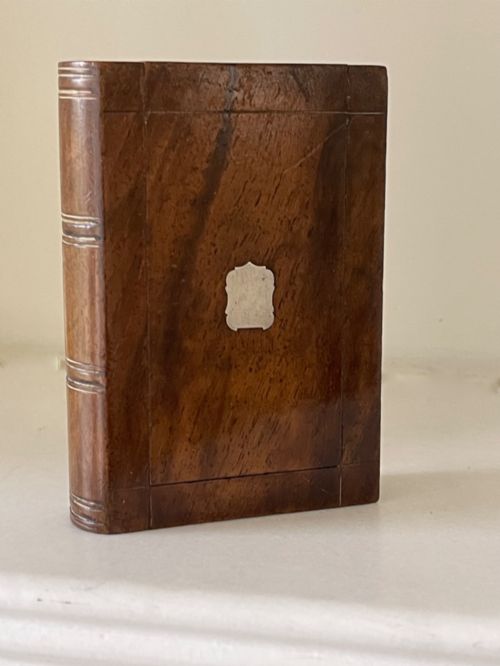
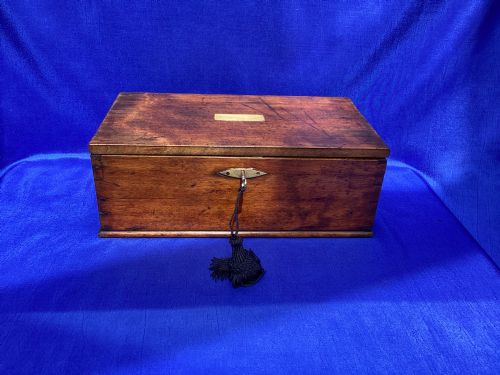


Mahogany Keepsake Box
These mahogany keepsake box pieces bring practical timber construction to your home, offering compact storage with period character.
Identifying a mahogany keepsake box
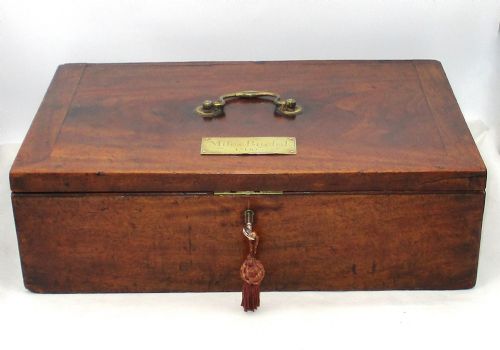
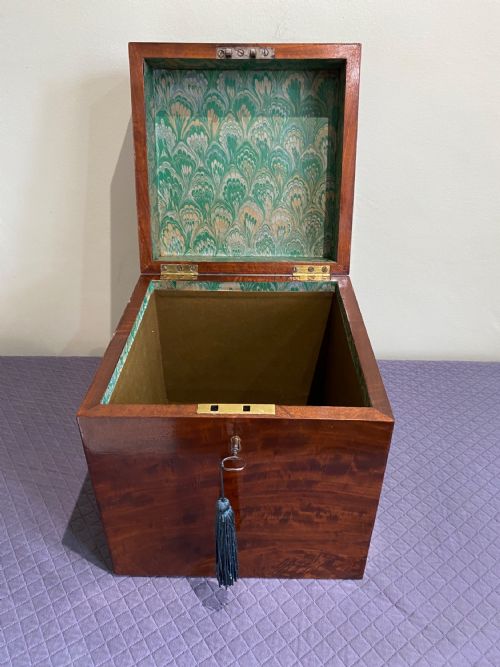
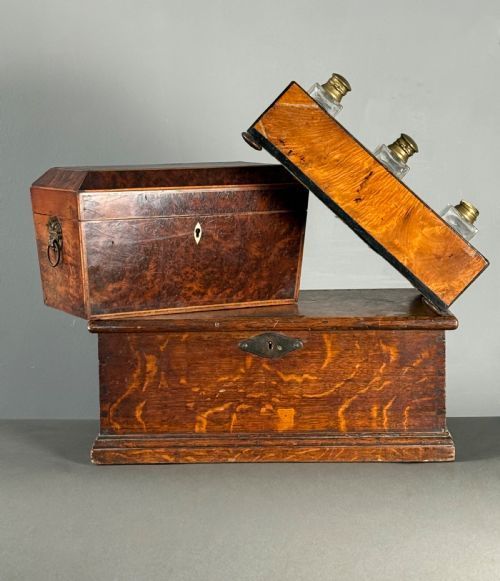
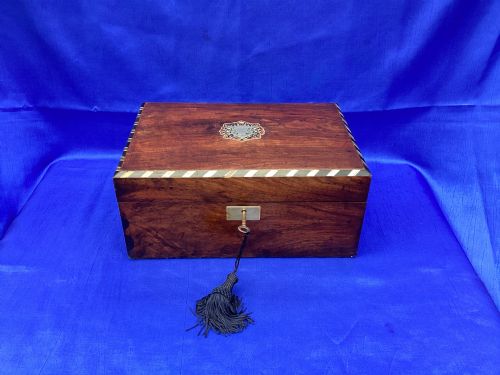
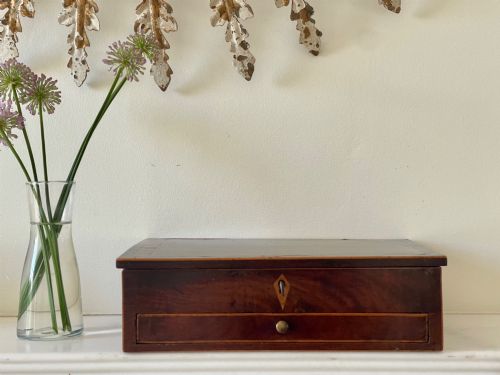
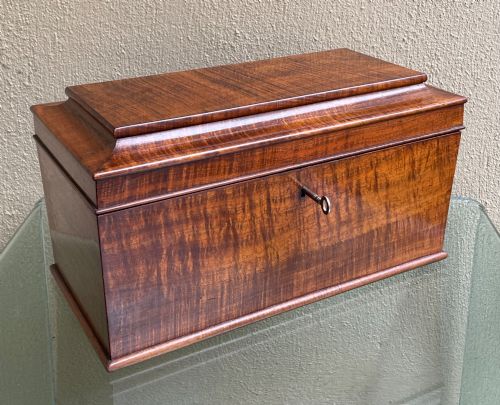
When you search for a mahogany keepsake box, you are looking at small wooden containers designed for storing valuables, documents, or tea. The pieces listed on this page span the Georgian, George IV, Victorian, and 1890 periods, originating from English workshops. You will most frequently encounter compact examples that serve as decorative boxes, storage boxes, or tea caddies.
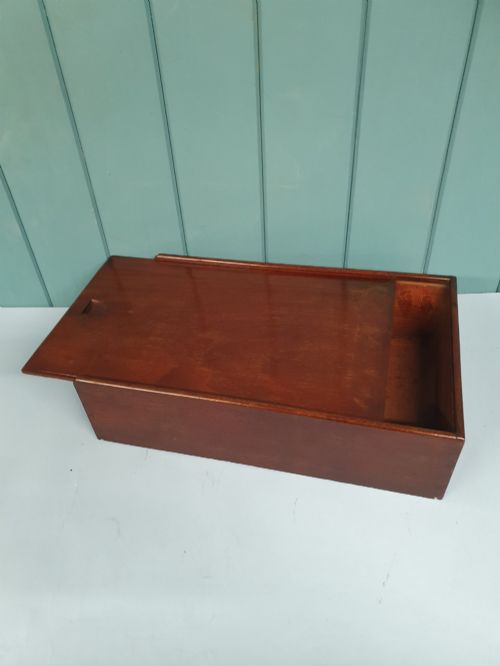
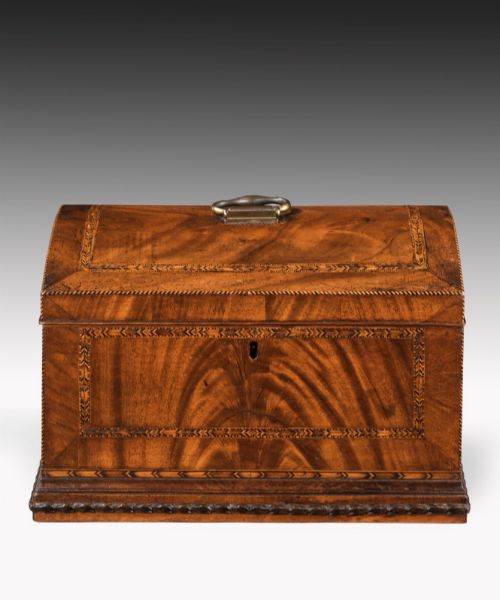
The forms range from a twin mahogany Georgian tea caddy to a George IV mahogany silver chest and a Victorian chapel storage box. Smaller variants appear as document boxes or simple small boxes featuring spring locking mechanisms. These objects combine utilitarian storage with the rich grain of nineteenth-century timber.
Materials and construction
The primary material across these pieces is mahogany, often paired with contrasting boxwood stringing, brass hardware, and bone details. Some interiors retain paper linings alongside the solid wood structure. Joinery relies on traditional carpentry methods suitable for small domestic containers.
Hardware elements such as brass locks and hinges provide functional security for the lids. Spring locking mechanisms appear on select small boxes, indicating mechanical ingenuity within the period.
Retail Price Guide 2026
Typical UK retail prices for mahogany keepsake box, calculated from the Sellingantiques database of over a million retail prices indexed since 2003. This retail price guide relies exclusively on Sellingantiques data; no external sources or auction records are used, so the figures do not describe the wider market.
Assessing quality
Quality in these boxes rests on the selection of timber grain, the precision of secondary wood inlays such as boxwood, and the integration of functional elements like brass fittings. Finer pieces demonstrate careful attention to proportion and structural joinery that withstands handling over centuries.
The presence of specialised internal mechanisms, such as spring locking systems or fitted tea caddy compartments, elevates the complexity of the piece. Simpler storage boxes rely purely on the warmth of the polished mahogany surface and clean lines.
The Mahogany Keepsake Box Glossary
- Mahogany
- A dense tropical hardwood known for its rich reddish-brown colour and durability, widely utilised in British cabinet making. It forms the primary structure of all pieces on this page.
- Tea caddy
- A container designed to store tea leaves, often featuring internal compartments or twin sections as seen in Georgian examples. These vessels were kept locked to protect expensive contents.
- Boxwood
- A pale, hard wood frequently utilised for contrasting inlay work and stringing on darker timbers like mahogany. It creates crisp linear details around box lids and edges.
- Spring locking mechanism
- An internal spring-loaded device that secures the box lid automatically upon closure. It represents a clever mechanical improvement found in unusual small boxes.
Frequently Asked Questions
What were mahogany keepsake boxes used for?
These boxes served to safeguard letters, jewellery, documents, and valuables in domestic settings. Tea caddies specifically held prized tea leaves under lock and key.
Over time, their domestic utility shifted toward general storage and decorative display on tables or desks.
How do I date a mahogany box?
Dating relies on stylistic markers associated with Georgian, George IV, and Victorian eras, alongside construction techniques and hardware types. Cabinet makers of each decade utilised specific moulding profiles and timber cuts.
Comparing the style of brass locks and interior paper linings also helps establish the approximate period of manufacture.
How do I clean mahogany wood?
Maintenance requires gentle dusting with a dry, soft cloth to protect the polished timber surface from abrasive particles. Avoid using modern chemical sprays or excessive moisture.
Periodic application of traditional wax helps preserve the natural sheen of the nineteenth-century mahogany grain.