
Wooden Blanket Trunk
A wooden blanket trunk serves as a robust storage chest, offering timeless utility and historical character for modern interiors.
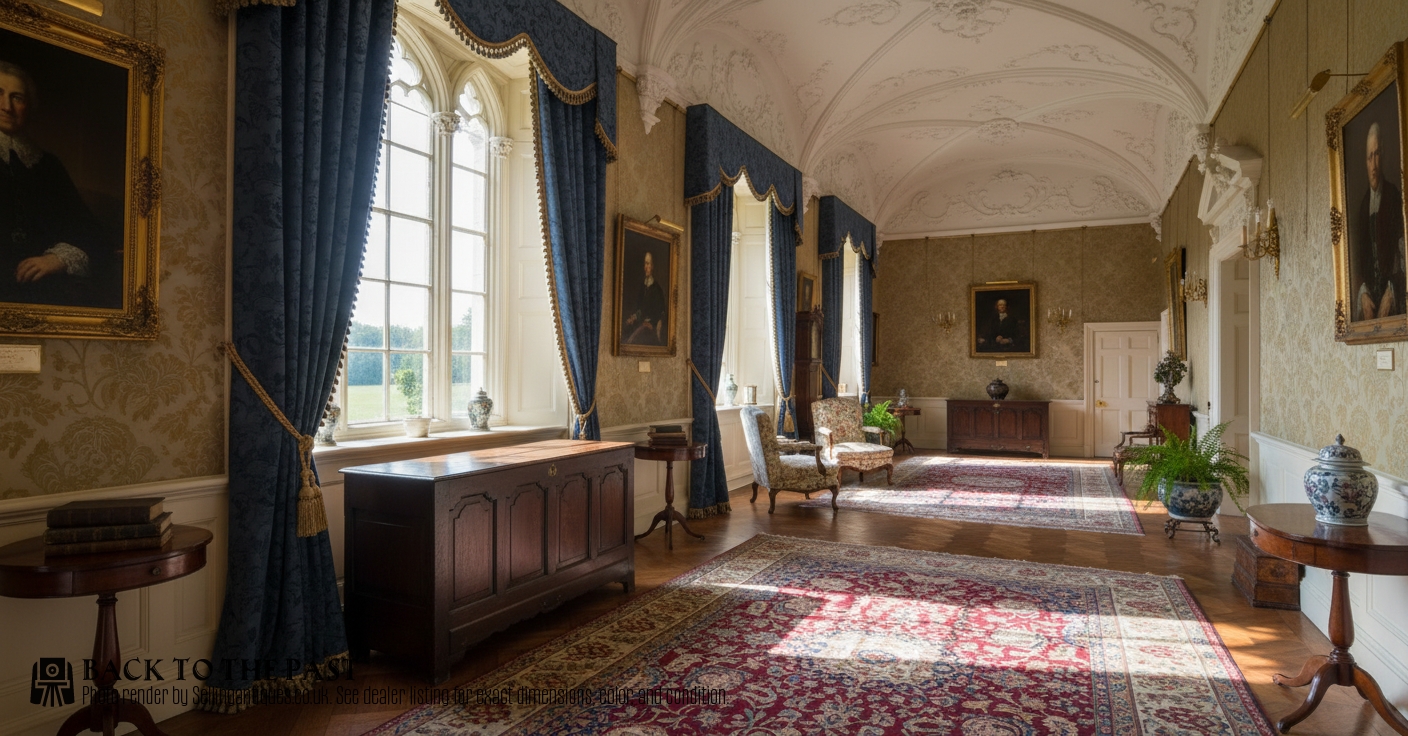
Wooden Blanket Trunk
A wooden blanket trunk is a deep storage receptacle designed originally to house textiles, garments, and valuables securely within domestic spaces. These pieces appear frequently as heavy oak coffers, sturdy pine boxes, and specialised campaign chests spanning multiple centuries.
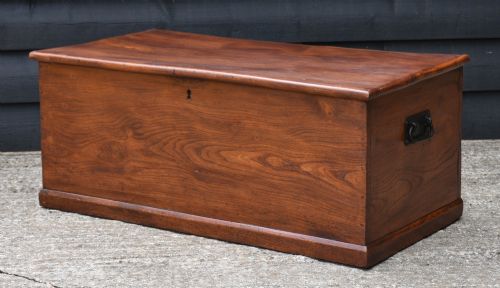
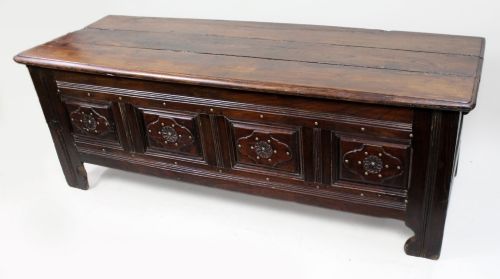
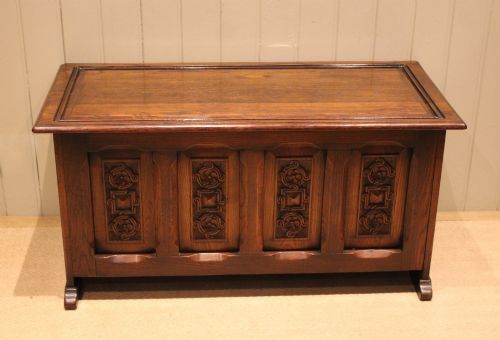
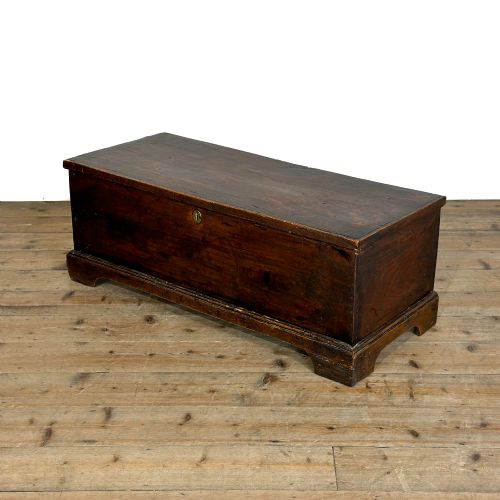
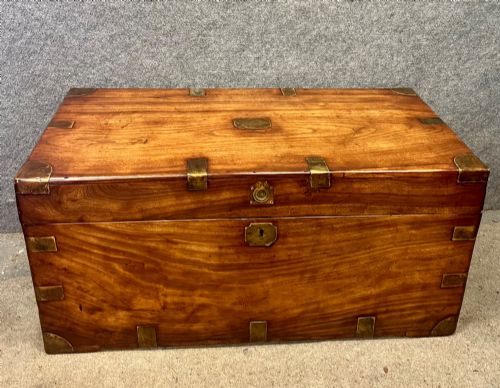
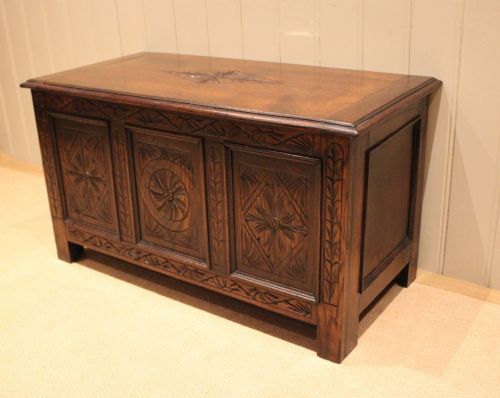
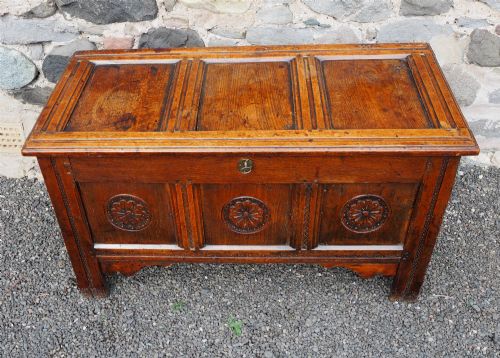
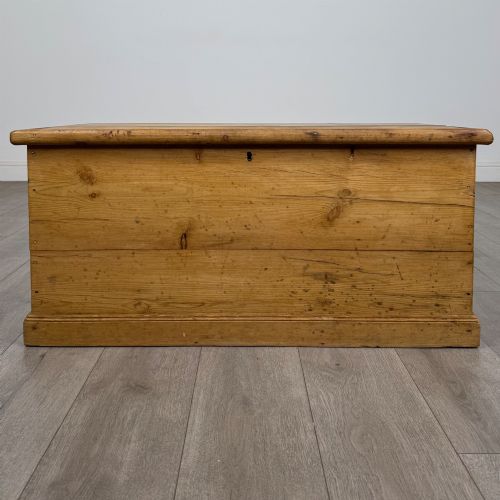
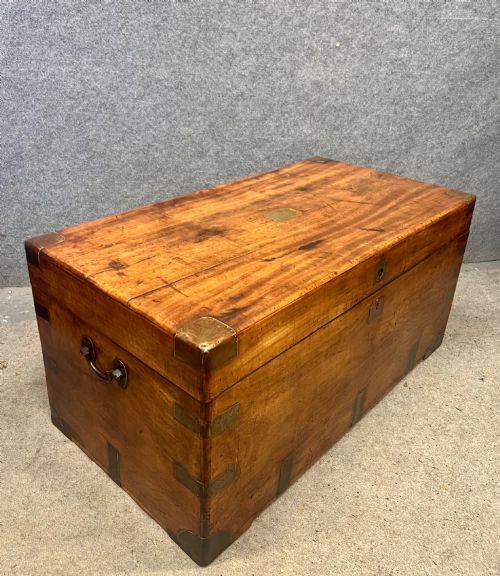
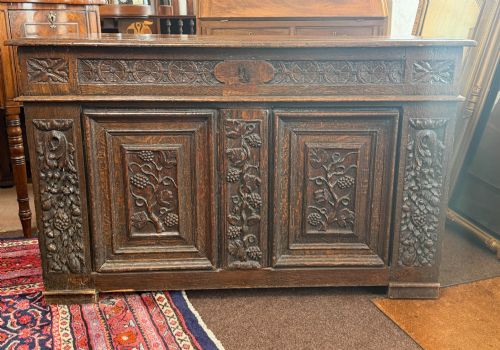
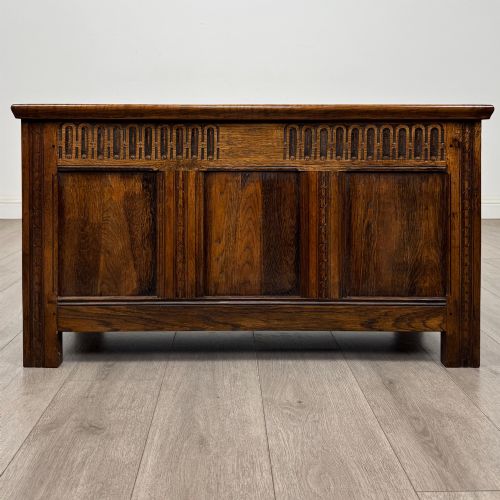
Buyers meet examples ranging from simple six-plank elm boards to intricately carved seventeenth-century panels and brass-bound nineteenth-century travel chests. Oak and pine dominate the selection, appearing alongside exotic woods such as camphor and padouk.
Regional variations emerge clearly across the inventory, including Welsh country pieces and Anglo-Indian campaign trunks. Each form reflects the specific joinery traditions and domestic requirements of its period of origin.
How they were made
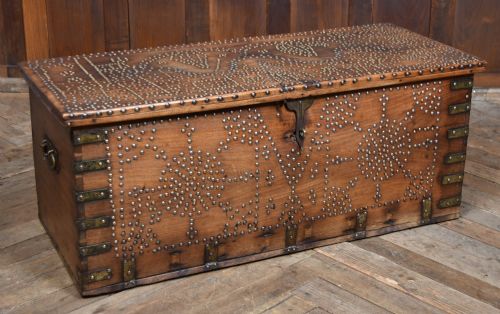
Construction relies upon heavy solid timbers, primarily oak, pine, and elm, joined by pegged mortise and tenon frames or straightforward dovetail corners. Iron and brass hardware, including strap hinges and carrying handles, reinforce the structural integrity of transportable trunks.
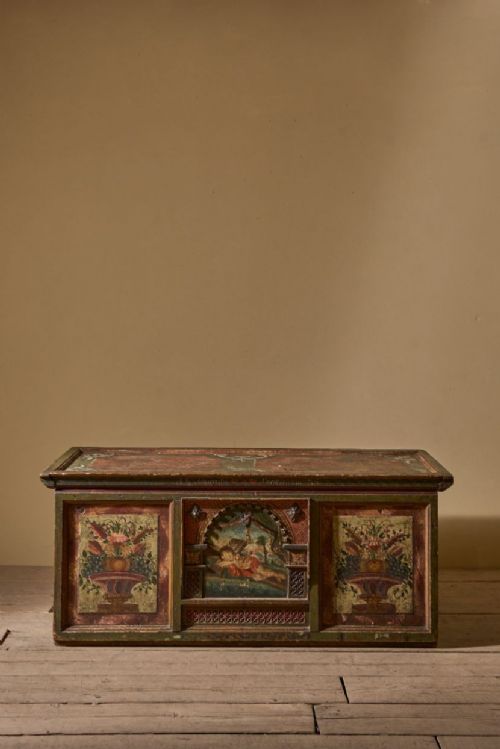
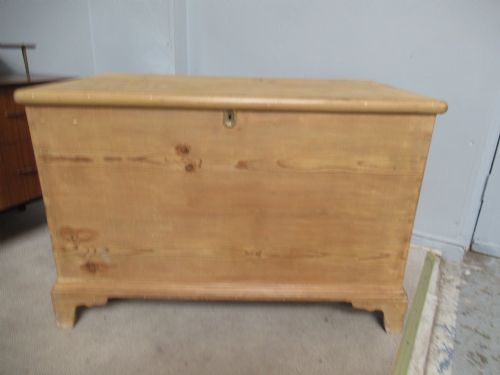
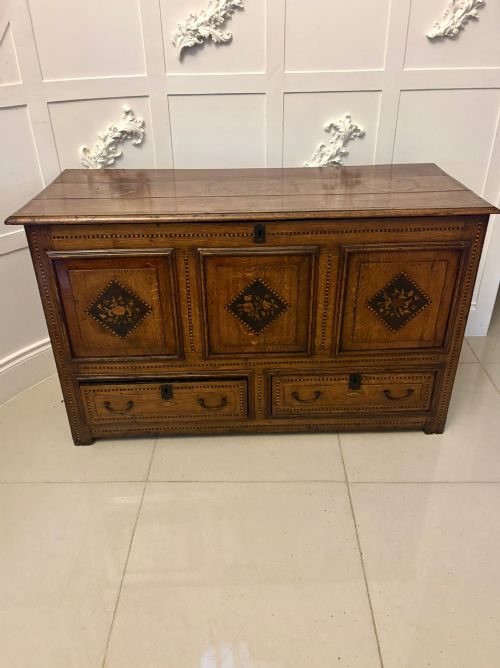
Surface ornamentation ranges from geometric chip carving and marquetry inlay to plain scrubbed pine and polished mahogany finishes. Craftsmen utilised local timbers for country pieces while employing durable exotic woods like camphor for travel-resistant campaign boxes.
Listings feature solid timber construction spanning the sixteenth century through the Victorian era, utilising oak, pine, elm, and camphor wood.
What varies in quality
Quality rests in the integrity of the original timber, the sophistication of the joinery, and the survival of secondary elements such as hinges, tills, and locks. Early joined oak work with crisp, deep carving commands greater regard than later revival pieces.
The degree of original surface patination and the retention of authentic brass or iron mounts distinguish superior examples from heavily restored or altered chests. Unaltered regional vernacular pieces demonstrate a truer historical honesty.
The Wooden Blanket Trunk Glossary
- Coffer
- A heavy wooden chest traditionally used for storing valuables, linens, and documents. These pieces often feature hinged lids and robust panelled construction.
- Campaign trunk
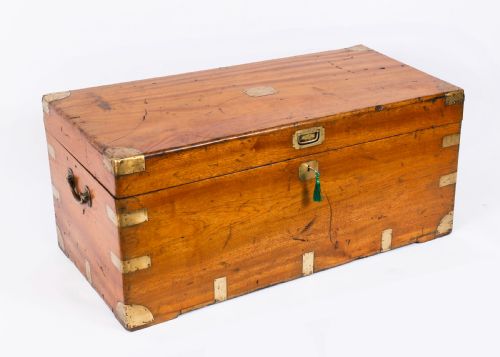
- A portable chest made for military officers on active service during the eighteenth and nineteenth centuries. They typically incorporate brass corners, flush handles, and durable camphor wood.
- Six-plank coffer
- A primitive chest constructed from six distinct boards joined simply at the edges. This method represents one of the earliest forms of box construction.
- Mule chest
- A traditional storage chest featuring one or two drawers beneath the main internal compartment. They bridge the functional gap between a simple coffer and a chest of drawers.
- Marquetry
- The art of applying decorative veneer pieces to a structure to form intricate patterns. This technique appears on exceptional seventeenth-century examples.
Wooden Blanket Trunk: Frequently Asked Questions
What is a coffer bach?
A coffer bach is a small Welsh box or chest traditionally made in domestic workshops. The term translates directly from Welsh as little coffer.
These compact chests frequently served as presentation pieces or marriage boxes for holding household documents and small valuables. Their diminutive scale makes them highly versatile for modern placement.
How do I date an oak trunk?
Dating relies upon examining the construction methods, tool marks, and style of carving present on the timber frame. Pegged joinery and hand-riven boards typically indicate earlier centuries.
Later revival pieces often display machine-sawn timber edges and standardised hardware fittings. Comparing the panel layout with established period examples clarifies the manufacturing era.
Why use camphor wood for trunks?
Camphor wood naturally repels insects and moths, making it an ideal material for protecting woollen blankets and garments during transport. Its distinct aroma preserved stored textiles effectively in humid climates.
Cabinetmakers utilised this durable timber extensively for nineteenth-century campaign chests. The wood accepts brass bound mounts securely, withstanding rigorous travel.
Where should I place a trunk at home?
These chests function effectively at the foot of a bed, beneath windows, or as alternative coffee tables in living spaces. Their flat lids provide convenient surface utility alongside internal storage.
Keeping wooden trunks away from direct heat sources prevents the timber from splitting or warping. Natural oils maintain the surface patination over years of domestic use.