





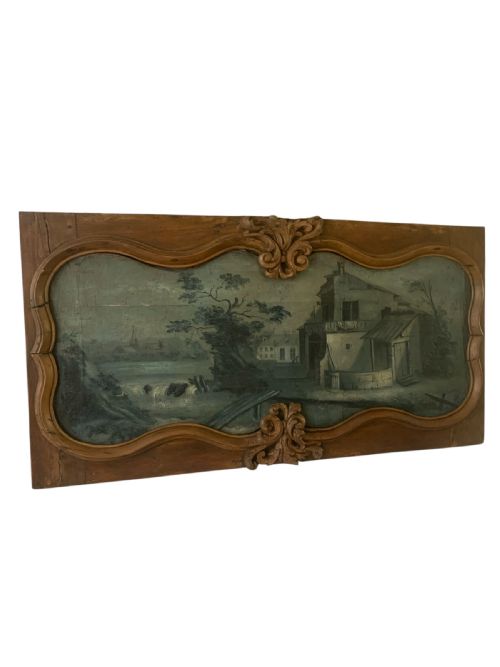
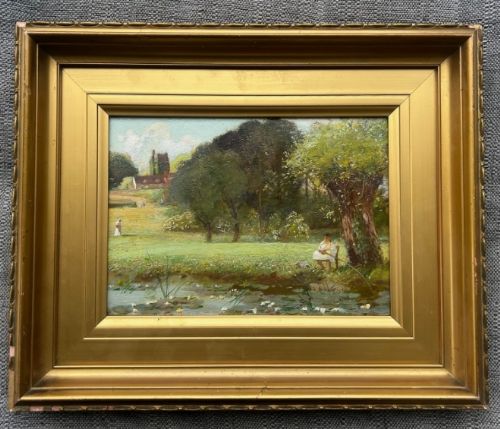

Wood Panel Landscape
A wood panel landscape offers a compact, durable surface that artists have favoured for centuries to capture fine detail outdoors.
Wood Panel Landscape
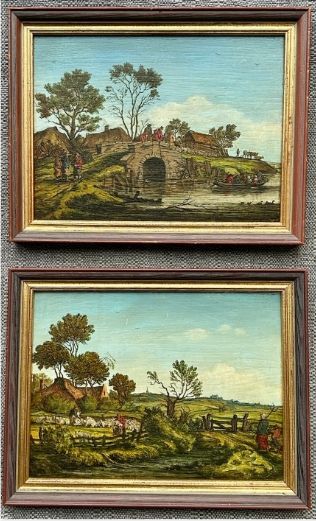
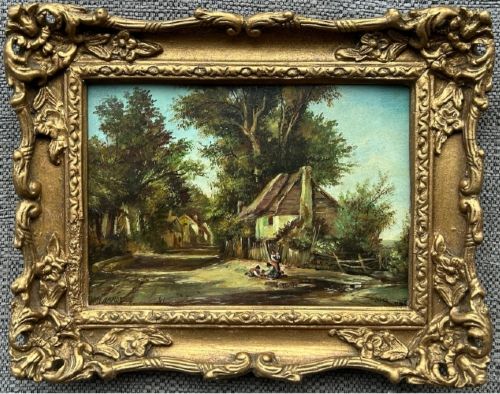
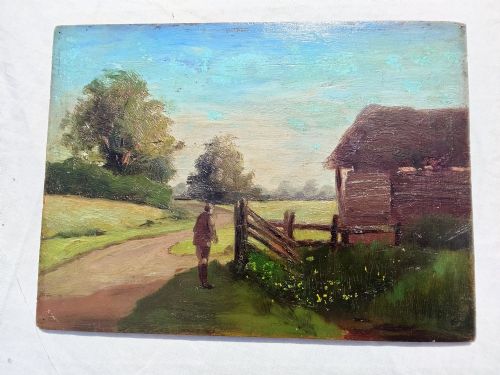
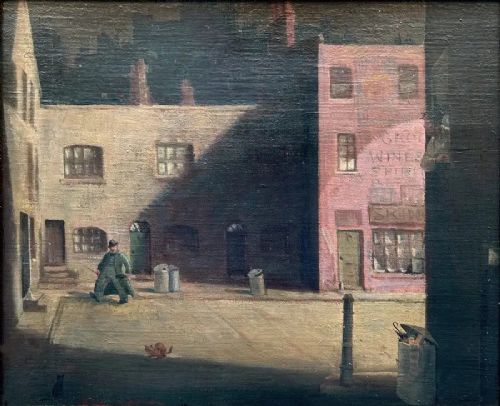
Buyers exploring this selection encounter mostly small-scale oil paintings executed on rigid wooden boards, dating predominantly from the nineteenth and early twentieth centuries. These works frequently depict rural scenes, rivers, windmills, and highland valleys rendered by British, Scottish, and continental European schools.
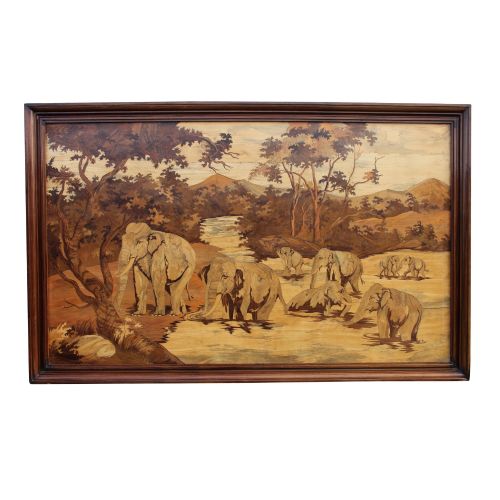
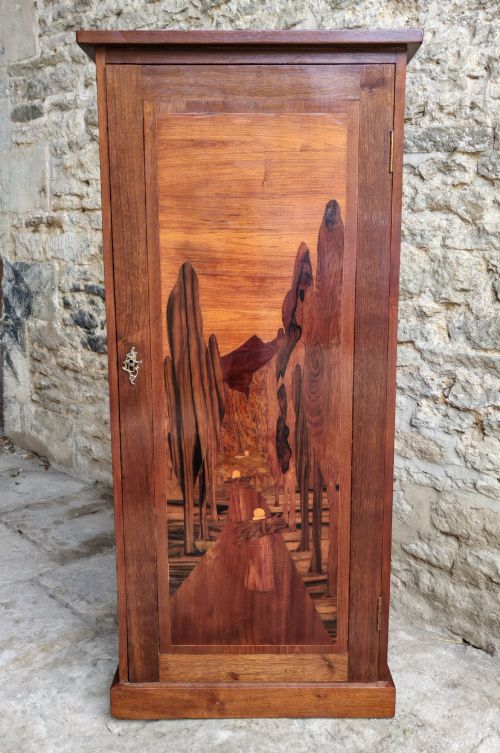
The format ranges from intimate miniature studies painted on mahogany or oak to larger framed overdoor panels and decorative marquetry scenes. Artists favoured wood for its stability and smooth grain, which allowed for precise brushwork without the weave interference of canvas.
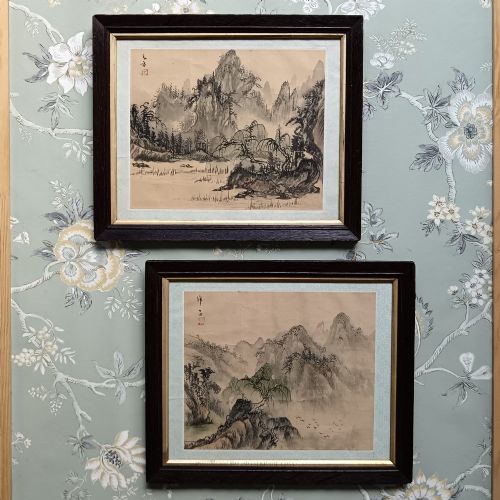
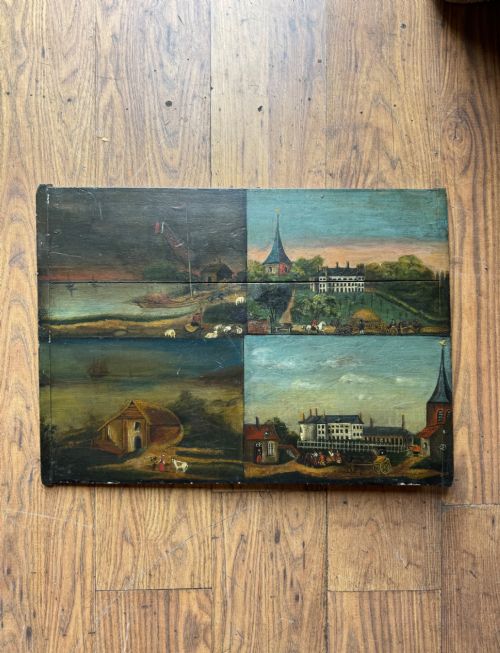
Regional British landscapes dominate the offerings, alongside French plein air works and Italian coastal views. Provincial naive examples appear alongside signed works by listed artists associated with distinct regional schools.
Materials and technique
The foundation consists of a prepared wooden support, typically oak, mahogany, walnut, or generic timber panels, smoothed to receive pigment. Artisans applied oil paint directly to the sealed board, often utilising the natural rigidity of the panel to achieve crisp edges and minute detail.
Listings feature oil paintings on wooden boards alongside carved marquetry panels, wall mirrors, and cabinets spanning the eighteenth to the mid-twentieth century.
Distinguishing quality
Quality rests upon the sensitivity of the brushwork and the structural integrity of the wooden support itself. Superior examples demonstrate confident handling of light and atmosphere, whereas lesser pieces rely on formulaic repetition without direct observation.
The condition of the timber panel - free from warping or splits - alongside the harmony of the original frame dictates the standing of an individual piece. Works bearing clear signatures by established regional artists or historical schools naturally command greater attention from discerning collectors.
Tom Campbell·William Howard Hardy·Florence Adelina Hess·Paul-Élie Gernez·Hubert Wellington·Sir David Murray·Fernando Del Basso·Sam Bough·Kershaw Schofield·Edmond Defonte
The Wood Panel Landscape Glossary
- Wood panel
- A flat piece of timber utilised as a rigid alternative to canvas for painting. It provides a smooth, unyielding surface that prevents the cracking often seen in aged fabric supports.
- Plein air
- Painting executed outdoors in direct natural light to capture ephemeral atmospheric effects. This French term translates literally to open air and defines much of nineteenth-century landscape practice.
- Marquetry
- The art of applying decorative veneer pieces of varying wood types to a structure to form pictorial designs. Artisans carefully cut and fitted woods like rosewood and mahogany to create tonal patterns.
- Overmantel
- A large decorative painting, mirror, or panel designed to hang permanently above a fireplace mantelpiece. These pieces often feature elaborate giltwood frames and thematic pastoral subjects.
- Naïve art
- Artwork created by a self-taught practitioner lacking formal academic training, characterised by charming perspective and direct observation. Such works celebrate honest local expression over strict proportion.
Wood Panel Landscape: Frequently Asked Questions
Why did artists paint on wood?
Painters chose wooden boards because the rigid surface allowed for meticulous brushwork and fine detail without the give of canvas. Panels also provided a durable foundation that resisted punctures and accommodated small, portable formats suited for outdoor sketching.
Over the centuries, wood proved exceptionally stable when properly sealed, though variations in humidity could cause warping if the timber was unseasoned or improperly prepared by the maker.
How do I identify the period?
Dating relies heavily on the style of the brushwork, the framing techniques, and the preparation of the wooden reverse. Nineteenth-century pieces frequently display darker ground layers and traditional varnish, while early twentieth-century works often embrace looser, brighter plein air palettes.
Examining the type of wood, such as early mahogany boards versus later plywood or generic timber, provides further clues regarding the date of execution and regional origin.
How should I display them?
These works require stable interior environments away from direct sunlight, extreme heat sources, and damp exterior walls. Maintaining moderate humidity prevents the wood panel from expanding, contracting, or splitting along the grain over time.
Most pieces are best hung securely using appropriate wall fixings that support the combined weight of the heavy wooden panel and its original gilt frame.
What is school attribution?
Attribution to a specific school, such as the Scottish School or Norwich School, indicates that an anonymous painting shares stylistic traits, palette, and technique with a known regional group of artists. These designations help contextualise provincial works created outside major urban art centres.
Such labels reflect historical proximity and shared artistic training rather than a signature by a documented master.