


Primitive Wall Art
Primitive wall art brings honest texture and direct character into a room, offering genuine historic domestic items and naive paintings.
Primitive Wall Art
Primitive wall art encompasses a diverse range of historic objects designed to hang or mount, combining utilitarian function with unpretentious visual appeal. These pieces span from the sixteenth century through the Victorian era and into the mid-twentieth century, reflecting local traditions rather than metropolitan academic standards.
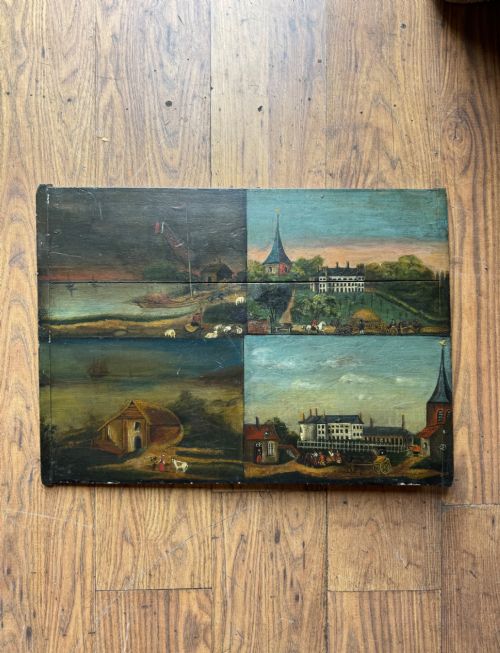
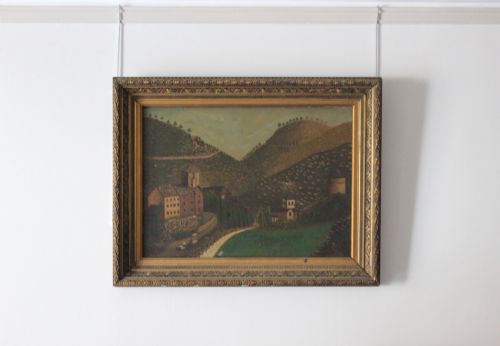
The most frequent examples on this page are oil paintings and watercolours executed in a naive or folk art style, alongside carved wooden panels and metal animal figures. Buyers often encounter portraits of individuals, rural street scenes, and decorative panels that carry the marks of provincial makers.
Domestic and agricultural items also appear under this heading, including hanging candle boxes and threshing boards. Such objects transform functional tools of past centuries into striking vertical display pieces for modern interiors.
Materials and construction
Wood is a foundational material for these pieces, utilising durable timbers such as oak, elm, beech, and various local boards. Carpenters and rural makers shaped these using hand tools, creating sturdy panels, storage boxes, and structural supports that survive centuries later.
Listings feature oak, elm, and beech alongside oil on canvas, watercolour, and sheet metal spanning from the sixteenth to the twentieth century.
Assessing quality and character
Quality in primitive wall art rests upon the strength of the visual composition and the integrity of the surface patina. Pieces that retain their original unwashed surfaces and honest wear show a superior historic presence compared to heavily restored examples.
The directness of the maker's hand dictates the success of paintings and carved panels, where unpretentious execution yields charm. Items that balance utility with clear regional character stand apart from standard mass-produced decorative goods.
The Primitive Wall Art Glossary
- Naive art
- Visual work created by a person without formal training, typically characterised by a rejection of standard perspective and proportion. This style relies on direct observation and personal expression.
- Folk art
- Artistic production originating from a cultural community or rural tradition, reflecting everyday life and practical utility. Items often incorporate local materials and traditional motifs.
- Patina
- The surface appearance grown on materials like wood and metal through age, handling, and use. A good patina indicates genuine historic age and continuous existence.
- Shoulder yoke
- A carved wooden implement designed to fit across the shoulders for carrying buckets or loads. These functional agricultural objects are often repurposed as wall displays.
- Threshing board
- An agricultural tool traditionally dragged across grain to separate wheat, typically embedded with flint or metal flakes. Surviving examples exhibit heavy wooden construction and deep weathering.
Primitive Wall Art: Frequently Asked Questions
What defines primitive wall art?
Primitive wall art comprises unpretentious historic paintings, carved wooden panels, and metal objects created outside formal academic traditions. These pieces reflect local craftsmanship, domestic life, and regional styles from past centuries.
Buyers are drawn to their honest materials, direct visual expression, and the unique character imparted by individual makers.
How were these wooden panels used?
Many wooden items began as functional household or agricultural objects, such as hanging candle boxes for domestic illumination or carved architectural panels.
Over time, their sturdy construction and distinct surface textures led to them being preserved and displayed vertically as decorative wall elements.
How do I date naive paintings?
Dating relies on examining the support materials, framing techniques, canvas preparation, and pigment types alongside stylistic clues within the subject matter.
Clothing styles, regional architecture, and the specific hand of the artist help narrow down the period of execution.
Where do these painted portraits originate?
Painted portraits typically stem from provincial artists working in rural towns and villages rather than major urban centres. Itinerant painters often travelled to record local families and children.
This background gives the works their characteristic directness and charming lack of academic polish.