





William IV Mahogany Sideboard
A william iv mahogany sideboard brings serious architectural presence to a dining room, offering deep pedestals and heavy scrollwork suited to period interiors.

William IV Mahogany Sideboard
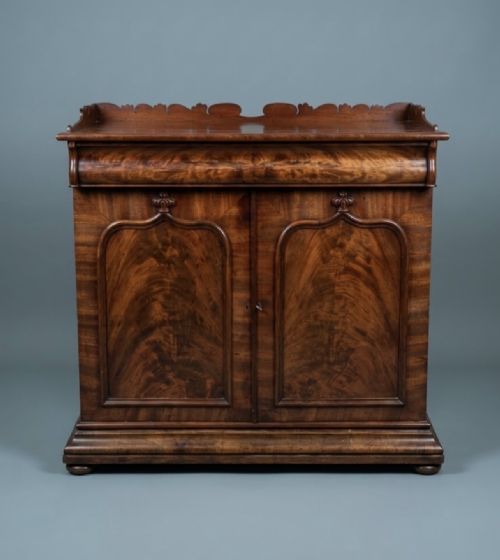
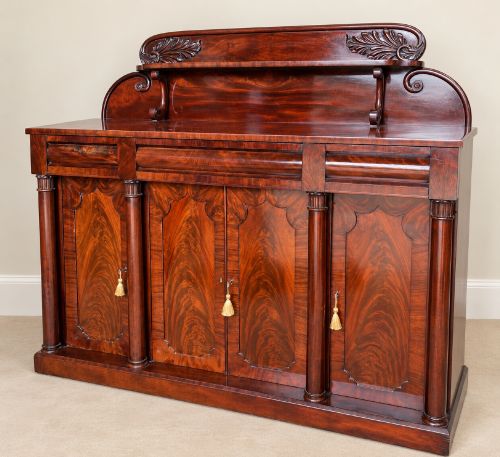
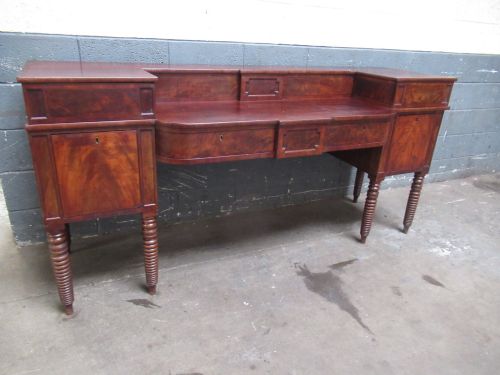
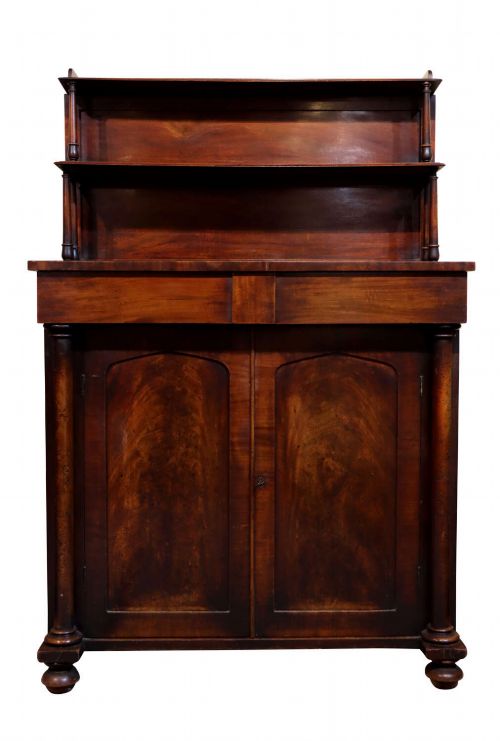
A william iv mahogany sideboard represents the heavy, confident dining room storage typical of the early nineteenth century, frequently appearing in pedestal formats with substantial side cupboards. These pieces evolved from late georgian serving tables, incorporating enclosed cellarettes and raised backsplashes that anchor the furniture against a wall.
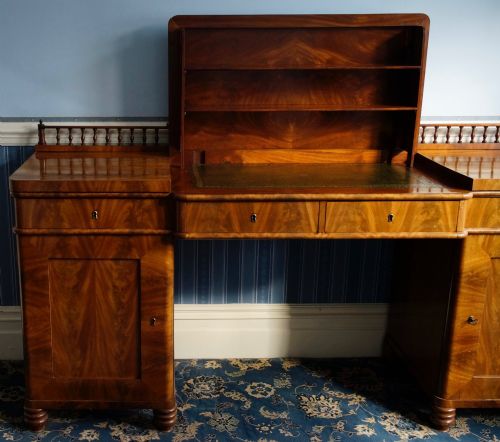
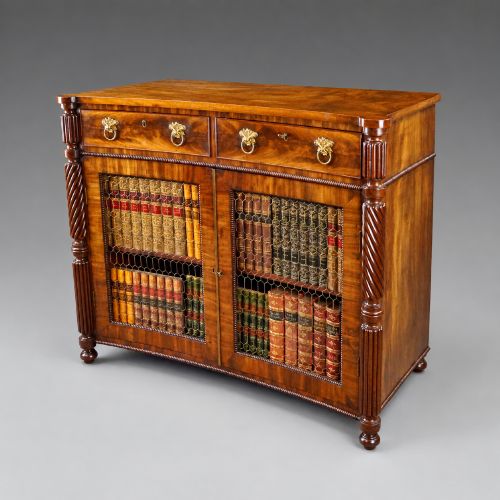
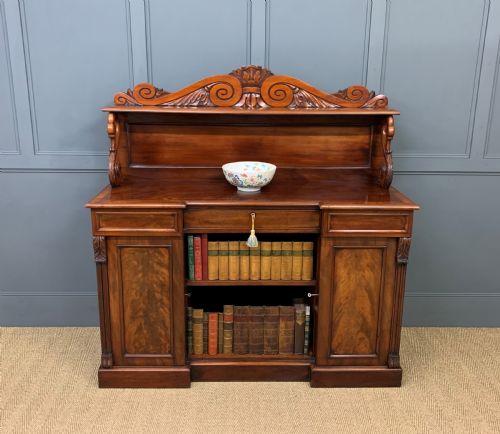
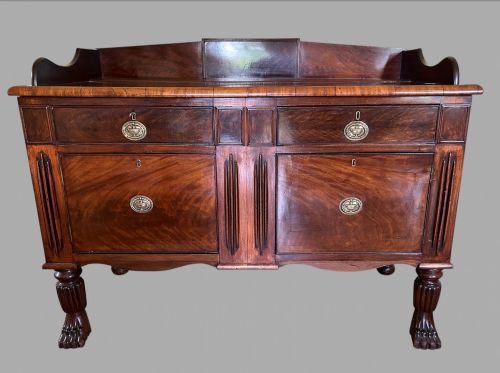
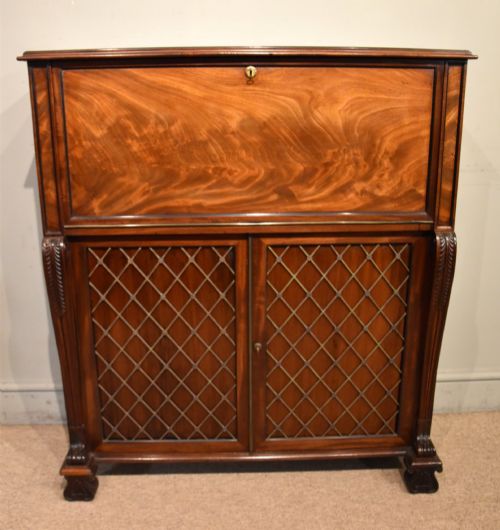
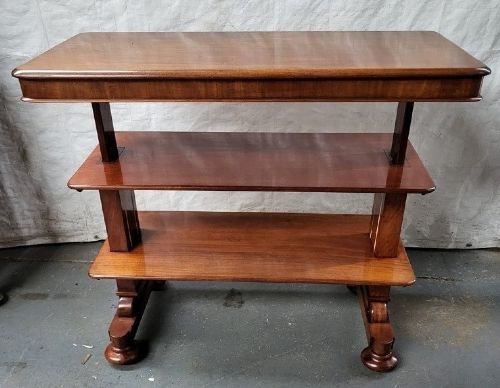
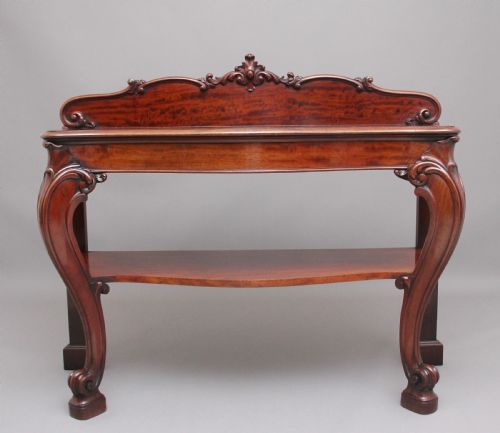
The inventory on this page spans several related forms, including pedestal sideboards, smaller chiffoniers, and serving tables from the nineteenth century. Variations range from concave and breakfront configurations to simple two-door cupboards and mirror-backed consoles.
How they were made
Cabinetmakers built the carcase from pine or secondary timbers, applying thick mahogany veneers and highly figured flame mahogany across the principal surfaces. Solid mahogany served for structural columns, carved scroll brackets, and heavy feet.
Brass fittings, glass panels, and occasional leather writing inserts completed the functional elements of these pieces. Construction relied on robust joinery designed to support the immense weight of marble tops and heavy timber doors.
The listings here combine 19th century mahogany items with earlier regency and georgian transitional pieces.
What varies in quality
The selection of timber dictates much of the visual success, with symmetrical flame mahogany veneers and deeply figured grains elevating a piece far beyond plain stock. Substantial depth in the timber allows for bolder architectural mouldings and deep-relief carving on the pedestals.
Structural integrity and the retention of original interior components, such as cellarette drawers and bottle partitions, separate utilitarian examples from cabinetmaker pieces attributed to workshops like Gillows.
Gillows of Lancaster and London
The William IV Mahogany Sideboard Glossary
- Sideboard
- A large dining room piece designed for serving food and storing tableware. These items usually incorporate cupboards, drawers, and central recesses.
- Flame mahogany
- A veneer cut from the branch junction of the mahogany tree, producing a distinctive, flickering flame pattern. Cabinetmakers matched these veneers symmetrically across cabinet doors.
- Chiffonier
- A smaller sideboard variant, often featuring enclosed shelves below and a raised superstructure with shelves or a mirror above. These served multipurpose storage roles in nineteenth-century parlours.
- Breakfront
- A piece of furniture where the central section projects forward from the flanking cupboards. This configuration adds architectural depth and presence to the facade.
William IV Mahogany Sideboard: Frequently Asked Questions
Where should I place a william iv mahogany sideboard?
These substantial pieces require a generous dining room or hallway with sufficient wall space to support their heavy proportions and deep pedestals.
Keep them away from direct sunlight and heat sources to protect the flame mahogany veneer and prevent the timber from splitting.
How do I maintain flame mahogany veneer?
Dust the surfaces regularly with a soft, dry cloth and apply a traditional beeswax polish sparingly to maintain the natural lustre of the timber.
Avoid liquid cleaners and silicone sprays, which can penetrate old finishes and degrade the underlying veneer over time.
What is the difference between a sideboard and a chiffonier?
Sideboards are generally larger dining room items designed with pedestals and cellarettes for storing heavy tableware and wine.
Chiffoniers are more compact pieces originating from the same period, frequently incorporating raised back shelves or mirrors for display purposes.