





Scottish Mahogany Sideboard
A Scottish mahogany sideboard brings serious presence to a dining room, offering deep timbers and architectural lines born in Edinburgh workshops.
Scottish Mahogany Sideboard
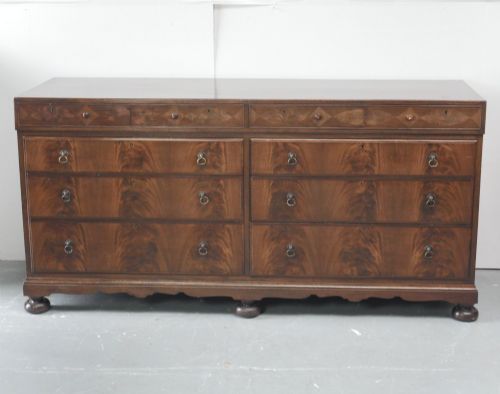
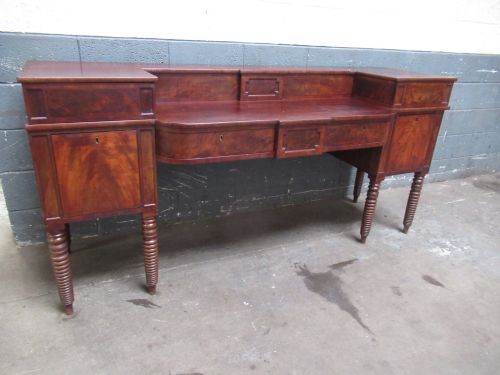
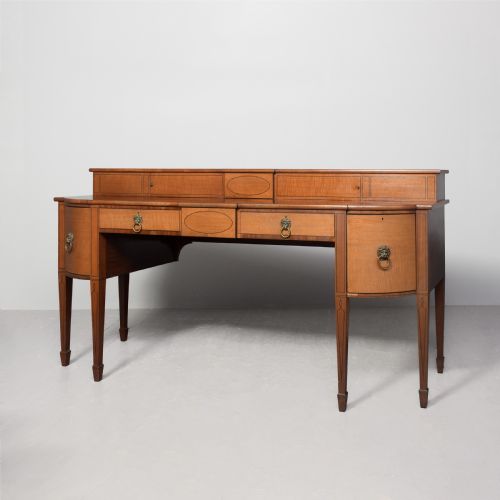
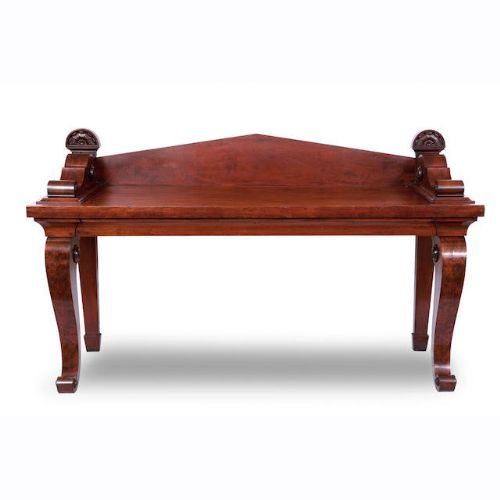
A Scottish mahogany sideboard is a substantial dining room piece designed for serving and storage, appearing most frequently from the Georgian and Regency periods. These heavy forms include stage-back designs, serpentine fronts, and grand pedestal layouts rooted in Scottish traditional cabinet making.
The evidence shows buyers often encounter large George III examples alongside nineteenth-century interpretations and later revivals. Whytock and Reid pieces also surface in the listings, bringing distinct Edinburgh craftsmanship to the category.
Materials and construction
Makers built these pieces primarily using solid mahogany and flame mahogany veneer, often selecting timbers with deep, highly figured grain patterns. Workshops enhanced these rich surfaces using subtle boxwood and satinwood inlay or contrasting crossbanding.
Structural elements frequently incorporate secondary woods such as oak, while brass fittings provide functional hardware for drawers and cupboards. Construction techniques followed rigorous regional traditions, resulting in heavy, stable cabinetry designed to endure.
Scottish Mahogany Sideboard Retail Price Guide 2026
Typical asking prices for scottish mahogany sideboard among the pieces listed under this phrase on Sellingantiques today, from the lower quarter to the upper quarter. They describe what is for sale here now, not the wider market.
Cabinet makers sometimes tailored these grand sideboards specifically to hold heavy silver plate and culinary tools for regional feasts.
Assessing quality
Quality rests heavily on the selection of the mahogany veneer, where intense flame figuring and book-matching elevate the visual impact of the piece. The crispness of inlaid boxwood or satinwood details further separates standard regional work from exceptional output.
Proportion and scale dictate the success of the design, particularly on large stage-back and pedestal formats where balance is critical. Original brass hardware and sound internal secondary timbers like oak also distinguish superior survivals.
Whytock and Reid·James Mein of Kelso
The Scottish Mahogany Sideboard Glossary
- Stage-back
- A raised architectural tier at the rear of a sideboard used for displaying silver or serving dishes. This feature defines many prominent Scottish dining pieces.
- Flame mahogany
- A veneer cut from the branch junction of the tree, producing a swirling, flame-like grain pattern. Cabinet makers reserved this timber for primary display surfaces.
- Bowfront
- A convex curved cabinet front that softens the heavy rectangular proportions of large dining furniture. It requires high skill to veneer accurately.
- Crossbanding
- A narrow strip of veneer laid around the border of a larger panel with the grain running at right angles. This technique frames the primary timber.
- Pedestal sideboard
- A format featuring separate pedestals flanking a central serving surface or recessed cupboard. These large pieces dominate formal nineteenth-century dining spaces.
Scottish Mahogany Sideboard: Frequently Asked Questions
How do I date a Scottish mahogany sideboard?
Dating relies on stylistic markers such as stage-backs, bowfronts, and inlay work, alongside structural construction details. Georgian pieces display crisp linear banding, while later nineteenth-century examples often adopt heavier proportions.
Comparing the primary mahogany timbers and secondary woods like oak helps confirm the era. Examining the drawer linings and brass hardware provides further clues to the decade of manufacture.
Where should I place a large sideboard?
These substantial dining pieces require significant wall space and a room with good proportions to accommodate their depth and height. Placing them in a dining room or a spacious hallway allows the heavy timber and architectural stage-backs to stand clear.
Keep them away from direct heat sources and strong sunlight to protect the mahogany veneer and polish. Ensuring a clear pathway lets you use the deep drawers and cupboards safely.
How do I care for antique mahogany?
Maintain the finish by dusting regularly with a soft, dry cloth and applying natural wax sparingly when the timber appears dry. Avoid commercial silicone sprays that damage old polish and attract dust.
Control the humidity in the room to prevent the solid mahogany and veneers from splitting or warping. Gentle handling of original brass pulls preserves the integrity of the drawer construction.
What is a stage-back sideboard?
A stage-back sideboard incorporates a raised wooden shelf or tier at the back of the serving surface. This addition provided extra display space for heavy silver and platters during formal meals.
Scottish cabinet makers favoured this arrangement for its imposing architectural silhouette. It remains one of the most distinctive regional traits found on Georgian and nineteenth-century examples.